California solar · Berkeley
Berkeley solar runs through Ava's rules, not MCE's
Written by the Solar Learning Lab research deskUpdated August 24, 20269 min read
The obvious mistake in Berkeley is carrying an MCE explanation across the Bay. Berkeley's community-choice provider is Ava Community Energy. Ava has its own NEM policy, its own true-up choices, and its own treatment for standard, legacy municipal, and CARE/FERA customers.
The permitting side is disciplined too. Eligible systems of 10 kW AC or less on a single-family home or duplex receive real-time SolarAPP+ approval. Standard solar permit applications are reviewed within one working day. Those are different paths with different fees, not interchangeable marketing lines.
Identify the Ava and permit category first
A Berkeley proposal should name the applicable Ava policy category and whether the system has the real-time approval route.
See the Berkeley framework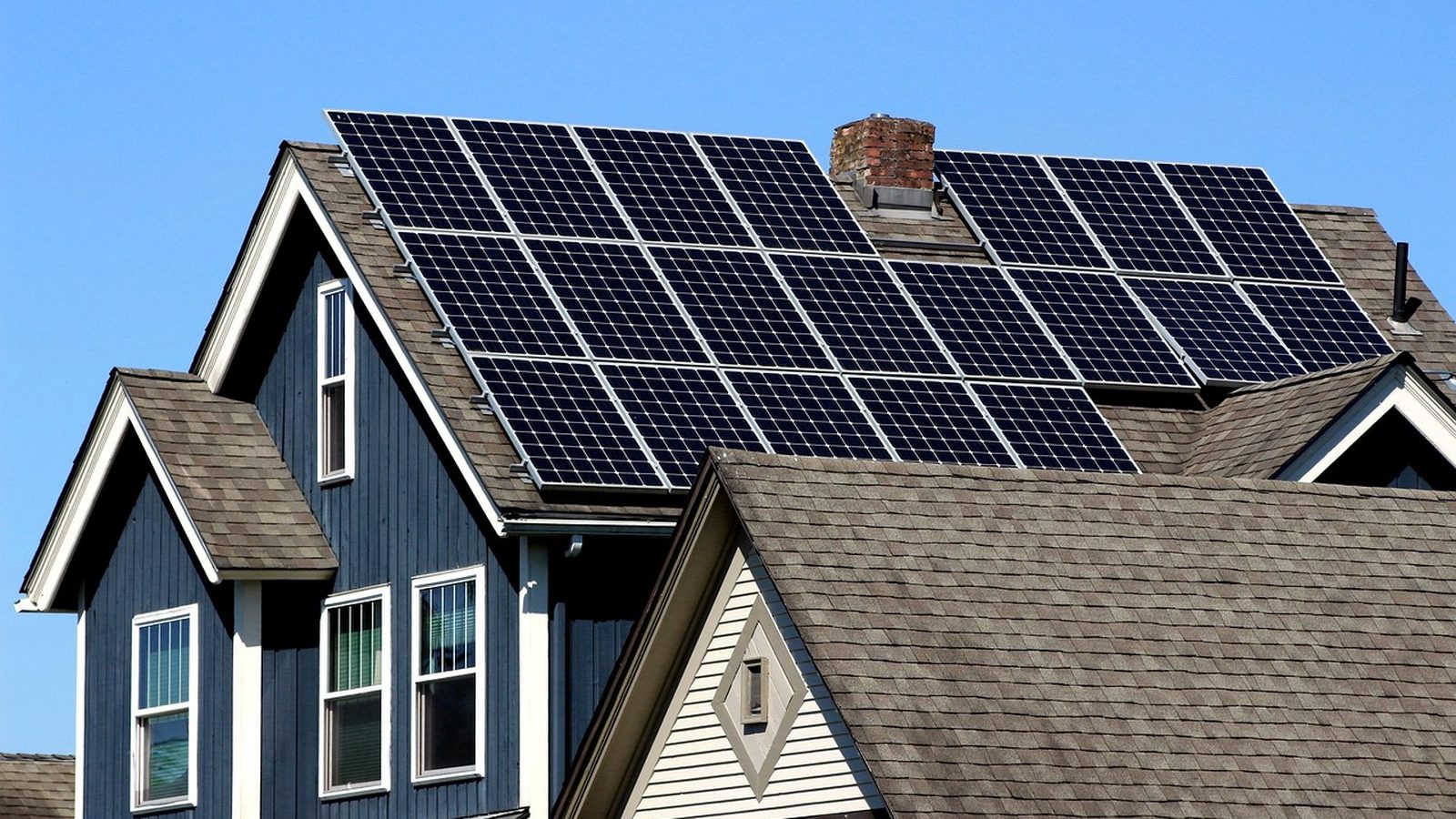
Photo: NxTide, via Pixabay
Ava Community Energy is the local generation provider
Ava lists Berkeley as an original jurisdiction, with service beginning in 2018. The organization reports 55,100 total Berkeley accounts and 5,900 solar accounts. PG&E remains the delivery utility, but the generation-side solar policy belongs to Ava, not MCE. Ava's Berkeley page.
The distinction is not cosmetic. Ava's published NEM policy follows PG&E Electric Schedule NEM structure, but provides its own category terms and true-up choices. Read the tariff document named in the actual account conversation, not a nearby city's CCA summary. Ava NEM policy.
Real-time approval has a defined boundary
Berkeley uses SolarAPP+ for eligible systems at 10 kW AC or smaller on single-family or duplex properties. Qualifying submissions receive real-time approval. Systems that do not use that route are not left in a mystery queue: the city says standard solar applications are reviewed within one working day. Berkeley's solar-permit page.
That range matters in a city with a lower single-family share than the other cities in this set. A building type can shape the route as much as panel size. Do not advertise the fastest pathway until the property and system meet the city's stated criteria.
Berkeley publishes several distinct solar line items
The fee schedule lists $100 per system for residential SolarAPP+, $200 for residential solar at 15 kW or less including plan check, and $250 plus $15 per kW above 15 kW for the larger residential category. It also lists a $62.50 filing fee, $150 electrical-permit base fee, and a 5 percent technology enhancement fee on specified permit categories. Berkeley's fee schedule is the place to calculate actual scope, not a single headline number.
The $200 small-system line and $250 plus $15 per kW larger line remain within the $450 plus $15 per kW state baseline. The large-system per-kW adder matches the statute's stated $15 amount. Government Code 66015.
Ava gives standard customers a settlement choice
Under Ava's policy, standard NEM customers may choose monthly or annual true-up. The default is monthly; the election must be made before March 1 to take effect with the following April billing cycle, and the policy says it can be changed once each year. CARE/FERA and Legacy Municipal customers use monthly true-up. Policy details.
| Energy source | Type | Average price | What that means |
|---|---|---|---|
| Ava Standard NEM | monthly export bill credit | retail rate per kWh exported | The policy differentiates monthly credit from annual surplus payout. |
| Ava Legacy Municipal | monthly export bill credit | retail + $0.01 per kWh | This category has distinct legacy treatment. |
| Ava annual payout | standard customer | PG&E NSC per kWh | Legacy Municipal and CARE/FERA have a different stated payout rule. |
| Solar used behind the meter | direct self-use | retail avoided cost depends on usage | It avoids a contemporaneous purchase instead of waiting for surplus settlement. |
Annual cash-out happens in April, and balances over $100 are paid by check under the policy. That may be useful cash-flow detail, but it is not an argument to design around surplus production.
Berkeley is cooler, wetter, and still productive
The downtown PVGIS run estimates 1,599.3 kWh per installed kW annually. May is narrowly the high month at 162.9 kWh per kW, and December is 87.5. This is the lowest annual output in this five-city group, which makes a conservative design assumption more useful than a sunny-state slogan.
May is the modeled high month. Building orientation and the household's daytime demand matter more than the city average.
PVGIS. PVGIS v5.2 model run by Solar Learning Lab on August 24, 2026, NSRDB radiation database. Fixed south facing mount, 30 degree tilt, 14 percent losses, downtown Berkeley coordinates. Your roof will differ.
The Ava battery program is structured, not a flat coupon
Ava's SmartHome Battery rebate depends on household income, battery size, and shared virtual-power-plant capacity. Participants can receive quarterly payments for five years for sharing capacity. There is no single fixed rebate amount published for every home, so an installer should not turn the program into a universal dollar claim. Ava SmartHome Battery.
The homeowner 25D tax credit ended after 2025 under the federal change described by CRS. Existing eligible unused credits can carry forward, but that does not make a newly completed 2026 owner purchase eligible. Federal credit context.
Ask installers which Berkeley lane the design fits
The core questions are concrete: Is the property a single-family home or duplex? Is the system 10 kW AC or less? Is the proposal using SolarAPP+? Is the Ava customer on monthly or annual true-up? Get those answers before equipment-brand talk.
SunPower®
Richmond, CA
4.4(477 Google reviews)
CivicSolar, Inc
Oakland, CA
4.7(89 Google reviews)
Save a Lot Solar
Berkeley, CA
4.8(46 Google reviews)
Ally Electric And Solar Inc
Richmond, CA
4.8(33 Google reviews)
Ratings snapshot: Google Maps, August 2026, via the DataForSEO SERP feed. Zero companies paid us and none are endorsed by us.
Use a Berkeley estimate as a screening tool
This calculator cannot choose an Ava true-up election or identify the property's permit path. It can help find a sensible size range before detailed design begins.
The slider is anchored to a downtown Berkeley PVGIS model. The lower setting is 85 percent of that annual result, which is a cautionary planning case rather than a shade study.
Cash quotes in Berkeley cluster near $2.46 per watt, against a $3.50 national 2024 median (LBNL). Use your quote.
Assumptions you can change
Use the rate on your actual lease or PPA quote. There is no published statewide average we trust enough to hardcode.
Cash purchase
$8,856 after state credit
- Year 1 benefit
- $160/mo
- Payback
- 5 years
- 20 year net position
- $37,600
This is a retail-rate screening estimate. Ava's NEM policy has monthly and annual true-up choices, so a real proposal should make its self-use and settlement assumptions visible.
Solar loan
$118/mo 15 yr payment
- Year 1 net
- $41/mo
- Upfront
- $0
- 20 year net position
- $25,139
In Berkeley, compare loan economics only after the permit path and property type are clear. A standard permit and an eligible SolarAPP+ project are not the same workflow.
Lease / PPA
$0 down you buy the power
- Year 1 net
- $44/mo
- Upfront
- $0
- 20 year net position
- $14,535
A PPA price needs to compete with the utility bill and Ava policy, not with a promise that every solar kWh has the same value.
Estimates, not quotes. This tool uses a California retail-rate baseline and a Berkeley PVGIS production run. It cannot reproduce PG&E time-of-use pricing, Ava settlement choices, fixed charges, shading, or roof-specific design. We are a solar installer and we also partner with other solar companies. See our disclosures.
Berkeley solar FAQ
Is Berkeley served by Ava or MCE?
Which Berkeley systems get real-time SolarAPP+ approval?
How long does standard Berkeley solar review take?
What does Berkeley charge for SolarAPP+?
Can Ava customers choose annual true-up?
Build a Berkeley solar proposal around the actual path
Bring the property type, a current bill, and the intended Ava settlement preference to the first serious conversation.
What does your monthly electric bill look like?
Berkeley average is $167 per month (EIA, 2024).