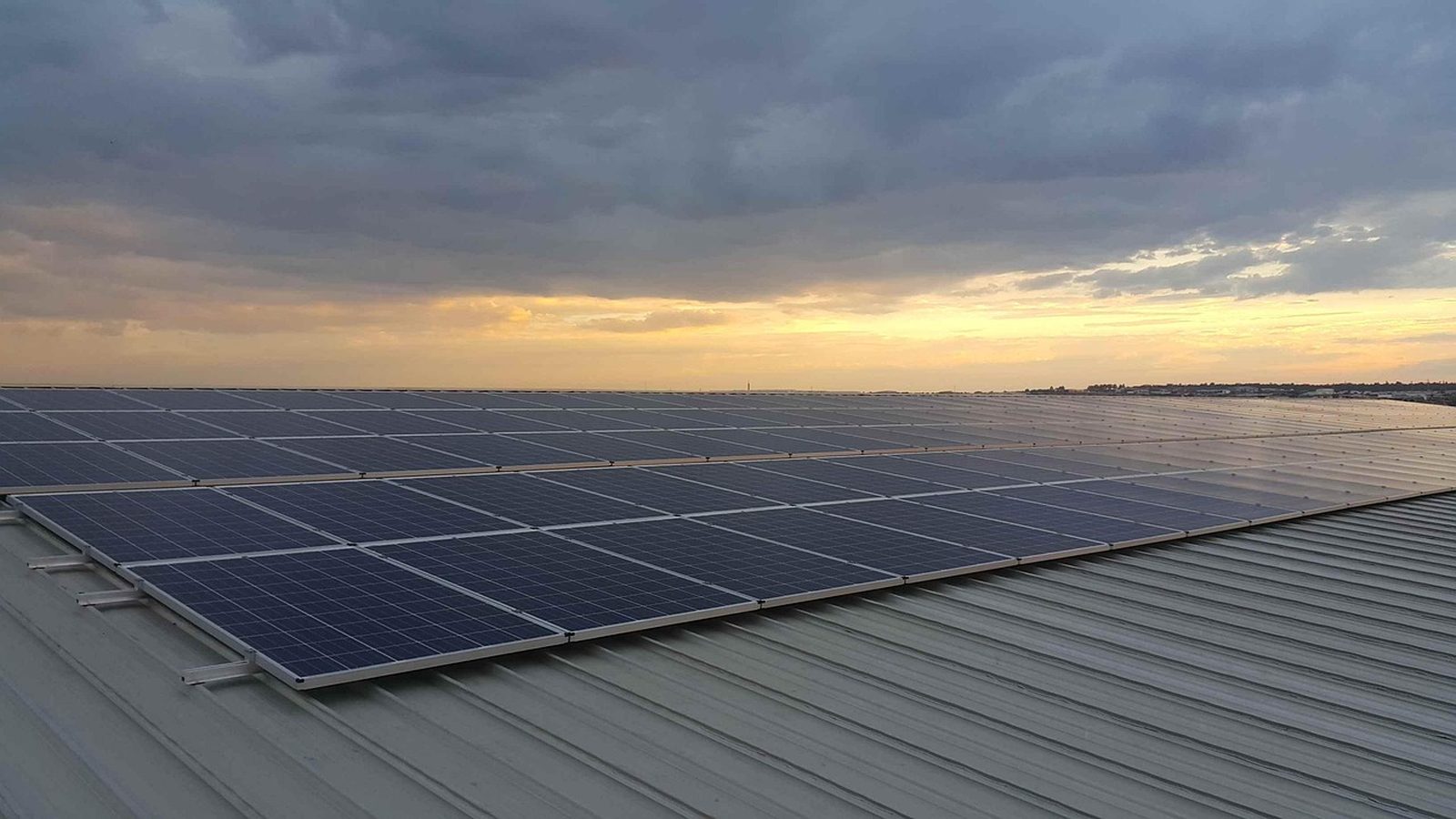
Photo: BLACKDOTENERGY, via Pixabay
California · Burbank
Burbank solar answers to BWP, and nobody else
Written by the Solar Learning Lab research deskUpdated August 26, 202613 min read
Almost everything written about Southern California solar assumes an Edison bill and CPUC rules. Apply any of it to Burbank and you will get the numbers wrong, because Burbank owns its utility. Burbank Water and Power is a municipal operation, the city appears nowhere in the community index SCE files, and the CPUC's Net Billing Tariff, SCE time-of-use plans and the ACC Plus export adder simply do not exist here. What exists instead: residential power that averaged 19.25 cents per kWh in 2024 against SCE's 32.43, per EIA Table 6, a City Council that has approved two consecutive 9.9 percent rate increases, and a brand new municipal export program called Solar Net Billing that started January 1, 2026.
Cheap power is the headwind. Rising power is the argument. BWP itself publishes an 8 to 11 year payback under the new program. This page walks through the utility's own numbers so you can decide whether that math works for your roof, and covers the one procedural step Burbank adds that no neighboring city does: the Solar Confirmation Number you need from BWP before the permit application even opens.
Test the 8 to 11 year claim yourself
Put your bill and BWP's own average rate into our estimator and see what payback your roof supports.
Run the Burbank mathYour utility is the city, and that changes every rule
Start with what Burbank is not. Not SCE territory: the city's absence from the filed communities index is affirmative evidence, so there is no SCE baseline region and no TOU-D rate plan at any Burbank address. Not Clean Power Alliance territory either, since community choice aggregation operates inside investor owned utility service areas and Burbank has its own utility. And critically, not CPUC net billing territory. Decision 22-12-056 governs the investor owned utilities, and none of it reaches a BWP customer.
The mistake we see in practice: an installer quotes a Burbank household using SCE assumptions, sometimes down to pasting the 4 to 9 p.m. peak pricing into the proposal. The savings estimate is inflated before the design is even wrong, because BWP households paid roughly 59 percent of the SCE average in 2024. If a Burbank proposal does not name Burbank Water and Power, its own rates and its own export program, put it down.
| Energy source | Type | Average price | What that means |
|---|---|---|---|
| BWP Residential Basic, 2026 | first 300 kWh, composite | 18.00¢ per kWh | 14.60 cent energy charge plus the 3.40 cent energy cost adjustment. Above 300 kWh the composite is 27.82 cents. |
| BWP Residential Basic, 2027 | above 300 kWh, composite | 30.58¢ per kWh | Published 2027 figures. The monthly customer charge also moves from $19.50 to $25.00. |
| BWP solar exports | avoided cost of energy | 6.66¢ to 11.56¢ per kWh | Varies by season and time of delivery. Summer on peak, 4 to 7 p.m., pays the 11.56 cent top. |
| Onsite solar | self-consumed energy | avoided retail not a tariff | Energy used in the house avoids 14.71 to 22.49 cent tiered retail rates. That gap versus export value is the whole design question in Burbank. |
BWP rates and charges, the published 2027 rate summary and the Solar Net Billing FAQ. Snapshot, not a bill simulation.
The cheap power is repricing, on a published schedule
Here is the honest hook, and it is not "high rates today." The Burbank City Council approved a 9.9 percent electric system average rate increase effective January 1, 2026, and an identical 9.9 percent increase effective January 1, 2027, per BWP's own announcement. For a typical residential customer using 520 kWh a month, BWP states the 2026 electric increase alone adds $19.80 per month.
The published 2027 numbers make it concrete. The monthly customer service charge climbs from $19.50 to $25.00. The composite rate above 300 kWh moves from 27.82 to 30.58 cents per kWh, per the 2027 rate summary. A solar decision in Burbank is not a bet against today's bill. It is a bet on a rate trajectory the utility has already put in writing through the end of 2027, with self-generated kWh as the hedge.
Solar Net Billing: BWP's program, BWP's numbers
Burbank's council approved Solar Net Billing on January 14, 2025, and it took effect for new installations on January 1, 2026. Anyone whose permit was applied for before that date stays on the old net energy metering arrangement, and that grandfathering runs 20 years from the program launch, though it does not shield anyone from rate increases and it ends if a system change requires a new interconnection agreement, per the program FAQ.
For everyone installing now, the deal works like this. Exports are paid at BWP's avoided cost of energy, 6.66 to 11.56 cents per kWh depending on season and time of day, while tiered retail sits at 14.71 to 22.49 cents. BWP's public meeting deck itemizes the summer values: 11.56 cents on peak from 4 to 7 p.m., 7.95 mid peak, 6.72 off peak. Credits are paid in dollars rather than banked kWh, roll to the next bill, and can be sent as an annual check on request. The old program's 100 percent sizing limit is gone; the FAQ allows sizing to 150 percent of use and the program page cites a proposed maximum of up to 5 megawatts.
Two honest cautions. First, BWP's own payback figures: 6 to 9 years under legacy net metering, 8 to 11 years under Solar Net Billing with oversizing. The utility concedes the new program is slower money, and quoting its numbers beats trusting ours or anyone's model. Second, a real documented contradiction: BWP's Solar Consumer Protection Guide, file dated 2024, still says systems sized above 100 percent of a customer's needs will not be approved. The guide predates the program. Confirm your allowed sizing directly with BWP when you request your confirmation number, and get the answer in writing.
The Solar Confirmation Number comes before everything
Burbank runs instant permitting for single family rooftop solar and battery storage through a partnership with Symbium Corp., covering systems up to 38.4 kW, per the city's solar page. The CEC's SB 379 file lists Burbank as a Symbium platform city, making it the only city in our three-city batch on Symbium rather than SolarAPP+, and the city page independently confirms it. The statutory basis, Government Code 65850.52, names SolarAPP+ as an example, not a mandate, so Symbium satisfies it.
But the sequence is Burbank-specific and order matters. Before applying in Symbium, the applicant contacts the BWP Electrical Division for a Solar Confirmation Number and system sizing. Then they create a Burbank Online Permits account and apply in Symbium using the same email address plus that confirmation number. Inspections schedule through Burbank Online Permits. Skip the utility step and the permit application stalls at the first field.
One more structural fact that trips up out-of-town installers: the building permit and the grid connection are two separate approvals. Burbank Municipal Code 9-1-3-80.99 states plainly that city approval does not authorize connecting the system to the BWP grid, per the codified ordinance, and the consumer guide confirms a separate interconnection application with written BWP approval required before the system is energized. Inspectors from both BWP and Building and Safety visit the home. Residential confirmation of electric service is handled by named BWP staff, listed on the BWP solar page. Multifamily, commercial and oversized systems skip Symbium entirely and take a traditional plan reviewed permit.
Permit fees, itemized and under the cap
Burbank's fiscal year 2026 to 2027 adopted fee schedule lists the residential photovoltaic permit at $316.56, comfortably below the $450 ceiling that Government Code 66015 sets for systems up to 15 kW. Adding a battery is where the fee stack grows: $255.92 for the energy storage permit plus $287.78 in plan check, a combined $543.70 on the storage portion alone. Storage still rides the same Symbium instant path for single family roof mounted projects, so the extra cost is fees, not process.
The counter, if you need it, is the Building and Safety Division at 150 N. Third Street, first floor, 818-238-5220, open Monday through Thursday 8:00 a.m. to 3:30 p.m. and Friday to 3:00 p.m., closed for lunch. Worth knowing: the Building and Safety page publishes monthly Solar Photovoltaic Permits Issued reports, with editions from August 2025 through July 2026 posted. No other city in our batch publishes its own solar volume data. If you want to know whether installation activity here is growing, the primary source is sitting on the city website.
The fire zone rules are real obligations, not fine print
Burbank climbs into the Verdugo Mountains, and unlike its flatland neighbors it has codified Very High Fire Hazard Severity Zones, established by ordinance effective January 1, 2023 and amended effective July 4, 2025, mapped on file with the Building Official and Fire Official, per the municipal code. CAL FIRE's state map update landed March 24, 2025. A property in more than one zone is treated as being in the highest risk zone.
For a hillside homeowner adding solar, the Fire Hazard Reduction Program obligations run alongside the project: weeds under 3 inches within 100 feet, tree limbs 18 feet or more above ground, 10 feet of chimney clearance, 5 feet of vertical roof clearance, vegetation control within 10 feet of a structure, and a fuel modification zone out to 200 feet of total clearance. The annual cycle is a May letter, June completion, July inspections, and the enforcement fees escalate: no charge on first notice, $280 on the second, $560 on the third. None of this blocks solar. All of it belongs in the site plan and the insurance conversation before panels go up on a Verdugo-adjacent roof.
Yield on a Burbank roof
Our August 26 PVGIS v5.2 run at downtown Burbank coordinates models 1,710.5 kWh per year per installed kW, peaking at 169.1 kWh per kW in August and bottoming at 112.2 in December. A research pass on the v5.3 engine at 20 degree tilt returned 1,664.04 kWh per kWp, the lowest of our three-city batch on that run, but the spread across all three cities was under 2 percent. Sunshine is not what separates Burbank from Inglewood or Norwalk. The utility is.
August models at 169.1 kWh per kW. Under Solar Net Billing, a kWh consumed on site avoids 14.71 to 22.49 cent retail rates while an exported kWh earns 6.66 to 11.56 cents, so summer daytime load is the lever.
PVGIS v5.2 model run by Solar Learning Lab on August 26, 2026, NSRDB radiation database. Fixed south facing mount, 30 degree tilt, 14 percent losses, downtown Burbank coordinates. Your roof will differ. The run comes from the PVGIS tool. Burbank's terrain ranges from about 500 to roughly 800 feet near the Verdugos, and hillside orientation and shading will move individual roofs off this model more than in a flat city.
An incentive audit for municipal utility territory
Being a BWP customer redraws the incentive map, mostly by subtraction. DAC-SASH is off the table entirely: eligibility requires billing customer status with PG&E, SCE or SDG&E, and BWP is none of those, per GRID Alternatives. SGIP is a maybe rather than a yes. The CPUC describes the $280 million residential solar and storage equity budget, at $3,100 per kW and $1,100 per kWh, as open to low income customers statewide, but it directs publicly owned utility customers to the program administrator list, so confirm which administrator covers BWP territory before anyone books that money into your quote. Start at the CPUC page. We found no BWP or city rebate for residential solar or batteries this session.
What still applies without asterisks: the federal 25D homeowner credit is gone for systems completed after December 31, 2025, per CRS IN12611, exactly as in IOU territory. The property tax new construction exclusion still shields qualifying systems from reassessment through its January 1, 2027 statutory sunset. And Civil Code 714 still voids unreasonable HOA restrictions; Burbank's own expedited-review ordinance ties its eligibility definition to that section.
Crews that already know the BWP two-step
The installer map for Burbank pulls heavily from Glendale and Sun Valley, plus operations inside the city. The screening question here is not generic experience. It is specific: how many Solar Confirmation Numbers has this company requested from BWP, and have they taken a system through both the Symbium permit and the separate BWP interconnection approval since Solar Net Billing started in January. An installer who has never done the two-step will learn it on your schedule.
AWS Solar
Sun Valley, CA
4.9(85 Google reviews)
Green Conception Solar & Roofing Contractor
4.7(74 Google reviews)
ALA Renovations
Burbank, CA
5.0(50 Google reviews)
Ratings snapshot: Google Maps, August 2026, via the DataForSEO SERP feed. Zero companies paid us and none are endorsed by us.
Sanity-check the payback against BWP's own range
We loaded this estimator with BWP's 19.25 cent 2024 residential average rather than the state average, because using SCE-flavored numbers in Burbank is exactly the error this page exists to prevent. The tool cannot model tiered rates, the avoided cost export schedule or the approved increases, so read its output against BWP's published 8 to 11 year payback range and treat anything dramatically faster with suspicion.
The slider's upper bound is our downtown Burbank model run. The lower bound is 85 percent of it, covering a hillside lot or partial shade without pretending to measure either.
Cash quotes in Burbank cluster near $2.46 per watt, against a $3.50 national 2024 median (LBNL). Use your quote.
Assumptions you can change
Use the rate on your actual lease or PPA quote. There is no published statewide average we trust enough to hardcode.
Cash purchase
$14,514 after state credit
- Year 1 benefit
- $162/mo
- Payback
- 8 years
- 20 year net position
- $32,630
Burbank runs on Burbank Water and Power, not SCE, and BWP's 2024 residential average was 19.25 cents per kWh. BWP itself publishes an 8 to 11 year payback under Solar Net Billing with oversizing. The honest cash case is the two approved 9.9 percent rate increases, not today's price.
Solar loan
$194/mo 15 yr payment
- Year 1 net
- -$32/mo
- Upfront
- $0
- 20 year net position
- $12,207
Loan pricing carries the state's documented loan-over-cash spread. Against BWP's cheaper power, financing costs eat payback faster than they would in SCE territory, so get the dealer fee stated separately before comparing bids.
Lease / PPA
$0 down you buy the power
- Year 1 net
- -$40/mo
- Upfront
- $0
- 20 year net position
- -$8,808
Our federal source addresses only the expired homeowner credit and makes no claim about third party ownership, and a Burbank lease rate must beat 19.25 cent average power, not SCE prices. Make any provider show that comparison in writing.
Estimates, not quotes. This tool uses BWP's 2024 residential average price, our downtown Burbank PVGIS run and California market cost inputs. It cannot model BWP's avoided cost export values of 6.66 to 11.56 cents, the approved 2026 and 2027 rate increases, or tiered rate effects. We are a solar installer and we also partner with other solar companies. See our disclosures.
We are a solar installer and we also partner with other solar companies.
Burbank questions, answered from BWP's documents
Is Burbank on the CPUC Net Billing Tariff like SCE customers?
What does BWP pay for my exported solar power?
How long does solar take to pay for itself in Burbank?
What is the Solar Confirmation Number and when do I get it?
How big can my system be under the new rules?
I installed before 2026. Do I keep my old net metering deal?
The file cabinet
Every claim on this page traces to these documents, all reviewed August 26, 2026. The BWP material is the controlling authority for rates and exports here, not any CPUC page.
- BWP rates and charges, approved rate increases, 2027 rate summary, Solar Net Billing, Solar Net Billing FAQ, public meeting deck, solar consumer protection guide and BWP solar power page
- City of Burbank solar permitting, Building and Safety, FY 2026-27 adopted fee schedule and Burbank Municipal Code Title 9
- Fire Hazard Reduction Program
- CEC SB 379 permitting data, Government Code 65850.52, Government Code 66015 and Civil Code 714
- SCE communities index (Burbank's absence) and EIA Table 6
- SGIP, DAC-SASH eligibility, CRS IN12611, BOE property tax exclusion, DOF E-5 housing estimates, Burbank reference statistics and the PVGIS research run
Get a Burbank estimate that starts from BWP rates
Four questions, and the output uses municipal utility pricing, not SCE's. We are a solar installer and we also partner with other solar companies. Read our disclosures.
What does your monthly electric bill look like?
Burbank average is $161 per month (EIA, 2024).