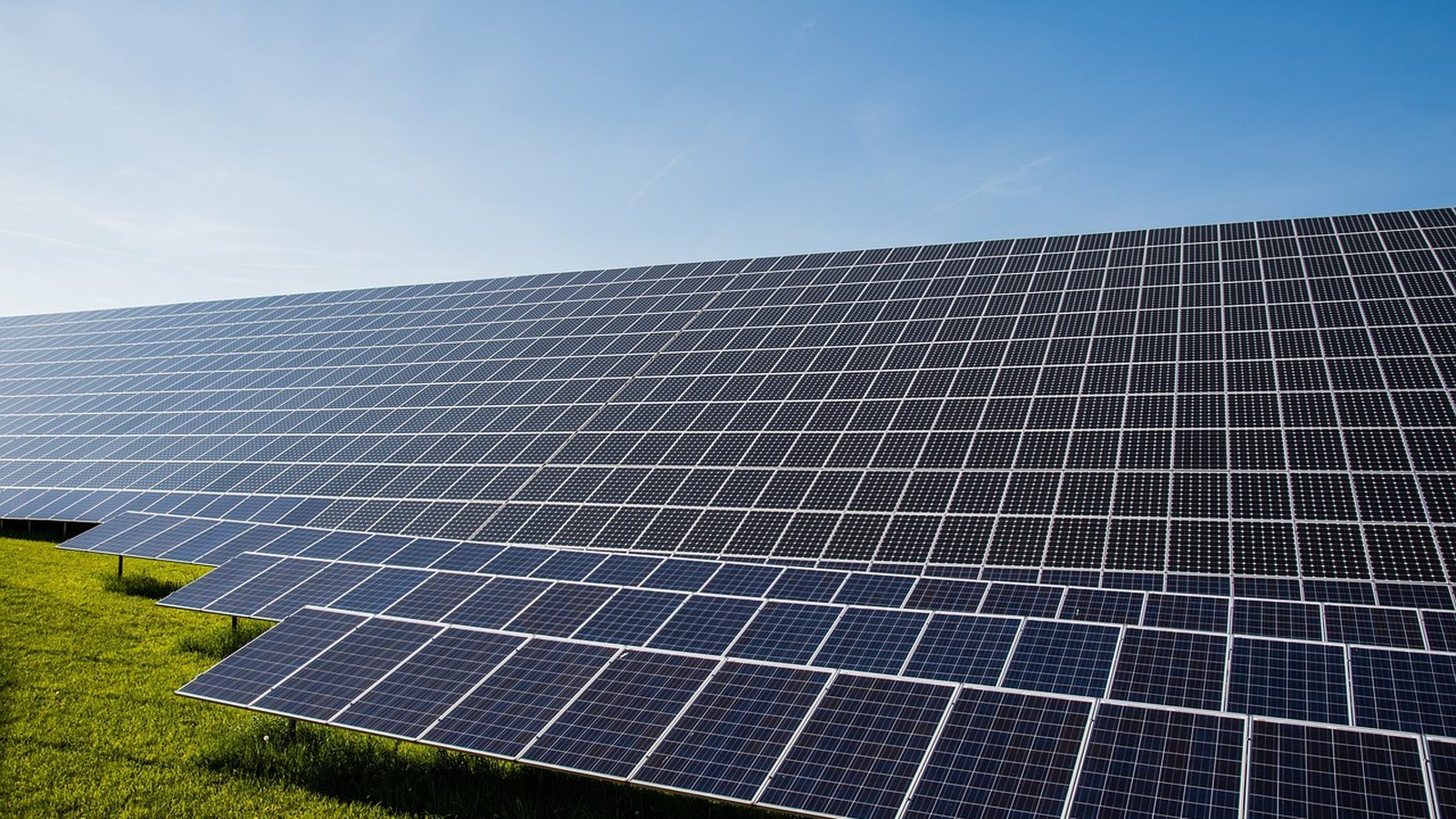
Photo: blickpixel, via Pixabay
California · Chico
Chico solar: the city took the money, the platform never launched
Written by the Solar Learning Lab research deskUpdated August 26, 202612 min read
On April 13, 2023, Chico accepted $80,000 in state CalAPP grant money to stand up automated solar permitting. Its legal deadline under SB 379 was September 2023. Three years later, the California Energy Commission's August 3, 2026 compliance dataset still lists the City of Chico as "Without Platform" with no annual report submitted. Butte County, next door, runs its own custom platform and filed 2025 data. Same statute, same deadline, opposite outcomes.
That gap is not trivia. It shapes how long your permit takes, what it costs, and which questions your contractor should be able to answer before you sign anything. This page walks through what a Chico homeowner actually faces in 2026: a conventional online permit queue, a community choice aggregator that advertised a Fall 2023 launch and never arrived, and a PG&E export bonus that pays more than twice as much for a 2026 enrollment as it will for a 2027 one.
Check the math before the pitch
Run a screening estimate for a Chico roof, then use it to interrogate the first quote instead of accepting it.
Estimate Chico solarThe $80,000 ledger entry the CEC keeps publishing
California's Government Code 65850.52, the SB 379 statute, is blunt: jurisdictions above 50,000 people had to implement an online automated permitting platform, one that verifies code compliance and issues residential solar permits in real time to licensed contractors, by September 30, 2023. The statute covers systems up to 38.4 kW AC plus paired storage, requires annual reporting to the Energy Commission, and does not touch utility interconnection. Read the section text if you want the ceiling and the carve outs.
The CEC tracks who complied. Its dataset, last updated August 3, 2026, carries Chico at a population of 107,394 with a September 2023 deadline, platform status "Without Platform", annual reports "None", and CalAPP funding "Awarded" at $80,000 on 4/13/2023. The CalAPP program paid grants of $40,000 to $100,000 specifically so cities could build this capability. Chico's award sits in the middle of that band, spent against an obligation the public record says is still unmet.
The contrast row in the same spreadsheet stings more: Butte County, population 205,592, same September 2023 deadline, status "Custom Platform", 2025 report on file, and it never took a CalAPP dollar. A homeowner in the unincorporated county gets the automated treatment the statute promised. A homeowner inside Chico city limits does not. When a sales rep tells you Chico permits are instant, that is the dataset to pull up.
What permitting actually looks like: eTRAKiT and a fee schedule with teeth
The real process runs through the Building Division at 411 Main Street and its eTRAKiT portal. The City's permit page announces "WE ARE GOING PAPERLESS" and directs applicants to apply online with digital plan submittal. Solar goes in as an Electrical Residential permit, and the online permit list carries the residential subtypes by name: Roof Top Photovoltaic System 707, Ground Mounted Photovoltaic System 707, and Expand Photovotaic System 707, typo and all. Contractors need a City of Chico business license on top of the state license.
Money side, from the FY 2026 to 2027 Master Fee Schedule, effective July 6, 2026: residential PV at 15 kW or less is $450, and above 15 kW it is $500 plus $15 per kW over 15. The first number sits exactly at the cap Government Code 66015 sets, which is $450 plus $15 per kW above 15 kW; the second starts $50 above that formula's base. We present both as published and point you to the statute rather than calling it anything.
The line most quotes miss is the plan check trigger. The schedule notes that plan check may be required for systems over 40 pounds per square foot or for systems on a conventional framed roof, and plan check bills at $282 per hour, with overtime at $422. A ground mount pulls a separate $876 racking permit. Do the work without a permit and the penalty is three times the permit fee, or two times if the work happened while the application was still in review. None of that appears in a glossy proposal. All of it appears in the fee schedule.
Butte Choice Energy never launched. Pioneer arrives in 2027.
Chico helped form the Butte Choice Energy joint powers authority on November 5, 2019, alongside unincorporated Butte County, with Oroville joining later. As of this writing, BCE's own site still describes a planned launch in "Fall of 2023" and a feasibility study projecting an initial 2 percent savings, about $4 million regionally. The launch did not happen. On solar, the site commits to nothing firmer than a board that "will determine policies and rates for net metered customers."
The path that is actually happening runs through Pioneer Community Energy, which lists Butte County, Chico, Oroville and Paradise among 16 communities it begins serving in October 2027, with automatic enrollment under AB 117. Butte County's own page confirms the October 2027 date, notes customers can opt out at no charge up to 60 days before launch, and points out that generation is about 40 percent of a typical bill. Pioneer says it saved customers an estimated $145 million from 2018 to 2025.
The practical read for a solar decision today: there is no CCA to shop in Chico. A homeowner buys bundled generation from PG&E until October 2027, full stop. Any pitch that prices your future bill against a local CCA rate is quoting a program that does not exist yet, from an agency the buyer probably has not heard of. Plan on PG&E economics now and treat Pioneer as a 2027 variable, not a 2026 input.
The nine year export bonus pays 2026 buyers twice what 2027 buyers get
New Chico systems interconnect under the CPUC's Net Billing Tariff, adopted in Decision 22-12-056 and applied to applications from April 15, 2023 forward. PG&E markets it as the Solar Billing Plan. Exports earn credits that vary by hour, day and season, and whatever cannot offset the month's charges banks toward an annual true-up, where net surplus pays roughly $0.02 to $0.03 per kWh under the CPUC's AB 920 framework.
Here is the lever with a date on it. PG&E's Solar Billing Plan guide describes an Energy Export Bonus Credit for residential customers who add a system by December 31, 2027: a constant value locked when the system receives permission to operate, paid for nine years, usable against any and all electric charges. Enroll in 2026 and the rate is $0.009 per kWh, or $0.036 for CARE, FERA and disadvantaged community customers. Wait until 2027 and those numbers fall to $0.004 and $0.018. After the 2027 deadline, nothing.
The exclusions matter as much as the values. New home construction does not qualify. Neither does buying a house that already has a Solar Billing Plan system, and neither does moving off legacy net energy metering. The bonus rewards one specific act: an existing PG&E customer putting new panels on an existing roof before the window closes. Customers with a complete application before April 14, 2023 keep their 20 year legacy terms, which follow the system to a new owner.
What PG&E charges in Chico, on paper
PG&E's bundled residential average came in at roughly 39.6 cents per kWh across 2024 per EIA Table 6, against a California statewide residential average of 31.97 cents from the EIA retail sales data. Call it about 7.6 cents above the state average. That premium is the raw material a Chico solar project works with.
| Energy source | Type | Average price | What that means |
|---|---|---|---|
| PG&E E-1 tiered | default non-TOU reference | 33¢ to 41¢ per kWh | Tier 1 and Tier 2 prices effective March 1, 2026. |
| PG&E E-TOU-D | weekday-peak TOU option | 34¢ to 48¢ summer per kWh | 5 to 8 p.m. weekday peak; winter runs 35, 39 and 35 cents. |
| PG&E E-ELEC | solar customer default | 33¢ to 55¢ summer per kWh | Winter is 28 to 32 cents. Base Services Charge applies; peak is 4 to 9 p.m. every day. |
| Rooftop production | self-consumed kWh | avoided retail varies by hour | Energy used onsite avoids the retail purchase. Exports follow the Solar Billing Plan credit rules instead. |
PG&E's residential pricing sheet, effective March 1, 2026, and the Solar Billing Plan guide. Snapshot, not a bill forecast.
Solar customers land on E-ELEC automatically. Its periods run seven days a week: peak 4 to 9 p.m., partial peak 3 to 4 p.m. and 9 p.m. to midnight, off peak from midnight to 3 p.m., with winter defined as October through May. Panels produce most in the off peak window and the expensive hours start as production fades. That mismatch is the whole argument for load shifting, and in some houses for a battery.
Sacramento Valley sun, measured monthly
Our standardized model puts a downtown Chico roof at 1,575.5 kWh per year for each installed kW. August peaks at 171.1 kWh per kW and December bottoms out at 74.9, better than a 2 to 1 seasonal swing. That shape fits the local climate: Wikipedia's Chico climate record shows a July mean daily maximum of 95.2 F, 27.39 inches of rain concentrated December through March, tule fog in the cool months, and a spot among the nation's clearest metros for sky cover.
August models at 171.1 kWh per kW, the annual high. Hot afternoons also mean cooling load, so a Chico household can often use a large share of summer production directly.
PVGIS v5.2 model run by Solar Learning Lab on August 26, 2026, NSRDB radiation database. Fixed south facing mount, 30 degree tilt, 14 percent losses, downtown Chico coordinates. Your roof will differ. The tool is PVGIS. Treat the run as a comparison baseline, not a promise; a separate PVGIS model at the optimal 36 degree tilt lands at 1,594.57 kWh per kWp with a year to year standard deviation of 61.68 kWh, which is the honest range of what configuration and weather do to the same address.
Storage here is about the county's history, not a gadget
Butte County is where the Camp Fire started on November 8, 2018, when a worn hook on a PG&E transmission line failed in the Feather River Canyon. It burned 153,336 acres, destroyed 18,804 structures and killed 85 people, mostly in the foothill communities east of Chico. That history is why PG&E now runs Public Safety Power Shutoffs when forecast winds, low humidity and dry fuel line up, and why its Enhanced Powerline Safety Settings will cut power within one tenth of a second when equipment detects a threat.
Two honest caveats. First, no public map we reviewed assigns a CPUC fire threat tier to parcels inside Chico city limits, so we will not claim your street is Tier 2 or Tier 3; the shutoff risk concentrates in the mapped foothill zones. Second, a battery is a resilience purchase before it is an arbitrage purchase in this market. Price it against how much an outage costs your household, then let the E-ELEC evening peak be the bonus, not the headline.
The help that survives 2026, and the credit that did not
The federal residential credit is gone for new purchases. The IRS states the 25D credit applied to property installed from 2022 through December 31, 2025, and is not available for anything placed in service after that date. A 2026 Chico buyer has no 30 percent federal offset, and any quote that includes one is stale or dishonest.
What remains is targeted. SGIP's Residential Solar and Storage Equity track pays $1,100 per kWh for storage and $3,100 per kW for solar to income qualified customers, with reservations open since June 2, 2025 and $280 million authorized. DAC-SASH, run by GRID Alternatives through 2030, serves CARE and FERA income households in the state's most disadvantaged census tracts. And the state's property tax treatment is a new construction exclusion, so a qualifying system does not raise your assessment, though the BOE notes the statute is scheduled to sunset January 1, 2027.
Local rebates: none found. We checked the City's building pages this month and found no Chico solar or battery rebate. The city level story is the permit process and its fees, covered above. One more right worth knowing: Civil Code 714 voids HOA restrictions that add more than $1,000 to a proposed system's cost or cut its efficiency more than 10 percent, per the statute text.
The Chico installer bench runs deeper than the city's size suggests
Six companies cleared our review threshold for this list, from an HVAC and solar shop with 775 reviews to a small licensed contractor with 43. A college town of 108,113 people supporting that bench tells you rooftop work is routine here. It does not tell you who fits your job. Ask each bidder two Chico specific questions: what triggers plan check on your roof type, and whether their timeline assumes the eTRAKiT queue or something faster they cannot actually deliver.
Royal Aire Solar, Heating, Air & Water
Chico, CA
4.7(775 Google reviews)
Urban Design
Paradise, CA
4.9(263 Google reviews)
OHM Solar Solutions
Chico, CA
4.6(205 Google reviews)
Chico Electric
Chico, CA
3.8(47 Google reviews)
California Builders - Solar Contractor
Chico, CA
5.0(43 Google reviews)
Ratings snapshot: Google Maps, August 2026, via the DataForSEO SERP feed. Zero companies paid us and none are endorsed by us.
Owner occupancy in Chico is 43.4 percent per Census QuickFacts, and the state housing estimate counts 25,911 single detached units out of 49,014 total. The addressable market is the detached owner slice, not the whole housing stock, which is exactly why the serious local installers survive on referrals and the out of town ones churn.
Run a Chico screening estimate
This calculator is a sizing and sanity tool. It uses the state retail rate context and our Chico production run; it cannot price hourly export credits, the bonus step down or your true-up. Use it to test system sizes and payment paths, then make an installer defend every assumption that differs.
The top of the range is our downtown Chico PVGIS run. The bottom is 85 percent of that output, a sensitivity case for a roof that faces the wrong way or sits under winter fog, not a prediction.
Cash quotes in Chico cluster near $2.46 per watt, against a $3.50 national 2024 median (LBNL). Use your quote.
Assumptions you can change
Use the rate on your actual lease or PPA quote. There is no published statewide average we trust enough to hardcode.
Cash purchase
$9,102 after state credit
- Year 1 benefit
- $162/mo
- Payback
- 5 years
- 20 year net position
- $37,934
No homeowner federal credit exists for a 2026 purchase and Chico has no city rebate. What a cash buyer in Chico controls is timing: a system enrolled on PG&E's Solar Billing Plan in 2026 locks a $0.009 per kWh export bonus for nine years, 2027 enrollment cuts that to $0.004, and systems added after December 31, 2027 get nothing.
Solar loan
$122/mo 15 yr payment
- Year 1 net
- $40/mo
- Upfront
- $0
- 20 year net position
- $25,127
The loan input carries the California loan-over-cash spread built into the state calculator. In Chico, get the cash price, the financed price, the dealer fee and prepayment terms on separate lines before comparing anything to a PG&E bill.
Lease / PPA
$0 down you buy the power
- Year 1 net
- $45/mo
- Upfront
- $0
- 20 year net position
- $14,717
A lease or PPA provider prices its own tax and financing position into the rate it quotes. Judge the contract against your actual PG&E E-ELEC bill and the export credits your own system would earn, not against a national savings claim.
Estimates, not quotes. This tool pairs the California average retail rate with our downtown Chico PVGIS run and state cost inputs. It cannot model hourly Solar Billing Plan export credits, the Energy Export Bonus step down, plan check hours or shade. We are a solar installer and we also partner with other solar companies. See our disclosures.
We are a solar installer and we also partner with other solar companies.
Chico solar questions, answered from the record
Does Chico have instant solar permitting?
How much is the city permit for rooftop solar?
Can I buy my electricity from Butte Choice Energy?
What do I lose by waiting until 2027?
Is the 30 percent federal tax credit still available?
Does a battery make sense in Chico?
Chico document trail
Every claim above traces to the following primary records, all reviewed for this page on August 26, 2026.
- CEC Residential Solar Permitting Program data, August 3, 2026 and the CalAPP program page
- Chico Building Division, permit information, online permit list and FY 2026 to 2027 Master Fee Schedule
- Government Code 65850.52, Government Code 66015 and Civil Code 714
- Butte Choice Energy, Pioneer Community Energy expansion and Butte County's Pioneer page
- PG&E residential pricing, Solar Billing Plan guide, Solar Billing Plan page, CPUC Net Billing Tariff and CPUC net metering page
- CPUC SGIP, DAC-SASH, IRS 25D guidance and BOE active solar exclusion
- PG&E PSPS program, wildfire safety program and Camp Fire record
- EIA Table 6, EIA retail sales API, DOF E-5 estimates, Census QuickFacts, Chico reference page and PVGIS model run
Price a Chico system against your actual bill
Start from the bill, the roof and the payment method, and remember the 2026 export bonus window when you compare timelines.
What does your monthly electric bill look like?
Chico average is $161 per month (EIA, 2024).