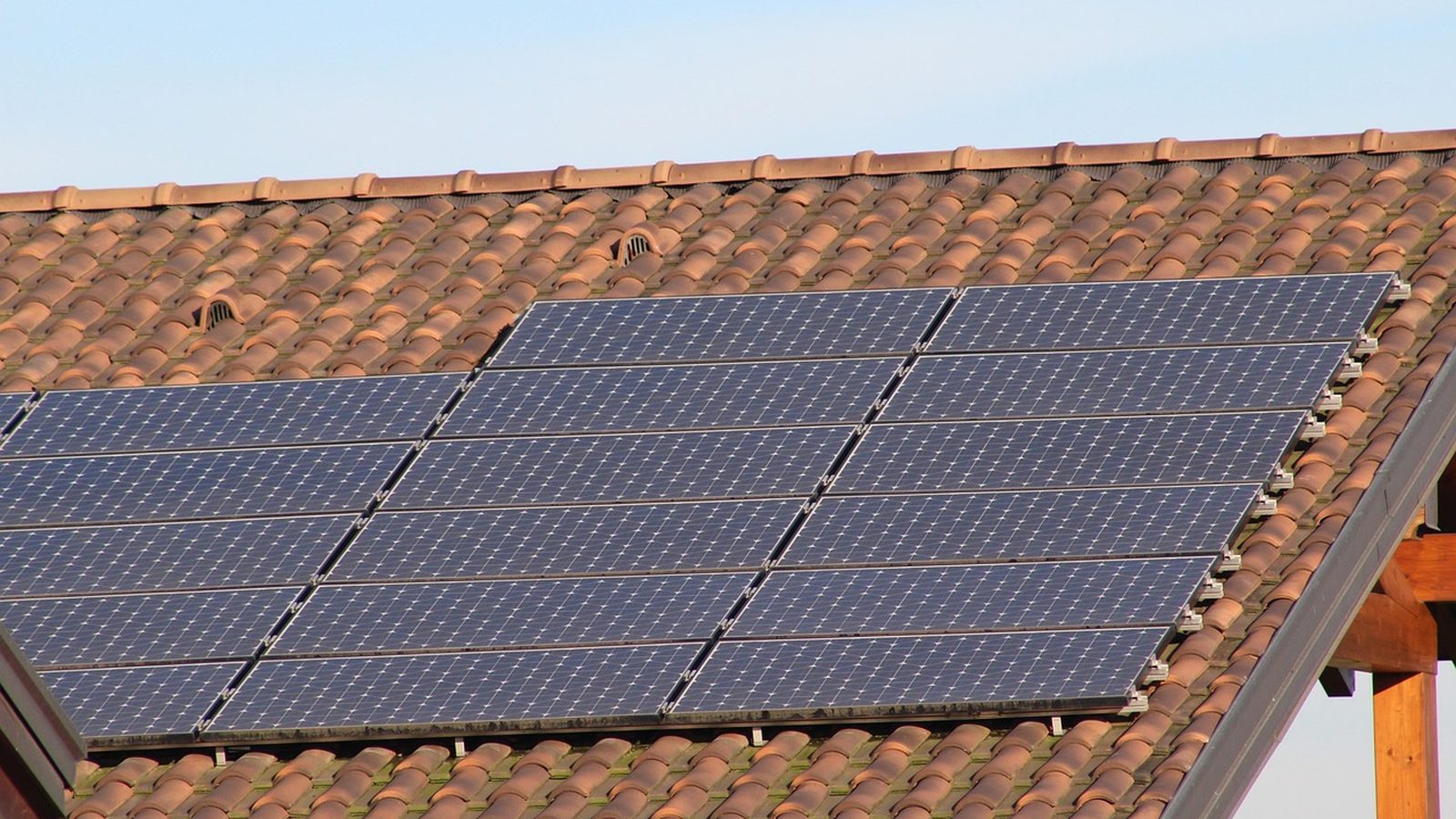
Photo: sferrario1968, via Pixabay
California · Chino
Solar in Chino: the fee schedule is honest, the process is paperwork
Written by the Solar Learning Lab research deskUpdated August 27, 202611 min read
Chino is the paperwork reality check of our five city research batch. On one hand, it does something most cities in this region will not: it publishes an actual photovoltaic fee schedule, tier by tier, tracking the state's legal caps almost line for line. On the other hand, its posted solar submittal requirements describe a conventional plan review package, engineered structural calculations included, even though the state's permitting tracker lists Chino as a "SolarAPP+ Platform" jurisdiction. And whichever intake path applies, a separate agency, the Chino Valley Fire District, must approve the project from its own office in Chino Hills.
None of this makes Chino a bad solar city. The sun is strong, the housing stock is young by regional standards, and the costs are transparent. It just makes Chino a city where the honest pitch is "organized process" rather than "instant permit," and where one confirmation phone call to (909) 334-3251 before contract signing is worth more than any marketing claim.
Price it before you process it
The paperwork is knowable. Start with whether the system size makes sense against your summer bills.
Estimate Chino solarA fee schedule that mirrors the statute, almost to the dollar
Open Chino's Building Fee Schedule, updated August 16, 2025, and you find photovoltaic pricing in three tiers: Tier 1 at a $450 base fee capped at $500, plus $15 per kW for each kW above 15 kW; Tier 2 at $900 capped at $1,000 plus $7 per kW from 51 to 250 kW; Tier 3 at a $1,000 cap plus $5 per kW above 250 kW. An electrical permit issuance fee of $67.94 rides along.
Now hold that against Government Code 66015, which caps residential PV fees at $450 plus $15 per kW above 15 kW and commercial fees at $1,000 up to 50 kW with the same per-kW steps beyond. Chino priced itself at the statutory ceiling and wrote it down. We would rather see a city charge the cap in public than charge less in theory and surprise you at the counter. For a typical home system under 15 kW, budget $450 to $500 plus the issuance fee, and treat any quote that shows a materially different permit number as a math error to be corrected.
The submittal stack the city actually asks for
The City's Solar Photovoltaic System Submittal Requirements, dated 2023, read like classic plan check: a site plan, a roof plan, a partial roof framing plan, structural and lateral calculations prepared by a licensed engineer or architect, an electrical plan, and equipment specification sheets with installation instructions and UL listings. Applications flow through the Citizen Access portal at the Development Services Building Division, 13220 Central Avenue.
The same document answers the who-can-do-the-work question: contractors holding B, C-46 solar, or C-10 electrical licenses, or the property owner acting as owner-builder. Unlike South Gate up the freeway, Chino's posted paperwork does not wall owner-builders out of the standard process. The wall here is competence: those structural and lateral calcs require a licensed engineer or architect's stamp regardless of who pulls the permit, so a true DIY submission still has a professional in the loop.
What the CEC lists versus what Chino posts
Here is the discrepancy we could not resolve from documents alone. The CEC's August 2026 tracking file shows Chino with platform status "SolarAPP+ Platform," a 2023 annual report on file, and a $60,000 CalAPP award dated November 16, 2023. That is the profile of an automated permitting city under Government Code 65850.52. Yet the City's own posted solar documents describe the conventional engineered submittal package above, and the Chino pages we fetched this session never mention SolarAPP+ at all.
Both facts are real; we present them side by side and draw the only safe conclusion: do not assume an instant permit in Chino, and do not assume its absence either. Confirm the current intake path with the Building Division at (909) 334-3251 before your installer promises a timeline. Five minutes on the phone beats a contract clause built on a stale webpage, in either direction. The CEC, for its part, disclaims certifying compliance and leaves enforcement to private claims, so its listing is reported data, not a guarantee of how Monday morning at the counter goes.
The second desk: Chino Valley Fire District signs separately
The submittal requirements contain a line the LA County cities in our batch do not have: separate approval from the Chino Valley Fire District, headquartered at 14011 City Center Drive in Chino Hills, phone (909) 902-5260. Two agencies, two addresses, two sign-offs per project, per the City's own document.
Operationally, this is a scheduling dependency more than a cost. A project plan that treats fire district approval as an afterthought discovers it at the worst possible moment. Ask your bidder one direct question: who submits to the fire district, when, and how long did that step take on their last three Chino jobs. The answer tells you whether they actually work this jurisdiction or just quote in it.
Cooling load is the demand story here
Chino's NOAA climate normals put July's mean daily maximum at 93.7 F and August at 96.3 F, with a record 121 F set in September 2020 and under ten inches of annual rain. This is genuine inland heat, a different world from the marine-cooled coastal cities 35 miles west. Air conditioning is not optional equipment here; it is the load that defines the summer bill.
That load shape is solar's friend and enemy at once. Friend, because heavy daytime cooling consumes solar production on site at retail value. Enemy, because SCE's steepest prices land in the early evening after production fades. The posted plans make the point directly, and it is why a Chino design conversation should always include the question of shifting cooling into the afternoon production window, pre-cooling the house before the peak period prices arrive.
| Energy source | Type | Average price | What that means |
|---|---|---|---|
| SCE TOU-D-4-9PM | October to May mid peak | 51¢ per kWh | The 4 p.m. to 9 p.m. window stays expensive even outside summer; 41¢ after baseline credit. |
| SCE TOU-D-4-9PM | October to May super off peak | 33¢ per kWh | 8 a.m. to 4 p.m., the solar production window, prices at 23¢ after credit. |
| SCE TOU-D-5-8PM | October to May mid peak | 60¢ per kWh | 50¢ after the baseline credit; the three hour window concentrates cost. |
| Onsite solar | self-consumed energy | retail avoided cost not a fixed tariff | Production consumed by daytime cooling avoids the retail price in that hour. Exports settle at tariff values instead. |
SCE time of use plan pages, posted rates including the winter season most rate tables skip. Both metered plans add a $0.79 daily Base Services Charge.
Baseline Region 10 and the export math
Chino sits in SCE Baseline Region 10 per the Index of Communities, an inland allocation rather than the coastal Region 8 that covers much of LA County. The baseline matters because the 10 cent per kWh baseline credit on metered TOU plans applies up to a monthly allocation that differs by region, so bill comparisons copied from a coastal cousin will quietly mislead. Generation is SCE bundled; Chino appears in no aggregator listing on SCE's community choice page, and the systemwide bundled average was 32.43 cents per kWh in EIA's 2024 data.
Exports follow the Net Billing Tariff for all applications since April 15, 2023: averaged hourly values by month, weekday versus weekend, per Decision 22-12-056, which targeted a nine year simple payback at a modeled $3.30 per watt. ACC Plus adders run $0.040 per kWh for SCE residential customers and $0.093 for CARE, on the eligible TOU-D-PRIME rate. In a city with Chino's $103,845 median income, fewer households will qualify for the CARE adder than in the batch's LA County cities; the base $0.040 figure is the one most Chino quotes should be modeling.
Production at the valley's western end
Our downtown Chino run models 1,718.0 kWh per year per installed kW, with August at the top of the curve at 168.9 kWh per kW and December holding 114.3. Solid inland numbers, though notably not the batch leader; Hemet, deeper into Riverside County, outproduces it.
August models at 168.9 kWh per kW, arriving in the same weeks as 96.3 F normal highs. Peak production meeting peak cooling load is the core of the Chino solar case.
PVGIS v5.2 model run by Solar Learning Lab on August 27, 2026, NSRDB radiation database. Fixed south facing mount, 30 degree tilt, 14 percent losses, downtown Chino coordinates. Your roof will differ. Tool at PVGIS. The elevation is 728 feet and the airshed is famously hazy, but haze is already baked into the satellite radiation data. What the model cannot see is your specific tract: roof azimuth, tile versus composition shingle, and the two-story neighbor to your south.
Newer tract roofs mean fewer electrical surprises
The state's 2026 estimates give Chino 29,983 housing units with 21,058 single detached, 70.2 percent, the highest share in our five city batch. The growth record shows why that stock is young: population climbed from 59,682 in 1990 to 91,403 in 2020, so a large slice of these homes was built in the last three decades. Newer construction generally means 200 amp panels and permit-ready roofs, the opposite of the prewar panel-upgrade lottery in the batch's LA County cities.
One sizing caution from the same data: 3,770 Chino residents live in group quarters, the largest such count in the batch, inflating headline population against the household market. The addressable number is 28,997 occupied units, and effectively the owner-occupied detached subset of it. On incentives, the picture matches the rest of the state: 25D ended for installations completed after December 31, 2025 per CRS IN12611, our file asserts nothing about 48E, the SGIP equity budget serves eligible low income customers at $3,100 per kW and $1,100 per kWh, and the property tax exclusion runs to its January 1, 2027 sunset.
Reading the Chino bidder list
The map results around Chino include one high-volume local firm with a notably weak 2.5 rating across 76 reviews, several small outfits with single digit review counts, and companies based in Chino Hills and Corona. Ratings this thin and this mixed argue for widening the search across the Inland Empire and letting the two process questions, city intake path and fire district handling, do the sorting.
American Solar Advantage
Chino, CA
2.5(76 Google reviews)
Lume Energy
Chino, CA
4.6(9 Google reviews)
Solar My Choice
Chino Hills, CA
5.0(1 Google reviews)
AmpSun Energy Inc.
Chino, CA
4.8(4 Google reviews)
Corona Solar Installers
Corona, CA
5.0(14 Google reviews)
GoSolar Homegrid Chino-Hills
Chino Hills, CA
5.0(1 Google reviews)
Ratings snapshot: Google Maps, August 2026, via the DataForSEO SERP feed. Zero companies paid us and none are endorsed by us.
Also verify the license class against the city's own list: B, C-46 or C-10 per the submittal requirements. It is a thirty second lookup that filters out the marketing companies wearing contractor costumes.
Screen a system size against the summer bill
This estimator uses the statewide average rate and our Chino production run. It does not know your Region 10 baseline allocation, your rate plan, or how hard your air conditioner works in a 96 degree August. Use it for scale, then demand quotes modeled on your actual twelve months of usage.
The top slider position is our downtown Chino PVGIS model, 1,718.0 kWh per kW per year. The bottom is 85 percent of it, room for a west-facing tract roof or partial shade, not a substitute for a site visit.
Cash quotes in Chino cluster near $2.46 per watt, against a $3.50 national 2024 median (LBNL). Use your quote.
Assumptions you can change
Use the rate on your actual lease or PPA quote. There is no published statewide average we trust enough to hardcode.
Cash purchase
$8,364 after state credit
- Year 1 benefit
- $162/mo
- Payback
- 5 years
- 20 year net position
- $38,768
Chino runs on SCE bundled service in Baseline Region 10, and its posted permit fee tiers sit right at the state cap, so the government cost of a cash project here is unusually predictable. The retail rate in this tool is still the statewide average, not your tariff.
Solar loan
$112/mo 15 yr payment
- Year 1 net
- $50/mo
- Upfront
- $0
- 20 year net position
- $26,999
Financed pricing includes the state calculator's loan-over-cash spread. Chino publishes its building fees, which means a lender or installer quoting mystery permit costs can be checked against the city's own fee schedule in about two minutes.
Lease / PPA
$0 down you buy the power
- Year 1 net
- $45/mo
- Upfront
- $0
- 20 year net position
- $14,747
Our Chino research file states nothing about the commercial 48E credit, so this page asserts nothing either. Evaluate a lease or PPA against the SCE bill a hot Chino August actually produces, not against a salesperson's average month.
Estimates, not quotes. Inputs are the California average retail rate, our downtown Chino PVGIS run and statewide cost data. Hourly export credit values, baseline allocations and Chino Valley Fire District timing sit outside this tool. We are a solar installer and we also partner with other solar companies. See our disclosures.
We are a solar installer and we also partner with other solar companies.
Chino questions answered
How much is a residential solar permit in Chino?
Does Chino issue instant SolarAPP+ permits?
What documents does a Chino solar application need?
Is there a separate fire approval?
Can I install as an owner-builder in Chino?
How do solar exports get valued here?
Records consulted
Every claim on this page traces back to one of these records, each opened and checked on August 27, 2026.
- Chino solar submittal requirements, 2023, the building fee schedule updated August 16, 2025 and the building applications and forms page
- The CEC residential permitting data file alongside the automated permitting statute, 65850.52
- State fee caps in Section 66015 and solar access protections in Civil Code 714
- SCE's filed community index tariff sheet, its aggregation service list, the rate plan pages and EIA bundled sales data
- The net billing program page and the underlying CPUC decision document
- Incentive records: the SGIP page, the CRS federal credit note and the BOE exclusion page
- Market context from the DOF housing file, Chino's climate and growth record and the PVGIS model
Start a Chino estimate from twelve real bills
Summer usage drives everything here. Bring the August bill, not the April one, and size from there.
What does your monthly electric bill look like?
Chino average is $161 per month (EIA, 2024).