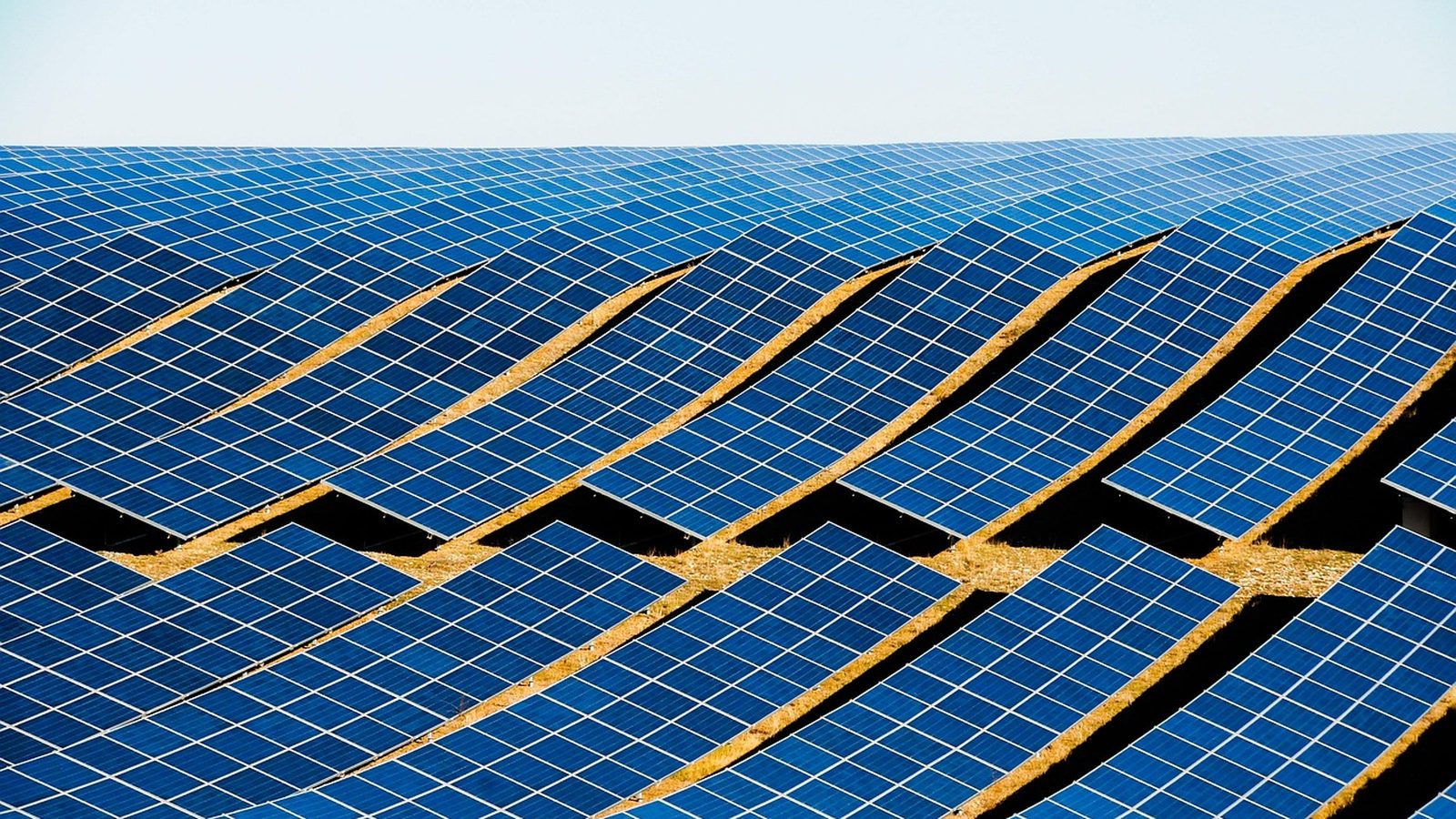
Photo: gregroose, via Pixabay
California · Hemet
Solar in Hemet: cheap permit, big sun, fewer eligible roofs
Written by the Solar Learning Lab research deskUpdated August 27, 202611 min read
Hemet gives solar shoppers two gifts and one hard filter. Gift one: the best sun of the five cities we researched this week; the independent PVGIS check in our research file models 1,736.92 kWh per year per kWp, the highest in the batch. Gift two: a documented Streamline Solar program that permits roof mounted PV of 10 kW or less on one and two family dwellings for $274.28 plus mandated fees, with no planning review and no fire department approval. The filter: 25.1 percent of Hemet's housing units are mobile homes, and standard rooftop solar mostly is not built for them.
So the real Hemet question is not whether solar pencils here. With this sun and this permit fee, it usually does. The question is whether your specific home is in the slice of the market the program was designed for, and how to work around the one genuine friction point, an intake queue the City itself says runs about two weeks by email.
Check your slice of the market first
Before the permit conversation, see whether the production and bill numbers work for your address.
Estimate Hemet solarThe $274.28 price tag, in writing
Hemet's Streamline Solar Bulletin is the cheapest confirmed solar permit among the cities in our batch: $274.28 plus state and city mandated fees for roof mounted PV of 10 kW or less on one and two family dwellings. That undercuts the Government Code 66015 ceiling of $450 by a comfortable margin. Qualifying projects skip planning review entirely and require no fire department approval. A main panel upgrade needs its own separate permit, a line worth reading twice in an older valley home.
The bulletin also hands applicants a standard plan set most cities make contractors reinvent: Form 2 is the eligibility checklist, Form 3 the standard plan for string inverter systems, Form 4 for microinverter and AC module systems, Form 5 the structural criteria. If your system fits the forms, the engineering conversation largely disappears. Above 10 kW or outside the program, the City publishes no fee figure, so get the number from the Building Division before you budget.
Digital only intake, and the two week lag the City admits to
Hemet stopped accepting paper plans on October 1, 2024, per the Building and Safety Division. Submittals are electronic, permits are managed through the Community Development Web Portal, and the permit issuance page says applications sent to bldgstaff@hemetca.gov carry roughly a two week processing delay. The alternative for small projects: over the counter checks at 445 E. Florida Avenue, where the counter runs Monday through Friday, 7:30 a.m. to 5:30 p.m. Five day weeks, a rarity among the city halls in our batch.
The practical play is obvious once stated: a streamline-eligible system that can be walked through an over the counter check bypasses the email queue entirely. Ask your installer which intake they use for Hemet jobs and how recent their last one was. Two weeks is not fatal, but it is two weeks you can have back for the price of a better-prepared package.
The CEC listing versus the bulletin on the City's own site
The CEC's August 2026 permitting tracker records Hemet as a "SolarAPP+ Platform" jurisdiction with a $60,000 CalAPP award dated April 19, 2023, and no SB 379 annual report ever submitted. The City's own pages, meanwhile, document the streamline standard plan program and the web portal, and never mention SolarAPP+. Two official records, two different pictures of the same counter.
We flag this as reported data, since the CEC certifies nothing and enforcement of Government Code 65850.52 sits outside its jurisdiction. Our read: the streamline bulletin is the process the City actually documents and stands behind, so plan around it, and let anyone promising a SolarAPP+ instant permit in Hemet show you where the City says so. Verification is one call to the Building Division's inspection line at (951) 765-2428.
Who can actually put panels up: the mobile home arithmetic
The state's 2026 housing file counts 37,449 units in Hemet, the largest stock in our batch, but the composition is unlike anywhere else we researched this week: 9,387 of those units, 25.1 percent, are mobile homes, and single detached homes are 51.5 percent. The city's history of large retirement communities and mobile home parks explains the mix. Vacancy runs 7.46 percent, also the batch high.
Standard rooftop PV, and Hemet's streamline program specifically, is built for one and two family dwellings. Mobile homes typically cannot host these systems, so a quarter of the city's housing units are effectively outside this page's subject matter. That is not a knock on Hemet solar. It is a sizing correction: the addressable market is the owner occupied detached stock, roughly 19,288 single detached units before tenure and roof condition filters, not the headline 37,449. If you own one of those detached homes, less competition for your roofer is the only consequence you will feel.
The strongest sun of the five cities we modeled
Two model runs, two tilts, one conclusion. Our page production run at 30 degrees comes in at 1,776.7 kWh per year per installed kW, and the separate 20 degree check in our research file models 1,736.92 kWh per kWp, the highest of the five assigned cities with the lowest year to year deviation, 27.35 kWh. However you tilt the panels, Hemet leads the batch.
May tops the curve at 168.8 kWh per kW, ahead of August at 167.2. Inland valley air is clearest in late spring, before the deep summer heat arrives to trim panel efficiency.
PVGIS v5.2 model run by Solar Learning Lab on August 27, 2026, NSRDB radiation database. Fixed south facing mount, 30 degree tilt, 14 percent losses, downtown Hemet coordinates. Your roof will differ. Tool at PVGIS. The consumption side keeps pace with the production side: NOAA normals put July at 95.6 F and August at 96.7 F mean daily maximums in a semi arid valley at 1,594 feet. Strong sun feeding hard-running air conditioners is the cleanest solar story in this batch.
Two baseline regions, one utility, no aggregator
Hemet is SCE bundled territory, listed in the Index of Communities across Baseline Regions 10 and 16 depending on where in the city you sit. Which region your address falls in changes your monthly baseline allocation, and with it how much energy earns the 10 cent baseline credit on the metered TOU plans, so two Hemet neighbors can see different bills on identical usage. The bundled average across SCE was 32.43 cents per kWh in EIA's 2024 data.
A geography note that trips people up: neighboring San Jacinto runs its own community choice aggregator, San Jacinto Power, but it serves that city only. Hemet has no CCA, per SCE's aggregation page. Generation rate claims that drifted across the valley line from a San Jacinto quote do not apply to a Hemet meter.
Fixed income solar math, done without hand waving
Hemet's retirement community character shows up in the data as the batch's lowest household size, 2.62 persons, and a median income of $53,623 in the ACS figures. For a household on a fixed income, two program details matter more than any brochure. First, CARE status lifts the Net Billing Tariff's ACC Plus export adder from $0.040 to $0.093 per kWh for SCE residential customers on the eligible TOU-D-PRIME rate, per Decision 22-12-056. Second, the SGIP Residential Solar and Storage Equity budget, $280 million statewide, pays $3,100 per kW for solar and $1,100 per kWh for storage to eligible low income customers, with demand response enrollment required and a one year completion window.
The baseline export framework is the same one every new California interconnection since April 15, 2023 lives under: averaged hourly export values via the Net Billing Tariff, engineered around a nine year simple payback at $3.30 per watt. What is gone: the federal 25D homeowner credit, terminated for installations completed after December 31, 2025 per CRS IN12611, with pre 2026 carryforwards intact. Our research file makes no claim about the commercial 48E credit, and a salesperson who makes one for you should be asked for their source. Still standing: the property tax new construction exclusion through January 1, 2027, and DAC-SASH for households that clear the CalEnviroScreen and CARE or FERA gates.
Crews working the San Jacinto Valley
Hemet's map results are healthier than its size suggests: a 536 review operation based in town, several mid sized local electrical and solar contractors, and one San Jacinto firm. One listing is a panel cleaning service, a reminder to read categories, not just stars. This is a market where local matters, because the streamline forms and the over the counter option reward a crew that has run this exact process recently.
Devil Dog Energy
Hemet, CA
4.8(39 Google reviews)
Global Solar Integration
San Jacinto, CA
5.0(9 Google reviews)
Nunez Electric and Solar
Hemet, CA
4.7(14 Google reviews)
Lightyear Solar
Hemet, CA
5.0(12 Google reviews)
8 Bit Solar Cleaning
Hemet, CA
5.0(6 Google reviews)
Ratings snapshot: Google Maps, August 2026, via the DataForSEO SERP feed. Zero companies paid us and none are endorsed by us.
Two Hemet specific screening questions: does my system fit the streamline bulletin's 10 kW limit and standard plans, and will you file over the counter or through the two week email queue. Contractors who answer both precisely have earned the third question, which is price.
Rough out a system before anyone sizes it for you
This tool applies the statewide average rate to the strongest production curve in our batch. It cannot tell Region 10 from Region 16, does not know your CARE status, and has never seen your roof. It will still catch an oversized quote faster than a sales meeting will.
The slider ceiling is our downtown Hemet PVGIS run, 1,776.7 kWh per kW per year, the strongest of the five cities we modeled this week. The floor is 85 percent of that, margin for orientation and dust, not a shade survey.
Cash quotes in Hemet cluster near $2.46 per watt, against a $3.50 national 2024 median (LBNL). Use your quote.
Assumptions you can change
Use the rate on your actual lease or PPA quote. There is no published statewide average we trust enough to hardcode.
Cash purchase
$8,118 after state credit
- Year 1 benefit
- $162/mo
- Payback
- 5 years
- 20 year net position
- $39,190
Hemet is SCE bundled service split across Baseline Regions 10 and 16, and the city's $274.28 streamline permit keeps soft costs low for qualifying roof mounted systems up to 10 kW. The rate used here is the statewide average, so treat savings as directional.
Solar loan
$109/mo 15 yr payment
- Year 1 net
- $54/mo
- Upfront
- $0
- 20 year net position
- $27,768
The loan input carries the state calculator's loan-over-cash spread. On a fixed income, the monthly payment schedule matters more than the headline system price, so get the payment, term, dealer fee and prepayment rules in writing before comparing anything.
Lease / PPA
$0 down you buy the power
- Year 1 net
- $45/mo
- Upfront
- $0
- 20 year net position
- $14,802
Our Hemet research file makes no statement about the commercial 48E credit and this page follows suit. For many Hemet households the sharper question is CARE eligibility, which changes export economics under the Net Billing Tariff.
Estimates, not quotes. This tool pairs the California average retail rate with our downtown Hemet PVGIS run and statewide cost inputs. It cannot see hourly export values, your baseline region or whether your home qualifies for the streamline permit. We are a solar installer and we also partner with other solar companies. See our disclosures.
We are a solar installer and we also partner with other solar companies.
Hemet, asked and answered
What does a Hemet solar permit cost?
Does streamline solar skip fire review?
How long does permit intake take?
Is Hemet a SolarAPP+ city?
Can I put solar on a mobile home in Hemet?
Why do quotes here mention CARE so often?
The source shelf
Where each number on this page came from. Pull dates: August 27, 2026.
- City of Hemet: the Streamline Solar Bulletin, its Building and Safety Division page and its permit issuance instructions
- State permitting: the CEC tracking spreadsheet plus Section 65850.52, the 66015 fee limits and the solar rights statute
- Utility records: the baseline region index, SCE's CCA participation page, its time of use tariffs and federal EIA rate data
- Export compensation: the CPUC net billing page and the full decision text
- Programs for qualifying households: SGIP equity and DAC-SASH, plus the CRS note on 25D's end and the property tax exclusion
- Housing and sun: DOF unit counts, Hemet's climate record, the PVGIS tool and our independent PVGIS verification run
Get a Hemet estimate built for your actual roof
Detached home, mobile home, or somewhere between, start from what you pay SCE and what your roof can hold.
What does your monthly electric bill look like?
Hemet average is $161 per month (EIA, 2024).