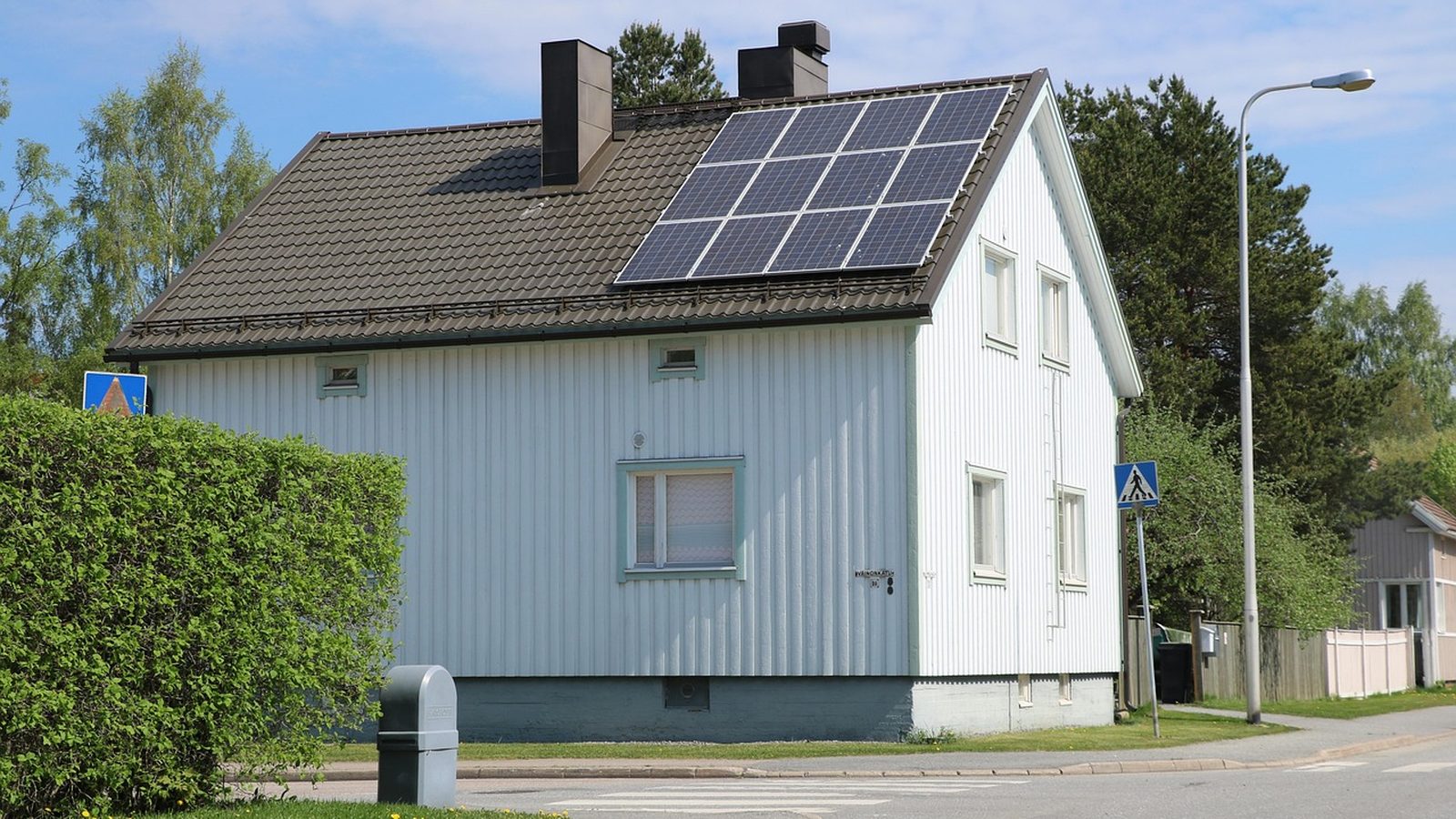
Photo: reijotelaranta, via Pixabay
California · Merced
Merced solar: the permit is instant, the utility bill is not
Written by the Solar Learning Lab research deskUpdated August 27, 202610 min read
Merced does something refreshingly rare for a mid-sized California city: it says the quiet part on its own website. The Inspection Services Division tells applicants to "Choose SolarAPP when applying for a permit" for eligible residential rooftop systems. No hunting through PDFs, no calling to ask whether the automated lane really exists. The city built it and points at it.
The economics attached to that easy permit are heavyweight. Merced proper is PG&E territory for both generation and delivery, and the utility charged residential customers an average of 39.62 cents per kWh in 2024, among the highest of any large US utility per EIA data. Expensive power plus 1,641.9 modeled kWh per kW of annual production is the strongest raw case for self consumption solar in the Central Valley. The catch, as everywhere in IOU California, is that exports pay far less than retail, so the system has to be designed around the household's own load.
Fast permit, careful sizing
Use the estimator to test a size against your bill before a proposal turns Central Valley sun into a sales pitch.
Estimate Merced solarA SolarAPP+ city that did it without the grant
California's Government Code 65850.52, added by SB 379, requires cities over 50,000 residents to run online automated permitting for home solar systems up to 38.4 kW AC. The CEC's tracking file, updated August 3, 2026, lists Merced with platform status SolarAPP+ Platform and 2025 annual report data submitted. Here is the detail we found interesting: the tracker shows Merced as Not Awarded for CalAPP grant funding. Peer cities collected 60,000 dollar state grants to stand up automated permitting. Merced built its lane without one.
Two local prerequisites still apply. Contractors must hold a current City of Merced business license before pulling permits, per the city's solar permit page, and submittals on or after January 1, 2026 must comply with the 2025 California Building Standards Code editions per the building permits page. On cost, no Merced specific solar fee was published on any page we fetched, but Government Code 66015 caps residential PV permit fees statewide at 450 dollars, plus 15 dollars for each kW beyond 15, unless a city adopts findings to exceed it. HOA pushback, if any, runs into Civil Code 714, which voids covenants that effectively prohibit solar.
The stakes: nearly 40 cents per avoided kWh
PG&E is the whole utility story inside city limits. PG&E's service area list places the City of Merced in its territory under Merced County, and its list of operating CCAs includes no program serving the city, so PG&E supplies generation as well as delivery. There is no community choice layer to parse here, which makes Merced simpler than half the PG&E cities we cover.
New interconnections fall under the CPUC Net Billing Tariff, D.22-12-056, which applies to applications on or after April 15, 2023: imports billed at retail, exports credited at Avoided Cost Calculator values that vary by hour and month, and a nine year lock on export prices for early adopters, per the CPUC's NBT page. Translated for a Merced kitchen table: the 39.62 cent rate is what you avoid paying when your panels feed your own appliances, and it is dramatically more than any export credit. Run the dishwasher at noon. Consider a battery. Do not buy panels sized for a fantasy of selling power back.
The irrigation district next door is not your utility
One source of persistent confusion deserves a clean answer. Merced Irrigation District serves Livingston, Atwater, Winton and portions of the greater Merced area, about 8,500 electric customers in the Merced area per the county economic development office. It is not the default utility for the City of Merced, and any solar pitch that quotes MID terms to a city address is quoting the wrong company.
Why the confusion persists: MID's deal is better. Its solar program still offers NEM 2.0 style net metering with monthly netting, an Excess Generation Credit at the retail rate, an annual true up and a 600 dollar residential application fee, against a 24.25 cent average residential price per EIA 2024 data. A homeowner in Atwater keeps retail rate exports while a PG&E neighbor in Merced proper gets hourly avoided cost values. Same county, radically different export math. If your address is genuinely in MID territory, read our coverage through MID's own documents. If you are in the city, the rest of this page is your reality.
Tule fog winters, blazing summers, 1,642 kWh per kW
The production model tells a classic Central Valley story. August peaks at 171.4 kWh per kW; January delivers just 83.7. That low winter tail is the tule fog season, a documented feature of Merced's cold semi arid climate per the city's Wikipedia entry, which lists about 13 inches of annual rainfall concentrated in mild wet winters.
August models at 171.4 kWh per kW against a foggy January of 83.7. Under hourly export pricing, the summer surplus is worth less than a flat annual average implies, so match size to load.
PVGIS v5.2 model run by Solar Learning Lab on August 27, 2026, NSRDB radiation database. Fixed south facing mount, 30 degree tilt, 14 percent losses, downtown Merced coordinates. Your roof will differ. Details at the PVGIS tool. Who can use this production? The honest denominator is smaller than the population suggests: Merced is a renter majority city, 44.4 percent owner occupied per ACS 2023 data, with rapid growth around UC Merced. The state housing file counts 21,177 single family detached units, and that, not the 27,482 total households, is the realistic rooftop market.
The equity programs are not a footnote here
Merced's median household income is 59,938 dollars with 23.0 percent of residents below the poverty line, per the 2023 ACS figures on the city's page. That profile makes two programs central rather than peripheral. DAC-SASH, administered by GRID Alternatives through 2030, provides solar for income qualified homeowners who are PG&E, SCE or SDG&E billing customers; Merced homeowners on PG&E can qualify if census tract and income line up, per the program page. And SGIP carved out a 280 million dollar residential equity budget for solar paired with storage, taking applications from income qualified households across the state since June 2, 2025.
The broad-based subsidies are thinner. The active solar energy system exclusion keeps qualifying installations out of property assessments through the 2025 to 2026 fiscal year, sunsetting January 1, 2027. The federal 25D homeowner credit ended for expenditures after calendar year 2025 under P.L. 119-21, per the CRS explainer, and California has never offered a state solar income tax credit. In 2026 the pitch that survives scrutiny is avoided retail cost plus targeted equity money, not tax season magic.
Read this bench carefully before shortlisting
Merced's map results need sorting: several listed companies are maintenance and cleaning outfits rather than installers, and two of the six list Atwater addresses. That is not a criticism, it is a reading instruction. Confirm scope before requesting bids, and expect to widen the search toward regional Central Valley installers for competitive pricing. A CSLB license check and a SolarAPP+ track record question will thin the list fast.
Senga Energy Central Valley
Merced, CA
5.0(1 Google reviews)
APG Solar
City of Atwater, CA
5.0(76 Google reviews)
Watts Up Solar Cleaning
Merced, CA
5.0(5 Google reviews)
Central Valley solar maintenance
Merced, CA
5.0(7 Google reviews)
Extreme Solar Solutions
City of Atwater, CA
3.7(9 Google reviews)
SmartEnergy Solar Cleaning
Merced, CA
4.3(6 Google reviews)
Ratings snapshot: Google Maps, August 2026, via the DataForSEO SERP feed. Zero companies paid us and none are endorsed by us.
A rough cut, using state inputs and Merced sun
This estimator combines the California average retail rate with our downtown Merced production run. Actual PG&E bills at 39.62 cents average will make good self consumption look better than this tool shows, and heavy exporting will look worse. It is a screening pass, not a bill simulation.
The slider tops out at our Merced PVGIS run. The lower bound is 85 percent of that output, a sensitivity check for a less favorable roof, not a shade study.
Cash quotes in Merced cluster near $2.46 per watt, against a $3.50 national 2024 median (LBNL). Use your quote.
Assumptions you can change
Use the rate on your actual lease or PPA quote. There is no published statewide average we trust enough to hardcode.
Cash purchase
$8,610 after state credit
- Year 1 benefit
- $159/mo
- Payback
- 5 years
- 20 year net position
- $37,759
Merced proper is PG&E for generation and delivery, with no CCA on PG&E's operating list. Exports follow the Net Billing Tariff, so the money is in offsetting your own usage, not in selling power back.
Solar loan
$115/mo 15 yr payment
- Year 1 net
- $44/mo
- Upfront
- $0
- 20 year net position
- $25,644
The loan figure carries California's documented loan-over-cash spread. In Merced, a fair quote separates the cash price, the dealer fee and the financed total, and a business licensed contractor should not flinch at the request.
Lease / PPA
$0 down you buy the power
- Year 1 net
- $44/mo
- Upfront
- $0
- 20 year net position
- $14,508
A lease or PPA provider may claim the federal 48E business credit, per the CRS description of the 2025 law. The homeowner credit is gone, so a third party rate must stand against your actual PG&E bill, not last year's assumptions.
Estimates, not quotes. This tool uses the California average retail rate, our downtown Merced PVGIS run and California market cost inputs. It cannot reproduce PG&E hourly export values, fixed charges or roof-specific shading. We are a solar installer and we also partner with other solar companies. See our disclosures.
We are a solar installer and we also partner with other solar companies.
Merced questions we hear
Is SolarAPP+ really live in Merced?
Which utility serves a City of Merced address?
What is the difference between PG&E and MID solar terms?
What should the Merced permit cost?
Do contractors need anything beyond a CSLB license?
Is there help for lower income Merced homeowners?
Source notebook
Everything above ties back to these records, reviewed August 27, 2026.
- City of Merced solar permits page and building permits page
- CEC SB 379 tracking file, Government Code 65850.52, Government Code 66015, and Civil Code 714
- PG&E service area, PG&E CCA list, and CPUC Net Billing Tariff
- County utility provider guide and Merced Irrigation District solar program
- DAC-SASH, SGIP, BOE property tax exclusion, and CRS federal credit note
- EIA 2024 sales data, DOF E-5 housing estimates, PVGIS, Census ACS, and city background
Start a Merced estimate from your actual bill
PG&E prices reward getting the size right. Share the bill and the roof basics and we will start from there.
What does your monthly electric bill look like?
Merced average is $167 per month (EIA, 2024).