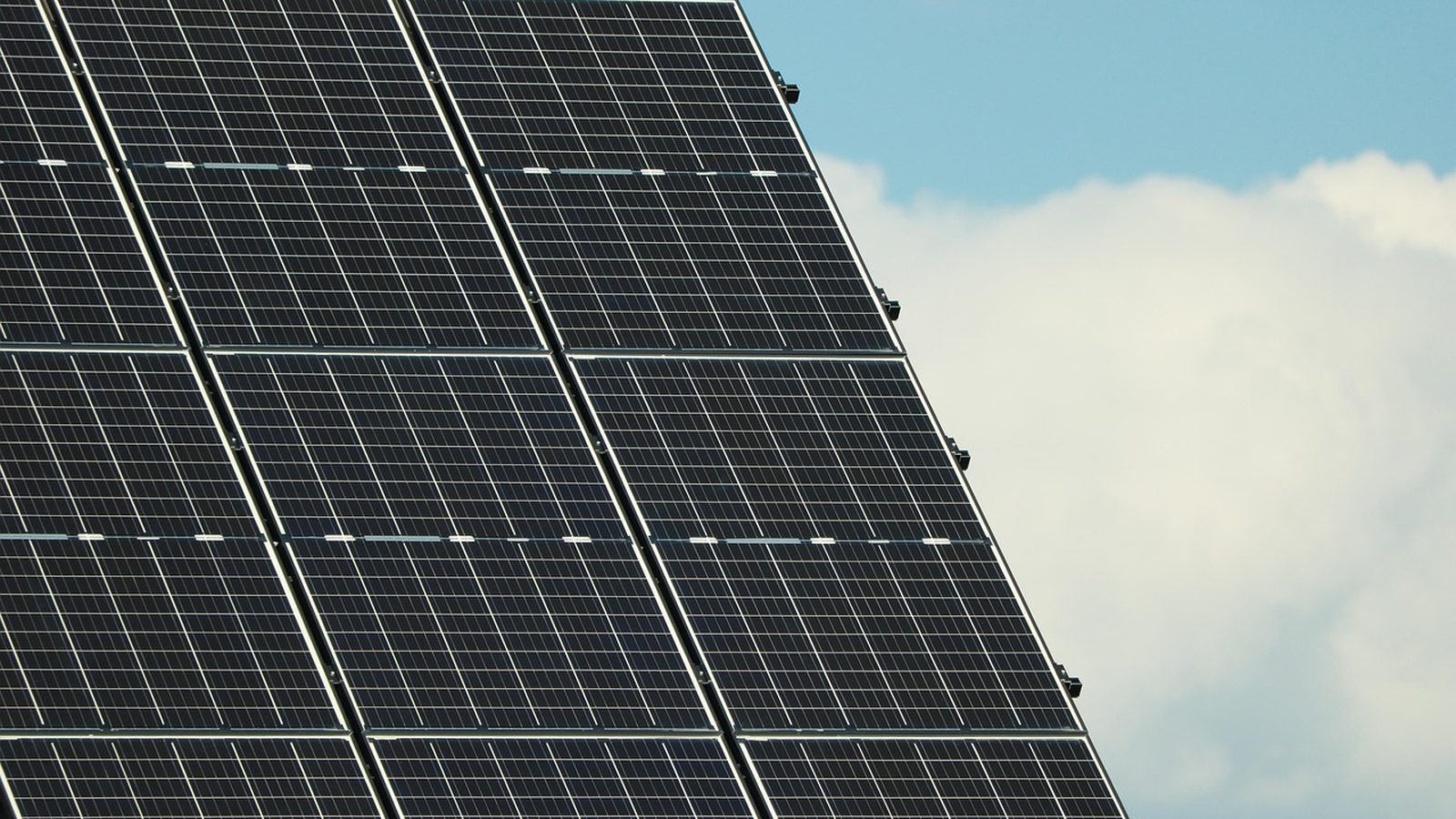
Photo: Caniceus, via Pixabay
California · Mountain View
Solar in Mountain View: the permit is the easy part
Written by the Solar Learning Lab research deskUpdated August 29, 202610 min read
Mountain View has quietly assembled one of the better solar setups in the Bay Area, and almost nobody frames it this way. On the permitting side, the City runs SolarAPP+ for qualifying single family systems, which verifies code compliance and issues the building permit automatically, no traditional plan set required. On the money side, Silicon Valley Clean Energy handles the generation half of the bill and runs crediting for its net metering customers that values surplus at the full retail rate in effect when it was generated, with balances over $100 cashed out annually. Both halves are documented by the institutions themselves, which is rarer than it should be.
The catch is that the two halves follow different rulebooks. The permit belongs to the City. The bill belongs to PG&E and SVCE jointly, and anyone interconnecting today does so under the state's Net Billing Tariff on the PG&E side. Sorting out which rules apply to which dollars is most of the work of evaluating a Mountain View quote, so that is what this page does.
Size it before someone sizes it for you
The estimator gives you a defensible production and cost range to hold against whatever lands in your inbox.
Try the Mountain View numbersSolarAPP+ here means no plans, not no process
For roof mounted or building integrated PV on a single family home, with or without a battery and with or without a service panel upgrade, a registered contractor submits through SolarAPP+, the platform runs its compliance checks instantly, and the result is a genuine City of Mountain View building permit. The City's solar permits page spells out that scope. Multifamily, commercial and anything SolarAPP+ cannot process route through the ePermitsMV portal with plans and fees the old fashioned way.
What survives from the traditional process is the field check. A City building inspector still verifies the installation on site, and the contractor cannot schedule that visit sooner than one business day after permit approval. So the honest pitch is same day permit, not same day project. The gap between those two claims is where sloppy sales timelines live.
The paper trail behind this is solid. The CEC's permitting program data lists Mountain View on the SolarAPP+ platform with a 2025 annual report on file and a $60,000 CalAPP grant awarded March 28, 2023, all under the Government Code 65850.52 mandate, whose text requires real time automated permitting for residential systems up to 38.4 kW AC. Fee amounts are the one blank: the City says permit fees have been reduced for residential solar and offers over the counter One Stop plan check for one and two family dwellings, but publishes no dollar figure, so the working ceiling is the $450 cap for systems up to 15 kW in Government Code 66015.
One bill, two companies, and the split that confuses everyone
Mountain View is a founding member of Silicon Valley Clean Energy, and the City states SVCE is the official electricity provider for residents, with service having rolled out in two phases in April and July of 2017, per the City's renewable energy page. PG&E still owns the poles and wires, maintains the lines, provides customer service and sends the single combined bill, with the SVCE and PG&E portions shown separately.
On the generation side, new customers default into GreenStart, which SVCE prices below PG&E generation and expects to be approximately 50 percent renewable and carbon free in 2025, with GreenPrime available as a 100 percent renewable upgrade for a few dollars more per month under a 200 GWh enrollment cap, per SVCE's plans page. Opting out to full PG&E bundled service remains possible. SVCE also reports $203 million in on bill savings delivered since 2017, a number worth knowing mostly because it signals the agency prices to undercut, not to match.
Why does this matter for solar? Because every export credit conversation in this city has to name which company's ledger the credit sits on. PG&E handles the delivery side under state tariff rules. SVCE keeps its own credit balance on the generation side. Confusing the two is the single most common error in Mountain View solar quotes we see.
The annual check is real, and so is the tariff underneath it
Start with SVCE, because its terms are the standout. For its net metering customers, SVCE values surplus solar at the full retail rate in effect when the energy was generated, automatically cashes out credit balances above $100 once a year, and caps payments at $5,000 per customer per year. In its largest payout year, more than 2,700 SVCE solar customers shared $791,000 based on April balances, with checks going out through May. SVCE states plainly that it pays higher rates for surplus than PG&E does. All of that comes from SVCE's own payout announcement and its cash out explainer.
Now the tariff underneath. Anyone whose interconnection application went in on or after April 15, 2023 sits on the Net Billing Tariff, which PG&E administers as the Solar Billing Plan. That framework enrolls residential solar customers automatically in the Electric Home time of use rate, reconciles charges and export credits monthly, settles at an annual true up, and never lets credits offset non-bypassable charges. PG&E's own guidance says solar customers can expect to save up to 40 percent on electric charges and flags 4 to 9 p.m. as the expensive hours, per its Solar Billing Plan page. SVCE's bill materials reference a separate SBP credit balance for this era of customers, but the fetched pages publish no SBP export rate, so nobody should quote you one as if it were SVCE policy.
The operator read: the full retail surplus deal describes SVCE's NEM program, and the annual cash out mechanism is genuine, documented and modest for most households. A 2026 interconnection lives under Net Billing rules on the delivery side either way. Design for self consumption in the 4 to 9 p.m. window first and treat any SVCE generation side credit as upside, not as the foundation of the payback story.
Peninsula sunshine, measured rather than assumed
Our model puts a downtown Mountain View roof at 1,681.0 kWh per installed kW per year. July leads at 176.7 kWh per kW and December trails at 90.5, a wider seasonal spread than Southern California cities show because winter here brings genuine cloud cover off the Bay.
July models at 176.7 kWh per kW. Long clear evenings also mean more production spilling into the 4 to 9 p.m. window that PG&E prices highest.
PVGIS v5.2 model run by Solar Learning Lab on August 29, 2026, NSRDB radiation database. Fixed south facing mount, 30 degree tilt, 14 percent losses, downtown Mountain View coordinates. Your roof will differ. The model is documented at PVGIS. It compares locations. It does not certify a roof. A quote should reconcile this figure against the actual plane directions, tree lines and any planned electrification loads, and the household with 38.2 percent electric heat exposure typical of this area per Census data has more winter load to think about than the annual average suggests.
A wealthy city with surprisingly few eligible roofs
Here is the tension a market analysis would flag immediately. Mountain View's median household income runs near $179,917 in recent Census estimates, yet the state housing tables count just 10,977 single detached homes among 41,661 total units, about 26.3 percent, with 50.7 percent of the stock in buildings of five or more units. Layer in the tenure picture, 58.3 percent renter occupied at the 2010 census per the city background, and the pool of households that can actually sign a rooftop contract is a fraction of the population.
For those households, though, the economics stack favorably: PG&E's 2024 bundled average of about 39.6 cents per kWh in EIA data is among the highest retail baselines in the country, the permit is automated, and the CCA adds a documented generation side benefit. The City even points residents to Google's Project Sunroof for a first pass roof screen on its renewable energy page, a sensible free step before inviting bids.
The statutes worth thirty seconds each
Property assessment: qualifying active solar systems get a new construction exclusion through the current fiscal year, sunsetting January 1, 2027, per the BOE. HOA and CC&R interference: Civil Code 714 voids provisions that effectively prohibit solar. Storage funding: the CPUC's SGIP Residential Solar and Storage Equity budget stands at $280 million with reservations open since June 2, 2025 for income qualifying households, and PG&E territory is covered, per the program page.
Federal credit: handle with precision. The Congressional Research Service describes a credit that applied to qualifying expenditures made before the end of 2025, nonrefundable, with indefinite carryforward of unused amounts. A system bought in 2026 falls outside that expenditure window. Quotes that wave a 30 percent federal discount at a purchase signed this year are describing last year's law.
Bid the project like the process is already solved
Because the permit is automated, permitting speed is a commodity here and should not be a differentiator any bidder brags about. Push the competition onto ground that still varies: production modeling honesty, the export assumption used for the Solar Billing Plan era, battery sizing logic against the 4 to 9 p.m. window, and who handles the SVCE versus PG&E paperwork split.


Highlight Solar
San Jose, CA
4.8(60 Google reviews)

California Glass and Solar
Campbell, CA
5.0(28 Google reviews)


Evolution Solar inc
Santa Clara, CA
4.6(22 Google reviews)
Ratings snapshot: Google Maps, August 2026, via the DataForSEO SERP feed. Zero companies paid us and none are endorsed by us.
One useful probe: ask each company what happens if the SolarAPP+ submission bounces because of a nonstandard roof or electrical condition. The fallback is an ePermitsMV filing with plans, and a bidder who has a clean answer for that path has done real work in this city.
Napkin math with a real production model behind it
The tool below deliberately ignores the PG&E and SVCE split. It applies a blended state rate to a Mountain View specific production run so you can compare system sizes and payment structures on equal footing. The true bill outcome depends on time of use behavior and export treatment no simple calculator should pretend to know.
The slider tops out at our downtown Mountain View PVGIS figure and bottoms out at 85 percent of it. Marine layer mornings near the Bay are already baked into the radiation data, but tree cover on an individual lot is not.
Cash quotes in Mountain View cluster near $2.46 per watt, against a $3.50 national 2024 median (LBNL). Use your quote.
Assumptions you can change
Use the rate on your actual lease or PPA quote. There is no published statewide average we trust enough to hardcode.
Cash purchase
$8,610 after state credit
- Year 1 benefit
- $163/mo
- Payback
- 5 years
- 20 year net position
- $38,863
A Mountain View bill has two halves: PG&E delivery and Silicon Valley Clean Energy generation. This screen uses a single blended state rate, so it cannot see the split, the Solar Billing Plan export credits or SVCE's separate generation-side crediting. Use it to size the question, not to settle it.
Solar loan
$115/mo 15 yr payment
- Year 1 net
- $48/mo
- Upfront
- $0
- 20 year net position
- $26,748
The loan figures reflect the statewide spread between financed and cash pricing, nothing Mountain View specific. Any lender quote worth trusting shows the dealer fee as its own line instead of burying it in a per watt price.
Lease / PPA
$0 down you buy the power
- Year 1 net
- $45/mo
- Upfront
- $0
- 20 year net position
- $14,854
If a third party owns the panels on your Mountain View roof, your real comparison is their contract rate against the PG&E plus SVCE bill you would otherwise pay. Ask who keeps the SVCE credit balance under that arrangement, and get the answer in the contract.
Estimates, not quotes. This tool pairs the California average retail rate with a Mountain View PVGIS run. It does not simulate PG&E time of use pricing, non-bypassable charges, annual true-up or SVCE cash-out rules. We are a solar installer and we also partner with other solar companies. See our disclosures.
We are a solar installer and we also partner with other solar companies.
Questions Mountain View homeowners actually ask
Does Mountain View really issue solar permits instantly?
Can a battery or panel upgrade go through the automated path?
Who pays me for exported solar, PG&E or SVCE?
What rate plan comes with solar here?
How much is the permit fee?
Is there still a federal tax credit for a 2026 purchase?
Reference shelf for Mountain View
The documents behind this page, each reviewed August 29, 2026.
- City of Mountain View solar permits, building permits, ePermitsMV account setup and renewable energy page
- SVCE plans, energy choices, rooftop solar, payout announcement and cash out explainer
- PG&E Solar Billing Plan and CPUC Net Billing Tariff
- CEC permitting program data, Government Code 65850.52 and Government Code 66015
- CPUC SGIP, BOE solar exclusion, Civil Code 714 and CRS IN12611
- EIA Table 6, DOF E-5 estimates, Mountain View background and PVGIS
Start a Mountain View estimate with your own numbers
Your bill, your roof, your payment preference. Use the result to make bidders explain their assumptions instead of reciting them.
What does your monthly electric bill look like?
Mountain View average is $161 per month (EIA, 2024).