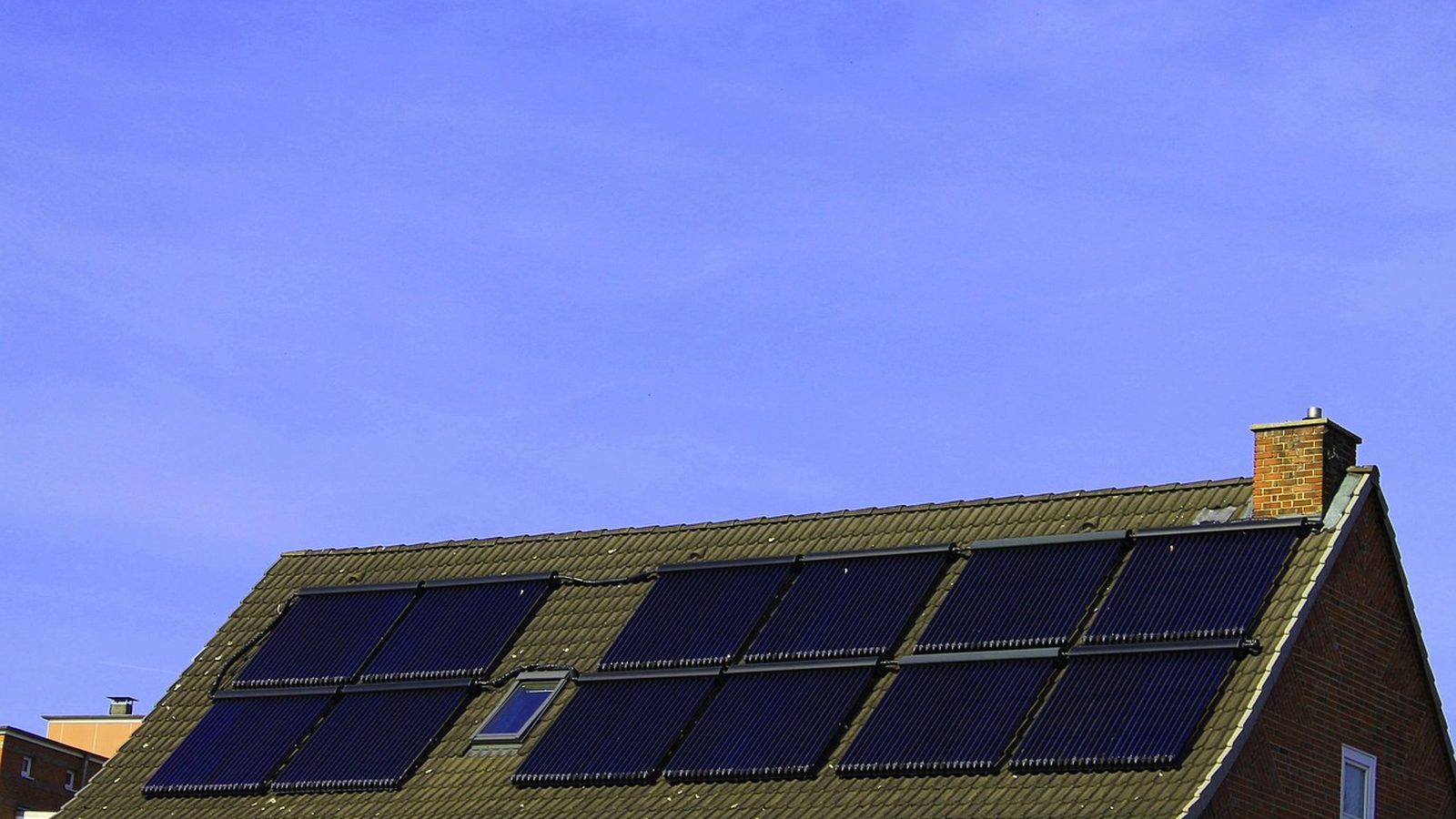
Photo: kalhh, via Pixabay
California · Oxnard
Oxnard solar in 2026
Written by the Solar Learning Lab research deskUpdated August 22, 202612 min read
Oxnard wins the permit-fee comparison and loses the simple-story comparison. The single-family PV electrical permit line is $96.05, a remarkably low published number. Yet the city's fast SolarAPP+ route is only useful to a contractor who has cleared three administrative gates: a California State Licensing Board license, an Oxnard Business Tax Certificate, and a Click2Gov account tied to the exact phone number held by the city's Licensing Division. The bottleneck is not the fee. It is who is ready to use the system. Sources: fees; solarApp
$96.05
Single-family PV electrical permit fee
100%
Clean Power Alliance Green Power default
1,624.9 kWh
PVGIS annual output per kW, before your roof changes it
See what this address may pencil out to
A first pass using the local production model and tariff input. A serious proposal still has to confront the permit path and how your household uses power.
Get my local estimateThe $96.05 line item is real. So is the contractor bureaucracy.
Oxnard's B100 development fee schedule lists $96.05 for an electrical permit for a photovoltaic system on a single-family residential structure. It also lists a $45 permit-issuance fee. A valuation-based building permit component can apply, excluding the cost of the PV electrical components, and online residential submittals add $2 per page at issuance. So the $96.05 figure is the electrical line, not permission to quote an all-in city closing cost without looking at the scope. Sources: fees; express
For a contractor-submitted SolarAPP+ project, the city tells the applicant to get SolarAPP+ approval first, then use Click2Gov to enter the approval ID, system kilowatts, and panel count, upload the approval documents, pay online, print the permit, and request inspection. The city says this path provides real-time permit issuance. That is excellent operations when the account already works. It is not a homeowner DIY process dressed up as an app. Sources: solarApp; click2gov
Here is the limiting rule: the contractor must be licensed with the California State Licensing Board, have a City of Oxnard Business Tax Certificate, and have a Click2Gov account tied to the same phone number on file with the city Licensing Division. That last clause will sound petty until a job is ready and an account fails validation. It is a structural barrier for a regional company that has not done its local registration work. Ask the installer to confirm all three items in writing. Sources: solarApp
Clean Power Alliance changes generation, not the SCE wires
Oxnard is served by SCE for delivery and is a Clean Power Alliance member community. CPA says Oxnard has been served since 2019 and its preferred energy option is 100 percent Green Power, CPA's highest tier. That is a real default-generation fact, not a claim that every kWh on the bill comes directly from a local panel. Your solar design still needs to respond to the SCE delivery schedule and the net-billing interconnection rules. Sources: cpa; ccaStatus
SCE's Schedule D tiered plan lists 30 cents per kWh up to the 384-kWh baseline and 40 cents through 1,535 kWh, plus a 79-cent daily base-services charge. The published system-average residential rate is 34.5 cents per kWh before the Climate Credit. Oxnard's Green Power default makes the environmental choice simpler at the account level. It does not make a broad solar array automatically economic if much of its output goes out during low-value hours. Sources: sceD; sceRateAdvisory
New interconnection falls under the CPUC Net Billing Tariff. SCE requires TOU-D-PRIME for those customers. For an SCE customer who applies before the end of 2027, the CPUC describes a nine-year export adder, except for code-required systems. SCE's stated 2026 summer export credit is 6 cents from 6 a.m. to 4 p.m. and 21 cents from 4 p.m. to 9 p.m. The rate gap is a sizing problem in disguise. Sources: cpucNbt; sceSolarPlan
| Energy source | Type | Average price | What that means |
|---|---|---|---|
| SCE Schedule D | Tier 1 | 30¢ per kWh | 0 to 384 kWh, plus a 79-cent daily base-services charge. |
| Clean Power Alliance | Oxnard default product | 100% Green Power | CPA supplies generation while SCE delivers power. |
| Rooftop solar, owned | Illustrative lifetime output | ~6.1¢ per kWh | Our calculation: California's $2.46 per watt market figure spread across 25 years of this city's PVGIS production. It excludes financing, maintenance, and hourly export-credit effects. |
Market price: EnergySage California. Local tariff sources appear with the analysis above.
Mild coastal weather changes the production and load story
The model yields 1,624.9 kWh per kW annually, from a February high of 122.2 to an April high of 155.1 before the summer marine-layer softness. August is 145.4 and December is 113.2. The local climate is not an air-conditioning engine: the Oxnard Airport normal has just 323.6 cooling degree days and 1,691.5 heating degree days. That makes high SCE prices and the household's electrification plan more relevant than a generic "beat the AC bill" pitch. Sources: noaa
April is the model peak at 155.1 kWh per kW. The coastal curve is not an inland summer spike.
Method: PVGIS v5.2. PVGIS v5.2 model run by Solar Learning Lab on August 22, 2026, NSRDB radiation database. Fixed south facing mount, 30 degree tilt, 14 percent losses, downtown Oxnard coordinates. Your roof will differ.
Do not let a low permit fee turn into an imaginary rebate
The Oxnard pages reviewed do not publish a city solar rebate or fee waiver. The published $96.05 single-family electrical permit fee is already the concrete local advantage. It is tempting to turn that into a story about cheap solar overall. That would be sloppy. The fee schedule also contains issuance, valuation-based, plan-review, and online-submittal provisions. Hardware, roof complexity, and contractor readiness will outweigh a small municipal line item on a full proposal. Sources: fees; express
There is no verified CPA residential solar or battery rebate in the material reviewed, even though Oxnard's default product is 100 percent Green Power. In SCE territory, SGIP has program rules, but SCE says ratepayer budgets are closed to new applicants and the state-funded RSSE budget is exhausted and on a waitlist. A buyer can ask about eligibility, but should not subtract an incentive from a quote until the actual program administrator confirms a reservation path. Sources: cpa; sgip
The federal homeowner 25D credit ended December 31, 2025. A lease or PPA provider may claim 48E. That does not make a PPA good or bad by default. It means the homeowner needs the provider rate, escalator, term, transfer rules, and production guarantee on paper. In Oxnard, also ask which entity is registered to pull the permit and whether it has the necessary city account setup. Sources: federal; solarApp
Oxnard is a mild-load, smaller-roof-market case
State estimates count 58,781 Oxnard housing units, including 31,315 detached units, or roughly 53 percent. That is the smallest total housing stock among the five cities in this tranche. The ACS profile used on this page is somewhat more detached-house-heavy at 65.8 percent and puts owner occupancy at 53.9 percent. Neither figure changes the operational point: this is not an endless-address market, so a three-company list needs to be used honestly rather than treated as a deep local bench. Sources: dofHousing
The weather supports that restraint. Oxnard Ventura County Airport's 1991-2020 normal reports an annual mean of 61.2 degrees, 12.93 inches of precipitation, 323.6 cooling degree days, and 1,691.5 heating degree days. This is the lowest cooling load and highest heating load in the batch. If a proposal leans entirely on air-conditioning savings, pause. The stronger questions are whether the household is electrifying heat, charging an EV, and using enough energy in the right hours. Sources: noaa
Oxnard's Climate Action and Adaptation Plan was approved December 7, 2022 and targets a 40 percent greenhouse-gas reduction below 1990 levels by 2030. The plan context supports a serious electrification conversation. It does not provide a solar-specific local incentive on the pages reviewed. The city has adopted the 2022 building code, but a current code title should never be used as a substitute for reading the exact permit lane that applies to an existing home. Sources: code
local decision tests
Five Oxnard checks before an installer wins the job
Start with the license-and-account question, then write the answer down. The SolarAPP+ page is precise: a CSLB license, an Oxnard Business Tax Certificate, and a Click2Gov account tied to the phone number on file are all part of the eligible contractor path. A company can be an excellent solar contractor and still not be ready for this particular city portal. That is not a reason to reject it. It is a reason not to schedule around a permit that has not been proven workable. Sources: solarApp
Ask which fee numbers are carried in the bid. The city publishes $96.05 for the single-family PV electrical permit and $45 for permit issuance. It also says the building fee is calculated from construction valuation excluding PV electrical components. A quote that says "Oxnard permit: $96" may be shorthand, or it may be an omission. Ask for a line-by-line municipal allowance and a reconciliation if the permit closes above it. Sources: fees
Treat SolarAPP+ as a workflow, not an approval badge. The contractor obtains approval first, then supplies the approval ID, system kW, panel count, and documents through Click2Gov. The permit carries that information. In a mature operation, that reduces re-entry and gets a real-time permit. In a rushed operation, a mismatch between the design, account, or uploaded approval can turn portal convenience into delay. Request the workflow owner's name. Sources: solarApp
Size against the house's use, not the coast's sunshine stereotype. Oxnard has a mild cooling normal and a comparatively high heating-degree-day count for this group. If future space or water heating will become electric, say so before design. If the home mostly uses gas and has little daytime load, say that too. Both facts can push the right array size in different directions, and neither is visible in a generic utility-bill screenshot. Sources: noaa
Use CPA's 100 percent Green Power default for what it is: a generation choice already made at the account level. It does not eliminate the financial question of buying a private asset. Solar still has to beat the relevant SCE billing and export mechanics for the household. The strongest quote separates generation, delivery, self-consumption, and export instead of presenting green power as a duplicate benefit that gets counted twice. Sources: cpa; cpucNbt
project-file detail
Details that belong in a real Oxnard solar comparison
Oxnard's online route carries a timing condition that can get lost in the rush to issue a permit. The city says inspections are requested through Click2Gov and must be requested within 365 days of permit issuance. That is generous enough for a normal residential job, but not infinite. A buyer combining reroofing, electrical work, or financing should ask who tracks that date. A permit issued in real time still needs a completed installation, a requested inspection, and the final utility step before it becomes useful solar production. Sources: solarApp
The non-SolarAPP+ route tells a different operational story. Oxnard's Residential Express Permits page says solar submittals are subject to plan check, permits only allow three attached documents, and online submittal adds $2 per page. It asks applicants to allow up to three working days while stating a same-business-day effort. This is why an installer should not casually promise the fast lane before it has determined that SolarAPP+ applies. The city has two workflows, and the correct one changes the documents and the calendar. Sources: express
A Business Tax Certificate is not a solar-quality signal. It is a city registration requirement for the Click2Gov SolarAPP+ lane. The distinction is useful because it prevents two opposite errors: dismissing a good contractor because it needs time to establish a local registration, or assuming a contractor is technically superior because it happens to have an active city account. The homeowner should evaluate engineering, equipment, warranty, and contract quality separately from the administrative ability to pull this specific permit. Sources: solarApp
Oxnard's fee sheet has a plan-review number worth recognizing if the project leaves the easy path. Building plan review is 85 percent of the building permit fee and covers the first three submittals. The schedule then lists hourly plan review at $212 with a one-half-hour minimum and quarter-hour revisions. None of that means every solar project pays every line. It does mean a contractor should explain why a particular design expects an automated approval, an ordinary plan check, or a revision allowance rather than burying the risk in an unlabelled contingency. Sources: fees
The city adopted the 2022 Oxnard Building Code through Ordinance 3021. That is a useful confirmation of the current construction-code basis, not an invitation to tell a homeowner that code adoption alone predicts a permit outcome. SolarAPP+ review, Click2Gov access, the roof design, and the electrical scope still control the actual path. When a sales presentation relies heavily on a code-year logo, bring the conversation back to the documents that will be uploaded and the inspection that will be requested. Sources: code
Clean Power Alliance's Oxnard default is unusual enough to report carefully. The city's preferred option is 100 percent Green Power, and CPA says Oxnard has been served since 2019. But a solar proposal should still identify the generation supplier and delivery utility separately, because SCE delivery rates and interconnection rules remain in the analysis. If a household opts out or changes a CPA product, that is a generation decision. It is not a reason to rebuild the physical PV production estimate from scratch. Sources: cpa; ccaStatus
SCE's 2026 rate advisory gives a system-average residential figure of 34.5 cents per kWh before the Climate Credit and shows a typical 500-kWh bill near $187.40 after the stated June 1 change. A utility average is not an Oxnard household's marginal savings rate. It does make a better calculator input than a national average, provided the user remembers the base charge, tiering, time-of-use choices, and export credits. The proposal must go one level deeper and use the actual account history. Sources: sceRateAdvisory; sceD
The coastal weather record makes a particular claim easy to reject. With 323.6 cooling degree days in the Oxnard Airport normal, a pitch that assumes an inland-style summer air-conditioning load needs evidence from the bill, not faith. Conversely, the 1,691.5 heating degree days mean an electrification plan can change consumption in a way that an old gas-heated usage history misses. The right load forecast is personal: documented equipment today, planned equipment tomorrow, and a clear statement of which changes are included. Sources: noaa
The CEC's 2022 standards require solar PV on newly constructed single-family homes under their stated prescriptive requirements, while additions and alterations are not covered by the general rule in the research file. That matters because code-required solar does not receive the SCE export adder. A new-home buyer should ask whether the installed system was code required, whether it is already interconnected, and what happens if more capacity or storage is added later. Existing-home rules should not be guessed from new-construction materials. Sources: cecCode; cpucNbt
Civil Code 714 protects against effective solar bans while preserving the possibility of reasonable association restrictions. On an Oxnard address with an HOA, a contractor's promise that "California law says they cannot stop you" is not a complete operational answer. The better question is what the association requires for roof work, visibility, conduit routing, and architectural review, then whether any condition materially raises cost or reduces efficiency. Document the proposal before asking for approval, because the practical dispute is usually about a design, not solar in the abstract. Sources: hoa
A three-company list is useful only if you work it harder
The local results list is thin by design: three companies met the 20-plus-review screen already loaded for this city. That is not evidence that only three companies can install in Oxnard. It is a reason to put administrative readiness on the call script. Ask every candidate whether its Business Tax Certificate is active and whether its Click2Gov account has already been validated against the phone number on file. You should not become the test case for their portal setup.
Ratings snapshot: Google Maps, August 2026, via the DataForSEO SERP feed. Zero companies paid us and none are endorsed by us.


Voltaico
Ventura, CA
4.8(70 Google reviews)

Sespe Power Solutions
Ventura, CA
4.9(27 Google reviews)
Ratings snapshot: Google Maps, August 2026, via the DataForSEO SERP feed. Zero companies paid us and none are endorsed by us. Verify licensing, insurance, scope, and contract terms before signing.
Run a screening estimate, then pressure-test it
This calculator uses the SCE system-average residential rate and the Oxnard PVGIS output. It does not know your CPA generation selection, interval consumption, exact export credits, or whether a contractor can actually use the SolarAPP+ and Click2Gov lane. Use it to size the questions, not to accept a savings promise.
The top of the slider is the Oxnard PVGIS result. The lower bound reduces it by 15 percent, which is a more honest first-pass range for a roof that is not a clear south-facing array.
Cash quotes in Oxnard cluster near $2.46 per watt, against a $3.50 national 2024 median (LBNL). Use your quote.
Assumptions you can change
Use the rate on your actual lease or PPA quote. There is no published statewide average we trust enough to hardcode.
Cash purchase
$8,364 after state credit
- Year 1 benefit
- $159/mo
- Payback
- 5 years
- 20 year net position
- $37,889
Cash pricing starts with the California market input, but Oxnard's real due-diligence item is permit access. Ask whether the company already has its California license, Oxnard Business Tax Certificate, and a Click2Gov account matched to the phone number on file.
Solar loan
$112/mo 15 yr payment
- Year 1 net
- $47/mo
- Upfront
- $0
- 20 year net position
- $26,120
The loan estimate uses California market assumptions, not a promise of approval. A low $96.05 PV electrical fee does not erase the city's separate issuance charge, possible valuation-based building fee, or the administrative setup a contractor needs.
Lease / PPA
$0 down you buy the power
- Year 1 net
- $48/mo
- Upfront
- $0
- 20 year net position
- $15,623
A lease or PPA provider may claim 48E after the homeowner 25D credit ended. Read the escalator alongside SCE delivery rates and CPA generation, then ask who carries the contract and interconnection responsibility.
Estimates, not quotes. This tool uses SCE's 34.5 cent system-average residential rate, Oxnard PVGIS output, and EnergySage California cost data. Oxnard's 100 percent Green Power default does not change the SCE wires or the hourly Net Billing export calculation. We are a solar installer and we also partner with other solar companies. See our disclosures.
Oxnard solar questions, answered from the local record
The point here is to keep the answer tied to the city file. When the research did not yield a verified current number, we say n.a. rather than float a national average into a local decision.
How much is an Oxnard single-family solar electrical permit?
Can a homeowner use Oxnard SolarAPP+ and Click2Gov directly?
Does Oxnard default to 100 percent renewable electricity?
How fast can Oxnard issue a SolarAPP+ permit?
Does SCE offer a solar export adder in Oxnard?
Can an HOA prohibit rooftop solar in Oxnard?
Sources and gaps we did not paper over
No primary source with Oxnard-specific installed solar capacity, adoption counts, or a census of installers was verified in the research file. We also did not find a published city solar or battery rebate, a SolarAPP+ size cap, or a verified current CPA solar-storage incentive. Those are n.a., not zeros and not claims of absence beyond the sources reviewed.
Federal credit: residential 25D credit ended December 31, 2025; lease/PPA providers may claim 48E. Congressional Research Service credit summary.
- solarApp: https://sites.google.com/oxnard.org/onlinesolarpermitswithsolarapp/home
- fees: https://www.oxnard.gov/wp-content/uploads/B100-Fees-Charged-to-Dev.pdf
- express: https://www.oxnard.gov/community-development/building-engineering/residential-express-permits
- click2gov: https://oxna-egov.aspgov.com/Click2GovBP/index.html
- code: https://www.oxnard.gov/community-development/building-engineering/building-construction-handouts
- cpa: https://cleanpoweralliance.org/
- ccaStatus: https://www.cpuc.ca.gov/-/media/cpuc-website/divisions/energy-division/documents/community-choice-aggregation-and-direct-access/2026-cca-and-esp-formation-status-report.pdf
- sceD: https://www.sce.com/save-money/rates-financing/residential-rate-plans/tiered-rate-plan
- sceTou: https://www.sce.com/save-money/rates-financing/residential-rate-plans/time-of-use-plans
- sceRateAdvisory: https://www.sce.com/save-money/rates-financing/sce-rate-advisory
- cpucNbt: https://www.cpuc.ca.gov/industries-and-topics/electrical-energy/demand-side-management/customer-generation/net-energy-metering-and-net-billing
- sceSolarPlan: https://www.sce.com/clean-energy-efficiency/solar-generating-your-own-power/billing-incentives/solar-billing-plan
- sgip: https://www.sce.com/clean-energy-efficiency/solar-generating-your-own-power/billing-incentives/self-generation-incentive
- dofHousing: https://dof.ca.gov/media/docs/forecasting/Demographics/estimates/e-5-population-and-housing-estimates-for-cities-counties-and-the-state-2020-2026/E-5_2026_Geo_InternetVersion.xlsx
- noaa: https://www.ncei.noaa.gov/access/services/data/v1?dataset=normals-annualseasonal-1991-2020&stations=USW00093110&format=json&includeStationName=true&includeStationLocation=1&units=standard&dataTypes=ANN-TAVG-NORMAL,ANN-TMAX-NORMAL,ANN-TMIN-NORMAL,ANN-PRCP-NORMAL,ANN-CLDD-NORMAL,ANN-HTDD-NORMAL
- hoa: https://leginfo.legislature.ca.gov/faces/codes_displaySection.xhtml?lawCode=CIV§ionNum=714
- cecCode: https://www.energy.ca.gov/programs-and-topics/programs/building-energy-efficiency-standards/energy-code-support-center/2022-0
- federal: https://www.congress.gov/crs-product/IN12611
- cost: https://www.energysage.com/local-data/solar-panel-cost/ca/
- PVGIS production model: https://re.jrc.ec.europa.eu/pvg_tools/en/
- US Census Bureau, ACS 5-year estimates, 2023: https://data.census.gov/
Get a Oxnard estimate
Four questions first, then an estimate built from this page's local inputs. We are a solar installer and we also partner with other solar companies. Read our disclosures.
What does your monthly electric bill look like?
California average is $161 per month (EIA, 2024).