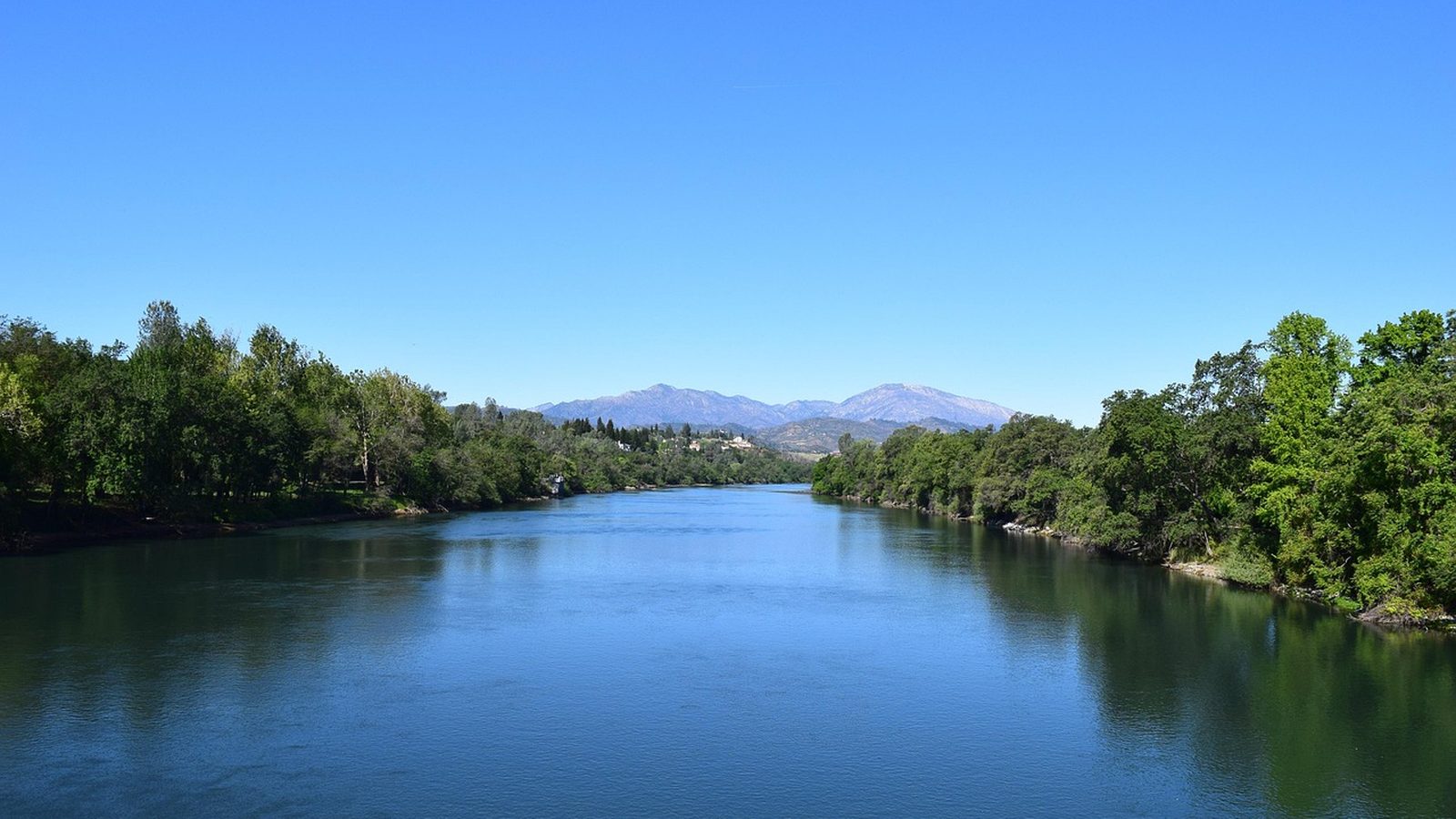
Photo: RDTubbs, via Pixabay
California · Redding
Redding solar: the city that NEM 3 never touched
Written by the Solar Learning Lab research deskUpdated August 27, 202611 min read
Most California solar advice arrives in Redding pre-broken. Articles about the Net Billing Tariff, NEM 3 export pricing, IOU interconnection timelines: none of it applies at a Redding address. Redding Electric Utility is a municipal utility owned by the city, its rates are set by the city council by resolution under Redding Municipal Code 14.22.170, and the CPUC's own NBT page makes clear the tariff governs customers of the CPUC regulated investor owned utilities. REU is not one of them.
The rules that actually bind a Redding rooftop are REU's Zero Net Energy Service tariff, a 6.08 cent surplus credit, and a sizing cap tied to your last 12 months of usage. Cheaper power, smaller credits, different sequence at the permit counter. The project can still make sense. It just has to be designed for Redding, not for a PG&E customer two hours south.
Design for REU, not for PG&E
Run the estimator with Redding's actual retail rate before anyone shows you a payback slide built on IOU prices.
Estimate Redding solarThe cheapest electricity in this part of California changes everything
Start with the rate card. Residential Service E1, set by Resolution No. 2023-128 effective January 1, 2024, charges 32.50 dollars per meter per month plus 14.88 cents for every kWh. Compare that with the 2024 EIA benchmark: REU's average residential price came to 17.85 cents per kWh, roughly 45 percent of PG&E's 39.62 cent average in the same file. The city's rates page and the EIA data agree on the ranking: this is cheap power by California standards.
Cheap power cuts both ways. Every solar kWh you consume replaces a 14.88 cent purchase, not a 40 cent one, so the same array recovers its cost more slowly here than in IOU territory. Meanwhile the 32.50 dollar fixed charge arrives every month no matter what your panels do. An honest Redding proposal leads with those two facts. A dishonest one quotes statewide savings averages and hopes you never look up who sets your rates.
| Energy source | Type | Average price | What that means |
|---|---|---|---|
| REU Residential E1 | energy charge since January 1, 2024 | 14.88¢ per kWh | Plus a 32.50 dollar monthly fixed charge per meter. Set by council resolution, not the CPUC. |
| REU average, EIA 2024 | average residential price | 17.85¢ per kWh | About 45 percent of PG&E's 39.62 cent 2024 average across 38,170 REU residential customers. |
| E ZNE surplus credit | avoided cost export credit | 6.08¢ per surplus kWh | Effective January 1, 2020 in the fetched tariff, updated administratively each year. |
| Onsite solar | self-consumed kWh | 14.88¢ avoided retail offset | Consumption billed at retail; only surplus sent to the grid earns the avoided cost credit. |
REU tariff and rate resolution, city rates page, and EIA 2024 data.
E ZNE in plain terms: retail in, six cents out
REU's current solar offering is Zero Net Energy Service, written E*ZNE in the tariff. The mechanics per the tariff document: your consumption bills at the retail rate, and surplus energy transmitted to the grid earns a credit based on the current value of solar, REU's avoided cost for energy. That figure stands at 6.08 cents per kWh, effective January 1, 2020, with administrative updates on an annual basis. The legacy Renewable Resource Net Metering Service, E*NET, closed to new generators on January 1, 2020, so nobody signing this year gets retail rate netting.
Read that spread again: 14.88 cents avoided by self consumption versus 6.08 cents earned by export. A kWh used inside the house avoids the full retail rate; one pushed to the grid earns the 6.08 cent credit. This has been Redding's arithmetic since before the CPUC ever voted on NBT, which is worth remembering the next time a door knocker warns you that export rates just got slashed. Here, nothing changed. The design answer is the same as it has always been: aim production at your own load, especially summer air conditioning, and treat exports as a rounding error rather than revenue.
The sizing cap is the quote police
REU does not leave oversizing to homeowner judgment. The utility's PV program page limits system size to 1 kW DC per 1,752 kWh of onsite consumption over the prior 12 months. A household that used 14,000 kWh last year caps out just under 8 kW; REU reports its average residential system at 7.75 kW, which tells you the cap binds in practice. The same page notes REU is not in the market for power purchase agreements, so the standard Redding deal is ownership, not a third party contract.
In IOU California a too-big system merely pays back slowly. In Redding it may simply not be approvable. Any bid that lands above the cap for your actual usage history is a bid from someone who has not pulled your usage history, and that should end the conversation.
Sequence matters: Generator Number, then permit, then REU flips the switch
Redding runs its solar paperwork in a specific order that trips up out of town installers. First, obtain a REU Generator Number from REU Customer Service. The Building Division will not accept a solar permit application without it, per the PV program page. The same page requires a Generator Disconnect Nameplate within 10 feet of the electric meter, and commissioning is performed by REU itself, not the contractor. Installing contractors need a C-10, C-46, A or B license classification.
The building permit side is genuinely modern. The CEC's SB 379 tracker, updated August 3, 2026, lists Redding as a SolarAPP+ Platform jurisdiction with a September 2023 deadline met and a 60,000 dollar CalAPP grant awarded December 13, 2022. The statute behind that, Government Code 65850.52, requires automated permitting for residential solar up to 38.4 kW AC. On fees, Government Code 66015 caps residential PV permit charges at 450 dollars plus 15 dollars per kW above 15 kW unless a city adopts contrary findings; Redding's exact fee page could not be fetched this session, so confirm the number with the Building Division at 777 Cypress Avenue. If an HOA objects to any of it, Civil Code 714 voids covenants that effectively prohibit solar.
Second sunniest city in America, with a heat tax on panels
Redding's Wikipedia entry lists average possible sunshine at 88 percent, stated as second highest of any US city after Yuma, Arizona, with a July average daily maximum near 100 degrees F and a record 119 set on July 6, 2024. That page also notes the wet winters: 33.52 inches of average precipitation, which shows up as a deep seasonal swing in production.
July models at 170.6 kWh per kW, the annual peak, and December falls to 73.2. That is the widest summer-to-winter swing of any city we cover in this region.
PVGIS v5.2 model run by Solar Learning Lab on August 27, 2026, NSRDB radiation database. Fixed south facing mount, 30 degree tilt, 14 percent losses, downtown Redding coordinates. Your roof will differ. Source: PVGIS. The annual figure, 1,543.2 kWh per kW, already reflects heat losses, and heat is the quiet engineering topic here. Panel output derates as cell temperature climbs, and inverters last longer mounted out of direct sun. In a city with a 119 degree record, ask where the inverter goes. It is a small question that identifies careful installers.
The happy alignment: peak production lands exactly on peak air conditioning season. With 36,774 households, 55 percent owner occupancy and 67.7 percent single family housing per ACS 2023 data, Redding has plenty of roofs whose summer load profile matches what the sun delivers.
Which incentives actually cross the municipal boundary
Being municipal cuts Redding out of some state programs and leaves it inside others. Out: DAC-SASH, the low income solar program, which requires the homeowner to be a billing customer of PG&E, SCE or SDG&E per GRID Alternatives. REU customers do not qualify, and anyone promising that money in Redding is wrong. In: SGIP storage funding, which the CPUC page describes as including 280 million dollars for Residential Solar and Storage Equity incentives open to any low income residential electric or gas customer in California beginning June 2, 2025.
Statewide items that do not care who your utility is: the active solar energy system new construction exclusion keeps a qualifying installation out of your property assessment, extended through the 2025 to 2026 fiscal year and scheduled to sunset January 1, 2027. And the federal 25D homeowner credit is gone, repealed for expenditures after calendar year 2025 by P.L. 119-21 per the CRS note. Against a 14.88 cent rate with no federal credit, batteries funded partly through SGIP are often the more interesting conversation than panels alone.
Six companies, all with Redding addresses
Unusual for a city this size: every company on our snapshot lists a Redding location, not a Sacramento or Bay Area office with a satellite phone number. Local matters more here than in most markets because of the REU specific sequence, the Generator Number prerequisite and REU performed commissioning. Ask each bidder how many E ZNE interconnections they completed last year. A real number, quickly given, is the tell.
Advance Power Redding
Redding, CA
4.7(15 Google reviews)
Rockstars Solar
Redding, CA
5.0(18 Google reviews)
Next Level Energy
Redding, CA
4.7(13 Google reviews)
Addy Solar & Electric
Redding, CA
4.9(57 Google reviews)
Top Hat Energy Inc.
Redding, CA
4.9(164 Google reviews)
Solar Solutions
Redding, CA
4.7(14 Google reviews)
Ratings snapshot: Google Maps, August 2026, via the DataForSEO SERP feed. Zero companies paid us and none are endorsed by us.
Reality-check the payback at 14.88 cents
We loaded this estimator with REU's published E1 energy rate instead of the statewide average, precisely because the statewide average would flatter the result by more than double. It still cannot see the monthly fixed charge, the 6.08 cent surplus credit or your usage history, so read the output as a ceiling, not a floor.
The high end of the slider is our Redding PVGIS run. The low end is 85 percent of it, a check against shade and off-south orientation rather than a site survey.
Cash quotes in Redding cluster near $2.46 per watt, against a $3.50 national 2024 median (LBNL). Use your quote.
Assumptions you can change
Use the rate on your actual lease or PPA quote. There is no published statewide average we trust enough to hardcode.
Cash purchase
$20,664 after state credit
- Year 1 benefit
- $161/mo
- Payback
- 10 years
- 20 year net position
- $26,144
Redding Electric Utility is municipal, so the CPUC Net Billing Tariff does not apply here. Consumption offsets are worth REU's 14.88 cent retail energy rate and surplus exports earn the E ZNE credit, 6.08 cents per kWh in the fetched tariff.
Solar loan
$276/mo 15 yr payment
- Year 1 net
- -$116/mo
- Upfront
- $0
- 20 year net position
- -$2,932
The loan input keeps the California loan-over-cash spread. Against REU's low retail rate, financing costs eat savings faster than they would in PG&E country, so get the cash and financed prices side by side.
Lease / PPA
$0 down you buy the power
- Year 1 net
- -$99/mo
- Upfront
- $0
- 20 year net position
- -$25,061
REU states it is not in the market for power purchase agreements, and a third party provider claiming the federal 48E business credit still has to beat a 14.88 cent utility rate. Read that sentence twice before signing a lease here.
Estimates, not quotes. This tool uses REU's published E1 energy rate, our downtown Redding PVGIS run and California market cost inputs. It cannot model REU's 32.50 dollar monthly fixed charge, the E ZNE surplus credit or roof-specific shading. We are a solar installer and we also partner with other solar companies. See our disclosures.
We are a solar installer and we also partner with other solar companies.
Redding FAQ
Does NEM 3 or the Net Billing Tariff apply in Redding?
What does REU pay for the solar power I send back?
How large a system will REU approve?
What comes first, the permit or the utility paperwork?
Can I use SolarAPP+ for the Redding building permit?
Do low income solar programs work for REU customers?
Records
Every operational claim above traces to these documents, reviewed August 27, 2026.
- REU Solar Photovoltaic Program, city rates and fees, and REU tariff via the city records portal
- Redding Building Division, CEC SB 379 tracker, Government Code 65850.52, and Government Code 66015
- CPUC Net Billing Tariff page, SGIP, and DAC-SASH eligibility
- BOE solar new construction exclusion, Civil Code 714, and CRS federal credit note
- EIA 2024 sales data, PVGIS, Census ACS, and city background
Get a Redding estimate built on REU math
Bring twelve months of usage. In this city the utility history is not optional paperwork, it is the sizing input.
What does your monthly electric bill look like?
Redding average is $167 per month (EIA, 2024).