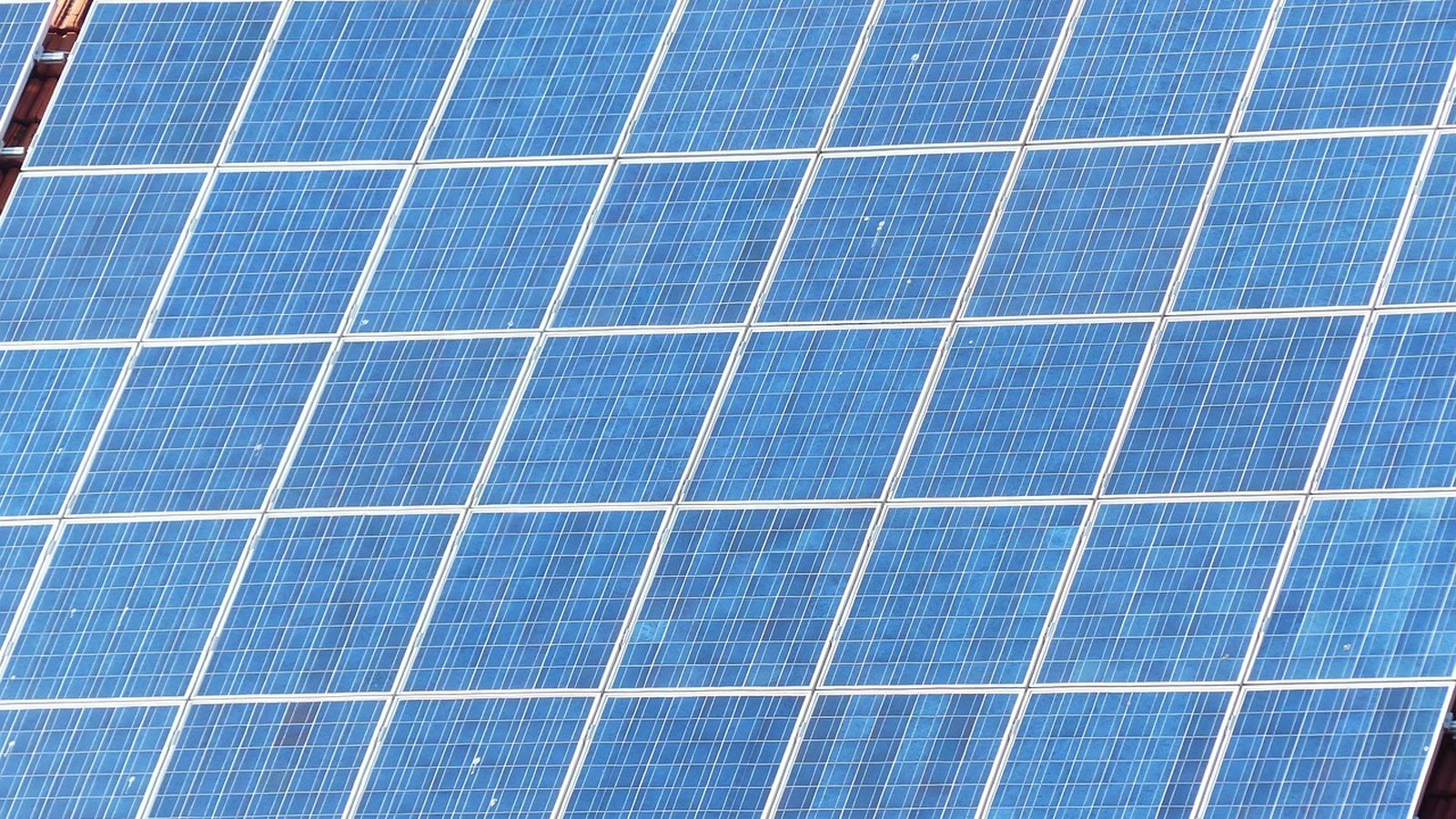
Photo: Hans, via Pixabay
California · Santa Clarita
Santa Clarita solar in 2026
Written by the Solar Learning Lab research deskUpdated August 22, 202612 min read
Santa Clarita has the clearest rooftop market in this group, then puts a remarkably narrow gate in front of it. State housing estimates count 51,286 detached homes, about 62 percent of the city stock, and the nearby Van Nuys climate normal records 1,837.1 cooling degree days. Those are conditions that can make a well-sized rooftop system meaningful. But the city's expedited checklist stops at 10 kW AC, applies to single-family or duplex roofs, and requires a utility-interactive project without battery storage. A buyer who hears only "streamlined solar" is getting half the story. Sources: dofHousing; noaa; code
62%
Single-detached share in state housing estimates
$450
Residential rooftop PV fee before related charges
1,765.6 kWh
PVGIS annual output per kW, before your roof changes it
See what this address may pencil out to
A first pass using the local production model and tariff input. A serious proposal still has to confront the permit path and how your household uses power.
Get my local estimateThe best roofs meet the tightest permit lane
Santa Clarita calls the governing system a small residential rooftop solar energy system and provides expedited, administrative approval when the application meets its checklist. That is not instant online solar permitting. The city's Instant Online Permits list covers items such as a main panel upgrade and water-heater changeout, not solar. A solar application can be submitted through eService, but the Building Official reviews it. The difference matters because a contractor can call something "online" while you hear "automatic." It is neither. Sources: permitCenter; code
The expedited definition gives you the useful boundaries: a single-family or duplex-family dwelling or accessory structure, 10 kW AC CEC rating or less, a roof-mounted array, a qualifying service configuration, and no battery storage. The electrical checklist also limits strings, combiners, inverter count, busbar rating, and the connection arrangement. That reads technical because it is technical. It means the job should be designed to the lane, not sold first and then forced into it. Sources: code
The listed residential rooftop PV fee is $450. The brochure separately lists $37 for permit issuance, $22 for a residential general inspection, a $46 plan-check application processing fee on each new submittal, and record maintenance at 10 percent of related permit fees. The city has not published a review-day count in the materials reviewed. A written correction notice is required when a streamlined application is incomplete, but "timely" is not a calendar promise. Treat a guaranteed install date that assumes one as sales copy, not local policy. Sources: fees; code
Santa Clarita is SCE territory, and it does not have a CCA
This address needs a correction before any rate math starts. Santa Clarita's planning materials identify Southern California Edison as the primary electric provider. A California Energy Commission ZIP workbook has incorrectly placed LADWP against several Santa Clarita ZIP codes, Valencia, Newhall, Canyon Country, and Stevenson Ranch. That workbook is not the bill. The city source is clearer: use SCE for an address in the city unless the actual service account says otherwise. Sources: sceUtility
There is also no Clean Power Alliance layer to peel apart. Santa Clarita is absent from Clean Power Alliance's member-community list, and the CPUC's 2026 formation report does not show it among CPA expansions. In practical terms, the household has bundled SCE generation and SCE delivery, not an SCE-wires plus CCA-generation bill. That is less glamorous than a local clean-power default, but it removes one moving part from the solar comparison. Sources: cpa; ccaStatus
SCE's Schedule D tiered plan lists 30 cents per kWh through the first 384 kWh and 40 cents from 385 through 1,535 kWh, plus a 79-cent daily base-services charge. The current system-average residential figure is 34.5 cents per kWh before the California Climate Credit. On TOU-D-4-9PM, a summer weekday 4 p.m. to 9 p.m. on-peak period is 58 cents. Rate selection and the household's load shape can change the value of the same panel output. Sources: sceD; sceTou; sceRateAdvisory
| Energy source | Type | Average price | What that means |
|---|---|---|---|
| SCE Schedule D | Tier 1 | 30¢ per kWh | 0 to 384 kWh, plus a 79-cent daily base-services charge. |
| SCE TOU-D-4-9PM | Summer weekday on-peak | 58¢ per kWh | 4 p.m. to 9 p.m. weekday summer period. |
| Rooftop solar, owned | Illustrative lifetime output | ~5.6¢ per kWh | Our calculation: California's $2.46 per watt market figure spread across 25 years of this city's PVGIS production. It excludes financing, maintenance, and hourly export-credit effects. |
Market price: EnergySage California. Local tariff sources appear with the analysis above.
Santa Clarita production has a late-summer high point
The PVGIS run puts a south-facing fixed kilowatt at 1,765.6 kWh a year, with August at 173.0 kWh per kW and December at 115.0. That curve fits the local decision better than a generic California annual number because high cooling demand tends to arrive when the model is also strong. It does not tell us your shading, roof pitch, or roof-condition outcome. The code still requires a roof layout and structural evaluation. Sources: noaa; code
August is the model high at 173.0 kWh per kW, not a promise for every roof.
Method: PVGIS v5.2. PVGIS v5.2 model run by Solar Learning Lab on August 22, 2026, NSRDB radiation database. Fixed south facing mount, 30 degree tilt, 14 percent losses, downtown Santa Clarita coordinates. Your roof will differ.
The battery case is real, but the easy permit lane excludes it
New SCE interconnection applications sit under the CPUC Net Billing Tariff, often called the Solar Billing Plan. The original interconnecting customer receives the tariff for nine years. SCE customers applying before the end of 2027 can receive a nine-year export adder, except for systems required by building code. The city-specific tension is awkward but important: the same battery that can help capture late-day value makes the project ineligible for Santa Clarita's expedited checklist. Sources: cpucNbt; code
SCE publishes 2026 export values that vary by season and period. Summer 4 p.m. to 9 p.m. is listed at 21 cents per kWh, while summer 6 a.m. to 4 p.m. is 6 cents. That spread is why a battery conversation is not a luxury add-on in this market. It is also why a quote using one retail rate for every solar kWh is weak. The question is how much of the home's production is used, shifted, or exported in each period. Sources: sceSolarPlan
The homeowner 25D credit ended December 31, 2025. SCE states that its SGIP ratepayer budgets are closed to new applicants and its state-funded RSSE budget is exhausted and on a waitlist, although eligibility and program rules differ by category. The city fee brochure shows no local PV rebate or waiver. There are adjacent wildfire-resiliency rebates for qualifying high fire-risk customers, but those are portable-power or generator benefits, not a solar cash incentive. Keep the distinction clean. Sources: federal; sgip; fees
A Santa Clarita roof file should begin with fire access, not panel count
The roof stock is unusually favorable. The Department of Finance counts 83,064 housing units and 51,286 single-detached units as of January 1, 2026, while the ACS city profile used by this page shows 72 percent owner occupancy and 71.2 percent single-family share. That does not mean every roof is easy. It means the addressable private-roof base is large enough that a local installer should be able to explain the specifics instead of hiding behind a generic California template. Sources: dofHousing
Fire-zone rules are the local friction point. The code requires Class A fire classification inside the City's Fire Zone, versus Class B otherwise, and it requires roof access pathways consistent with Los Angeles County Fire Department requirements. New roofing must meet or exceed the existing fire classification. Plans must show panels, access paths, disconnects, and roof access points. A structural evaluation must confirm that the support structure can transfer wind, seismic, dead, and live loads. These are not optional quote footnotes. Sources: code; reroof
The nearby NOAA normal has a 66.6-degree annual mean, 13.42 inches of precipitation, and 1,837.1 cooling degree days. Air conditioning is the reason this city's rooftop potential deserves attention. But the high summer load does not erase roof constraints, electric panel work, or the difference between a straightforward 9.9 kW solar-only system and a solar-plus-storage project that must leave the streamlined list. Smart sizing follows the hard constraint, not the sales target. Sources: noaa; code
local decision tests
Four questions that prevent a Santa Clarita mistake
First, decide whether storage is part of the project before asking for bids. A contractor can produce two handsome proposals that look nearly identical, while only one belongs inside Santa Clarita's expedited, battery-free checklist. The distinction affects the submittal route, not merely a future equipment choice. If resilience matters, ask for the standard-plan-check assumptions, the extra documents, and the exact inspection scope at the same time as the battery price. This is one of the few cities where leaving battery until later can rewrite the permit strategy. Sources: code; fees
Second, make the roof-condition conversation blunt. Santa Clarita publishes a residential solar reroofing policy, and the code ties the array to fire classification and access. Ask whether any reroofing is needed before the array goes down, whether the address lies in the City Fire Zone, and where the plan draws the Los Angeles County Fire access paths. A low panel price is not a savings if the array must be removed for a foreseeable roof replacement. Sources: reroof; code
Third, request the system size in AC terms as well as the familiar DC panel rating. The streamlined definition uses a 10 kW AC CEC rating cap. A proposal that only shows panel wattage and a DC total leaves the homeowner unable to check the city lane. Ask for the inverter AC nameplate, the CEC rating the permit package will use, and a written statement of whether the designer expects expedited administrative approval. Sources: code
Fourth, compare how the household handles the late afternoon. SCE's own published export credits make a midday export less valuable than a summer 4 p.m. to 9 p.m. export, while its TOU retail periods also price evening use differently. The useful proposal explains the actual load assumptions. The lazy proposal simply multiplies every modeled kWh by one retail number. Those models may share a final savings total, but they are not the same analysis. Sources: sceTou; sceSolarPlan
Finally, separate a city fact from a utility fact. The $450 PV fee is a Santa Clarita building-and-safety number. The 34.5-cent system-average figure is an SCE number. The export rules sit with the CPUC and SCE. When an estimate gives one broad claim such as "Santa Clarita incentive," ask which institution set it and whether it is a fee, a tariff credit, or a program reservation. That small discipline catches a surprising amount of bad math. Sources: fees; sceRateAdvisory; cpucNbt
project-file detail
Details that belong in a real Santa Clarita solar comparison
Read the Santa Clarita fee sheet as a stack, not a headline. The $450 residential rooftop PV line is the anchor, but the brochure separately names $37 permit issuance, $22 residential general inspection, 10 percent record maintenance on related permit fees, and a $46 plan-check application processing fee for each new submittal. The city also lists a 15 percent recheck fee for the third and later plan check. That does not prove each charge lands on every address. It does prove that a proposal saying only $450 has not explained the city-cost assumption completely. Sources: fees
The building official's correction process is worth asking about before a contract becomes a schedule. Under the expedited ordinance, an incomplete application receives a written correction notice detailing deficiencies, and a complete application is then administratively approved and issued. What the source does not provide is a numeric promised turnaround. That creates a simple consumer test: ask the contractor to show the document checklist, name the person who owns corrections, and distinguish a municipal review milestone from the later utility-interconnection milestone. Sources: code
The inverter is part of the permit story. Santa Clarita's eligibility checklist limits a qualifying central-inverter system to two inverters and requires load-side interconnection to a single-phase 120/220 Vac service panel with a busbar rating no greater than 225 amps. It also specifies string and combiner limits. A homeowner need not design that circuit. But the proposal should identify the inverter architecture and service-panel assumption well enough to show that someone checked the lane rather than copied a residential system diagram. Sources: code
A Class A roof issue can alter the sequence of work. The ordinance uses Class A inside the City Fire Zone and requires any new roofing to meet or exceed the existing roof's fire-safety classification. It also calls for clear access paths under Los Angeles County Fire Department requirements. Ask the contractor whether the roof plan reserves those paths from the first layout. Trying to recover access corridors after maximizing module count is an expensive way to learn that fire-code geometry was never a decorative drawing requirement. Sources: code; reroof
There is a practical distinction between a 10 kW AC cap and a marketing label such as "10 kW solar system." Panel nameplate is generally presented in DC terms, while the city's expedited definition uses AC nameplate or CEC rating. The research does not authorize a conversion for a particular design, so this page does not invent one. It does support a request for both figures on the proposal, plus the rating the permit application will use. That request is precise and avoids a needless dispute later. Sources: code
Santa Clarita's SCE rate menu carries more than one way to be expensive. On TOU-D-5-8PM, SCE lists a 74-cent summer weekday on-peak rate from 5 p.m. to 8 p.m. The alternative TOU-D-4-9PM has a 58-cent summer weekday on-peak period. The site cannot recommend a plan without the household's usage pattern, but it can say what a competent comparison must include: current rate plan, planned rate plan after interconnection, and which appliances operate during the evening window. Sources: sceTou
The SCE export bonus is not the same thing as an SCE retail rate. The utility describes an Energy Export Bonus Credit for qualifying enrollment before 2028 of about 4 cents per kWh for residential customers, with a higher income-qualified amount. It sits alongside time-varying Energy Export Credits. A proposal that calls that a universal 4-cent export rate is flattening two separate pieces. Ask to see the ordinary export-value assumption, the bonus assumption, and the date condition that controls the bonus. Sources: sceSolarPlan
The city's old climate-plan record is historical context, not a current rebate. Its August 2012 plan credited onsite solar with 5,971 metric tons of annual carbon-dioxide-equivalent reduction in its 2020 scenario and said roughly 430 solar permits had been issued from 2005 through 2011. Those figures show that the city was not new to solar permitting. The plan's target year has passed, and the research did not verify a newer adopted city target. Do not convert a past planning document into a current cash claim. Sources: dofHousing
For wildfire-related resilience, SCE's published rebates are more modest and more specific than a whole-home-battery sales pitch. Its information lists $150 for a portable power station and $200 for a portable generator, or $600 for income-qualified or Medical Baseline customers, in Tier 2 or Tier 3 high fire-risk areas, with a stated limit of five per residential address. Those benefits do not replace a solar-storage design, and they are not a residential PV incentive. They are a separate resilience tool with eligibility limits. Sources: sgip
California solar-access law matters if the roof is subject to an association process. Civil Code 714 voids provisions that effectively prohibit or restrict a solar system, while allowing reasonable restrictions that do not significantly raise cost or reduce efficiency. That does not excuse a homeowner from submitting an architectural request when the governing documents require it. The useful move is parallel work: start the HOA process while the installer confirms the fire-access and permit-layout constraints, then compare the actual conditions rather than arguing over a hypothetical right. Sources: hoa
Three listed installers is a short list, not a market verdict
The local cards are a Google Maps-derived snapshot with 20 or more reviews, not a comprehensive census of every contractor who can work in Santa Clarita. In a market with this much detached housing, use the short list to start calls, then insist on a permit strategy that says whether the design stays below the 10 kW AC, battery-free criteria or deliberately takes the standard path. A polished equipment list is not a permit plan.
Ratings snapshot: Google Maps, August 2026, via the DataForSEO SERP feed. Zero companies paid us and none are endorsed by us.

HomeLink Solar
Canyon Country, CA
4.9(355 Google reviews)

Green Convergence
Valencia, CA
4.8(269 Google reviews)

California Solar & Electric Inc.
Valencia, CA
4.9(66 Google reviews)

Tiger Stripe Solar + Services
Santa Clarita, CA
5.0(62 Google reviews)
Cervus Solar & Construction
Santa Clarita, CA
5.0(58 Google reviews)
Ratings snapshot: Google Maps, August 2026, via the DataForSEO SERP feed. Zero companies paid us and none are endorsed by us. Verify licensing, insurance, scope, and contract terms before signing.
Run a screening estimate, then pressure-test it
This screen uses the SCE system-average residential rate and the Santa Clarita PVGIS result. It is intentionally a crude first pass because Net Billing has hourly export values and an actual quote needs the load profile, roof plan, and a decision about storage. The lower production bound is not a roof survey.
The top of the slider is the downtown Santa Clarita PVGIS model. The lower bound is 85 percent of it, a useful check for orientation, shade, and the roof geometry the city requires on the permit plan.
Cash quotes in Santa Clarita cluster near $2.46 per watt, against a $3.50 national 2024 median (LBNL). Use your quote.
Assumptions you can change
Use the rate on your actual lease or PPA quote. There is no published statewide average we trust enough to hardcode.
Cash purchase
$7,872 after state credit
- Year 1 benefit
- $162/mo
- Payback
- 4 years
- 20 year net position
- $39,430
Cash ownership gets the Santa Clarita production assumption and SCE rate input, but no homeowner 25D credit remains in 2026. The useful comparison is an itemized proposal that shows the $450 PV permit and whether a battery pushes the job outside the streamlined lane.
Solar loan
$105/mo 15 yr payment
- Year 1 net
- $57/mo
- Upfront
- $0
- 20 year net position
- $28,353
This keeps California's loan pricing assumption. It is a planning input, not a lender offer, and it cannot know the roof, main-panel, fire-zone, or plan-check work in a particular Santa Clarita proposal.
Lease / PPA
$0 down you buy the power
- Year 1 net
- $49/mo
- Upfront
- $0
- 20 year net position
- $15,978
A lease or PPA provider may claim 48E, while a homeowner cash buyer cannot claim the ended 25D credit. Compare the contract's escalator and production guarantee against the SCE bill, not against an export-heavy savings promise.
Estimates, not quotes. This screening tool uses SCE's 34.5 cent system-average residential rate, Santa Clarita PVGIS output, and EnergySage California cost data. Net Billing exports have hourly values and Santa Clarita's expedited checklist excludes battery storage, so a quote needs project-specific review. We are a solar installer and we also partner with other solar companies. See our disclosures.
Santa Clarita solar questions, answered from the local record
The point here is to keep the answer tied to the city file. When the research did not yield a verified current number, we say n.a. rather than float a national average into a local decision.
Does Santa Clarita offer instant solar permits?
What is the Santa Clarita residential solar permit fee?
Can a Santa Clarita battery use the expedited solar checklist?
Is Santa Clarita served by LADWP or Clean Power Alliance?
What export rate does SCE pay for solar?
Is there a homeowner federal solar credit in 2026?
Sources and gaps we did not paper over
The reviewed city sources do not publish a stated number of days for solar plan review. They do not state a city PV rebate or waiver. We also did not assign a current city climate target because the located Climate Action Plan has a passed 2020 target year and no newer adopted city target was verified in the research file.
Federal credit: residential 25D credit ended December 31, 2025; lease/PPA providers may claim 48E. Congressional Research Service credit summary.
- permitCenter: https://santaclarita.gov/building-safety/permit-center/
- fees: https://santaclarita.gov/building-safety/wp-content/uploads/sites/12/2025/08/2025-2026-BS-Fee-Brochure.pdf
- code: https://www.codepublishing.com/CA/SantaClarita/html/SantaClarita25/SantaClarita2503.html
- reroof: https://santaclarita.gov/wp-content/uploads/sites/42/migration/Solar%20PV%20Re-roofing%20Policy%20(Residential).pdf
- sceUtility: https://filecenter.santa-clarita.com/EIR/OVOV/Draft/3_17_UtilitiesInfra091410.pdf
- cpa: https://cleanpoweralliance.org/
- ccaStatus: https://www.cpuc.ca.gov/-/media/cpuc-website/divisions/energy-division/documents/community-choice-aggregation-and-direct-access/2026-cca-and-esp-formation-status-report.pdf
- sceD: https://www.sce.com/save-money/rates-financing/residential-rate-plans/tiered-rate-plan
- sceTou: https://www.sce.com/save-money/rates-financing/residential-rate-plans/time-of-use-plans
- sceRateAdvisory: https://www.sce.com/save-money/rates-financing/sce-rate-advisory
- cpucNbt: https://www.cpuc.ca.gov/industries-and-topics/electrical-energy/demand-side-management/customer-generation/net-energy-metering-and-net-billing
- sceSolarPlan: https://www.sce.com/clean-energy-efficiency/solar-generating-your-own-power/billing-incentives/solar-billing-plan
- sgip: https://www.sce.com/clean-energy-efficiency/solar-generating-your-own-power/billing-incentives/self-generation-incentive
- dofHousing: https://dof.ca.gov/media/docs/forecasting/Demographics/estimates/e-5-population-and-housing-estimates-for-cities-counties-and-the-state-2020-2026/E-5_2026_Geo_InternetVersion.xlsx
- noaa: https://www.ncei.noaa.gov/access/services/data/v1?dataset=normals-annualseasonal-1991-2020&stations=USW00023130&format=json&includeStationName=true&includeStationLocation=1&units=standard&dataTypes=ANN-TAVG-NORMAL,ANN-TMAX-NORMAL,ANN-TMIN-NORMAL,ANN-PRCP-NORMAL,ANN-CLDD-NORMAL,ANN-HTDD-NORMAL
- hoa: https://leginfo.legislature.ca.gov/faces/codes_displaySection.xhtml?lawCode=CIV§ionNum=714
- cecCode: https://www.energy.ca.gov/programs-and-topics/programs/building-energy-efficiency-standards/energy-code-support-center/2022-0
- federal: https://www.congress.gov/crs-product/IN12611
- cost: https://www.energysage.com/local-data/solar-panel-cost/ca/
- PVGIS production model: https://re.jrc.ec.europa.eu/pvg_tools/en/
- US Census Bureau, ACS 5-year estimates, 2023: https://data.census.gov/
Get a Santa Clarita estimate
Four questions first, then an estimate built from this page's local inputs. We are a solar installer and we also partner with other solar companies. Read our disclosures.
What does your monthly electric bill look like?
California average is $161 per month (EIA, 2024).