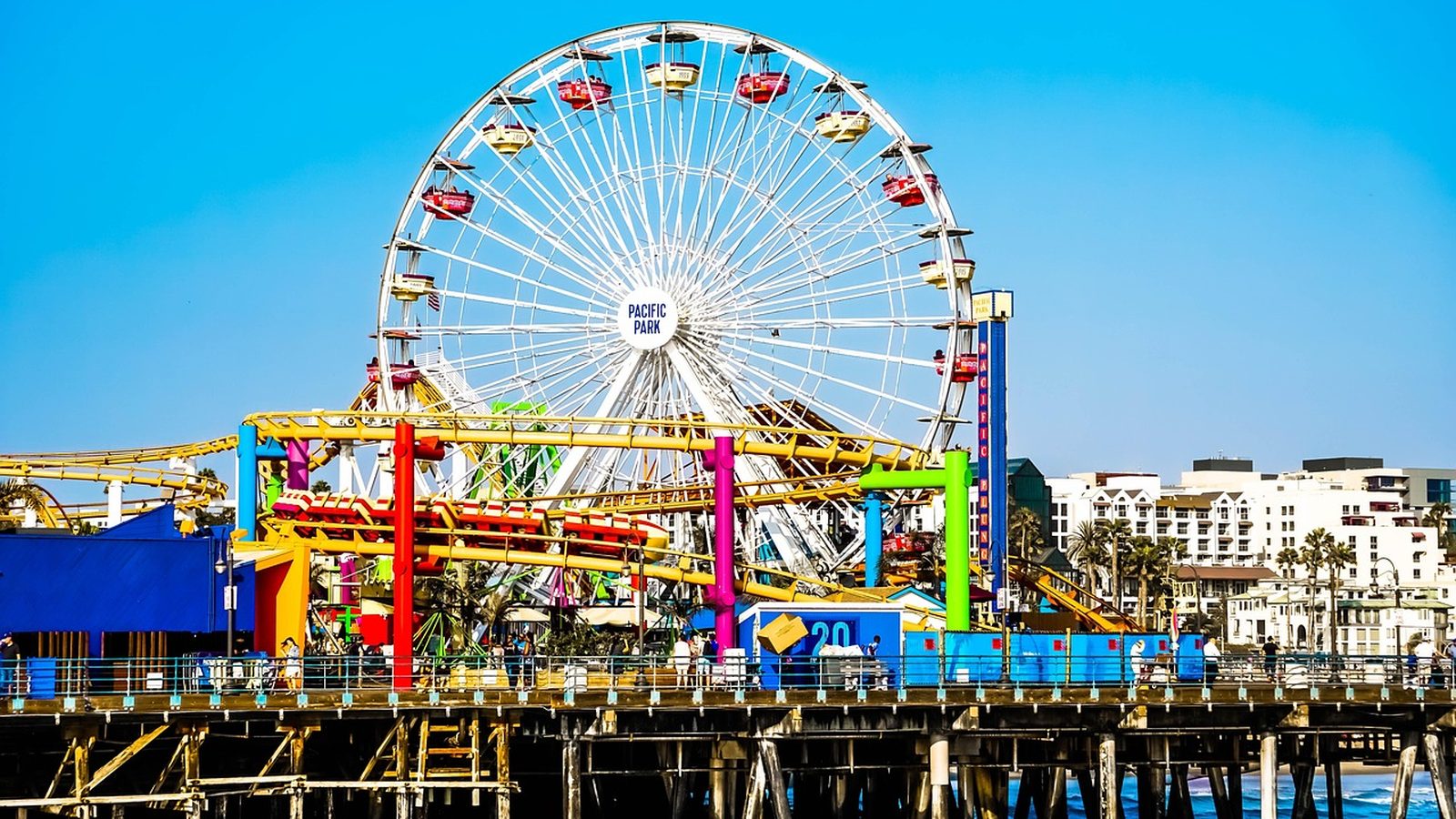
Photo: richardsongo, via Pixabay
California · Santa Monica
Santa Monica solar: trust the statute, not the summary
Written by the Solar Learning Lab research deskUpdated August 27, 202612 min read
Santa Monica has been earlier and more serious about solar than almost any city its size: the first zero net energy construction ordinance in the country, a free city-run advisory service, an express permit lane. And yet, as of our August 2026 review, the city's own solar rebates and incentives page still describes the federal residential credit as 30 percent through 2032. Congress changed that. P.L. 119-21 terminated the Section 25D credit for expenditures made after December 31, 2025, per the Congressional Research Service's IN12611. City web pages update on staff time; statutes do not wait for them.
No snark intended. Municipal sites carry thousands of pages and this one simply has not caught up. But it makes Santa Monica the cleanest illustration of a rule we apply everywhere: date-check every incentive claim against primary law before it enters your budget. This page does that, then covers the thing that actually makes Santa Monica solar different: your electricity is already 100 percent renewable by default.
Numbers first, narrative second
Run our Santa Monica production model before any sales conversation sets your expectations.
Estimate coastal solarCheck the date on everything, including official pages
The mechanics of the federal change matter for anyone finishing a project this year. The law treats an expenditure as made when installation is completed, so a system completed in 2026 does not qualify for 25D regardless of when the contract was signed or deposits paid. Carryforward rules for pre-2026 expenditures are unchanged. The CRS note we rely on, IN12611, does not address third party ownership arrangements, so we make no claims about what a lease or PPA provider can or cannot claim.
If an installer's proposal cites the city incentives page for a 30 percent federal credit, that is not fraud; it is stale sourcing. But it should reset your confidence in every other number in the document. Ask what else was copied forward from 2024.
Your power is already green. Solar here is about money and resilience.
Santa Monica routes generation through the Clean Power Alliance, and it is among the jurisdictions that chose 100% Green Power as the default rate product, meaning residents get fully renewable generation from wind, solar, and geothermal unless they opt down to Clean Power at 50 percent or Lean Power at 40 percent. CARE, FERA, and Medical Baseline customers in these default-green jurisdictions receive 100 percent renewable power at reduced cost. CPA bills for generation, SCE bills for delivery, two line items on one bill. Sources: CPA's residential rate schedule and rate options page, plus SCE's CCA territory list.
This flips the usual sales script. Panels on a Santa Monica roof do not make your consumption greener; it already is, by default. The case for solar here is narrower and more financial: displacing SCE delivery-plus-generation charges with self-consumed production, and adding storage for outages. Any pitch leading with the planet is selling you something you already own.
| Energy source | Type | Average price | What that means |
|---|---|---|---|
| SCE TOU-D-4-9PM | summer weekday on peak | 58¢ per kWh | 48¢ after the 10¢ baseline credit; Santa Monica sits in SCE Baseline Regions 6 and 9. |
| SCE TOU-D-5-8PM | summer on peak, 5 to 8 p.m. | 74¢ per kWh | 64¢ after credit. Both TOU plans carry a $0.79 daily Base Services Charge. |
| SCE bundled average | 2024 residential average | 32.4¢ per kWh | EIA Table 6 bundled figure; most Santa Monica residents take CPA generation instead. |
| Rooftop solar | self-consumed output | avoided combined bill hour dependent | Displaced kWh avoid both the CPA generation charge and SCE delivery for that hour. |
A narrow rooftop market, and who it actually serves
The housing math is unusual. Of Santa Monica's 54,758 housing units, only 10,084, about 18.4 percent, are single detached homes, while 68.1 percent sit in buildings of five or more units. Renters occupy 72.9 percent of occupied homes, the heaviest renter share in our five-city batch. The classic single family retrofit, the product most solar marketing is built around, addresses a thin slice of this city.
That does not mean solar is irrelevant here; it means the relevant programs differ. The city's incentives page points multifamily property owners to Solar on Multifamily Affordable Housing waitlist funding and points income-qualified households toward GRID Alternatives and the Low Income Weatherization Program. And for anyone confused about where they fit, Solar Santa Monica offers free individualized advice from the city itself, covering rules, incentives, financing, and storage. A no-cost second opinion from a party with no commission is rare. Use it.
The express permit lane is real, narrow, and contractor-only
Santa Monica's automated solar permit process runs through SolarAPP+ for licensed solar contractors, with permit expeditors explicitly not allowed. Nine published steps take a design from solarapp.nrel.gov, through a $25 SolarAPP+ administrative fee, into the city's Citizen Access portal under the Solar Permit with Solar APP Plus project type, with city permit fees paid at the final stage and inspections scheduled at einspections.smgov.net. The city page quantifies only the $25 platform fee, not its own permit fee, so ask your contractor for the all-in government cost from their last Santa Monica job.
The eligibility gate is tight: main dwelling roof mounted systems only. Ballasted, ground mounted, building integrated, and new construction systems all fall out of the express lane into standard plan review, which now evaluates submittals under the 2025 California Standards Code effective January 1, 2026. One transparency note from the state side: the CEC tracker lists Santa Monica's platform as SolarAPP+ but shows no annual report submitted, the only such gap in the five cities we reviewed this week. The platform works; the paperwork trail behind it is thinner than its neighbors'.
ZNE homes and the export adder they cannot claim
Since May 1, 2017, Santa Monica has required all new single family construction to be zero net energy, the first city ordinance of its kind in the country, per the city's announcement. Here is where that intersects with export economics. Under the Net Billing Tariff, SCE residential customers can earn an ACC Plus adder of 4 cents per exported kWh, 9.3 cents income-qualified. But Decision 22-12-056 excludes systems installed to satisfy a legal new construction requirement.
Translation: solar on a post-2017 ZNE-mandated Santa Monica home earns no adder, while a voluntary retrofit on an older home can qualify. Same panels, different regulatory history, different export value. If you are buying newer construction here, price the system as mandated equipment, not as an incentive-bearing investment. And remember the tariff's general shape either way: no netting of consumption against production, monthly-averaged hourly export values, an annual true up.
Coastal output, honestly stated
Our downtown Santa Monica run models 1,691.0 kWh per year per installed kW, the softest figure among the five cities we modeled this week. Blame the marine layer: May and June daily maximums at the pier barely clear winter values in the NOAA normals, and the modeled June output of 148.2 kWh per kW actually trails April's 160.9. The often-cited 310 sunny days figure and the gray reality of a June morning are both true; they just describe different hours.
August models at 164.2 kWh per kW once the marine layer relents. Note the June dip to 148.2, unusual for a Southern California city.
PVGIS v5.2 model run by Solar Learning Lab on August 27, 2026, NSRDB radiation database. Fixed south facing mount, 30 degree tilt, 14 percent losses, downtown Santa Monica coordinates. Your roof will differ. Model at PVGIS. Distance from the beach matters block by block here; a roof in the sunnier eastern reaches of the city will beat this model more often than one over the sand.
What still counts in 2026
The live programs list is short and income-gated. SGIP's Residential Solar and Storage Equity budget, $280 million with reservations open since June 2, 2025, pays $3,100 per kW for solar and $1,100 per kWh for storage to income-qualified households. DAC-SASH runs through 2030 for CARE or FERA homeowners in top-quartile CalEnviroScreen communities. The property tax new construction exclusion holds until its scheduled January 1, 2027 sunset. We found no Santa Monica cash rebate this session; the city's contribution is the free Solar Santa Monica advisory service, which is worth more than most coupons anyway. If an HOA or architectural board balks, Civil Code 714 sets the familiar limits: no restriction adding over $1,000 or cutting output over 10 percent, and 45 days of silence equals approval.
The installer field
Santa Monica's map results include national marketplaces headquartered locally alongside neighborhood installers. Marketplace review counts reflect nationwide customers, not local roofs, so weigh them differently. Whoever you engage, remember the city bars permit expeditors from the express lane; the contractor of record has to run its own paperwork.
Helios Energy Global
Santa Monica, CA
4.9(195 Google reviews)
Sunko Solar
Santa Monica, CA
4.8(19 Google reviews)
Solar.com
Santa Monica, CA
4.6(267 Google reviews)
Solar Unlimited Santa Monica : Solar Panel Installation Company
Venice, CA
0.0(0 Google reviews)
Santa Monica Solar Panel Installation
Santa Monica, CA
5.0(5 Google reviews)
Top Of The Line Solar Panel Santa Monica
Santa Monica, CA
0.0(0 Google reviews)
Ratings snapshot: Google Maps, August 2026, via the DataForSEO SERP feed. Zero companies paid us and none are endorsed by us.
Estimate before you engage
The tool below uses the state average rate and our coastal production run. It cannot split CPA generation from SCE delivery or model marine layer variance beyond the monthly figures, so use it to bracket system sizes rather than predict a bill.
The high end is our Santa Monica PVGIS run, 1,691 kWh per installed kW, already the softest of the five cities we modeled this week thanks to coastal cloud. The low end trims another 15 percent for shading and orientation.
Cash quotes in Santa Monica cluster near $2.46 per watt, against a $3.50 national 2024 median (LBNL). Use your quote.
Assumptions you can change
Use the rate on your actual lease or PPA quote. There is no published statewide average we trust enough to hardcode.
Cash purchase
$8,364 after state credit
- Year 1 benefit
- $159/mo
- Payback
- 5 years
- 20 year net position
- $38,027
Santa Monica bills split generation to Clean Power Alliance, where 100% Green Power is the default, and delivery to SCE. Your electricity is already fully renewable on paper, so evaluate solar here as a bill and resilience decision, not an environmental upgrade.
Solar loan
$112/mo 15 yr payment
- Year 1 net
- $47/mo
- Upfront
- $0
- 20 year net position
- $26,258
The loan input applies the standard California loan-over-cash spread. Santa Monica retrofit jobs on older coastal homes often carry roof or electrical surprises, so keep a contingency line out of the financed amount if you can.
Lease / PPA
$0 down you buy the power
- Year 1 net
- $44/mo
- Upfront
- $0
- 20 year net position
- $14,515
A third party owner sets a rate that reflects its own tax position. That rate competes against a combined CPA generation and SCE delivery bill, and against the marine layer's real effect on spring production. Model both before signing.
Estimates, not quotes. Inputs use the California average retail rate, our downtown Santa Monica PVGIS run and state market cost data. The tool cannot separate Clean Power Alliance generation charges from SCE delivery or model hourly Net Billing Tariff exports. We are a solar installer and we also partner with other solar companies. See our disclosures.
We are a solar installer and we also partner with other solar companies.
Sourced answers to Santa Monica questions
Is the 30 percent federal credit still available like the city website says?
Who supplies my electricity in Santa Monica?
How does the express solar permit work?
Does a new ZNE home's solar earn export adders?
I rent in a large building. Does any of this apply to me?
Sourcebook
Everything above traces to these primary documents, reviewed August 27, 2026.
- Santa Monica automated solar permit explainer, plan review page, and ZNE ordinance announcement
- City solar rebates and incentives page (federal language outdated as of this review) and Solar Santa Monica
- CPA residential rates (March 1, 2025), CPA rate options, and SCE CCA list
- SCE community index, SCE TOU plans, and EIA Table 6
- CPUC Net Billing Tariff and Decision 22-12-056
- Government Code 65850.52, Government Code 66015, Civil Code 714, and the CEC tracker
- CPUC SGIP, DAC-SASH, BOE exclusion, and CRS IN12611
- DOF E-5 housing estimates, Santa Monica overview, and PVGIS
Get a Santa Monica estimate with current-law math
We will frame your project with 2026 rules, not 2024 web copy. Start with your bill and building type.
What does your monthly electric bill look like?
Santa Monica average is $161 per month (EIA, 2024).