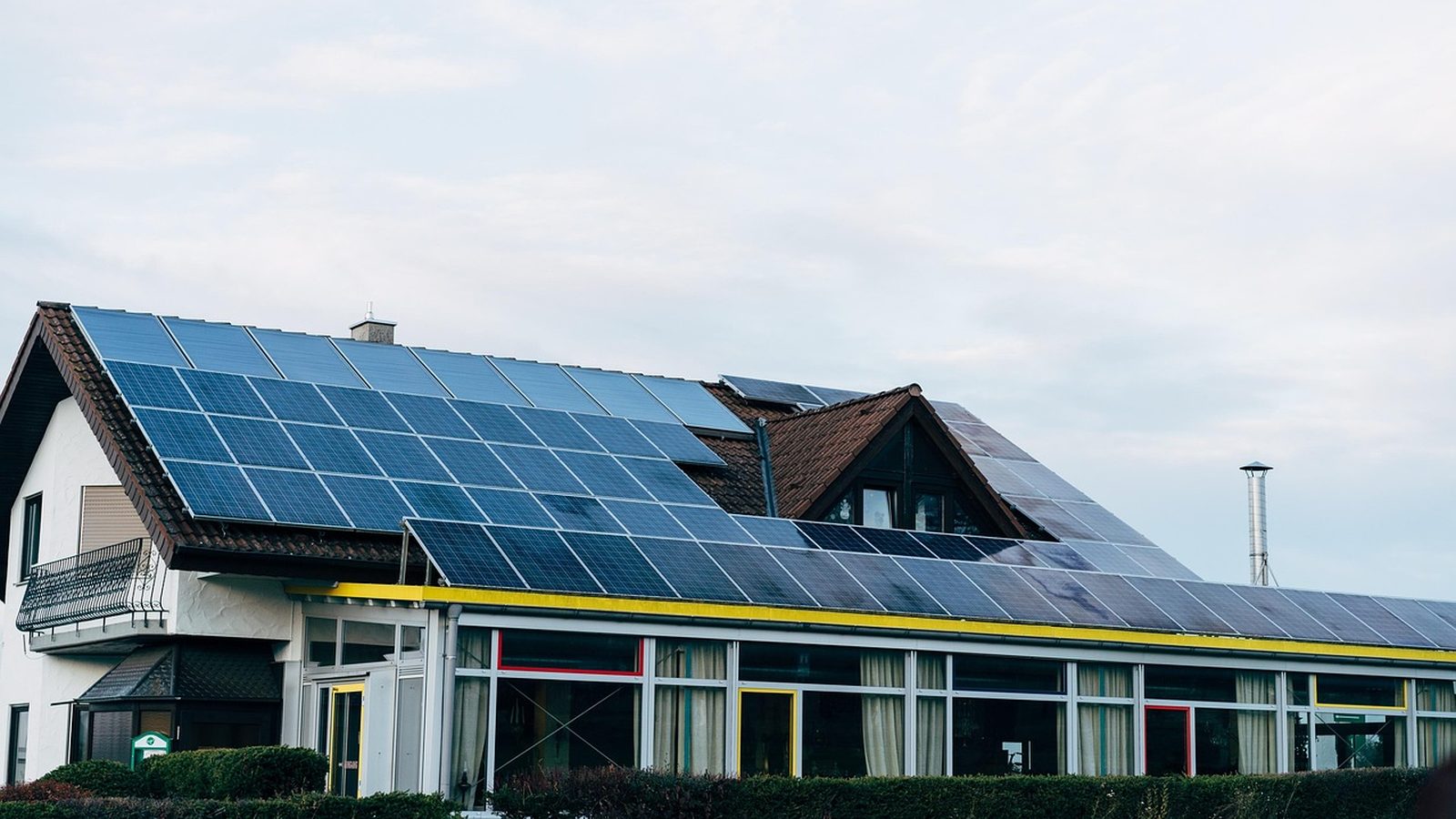
Photo: viarami, via Pixabay
California · Thousand Oaks
Solar in Thousand Oaks: the bill starts with a 100% green default
Written by the Solar Learning Lab research deskUpdated August 24, 2026
A Thousand Oaks solar proposal starts from a different utility baseline than a plain SCE account. Clean Power Alliance serves the city and defaults its customers to the 100% Green Power product. The March 2025 rate sheet lists its non-CARE generation charge at $0.14459 per kWh. SCE still delivers electricity. Both charges arrive on the same bill.
That split is the point. A proposal that talks about “the SCE rate” alone is describing only part of a Thousand Oaks account. The City's TO/24 portal and SolarAPP+ path can keep a qualifying rooftop job moving, but clean administrative routing does not settle the bill comparison.
Model the system before choosing the sales story
Use a cautious local estimate, then request a proposal that separates CPA generation, SCE delivery and export treatment.
Estimate Thousand Oaks solarOne monthly bill, two electricity functions
Clean Power Alliance says Thousand Oaks has been served since 2019. The City is among the jurisdictions that selected 100% Green Power as the default rate product. CPA supplies electricity generation; SCE continues to supply delivery. They are separate line items, even though the homeowner sees one bill. CPA's city information and its billing explanation are explicit.
| Energy source | Type | Average price | What that means |
|---|---|---|---|
| Clean Power Alliance | 100% Green Power default generation | $0.14459 per kWh | Non-CARE all-year flat generation rate in the March 2025 sheet. |
| Clean Power Alliance | CARE/FERA/Medical Baseline generation | $0.12544 per kWh | Same rate sheet, eligible-customer category. |
| SCE | electricity delivery | varies by tariff and time | SCE delivery remains on the bill alongside CPA generation. |
| Solar exports | new interconnection treatment | hourly Net Billing value | Do not assume a CPA-specific export rate without a customized account comparison. |
CPA's March 2025 residential rate sheet, CPA billing guidance, and SCE residential rate plans.
CPA says customers can switch to Lean Power or Clean Power by contacting customer service. It also directs NEM and Solar Billing Plan customers to ask for a customized comparison rather than publishing a one-size-fits-all solar rate table. That is the sensible move before signing a proposal built around a generic cents-per-kWh assumption. CPA rate options.
TO/24 is the handoff point, not a mere web form
Thousand Oaks uses TO/24 for permit applications, plan checks, inspections, status and payments, and digital plan submittal became mandatory September 1, 2025. For eligible roof-mounted residential solar up to 38.4 kW AC, SolarAPP+ handles the automated review. The approval is carried into TO/24, where the City issues the State Solar Permit after fees are paid. TO/24 and the City's building page describe the sequence.
Not every design belongs in that route. The City sends ballasted, ground-mounted, carport and parking-shade systems to standard permitting. It also limits the SolarAPP+ applicant pool to California-licensed B, C-10 or C-46 contractors, and the resulting permit is tied to that contractor. If a bid has an unusual mounting system or a contractor change, ask before the design is “final.”
The CEC tracker records Thousand Oaks as a SolarAPP+ jurisdiction with 2025 annual-report data and $80,000 in CalAPP funding awarded March 23, 2023. The tracker does not certify legal compliance, but it corroborates the City's operating platform. CEC tracking record.
Good local output, moderated weather, no shortcut around timing
The Thousand Oaks model comes in at 1,746.8 kWh per kW annually. August is highest at 171.7; December is 112.5. The local climate is described as warm-summer Mediterranean, with marine air reaching the area through hill and mountain passes. That can moderate the load profile relative to hotter inland cities. It cannot tell us what a specific family runs at 5 p.m. Climate context.
August is the modeled high month at 171.7 kWh per kW. A rate comparison still needs the household's hourly load.
PVGIS v5.2 model run by Solar Learning Lab on August 24, 2026, using the NSRDB radiation database. Fixed south-facing mount, 30 degree tilt, 14 percent losses, downtown Thousand Oaks coordinates. Your roof will differ. The output comparison is from PVGIS. The City's climate action plan aims for an 85% emissions reduction by 2045 against a 2010 baseline. That is meaningful context for local policy, but it is not a private-project savings assumption. Read the City climate plan.
The $411.21 figure is useful, with a necessary label
A Ventura County RMA comparative survey lists Thousand Oaks at $411.21 total for a solar electric permit. It is a county-compiled comparison of Southern California jurisdictions, not a current Thousand Oaks line-item fee schedule fetched directly from the City. That distinction matters, so we are treating $411.21 as a survey figure, not pretending it is a City-published quote. Ventura County comparative report.
The current research did not locate a City fee-schedule PDF with an exact residential PV line item. Government Code 66015 describes a $450 cap for systems up to 15 kW, subject to its stated exception. The survey value sits below that number. Get the charged amount from TO/24 for the actual scope, then ask the contractor to show whether it is included in the contract. Statutory fee context.
The storage conversation is more concrete than a generic rebate claim
The supplied research did not identify a Thousand Oaks municipal homeowner solar or battery rebate. It did identify the statewide Residential Solar and Storage Equity budget, with $3,100 per kW for solar and $1,100 per kWh for storage for qualifying low-income customers. Eligibility comes first. The CPUC SGIP page has the program conditions.
DAC-SASH can provide an incentive of $3 per CEC-AC-rated watt for qualifying households, but eligibility is tied to owner occupancy, income programs and disadvantaged-community location. In a city with varied neighborhoods, an address-level check is better than an assumption based on the city name. GRID Alternatives explains the test.
For private cash purchases completed in 2026, do not subtract the former 25D homeowner credit. The federal provision ended for expenditures after December 31, 2025. CRS summary.
Make the first calculation bill-aware
The calculator provides a disciplined starting range. It does not recreate the two-line CPA and SCE bill or place exports in their actual hours. Use the result to ask better questions about a specific system, not to replace the account comparison CPA recommends.
The high setting is the standardized downtown Thousand Oaks PVGIS output; the lower setting uses 85 percent of it to keep a favorable model from becoming a promise.
Cash quotes in Thousand Oaks cluster near $2.46 per watt, against a $3.50 national 2024 median (LBNL). Use your quote.
Assumptions you can change
Use the rate on your actual lease or PPA quote. There is no published statewide average we trust enough to hardcode.
Cash purchase
$8,118 after state credit
- Year 1 benefit
- $160/mo
- Payback
- 5 years
- 20 year net position
- $38,394
This is a first-pass comparison based on a Thousand Oaks production run and California market inputs. It is not a Clean Power Alliance and SCE bill model, and it does not calculate solar export value hour by hour.
Solar loan
$109/mo 15 yr payment
- Year 1 net
- $51/mo
- Upfront
- $0
- 20 year net position
- $26,971
Households should price financing as a separate product. Ask for the cash price, financed price, interest rate, dealer fee and payoff terms before treating a low payment as a low cost.
Lease / PPA
$0 down you buy the power
- Year 1 net
- $44/mo
- Upfront
- $0
- 20 year net position
- $14,553
With a lease or PPA, the relevant comparison is the contract's energy price and escalator against a bill that has CPA generation and SCE delivery charges. Request both bill components.
Estimates, not quotes. This tool uses the California average retail rate, a Thousand Oaks PVGIS production run and California market cost inputs. It cannot reproduce Clean Power Alliance generation charges, SCE delivery charges, hourly export credits or roof-specific shading. We are a solar installer and we also partner with other solar companies. See our disclosures.
Use the bid process to expose missing layers
Request the assumed CPA product, SCE delivery rate plan, self-consumption percentage, SolarAPP+ eligibility and City charges in writing. The contractor who can put those on one page is doing a better job than the one leading with panels and a payment.
DC Energy - Solar + Battery Back Up
Newbury Park, CA
5.0(28 Google reviews)
Ratings snapshot: Google Maps, August 2026, via the DataForSEO SERP feed. Zero companies paid us and none are endorsed by us.
Thousand Oaks questions before the contract
Does Thousand Oaks default to 100% Green Power?
Why is SCE still on my bill if CPA serves the City?
Can every solar project use SolarAPP+?
Is $411.21 the official City permit price?
Does the 25D homeowner credit reduce a 2026 project?
Thousand Oaks reading list
Primary materials: TO/24, City building guidance, CPA rate sheet, Ventura County fee survey, CPUC Net Billing page, SGIP, and PVGIS.
Get a Thousand Oaks estimate that uses both bill layers
CPA generation, SCE delivery and solar export treatment are three separate items. Put them in the same comparison before buying.
What does your monthly electric bill look like?
Thousand Oaks average is $167 per month (EIA, 2024).