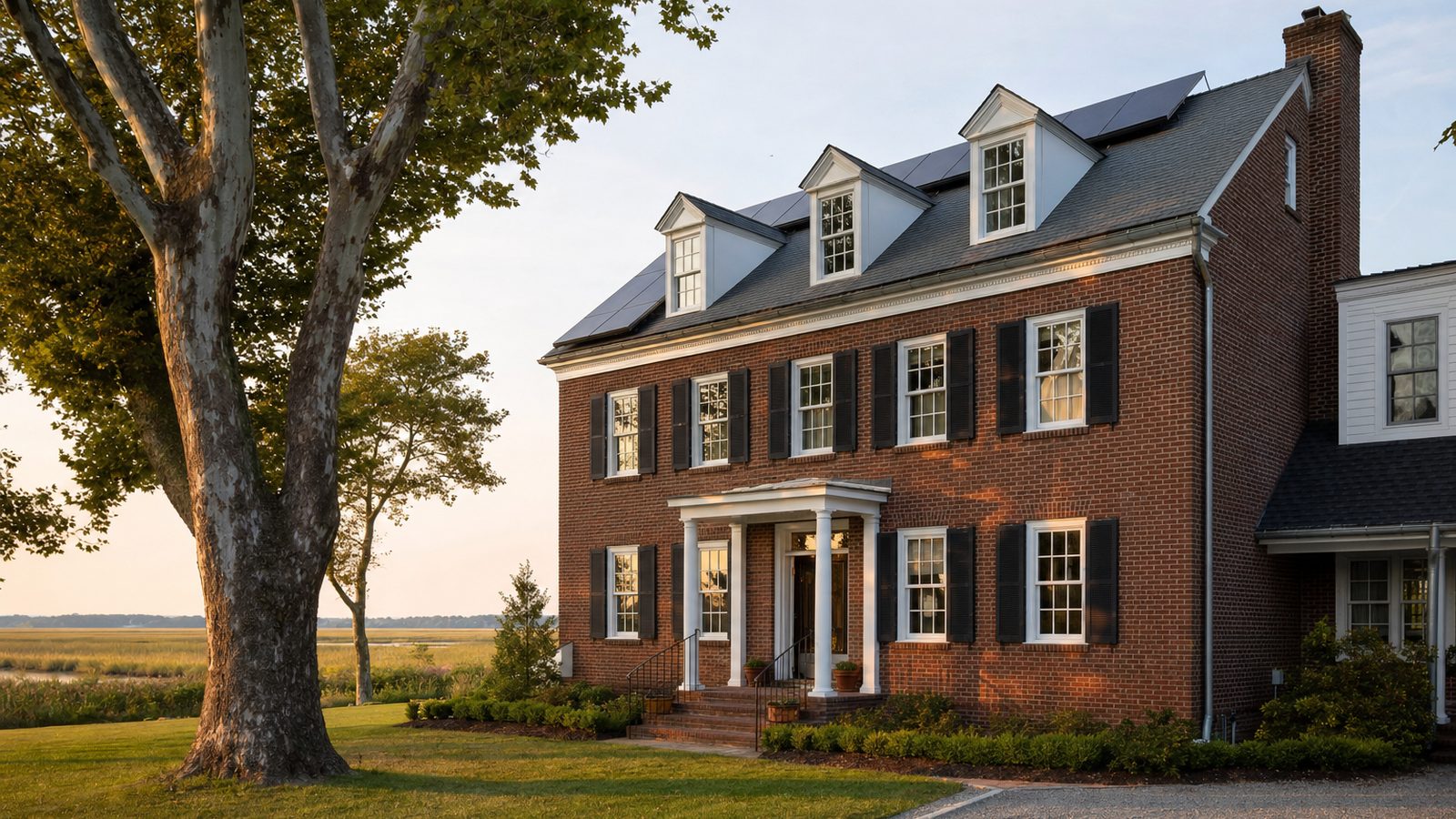
Delaware
Delaware solar in 2026
Delaware is more practical than flashy. Retail electricity is 19.38 cents per kWh, roof production is strong, and every electric supplier must offer net metering. Then there is the calendar: SREC Delaware accepts applications only during a yearly two-week window. Miss that window and a sales deck full of projected SREC value is just wishful thinking.
Delaware needs production discipline, not a hype cycle
Our levelized owned-solar estimate is about 7.6 cents per kWh, compared with a 19.38-cent statewide residential rate. That spread can work. The limiting factor is often not sunlight. It is sizing within the 110% rule and honestly valuing incentives when current per-system grant and SREC contract figures are unavailable.
| Energy source | Type | Average price | What that means |
|---|---|---|---|
| Delaware household electricity | Electricity | 19.38¢ per kWh | State residential average reported by EIA for May 2026. |
| Delaware home gas | Natural gas | $22.51 per Mcf | May 2026 EIA residential reading. Equivalent to roughly 7.4 cents per thermal kWh, and one Mcf contains about 304 thermal kWh. |
| Owned Delaware array | Electricity | ~7.6¢ per kWh | A 25-year ownership estimate built from EnergySage costs and local PVGIS output. It describes power consumed at home; grid-credit rules appear later. |
For the retail-power benchmark, see EIA Table 5.6.A for May 2026. The gas comparison comes from EIA natural gas prices for Delaware homes in May 2026, with one Mcf equal to about 304 thermal kWh. The solar estimate is ours; its approach is on the methodology page.
The coast produces. Your load sets the ceiling.
Rehoboth Beach models at 1,433.8 kWh per kW per year, the best of this set. Wilmington is 1,360.5. Solar output is not permission to oversize. Delaware net-metering eligibility relies on expected aggregate consumption, using a two-year usage average for an existing customer.
| Modeled place | Yearly yield (kWh per kW) | Generation from a 13.12 kW array |
|---|---|---|
| Wilmington | 1,361 | 17,850 kWh |
| Dover | 1,400 | 18,367 kWh |
| Newark | 1,364 | 17,893 kWh |
| Rehoboth Beach | 1,434 | 18,811 kWh |
Method: PVGIS v5.2 model runs by Solar Learning Lab on August 18, 2026, using the NSRDB radiation database. Assumptions: fixed roof mount, south facing, 30 degree tilt, 14 percent losses. Your roof will differ. The 13.12 kW example matches the EnergySage Delaware average system.
The 110% rule is the underwriting line
Delaware Administrative Code 3012 requires each electric supplier to offer net metering. A qualifying facility must be interconnected and operated in parallel with the electric distribution company. It must be designed to produce no more than 110% of the host customer's expected aggregate electricity consumption.
For an existing home, expected consumption uses the average of the previous two 12-month usage periods. New construction uses comparable units. The law currently caps net metering at 8%; SB 239 was released to the Senate floor and would remove that cap. A proposal should explain the current rule, not sell a pending bill as if it already changed the contract.
Policy sources: Delaware Administrative Code 3012; Delaware Public Media on SB 239.
Delaware solar value, including the catches
| Program or rule | Current status | What a homeowner should verify |
|---|---|---|
| SREC Delaware | Contract price not verified | Applications are accepted only during an annual two-week window; Delmarva Power purchases SRECs through procurement (details) |
| Green Energy Fund | Current per-system grant amount not verified | DNREC says programs have supported over $55 million and more than 4,300 renewable projects since 1999; levels vary by program (details) |
| Net metering | Mandatory supplier offering | Qualifying system must stay within the 110% expected-consumption rule (details) |
| Federal 25D | Ended December 31, 2025 | Providers using a lease or PPA can claim 48E, and their price may reflect part of that value (CRS) |
Size from two years of usage, not from a sales target
This model starts with Delaware's rate and a 1,390 kWh per kW production assumption. Before you trust any savings result, put two 12-month usage periods beside the proposed size. Current SREC contract pricing and Green Energy Fund grant amounts were not verified, so the calculator does not fabricate them.
Four Delaware PVGIS runs set the slider range, from Wilmington at 1,360.5 to Rehoboth Beach at 1,433.8 kWh per kW per year.
Cash quotes in Delaware cluster near $2.63 per watt, against a $3.50 national 2024 median (LBNL). Use your quote.
Assumptions you can change
Use the rate on your actual lease or PPA quote. There is no published statewide average we trust enough to hardcode.
Cash purchase
$17,621 after state credit
- Year 1 benefit
- $150/mo
- Payback
- 10 years
- 20 year net position
- $26,178
Current Green Energy Fund grant and SREC contract values were not verified, so this model excludes them rather than inventing incentive income.
Solar loan
$231/mo 15 yr payment
- Year 1 net
- -$80/mo
- Upfront
- $0
- 20 year net position
- $2,282
Loan modeling uses $3.83 per watt, the $2.63 Delaware cash figure plus the documented $1.20 LBNL loan-over-cash spread.
Lease / PPA
$0 down you buy the power
- Year 1 net
- -$36/mo
- Upfront
- $0
- 20 year net position
- -$7,835
A provider may claim federal 48E. Compare its price against an owned system that stays within Delaware's 110% sizing rule.
Estimates, not quotes. Inputs use EIA Table 5.6.A (May 2026), our PVGIS production runs, and EnergySage August 2026 cost data. Current Green Energy Fund grant and SREC contract values were not verified, so this model excludes them rather than inventing incentive income. We are a solar installer and we also partner with other solar companies. See our disclosures.
Delaware specifics worth acting on
- Keep the system at or below 110% of expected aggregate consumption. For existing homes, use the average of two 12-month usage periods.
- Ask whether the SREC Delaware annual two-week application window is open and who owns the paperwork. Do not value an SREC contract that was never applied for.
- Delmarva Power, Delaware Electric Cooperative, and City of Dover have different service contexts, even though the net-metering rule is statewide.
- SB 239 is a pending attempt to remove the 8% cap. Treat it as a policy watch item, not as a guaranteed current benefit.
A Delaware quote should follow a calendar and a load record
Start with the electric history, not with panel count. Code 3012 ties an existing home's expected consumption to the average of its prior two 12-month periods, and the proposed facility cannot exceed 110% of that amount. That makes a new EV, heat pump, or household change worth documenting before the size is set. For new construction, comparable units are the substitute. A quote that skips this step has not dealt with the actual eligibility test.
Then separate the recurring bill-credit case from SREC timing. SREC Delaware has operated since 2012, with Delmarva Power purchasing certificates through annual procurement. Applications are accepted only during a yearly two-week window. Ask who will submit the application, what happens if it is missed, and whether the proposal treats an unawarded contract price as guaranteed. It should not.
The Green Energy Fund is another category that needs a real program name, not a vague line item. Created in 1999 under 29 Del. C. §8057, it is funded by a $0.000356 per kWh charge on Delmarva Power customers. DNREC says the programs have awarded over $55 million and supported more than 4,300 renewable energy projects since 1999, while the cooperative and municipal programs set their own incentive levels. That history shows the program is not imaginary. It does not establish a current grant for a particular roof.
Finally, keep the policy status straight. The state cap is 8%, after an increase from 5% in 2022. SB 239 would remove that cap, but it is pending after release to the Senate floor. The 2025 Sustainable Energy Utility study cited in coverage found $1.28 in direct benefits for every dollar spent on net metering. That is useful context. It is not a substitute for the current rule, supplier interconnection, and a signed project scope.
Sources: Delaware Administrative Code 3012; SREC Delaware; DNREC Green Energy Program; Delaware Public Media on SB 239.
Delaware installers with public review histories
The Delaware list spans Wilmington, Newark, and Rehoboth Beach. It is a starting point for diligence. The winner should be able to show two years of load data, the net-metering size calculation, interconnection steps, and a clear answer on SREC timing.
SunnyMac Solar
Wilmington, DE
4.6(566 Google reviews)
Venture Home
Wilmington, DE
4.9(291 Google reviews)
Clean Energy USA
Rehoboth Beach, DE
4.9(155 Google reviews)
Zenergy Solar & Roofing
Wilmington, DE
5.0(60 Google reviews)
New Earth Solar
Newark, DE
4.9(31 Google reviews)
Review data was recorded from Google Maps in August 2026 through the DataForSEO SERP feed. Zero companies paid us and none are endorsed by us. Our research did not verify a statewide solar-license authority, so confirm contractor credentials, interconnection requirements, and local permits before signing.
Get your Delaware estimate
Start with a few household details, then compare them with the Delaware rate and yield inputs on this page. We are a solar installer and we also partner with other solar companies. The relationship is described in our disclosures.
What does your monthly electric bill look like?
Delaware average is $151 per month (EIA, 2024).