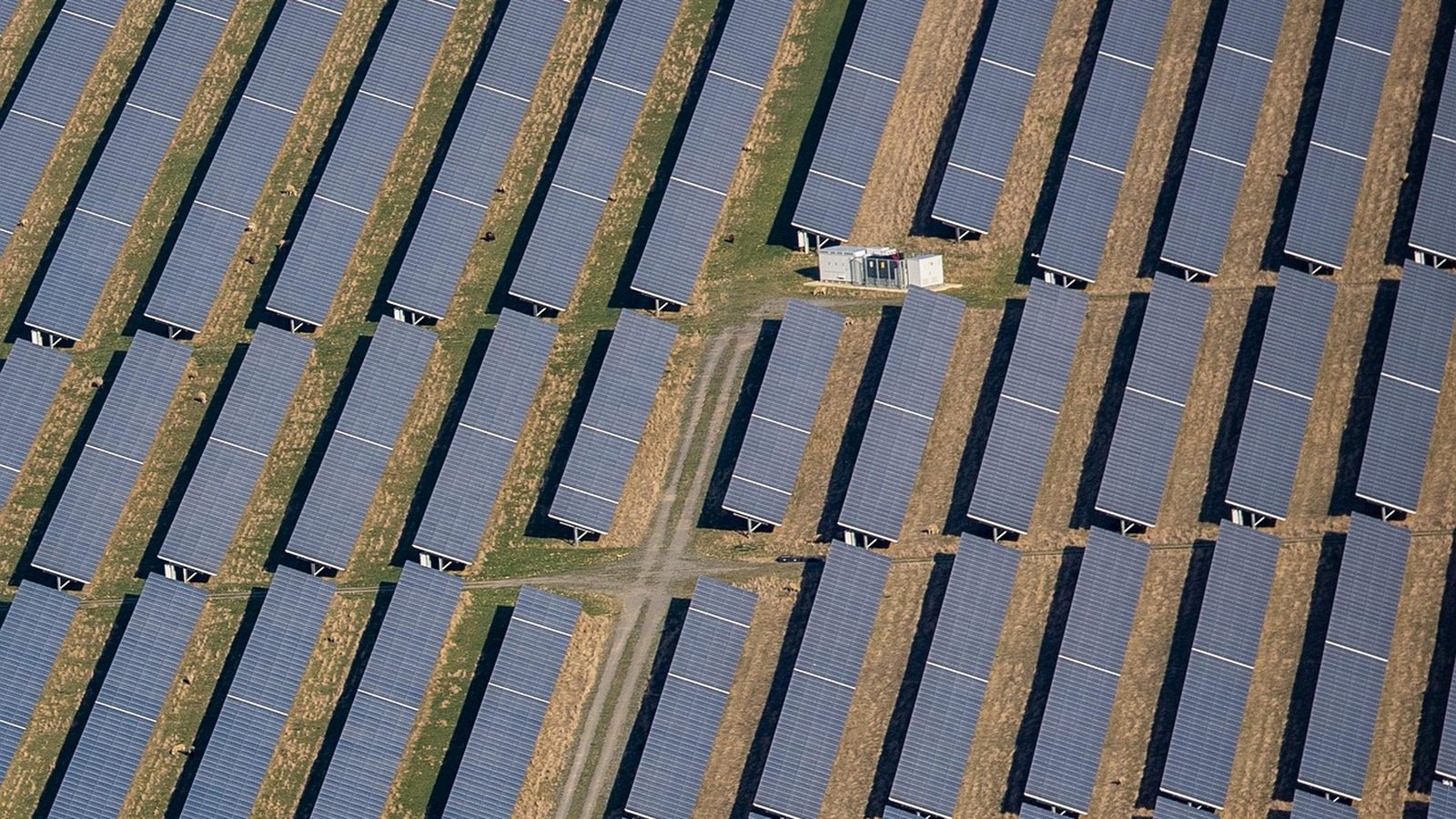
Photo: TheOtherKev, via Pixabay
Florida · Hialeah
Hialeah solar: built for 175 mph or not built at all
Written by the Solar Learning Lab research deskUpdated August 28, 202611 min read
Solar in Hialeah is not a generic Florida install with palm trees. Miami-Dade County sits inside the Florida Building Code's High Velocity Hurricane Zone, where houses are engineered for a 175 mph three-second design gust, and every module, rack and roof attachment on your project needs a current Miami-Dade Notice of Acceptance. Equipment that passes inspection in Orlando can be flatly illegal on a roof here.
The paperwork is heavier too: notarized owner affidavits, a recorded Notice of Commencement on any job of $5,000 or more, and a permit fee calculated as a percentage of job cost because the city's fee schedule has no solar PV line at all. None of this kills the deal. FPL's full retail monthly netting is one of the friendlier export rules in the country. But you need the real cost stack, and that is what this page is for.
Get the baseline before the pitch
Run a screening estimate first, so the hurricane-zone premiums show up as line items instead of surprises.
Run a Hialeah estimateWind load is the design constraint. Everything else follows.
The Florida Building Code's Section 1620 sets the wind velocity for load calculations in Miami-Dade County at 165 mph for Risk Category I buildings, 175 mph for Risk Category II, the category that includes houses, 186 for Category III and 195 for Category IV. Those are three-second gust figures, and they drive every structural decision on a Hialeah array: attachment spacing, rail selection, edge zone layout, fastener embedment.
Product approval is the enforcement mechanism. The Miami-Dade RER Product Control Section issues Notices of Acceptance to manufacturers, not installers, and each NOA carries review fees and renewal cycles, per the county's NOA submittal checklist. For your project this translates to one non-negotiable checklist item: modules, racking and attachments must carry current Miami-Dade NOAs or equivalent HVHZ-rated state approval. Ask each bidder for NOA numbers in the proposal. The good ones paste them in without being asked; the ones importing an out-of-county equipment package will stall.
In practice, the mistake we see is an attractive quote using hardware the installer normally deploys two counties north. It survives the sales call and dies at plan review, and the redesign eats whatever the discount was worth.
Nobody can quote you a flat Hialeah permit fee, honestly
We read the city's Building Department fee schedule, effective May 23, 2022, line by line. There is no residential photovoltaic line item. The closest applicable line is EL05R, which prices residential electrical alterations at 3 percent of job cost with a $300 minimum, and EL03 prices electrical service at $100 per 100 amperes. The only items with the word solar in them are plumbing lines for solar water heaters at $180, which is a different technology and not your PV project.
A percentage-of-cost fee scales with your contract, so a bigger system means a bigger permit line, unlike the flat fees most Florida cities publish. When a Hialeah proposal shows a permit number, ask which fee schedule item it maps to. A permit is required in the first place because the city's adopted Florida Building Code language captures installing or altering any electrical system, per the city's own guidance. Applications move through the Citizen Self Service portal listed on the fee schedules page, and the counter sits at the Building Division, 501 Palm Avenue, 2nd Floor.
Budget a trip to the notary and the county recorder
Hialeah's permit requirements page reads like a checklist of ways to lose two weeks. Permit applications require notarized owner affidavits. Condominium properties need an Association Authorization Letter with the association president's notarized signature. An owner-builder must actually live at the property, with a Florida driver's license matching the address.
Then the big one: any job of $5,000 or more requires a Notice of Commencement filed with the Miami-Dade County Recorder, and the recorded NOC must be present at the first inspection. Essentially every residential solar contract clears $5,000, so treat the NOC as mandatory. No recorded NOC at inspection means a failed inspection and a rescheduled crew. Permits also expire six months after the last approved inspection, which punishes projects that drift. A competent local installer sequences all of this before racking touches the roof; your job is to confirm they have.
The FPL account, itemized without the gloss
Hialeah is Florida Power and Light territory. The utility's Ten Year Site Plan filed with the PSC treats Miami-Dade as part of its South Florida load pocket, per the filing, and on the city side, Ordinance 2018-149 granting FPL a utility easement confirms who runs the wires here. FPL averaged 13.705465 cents per residential kWh in 2024 across 5,236,277 customers, per EIA Table 6.
| Energy source | Type | Average price | What that means |
|---|---|---|---|
| FPL | residential customer charge | $25.00 per month | Fixed. Survives any size solar system, per the Florida PSC's May 2026 Facts and Figures. |
| FPL | 1,000 kWh residential bill | $130.68 as of December 31, 2025 | Excludes local taxes and franchise fees. |
| FPL | 2024 average residential rate | 13.71¢ per kWh | EIA Table 6, bundled retail sales. |
| Net metering credit | monthly excess under Rule 25-6.065 | retail offset kWh for kWh monthly | Excess rolls to next bill; year end leftovers pay out at the COG-1 as available energy rate, far below retail. |
Figures from the Florida PSC Facts and Figures, May 2026, EIA Table 6 and Rule 25-6.065.
Local color that matters more than it seems: FPL's Turkey Point Units 3 and 4 sit in this county, licensed to operate to 2052 and 2053 per the PSC. This is a utility with cheap, long-lived generation, which is exactly why the solar pitch in Hialeah cannot be rate pain. It has to be the netting mechanics and the fixed-cost discipline, honestly presented.
The 12 month credit bank, and where it leaks
Florida's Rule 25-6.065 governs FPL net metering, and its core is generous: monthly excess energy is credited to the next billing cycle at retail equivalence, and credits accumulate for up to 12 months. The leak is at the end of the calendar year, when unused credits pay out at the average annual rate of FPL's COG-1 as available energy tariff, a wholesale-flavored number far below retail. Persistent overproduction is a donation with extra steps. Size to your consumption.
Tier 1 protections cover systems of 10 kW or less: the utility may not impose fees beyond those on ordinary customers, may not require liability insurance (it may only recommend it), and interconnection is standardized with the net meter installed at no cost to you. Sizing arithmetic hides in the definitions: ratings are AC nameplate, DC systems get multiplied by 0.85 for the inverter, and the system cannot exceed 90 percent of your distribution service rating. The rule also sets clocks, with the utility executing the interconnection agreement within 30 calendar days and inspecting within 30 days of your completion notice. A manual disconnect switch may be required at your expense.
What humid subtropical sun actually delivers
Our downtown Hialeah run models 1,521.2 kWh per year per installed kW. The shape surprises people: March is the top month at 148.4 kWh per kW, while June, nominally peak summer, sags to 115.7 under afternoon storm cloud. Latitude promises more than South Florida humidity delivers, and a model that respects that is worth more than a brochure that does not.
March models 148.4 kWh per kW, the annual peak. Dry season sun beats wet season heat here; June drops to 115.7 as daily storms roll through.
PVGIS v5.2 model run by Solar Learning Lab on August 28, 2026, NSRDB radiation database. Fixed south facing mount, 30 degree tilt, 14 percent losses, downtown Hialeah coordinates. Your roof will differ. Methodology at PVGIS. With over 90 percent of Hialeah homes running electric heat and cooling loads per Census data, self-consumption potential is high year-round, but only a bill-level review can say how high for your household.
Florida's tax angles: two real, one gone
The real ones first. Florida Statutes section 212.08(7)(hh) exempts solar energy systems and their components from sales tax, with the Florida Solar Energy Center certifying qualifying equipment. And section 193.624 keeps the added home value of a renewable energy device out of your assessed value for residential property, for devices installed since January 1, 2013. Florida also has no personal income tax at all, per the Department of Revenue, so no state credit exists or is missing; there is simply no income tax to credit against.
The gone one: P.L. 119-21 killed the federal 25D homeowner credit for any system whose installation wraps after December 31, 2025, since the completion date is what the statute counts, per the Congressional Research Service. In a city where median incomes run modest, losing a 30 percent credit changes payback math more than it does in wealthier zip codes. Be suspicious of any 2026 Hialeah quote that still shows a federal credit line, in either language.
Know the market you are actually in
Hialeah counted 223,109 residents and 76,459 households at the 2020 census, and it is 94 percent Hispanic or Latino, with 84.1 percent Cuban or Cuban American, the highest share of any large US city, and 89.5 percent of residents speaking Spanish at home, per the city's census profile. A solar company serving this city in English only is not serving this city. Contracts, disclosures and the finance conversation should be available in Spanish, and a household should never sign a document in a language the signer did not negotiate in.
Incomes here have historically ranked among the lowest of large US cities, which makes financing terms, not panel brands, the consumer protection issue. Watch for dealer fees folded into loans, escalator clauses in third party agreements, and any pitch that leans on a tax credit that no longer exists. The condo notarization requirement matters here too, since roughly half the housing stock is not single family.
Crews serving Hialeah roofs
The active companies cluster in Miami and Miami Gardens rather than Hialeah proper, with several carrying strong review volumes. HVHZ experience is the filter that matters: a crew that works Miami-Dade weekly lives inside the NOA regime; one based upstate visits it occasionally.
Sun Electronics
Miami Gardens, FL
4.6(54 Google reviews)
Airis Energy Solutions
Miami, FL
4.8(138 Google reviews)

Conexsol Florida - Solar Panel Companies
Miami, FL
5.0(60 Google reviews)
SolarWorks Innovations
Hialeah, FL
4.9(11 Google reviews)

Solar Dynamics
Doral, FL
4.8(107 Google reviews)
Ratings snapshot: Google Maps, August 2026, via the DataForSEO SERP feed. Zero companies paid us and none are endorsed by us.
Three questions that sort this list fast: which NOA numbers cover the proposed racking and modules, who records the Notice of Commencement and when, and can the crew walk a first inspection without a correction notice. Specific answers mean county experience. Vague ones mean you are the training job.
Estimate it yourself, in the open
The calculator below uses FPL's 13.71 cent average rate and our Hialeah production run. It does not price HVHZ hardware premiums or the $25 monthly customer charge, and it says so on its face. Use it to test system size against your bill before anyone with a commission does.
The top of the range is our downtown Hialeah PVGIS run, 1,521.2 kWh per kW. The bottom takes 15 percent off for shade, orientation and South Florida cloud. Summer humidity already lives in the model.
Cash quotes in Hialeah cluster near $2.17 per watt, against a $3.50 national 2024 median (LBNL). Use your quote.
Assumptions you can change
Use the rate on your actual lease or PPA quote. There is no published statewide average we trust enough to hardcode.
Cash purchase
$19,530 after state credit
- Year 1 benefit
- $156/mo
- Payback
- 10 years
- 20 year net position
- $26,020
Hialeah adds hurricane-zone hardware costs the state average cannot see: Miami-Dade NOA rated modules, racking and attachments engineered for 175 mph design gusts. Get the HVHZ line items priced separately in any cash quote.
Solar loan
$273/mo 15 yr payment
- Year 1 net
- -$116/mo
- Upfront
- $0
- 20 year net position
- -$3,521
With the federal homeowner credit gone after 2025, financed deals in Hialeah live or die on the dealer fee. Demand the cash price and the financed price side by side, in writing, in the language you negotiate in.
Lease / PPA
$0 down you buy the power
- Year 1 net
- -$117/mo
- Upfront
- $0
- 20 year net position
- -$30,355
Third party contracts are common where upfront cash is tight, but the provider's tax situation is not your savings. Compare the contract rate and escalator against FPL's 13.71 cent average and read the buyout table before signing.
Estimates, not quotes. This tool uses FPL's 2024 average residential rate, our Hialeah PVGIS run and Florida cost inputs. It does not model HVHZ equipment premiums, the $25 FPL customer charge or Rule 25-6.065 credit mechanics. We are a solar installer and we also partner with other solar companies. See our disclosures.
We are a solar installer and we also partner with other solar companies.
Hialeah solar questions, sin adornos
Why do Hialeah solar quotes run higher than quotes upstate?
What will the city charge for my permit?
What paperwork trips up solar projects here?
Does FPL pay me retail for my exports?
Can FPL charge me extra fees for going solar?
Is the 30 percent federal credit still available?
Receipts
Primary sources for this page, reviewed August 28, 2026.
- Hialeah Building Division directory, permit applicability guidance, permit requirements and fee schedules portal
- Building Department fee schedule, effective May 23, 2022
- FBC High Velocity Hurricane Zone wind loads and Miami-Dade NOA submittal checklist
- Ordinance 2018-149 and FPL Ten Year Site Plan
- Florida PSC Facts and Figures, May 2026, Rule 25-6.065 and EIA Table 6
- F.S. 212.08(7)(hh), F.S. 193.624 and Florida DOR on income tax
- CRS IN12611, Hialeah census profile and PVGIS
Hialeah estimates with the HVHZ priced in from the start
Tell us the roof type, the bill and whether the property is condo or single family. We answer in English o en español.
What does your monthly electric bill look like?
Hialeah average is $156 per month (EIA, 2024).