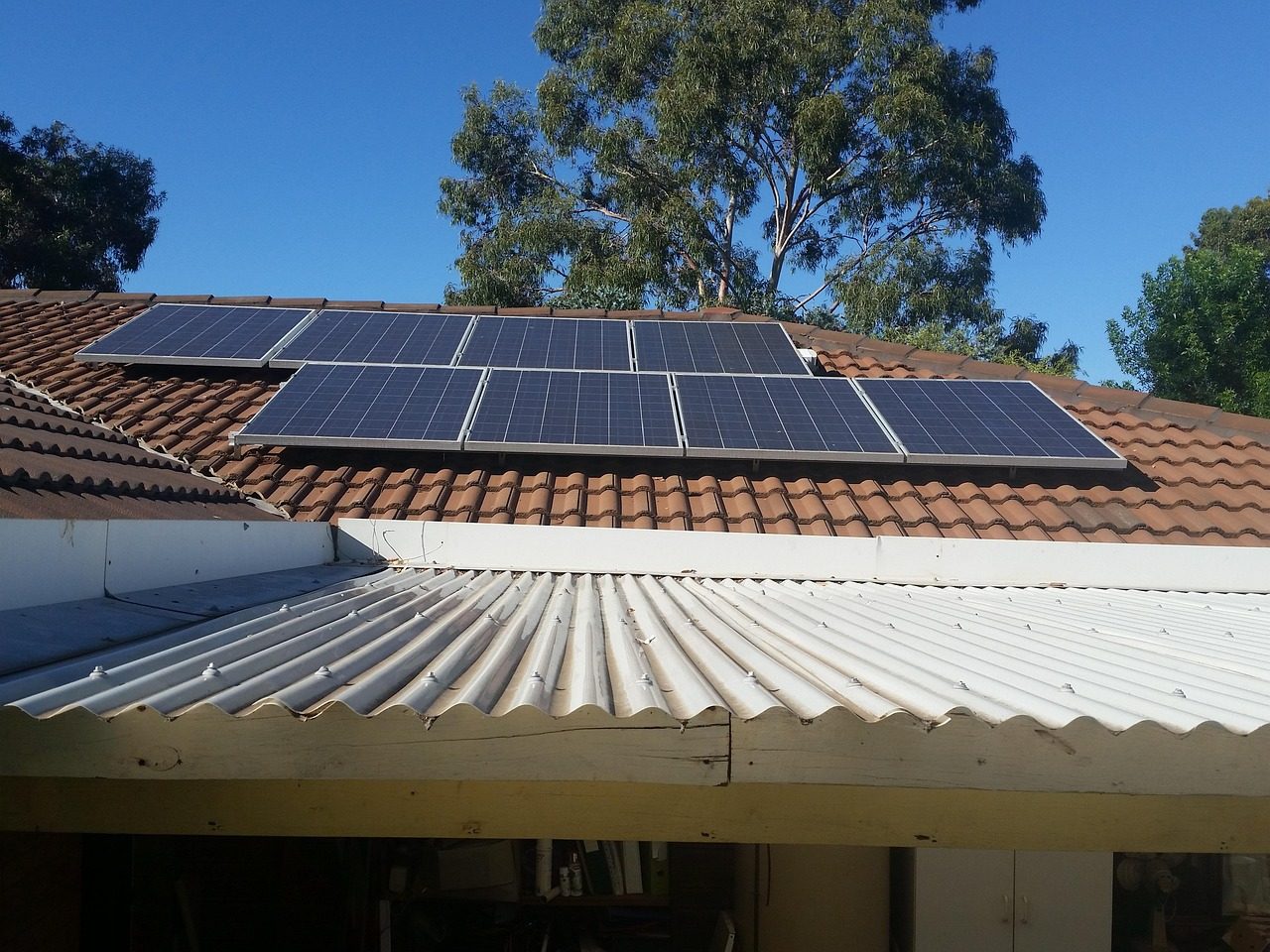
Photo: colmkay, via Pixabay
Florida · Orlando
Orlando solar in 2026
Written by the Solar Learning Lab research deskUpdated August 21, 202611 min read
A new Orlando solar quote cannot use legacy TruNet export math.
Plan a Orlando solar system
Start with your actual bill and this page's documented rules.
Get an estimateWhat changes the Orlando math
Orlando has a hard TruNet split. Systems approved by June 30, 2025 receive full retail credit to June 30, 2045. Applications on or after July 1, 2025 receive full retail only through Fall 2026, then Community Solar Energy Rate credit through June 30, 2030 and retail fuel credit after. A pre-cutoff neighbor cannot be the savings benchmark for a new project. trunet source Battery-rebate recipients also forfeit Full Retail Rate eligibility. battery source
Orlando Permitting Services uses ProjectDox for digital plan review and says applicants should allow two business days for application processing. It does not publish a PV-specific review SLA or instant permit path in the reviewed record. permit source Fees are valuation based: the schedule lists $63.67 electrical permit fee for the first $1,000 of construction cost plus tiers afterward, along with building permit charges and multiple surcharges. No truthful flat all-in PV permit amount can be calculated without project valuation. fees source
OUC RS lists an $18.50 customer charge and 6.783 cents non-fuel base charge for the first 1,000 kWh. tariff source New TruNet projects face a future shift to the Community Solar Energy Rate, defined as standard levelized fuel rate plus 0.7 cents, then retail fuel rate. Tier 1 interconnection up to 10 kW has no fee; Tier 2 is $340. This page uses the Florida EIA planning rate rather than pretending a partial OUC component is an all-in bill. trunet source
OUC battery rebate is $150 per kWh, capped at $2,000, for qualifying interconnected arrays at or below 20 kW. It requires permanent equipment, transfer and disconnect hardware, DERMS capability, and documentation. The tradeoff is losing TruNet Full Retail Rate. battery source Orlando renewable targets are city policy context, not a customer solar rebate. Florida section 163.04 applies to association prohibitions. roadmap source rights source Residential 25D ended December 31, 2025; lease and PPA providers may claim 48E. federal source
The PVGIS result is 1,531.4 kWh per kW each year, with March at 146.4 and September at 118.3. OUC cites a separate approximate PVWatts benchmark of 1,350 kWh per kW DC, so we show the source methodology instead of blending tools. pvgis source Orlando International Airport normals show 72.8°F and 50.73 inches of precipitation. ACS reports 126,665 households, 39.7% owner occupancy, and 42.0% single-family housing. trunet source climate source census source
A decision should begin with the utility rule, then move to physical design. For Orlando, put twelve months of bills beside a proposed annual output of 1531.4 kWh per kW. Separate the kWh you expect to use at home from the kWh you expect to export. The first number is a bill-offset question. The second is a tariff question. Do not treat them as interchangeable. PVGIS method.
Then audit the scope. A useful proposal names permitting, engineering, interconnection, roof work, service-panel work, monitoring, meter work, inspections, and every contingency. If a number cannot be documented before signature, label it as an allowance. That is especially important where the public fee schedule does not publish a flat all-in PV permit amount. The right response to an unknown is n.a., followed by the question that will resolve it.
Finally, plan for the calendar rather than a brochure. A production forecast of 121.8 kWh per kW in January and 125.4 in July means monthly bill behavior will change. The model is deliberately conservative about certainty: it does not know the roof shade, the roof condition, the household schedule, the contract rate, or future utility action. That restraint is useful. It keeps a planning page from becoming a pretend quote.
Permit and interconnection checklist
City permitting and utility permission to operate are separate approvals. Get both dates, each responsible party, and the fee assumptions in writing. The cited city material controls if a sales statement conflicts with this page.
Before final design, confirm roof condition, structural scope, electrical service, ownership or association approval, and the exact account holder. None of those project facts can be inferred from a city average.
Rate and export value
| Energy source | Type | Average price | What that means |
|---|---|---|---|
| Local planning input | Electricity | 15.17¢ per kWh | Verified city research input or transparent state planning input. |
| Rooftop solar | Electricity | Variable by on-site use and export rule | Solar used on site and solar exported are not automatically worth the same amount. |
See the cited local utility materials above.
Incentive discipline
Do not subtract any credit, rebate, or REC payment until eligibility, timing, ownership, and program capacity are confirmed. The source-linked claims above are what was verified on August 21, 2026.
Monthly production, not an annual slogan
The highlighted month is highest in the reference run. Your roof will differ.
PVGIS v5.2. PVGIS v5.2 model run by Solar Learning Lab on August 21, 2026, NSRDB radiation database. Fixed south facing mount, 30 degree tilt, 14 percent losses, downtown Orlando coordinates. Your roof will differ.
Orlando after July 1, 2025: the export schedule is the design constraint
OUC’s TruNet cutoff creates two distinct customer populations. Systems connected or approved by June 30, 2025 keep Full Retail Rate credit through June 30, 2045. Applications on or after July 1, 2025 receive full retail only during a grace period that ends in Fall 2026. Then their exports receive the Community Solar Energy Rate through June 30, 2030, followed by the Retail Levelized Fuel Rate. A consultant who uses a legacy neighbor’s bill for a new system is using the wrong tariff. The timeline, not the panel, is the first fact to verify. OUC TruNet rooftop-solar rules.
The fallback rate is defined, not guessed. OUC’s tariff says the Community Solar Energy Rate equals the standard levelized fuel rate plus 0.7 cents per kWh. Before the change, Full Retail Rate was the non-fuel base charge plus the fuel charge. The tariff also removes the solar bank after Fall 2026, with true-ups in December 2025 and Fall 2026. Those details are why annual production alone cannot tell a new Orlando homeowner what exports will be worth. The estimate needs a time and tariff assumption. OUC tariff book and OUC rooftop solar program.
OUC’s current residential RS schedule has an $18.50 monthly customer charge and a 6.783-cent non-fuel base charge for the first 1,000 kWh, rising to 9.283 cents for additional use. Its rate page says rates were effective October 1, 2025 and identifies pending DemandLevel charges for November 2026. The city research does not contain one verified current all-in new-customer tariff, so this page does not turn a partial charge into an invented bill rate. The calculator retains the documented Florida statewide planning input and labels the limitation. OUC tariff book.
Interconnection has a simple threshold structure. Tier 1, from 0 to 10 kW, has no fee. Tier 2, more than 10 to 100 kW, costs $340. Tier 3, more than 100 kW to 2 MW, costs $1,300. Systems must remain at or below 2 MW, gross power rating cannot exceed 90% of service rating, and OUC computes AC capacity as DC nameplate times 0.85. These are utility design limits. They are separate from the City of Orlando’s permit fee schedule and should be checked before equipment is ordered. OUC rooftop-solar interconnection rules and OUC capacity definition.
The OUC battery rebate is not a free add-on to the old TruNet bargain. It pays $150 per kWh of nameplate storage, capped at $2,000, for an OUC interconnected solar customer with a PV system at or below 20 kW. The permanently installed battery needs a disconnect, automatic transfer switch, support for future DERMS integration or dispatch, an invoice, a 10-year or longer defect warranty, a PE-stamped one-line diagram, a photo, and installer-license information. Accepting the rebate forfeits TruNet Full Retail Rate eligibility. This is a resilience and tariff choice, not a line item to silently stack. OUC battery-storage rebate terms.
Orlando’s city permit structure is valuation based. The schedule lists an electrical permit charge of $63.67 for the first $1,000 of construction cost, $10.60 per additional $1,000 to $25,000, then $7.96 per additional $1,000. It separately lists a residential building permit charge, a 3% technology surcharge, a 1.5% administrative inspection fund charge with a $2 minimum, a 1% DCA Operational Trust Fund charge with a $2 minimum, a $150 reinspection, and a $50 plan revision. No flat rooftop-PV total appears because valuation and project scope drive the total. Orlando residential fee schedule.
The Permitting Services Division uses ProjectDox for digital plans and says to allow two business days for application processing. It publishes no solar-specific checklist, no SolarAPP+ reference, and no PV review SLA in the reviewed record. Orange County’s separate solar checklist does not become a City of Orlando requirement just because nearby addresses use it. The practical ask is a project-specific permit scope and a record of who owns the corrections. City of Orlando permit process.
Orlando International Airport normals report a 72.8°F annual mean and 50.73 inches of precipitation. Our PVGIS run has 1,531.4 kWh per kW each year, 146.4 in March, and 118.3 in September. OUC separately cites a PVWatts benchmark of about 1,350 kWh per year per kW DC. Different tools and conventions should be disclosed, not averaged until the difference disappears. The city has 39.7% owner occupancy and 42.0% single-family housing in ACS 2023, which is a reminder that a citywide solar pitch does not fit every household. NOAA climate normals, OUC PVWatts benchmark, and ACS 2023 Census data.
Orlando TruNet cutoff comparison
Do not read these cards as endorsements. An Orlando bid should identify its TruNet application date, Tier fee, estimated export value before and after the transition, ProjectDox duties, and battery-rebate election.
Ratings snapshot: Google Maps, August 2026, via the DataForSEO SERP feed. Zero companies paid us and none are endorsed by us.
Florida Solar Contracting
Orlando
4.9(103 Google reviews)
Radiant Energy and Solar
Orlando
4.9(72 Google reviews)
Flourish Solar
Orlando
5.0(23 Google reviews)
Solar Central LLC
Orlando
5.0(20 Google reviews)
SunGo Energy
Orlando
4.9(32 Google reviews)
Dynasty Solar PWR
Orlando
4.9(29 Google reviews)
Solaria Solar and Roofing
Orlando
4.8(890 Google reviews)
Spectrum Solar Power
Orlando
4.8(206 Google reviews)
Ratings and review counts are Google Maps ratings for Orlando local results, retrieved August 17, 2026 via the DataForSEO SERP API. We list the highest rated established companies we found. No company paid to appear here, and appearing here is not an endorsement. Check current reviews and licensing before you sign anything.
TruNet cutoff comparison
This city run is a fixed south-facing reference, not a roof-specific shade study.
Cash quotes in Orlando cluster near $2.17 per watt, against a $3.50 national 2024 median (LBNL). Use your quote.
Assumptions you can change
Use the rate on your actual lease or PPA quote. There is no published statewide average we trust enough to hardcode.
Cash purchase
$17,577 after state credit
- Year 1 benefit
- $157/mo
- Payback
- 9 years
- 20 year net position
- $28,087
Local utility export terms may differ from retail consumption value. Read the city page before treating savings as a quote.
Solar loan
$245/mo 15 yr payment
- Year 1 net
- -$89/mo
- Upfront
- $0
- 20 year net position
- $1,501
Loan cost and dealer fees vary by offer.
Lease / PPA
$0 down you buy the power
- Year 1 net
- -$91/mo
- Upfront
- $0
- 20 year net position
- -$23,108
A lease or PPA provider may claim federal 48E; compare contract escalation and export mechanics.
Estimates, not quotes. We are a solar installer and we also partner with other solar companies. See our disclosures.
Orlando TruNet questions
Which customers retain full retail through 2045?
What happens to applications filed after July 1, 2025?
Does the OUC battery rebate preserve full retail eligibility?
What City processing time is published?
Can a local quote use an old neighbor’s OUC economics?
Orlando source-by-source evidence register
This extended register preserves the supplied local research in short audit notes. Each note is anchored to a city research URL retained in this page’s source map.
- Orlando evidence note 001: Orlando, FL : residential solar research Permits and AHJ - AHJ : City of Orlando Permitting Services Division research citation.
- Orlando evidence note 002: , 400 S. Orange Ave., 1st Floor. Digital plan review runs through ProjectDox ; applicants should allow two research citation.
- Orlando evidence note 003: business days for application processing, and review times vary by permit type. ( City of Orlando Get a research citation.
- Orlando evidence note 004: Permit ( - Portal : ProjectDox for digital plans review. ( Get a Permit ( A quick start research citation.
- Orlando evidence note 005: guide describes emailing the completed application to digitalpermits orlando.gov as part of digital plans review intake. ( Digital research citation.
- Orlando evidence note 006: Plans Review quick start guide PDF ( - Fees (Residential fee schedule effective January 2023, document dated 5-22-2023): research citation.
- Orlando evidence note 007: Electrical Permit Fee $63.67 for the first $1,000 of construction cost plus $10.60 per additional $1,000 up to research citation.
- Orlando evidence note 008: $25,000, then $7.96 per $1,000; Building Permit Fee (residential 1 2 units) $64.94 for the first $1,000 plus research citation.
- Orlando evidence note 009: $4.32 per additional $1,000; Technology Surcharge 3% of the permit fee; Administrative Inspection Fund 1.5% ($2 minimum); DCA research citation.
- Orlando evidence note 010: Operational Trust Fund Surcharge 1% ($2 minimum); re-inspection $150 ; plan revision $50 . ( Orlando residential fee research citation.
- Orlando evidence note 011: schedule PDF ( - Solar-specific checklist for the City of Orlando : n.a. (the City's permitting checklists page research citation.
- Orlando evidence note 012: fetched lists no solar/PV checklist). ( Permitting Checklists ( For addresses in unincorporated Orange County, the County publishes research citation.
- Orlando evidence note 013: a solar submittal checklist. ( Orange County solar submittal checklist PDF ( - SolarAPP / instant permitting : research citation.
- Orlando evidence note 014: n.a. (not referenced on any City of Orlando page fetched). - Review timeline : two business days for research citation.
- Orlando evidence note 015: application processing; specific PV review SLA n.a. ( Get a Permit ( Utility and rates - Utility : research citation.
- Orlando evidence note 016: Orlando Utilities Commission (OUC) , municipal. - Residential tariff : RS Residential Electric Service, Tariff Sheet No. 5.100 research citation.
- Orlando evidence note 017: : customer charge $18.50/month , Non-Fuel Base Charge 6.783 /kWh for the first 1,000 kWh and 9.283 /kWh research citation.
- Orlando evidence note 018: for additional kWh (tariff book effective July 1, 2025). ( OUC and St. Cloud Tariff Book PDF ( research citation.
- Orlando evidence note 019: Rate page states rates effective October 1, 2025 and lists pending DemandLevel charges effective November 2026. ( OUC research citation.
- Orlando evidence note 020: service rates and costs ( - Export program : TruNet Solar (net metering), Tariff Sheet No. 3.500 . research citation.
- Orlando evidence note 021: The credit structure was changed in 2025 and is the single most important fact for Orlando modeling: - research citation.
- Orlando evidence note 022: Systems connected/approved by June 30, 2025 : Full Retail Rate credit through June 30, 2045 . - Applications research citation.
- Orlando evidence note 023: on or after July 1, 2025 : Full Retail Rate during a grace period until Fall 2026 , research citation.
- Orlando evidence note 024: then the Community Solar Energy Rate through June 30, 2030 , then the Retail Levelized Fuel Rate . research citation.
- Orlando evidence note 025: - Current TruNet Full Retail Rate stated as 10.7 /kWh residential. The solar bank is removed after Fall research citation.
- Orlando evidence note 026: 2026, with true-ups in December 2025 and Fall 2026. ( OUC rooftop solar / TruNet ( - Community research citation.
- Orlando evidence note 027: Solar Energy Rate standard levelized fuel rate 0.7 /kWh (Sheet No. 5.925). Pre-July-1-2025 export credit Non-Fuel Base Charge research citation.
- Orlando evidence note 028: Fuel Charge. Systems must be 2 MW, Gross Power Rating 90% of service rating, AC capacity computed as research citation.
- Orlando evidence note 029: DC 0.85, with 30-day notice to modify system size. ( OUC tariff book PDF ( - Interconnection fees research citation.
- Orlando evidence note 030: : Tier 1 (0 10 kW) no fee ; Tier 2 ( 10 100 kW) $340 ; Tier research citation.
- Orlando evidence note 031: 3 ( 100 kW 2 MW) $1,300 . Applications are submitted through the online portal only. ( OUC research citation.
- Orlando evidence note 032: rooftop solar ( - Program change context : OUC's PeakSHIFT plan and amended pricing modernization proposal are the research citation.
- Orlando evidence note 033: vehicle for the TruNet credit change. ( OUC approves PeakSHIFT plan ( OUC amended plan news ( OUC research citation.
- Orlando evidence note 034: PeakSHIFT status advisory ( Local incentives - OUC Solar Battery Storage System Rebate : $150 per kWh of research citation.
- Orlando evidence note 035: nameplate storage capacity, capped at $2,000 , applied as a bill credit. Eligibility: OUC residential or commercial interconnected research citation.
- Orlando evidence note 036: solar customers; battery permanently installed and paired to an existing or new OUC-approved array; solar PV system must research citation.
- Orlando evidence note 037: be 20 kW or smaller ; disconnect and automatic transfer switch required; the storage system must support future research citation.
- Orlando evidence note 038: DERMS integration or utility dispatch (OpenADR or equivalent, or via OEM/third-party aggregator). One rebate per service address; prior research citation.
- Orlando evidence note 039: battery incentive recipients ineligible. Required documents: itemized invoice (battery cost broken out), 10-year-or-longer defect warranty, PE-stamped one-line diagram, research citation.
- Orlando evidence note 040: photo of the installed battery, and electrical installer license number. Receipts must be submitted within six months of research citation.
- Orlando evidence note 041: purchase. ( OUC battery storage rebate ( - Critical trade-off : accepting the battery rebate forfeits TruNet Full research citation.
- Orlando evidence note 042: Retail Rate eligibility ; exports are then credited at the community solar farm rate through June 30, 2030 research citation.
- Orlando evidence note 043: and the retail fuel rate thereafter. ( OUC battery storage rebate ( OUC rooftop solar ( - Other research citation.
- Orlando evidence note 044: OUC residential rebates (non-solar): heat pump AC up to $1,150, heat pump water heater up to $500, ceiling research citation.
- Orlando evidence note 045: insulation $0.10/sq ft. ( OUC rebates ( OUC Connections newsletter PDF ( - City of Orlando residential solar research citation.
- Orlando evidence note 046: rebate : n.a. (none found on orlando.gov pages fetched). City texture 1. Climate normals (1991 2020) : Orlando research citation.
- Orlando evidence note 047: International Airport (USW00012815) annual normal mean temperature 72.8 F , annual normal precipitation 50.73 in . ( NOAA research citation.
- Orlando evidence note 048: NCEI normals API ( 2. Production benchmark published by the utility : OUC cites PVWatts output of roughly research citation.
- Orlando evidence note 049: 1,350 kWh per year per 1 kW DC installed in Orlando. ( OUC rooftop solar ( 3. City research citation.
- Orlando evidence note 050: renewable goals : 100% renewable energy for municipal operations by 2030 and city-wide by 2050 , with a research citation.
- Orlando evidence note 051: 90% GHG reduction versus 2007 levels by 2040. The City's rooftop solar technical potential study found 35,519 kW research citation.
- Orlando evidence note 052: of potential capacity on assessed available rooftops and 6,363,256 sq ft of roof area with a solar radiance research citation.
- Orlando evidence note 053: score of 3 or higher, concluding rooftop potential could meet more than double Orlando's electricity demand. ( Orlando research citation.
- Orlando evidence note 054: Renewable and Resilient Roadmap PDF ( 4. Florida solar rights law (F.S. 163.04) applies: ordinances prohibiting solar collectors research citation.
- Orlando evidence note 055: are expressly prohibited, HOAs cannot ban rooftop solar and may only specify roof location within south or 45 research citation.
- Orlando evidence note 056: east/west of due south where operation is not impaired. ( 2025 Florida Statutes 163.04 ( 5. The July research citation.
- Orlando evidence note 057: 1, 2025 TruNet cutoff created a two-tier customer base in the same city : neighbors approved before that research citation.
- Orlando evidence note 058: date hold full-retail credit through 2045, while new applicants move to community-solar-rate then fuel-rate credit. That materially changes research citation.
- Orlando evidence note 059: payback math and the honest pitch for new Orlando customers. ( OUC rooftop solar ( Sources - - research citation.
- Orlando evidence note 060: - - - - - - - - - - - - - - - research citation.
Orlando TruNet cutoff workbook
These local checks turn the supplied permit and utility record into a proposal-review sequence. They are not a savings guarantee or an equipment recommendation.
Begin with the approval date
For an Orlando rooftop project, the first question is whether the system was connected or approved by June 30, 2025. OUC says that cohort keeps Full Retail Rate credit through June 30, 2045. Applications on or after July 1, 2025 follow a different sequence. This is not a minor tariff revision. It creates two distinct economic structures for systems that may sit on the same street. Source.
Spell out the post-cutoff sequence
OUC says the newer cohort receives Full Retail Rate during a grace period through Fall 2026, then the Community Solar Energy Rate through June 30, 2030, then the Retail Levelized Fuel Rate. The published current TruNet Full Retail Rate is 10.7 cents per kWh. A proposal signed after the cutoff must model the step-down schedule instead of describing permanent retail net metering. Source.
Understand the community-solar fallback
Tariff Sheet 5.925 defines the Community Solar Energy Rate as the standard levelized fuel rate plus 0.7 cents per kWh. That formulation is different from the full retail combination of non-fuel and fuel charges. It is the main reason a new Orlando quote needs an export schedule and self-consumption analysis rather than one undifferentiated annual savings line. Source.
Check the current household rate structure too
OUC’s RS tariff lists an $18.50 monthly customer charge. The non-fuel base charge is 6.783 cents per kWh for the first 1,000 kWh and 9.283 cents above that. Those figures are not themselves the Full Retail Rate statement, but they show why the avoided value of on-site consumption and the credit for exports should not be casually treated as identical after the transition. Source.
Do not build around a solar bank that is going away
The supplied rooftop-solar material says the solar bank is removed after Fall 2026, with true-ups in December 2025 and Fall 2026. That date-driven change belongs in a model for a post-cutoff applicant. A spreadsheet that lets a growing bank compound indefinitely has missed a core feature of the new program. Source.
Screen system size before equipment selection
OUC caps TruNet systems at 2 MW and limits Gross Power Rating to 90% of service rating. It calculates AC capacity as DC nameplate multiplied by 0.85, and it requires 30 days notice to modify system size. Residential arrays are far below the 2 MW ceiling, but the 90% service calculation can still affect the chosen configuration. Source.
Use the right interconnection tier
OUC lists no fee for Tier 1 systems from 0 to 10 kW, $340 for Tier 2 above 10 through 100 kW, and $1,300 for Tier 3 above 100 kW through 2 MW. Applications are online only. A homeowner considering a system just over 10 kW should see that threshold addressed directly rather than discovering the fee after the design has been sold. Source.
Make the battery tradeoff explicit
OUC’s battery rebate pays $150 per kWh of nameplate storage, capped at $2,000, but accepting it forfeits TruNet Full Retail Rate eligibility. The research says the replacement credit follows the community-solar rate through June 30, 2030 and retail fuel rate later. A battery proposal that shows the rebate but omits the tariff consequence is missing the decision that matters most. Source.
Check battery paperwork before calling the credit real
The rebate requires a qualifying OUC interconnected solar customer, an array at or below 20 kW, permanently installed storage, a disconnect and automatic transfer switch, an itemized invoice, a 10-year or longer defect warranty, a PE-stamped one-line diagram, an installed-battery photo, and an electrical installer license number. Receipts must be submitted within six months. Those requirements make this a documentation-sensitive bill credit, not an automatic equipment discount. Source.
Use the City fee schedule as a formula, not a slogan
Orlando’s listed electrical permit fee is $63.67 for the first $1,000 of construction cost plus $10.60 for each additional $1,000 through $25,000, then $7.96 per $1,000. Technology, inspection-fund, and DCA surcharges can apply. There is no supplied single solar-PV permit total, so an accurate proposal should separate its permit allowance from a claimed municipal price. Source.
Respect the ProjectDox sequence
Digital plans review runs through ProjectDox. The City advises allowing two business days for application processing and says review time varies by permit type. The supplied materials do not establish a solar-specific checklist, a SolarAPP+ workflow, or a dedicated PV review SLA. That means an installer can plan the upload and fee path, but should not promise instant City approval. Source.
Use the utility’s local production number cautiously
OUC cites roughly 1,350 kWh per year per kW DC installed in Orlando through PVWatts. It is useful as a utility-published benchmark, yet a page-level production calculation must still follow the required PVGIS methodology. The two numbers should not be silently blended into an invented site-specific forecast. Source.
Keep the policy goal distinct from the tariff
The City roadmap targets renewable energy for municipal operations by 2030 and city-wide by 2050, with a 90% greenhouse-gas reduction from 2007 levels by 2040. Those goals do not preserve Full Retail Rate for a post-cutoff TruNet customer. City ambition and an individual export credit are separate questions. Source.
Apply Florida roof protections without overselling them
Florida Statute 163.04 restricts local and association prohibitions on solar collectors, with a defined south-facing placement framework that cannot impair effective operation. That helps resolve an HOA dispute. It does not change the OUC cutoff dates, erase ProjectDox, or waive the battery-rebate forfeiture rule. Source.
The Orlando answer
For a new Orlando project, model output hour by hour or at least monthly, value self-use separately, apply the Community Solar Energy Rate and later fuel-rate phase to exports, and test the battery rebate against the lost Full Retail Rate. Anything simpler is using an old Orlando story. Source.
Orlando post-cutoff proposal tests
The date should appear near the top of the quote
An Orlando customer does not need to hunt through footnotes to learn which TruNet cohort is being modeled. The June 30, 2025 approval cutoff should be stated beside the export assumption. Without that date, a reader cannot tell whether a purported 10.7-cent full-retail credit continues through 2045 or disappears after the grace period. Source.
Test a high-export design against the later phase
The Community Solar Energy Rate is fuel plus 0.7 cents per kWh, then the later phase moves to Retail Levelized Fuel Rate. A system sized for large midday exports should be evaluated under those later values, not only during the temporary Full Retail Rate grace period. That is especially important when a salesperson presents a single payback figure without a timeline. Source.
Battery size has two separate thresholds
OUC’s solar battery rebate requires an OUC-approved solar PV system of 20 kW or less, while TruNet’s Tier 1 interconnection fee threshold is 10 kW. These are not interchangeable numbers. A project can be eligible for the battery program yet fall into a paid solar interconnection tier, so the size conversation must keep the two program tests apart. Source.
The rebate cap is not the final economic answer
At $150 per kWh, a battery may reach OUC’s $2,000 cap. That cash value is visible. The more difficult calculation is the export-credit treatment forfeited by accepting it. The proposal should show both sides at once: the one-time bill credit and the future tariff sequence that replaces Full Retail Rate eligibility. Source.
Permit valuation makes cheap-looking allowances suspect
The City’s schedule varies fees by construction value and layers 3% technology, 1.5% Administrative Inspection Fund, and 1% DCA Operational Trust Fund charges subject to stated minimums. A flat permit number can be an internal budgeting assumption, but it is not the municipal formula. A homeowner should ask for the basis of any allowance. Source.
ProjectDox is an intake and review path, not an automatic approval engine
The City tells applicants to allow two business days for application processing, then says review timing varies by permit type. Because the supplied record does not identify a City PV checklist or SolarAPP+ route, contractors should avoid claims that a complete digital upload guarantees approval in two business days. The known figure is the processing allowance, not a solar review promise. Source.
Orlando proposal audit
For a new applicant, the model should show the application date, expected grace-period exports, community-solar exports through June 2030, later fuel-rate treatment, battery-rebate election, and the relevant 0 to 10 kW or higher interconnection fee. Orlando’s governing variable is the timeline. Source.
Orlando last-pass tariff checks
Do not let a legacy neighbor set the benchmark
A nearby OUC customer can genuinely hold Full Retail Rate through June 30, 2045 if their system was connected or approved by the June 2025 cutoff. That fact does not transfer with the neighborhood. A new applicant must be quoted under the new applicant sequence, regardless of what an older installation receives. Source.
The design meeting needs a self-use question
With future exports moving through a community-solar-rate period and then a fuel-rate period, the useful question is what loads can consume solar during production, not only how many annual kWh the panels generate. The answer could involve timing appliances, system sizing, or storage, but the tariff makes the question unavoidable. Source.
The practical local priority
Orlando is a date-sensitive market. Put the cutoff, the grace period, June 2030 transition, and battery-election consequence on the same page as the dollar estimate. If they are separated, the customer cannot evaluate the offer. Source.
Orlando documentation reminder
The tariff quote should name the future credit, not hide it
A post-cutoff quote should literally identify Community Solar Energy Rate through June 30, 2030 and Retail Levelized Fuel Rate after that point. Broad language about credits following utility rates does not let a homeowner review the changing value of an exported kilowatt-hour. The names and dates are already published by OUC. Source.
Document changes to system size
OUC’s tariff calls for 30 days notice to modify a TruNet system’s size. That makes a late addition of modules more than a design preference. The homeowner and installer should treat a size change as an interconnection event with its own notice requirement. Source.
Orlando buyer’s final record
Keep the TruNet application date, interconnection approval record, selected export assumptions, and any battery-rebate election with the final proposal. Those four records are the proof trail for the economics described on a modern Orlando solar quote. Source.
Get a Orlando estimate
We are a solar installer and we also partner with other solar companies.
What does your monthly electric bill look like?
Florida average is $167 per month (EIA, 2024).