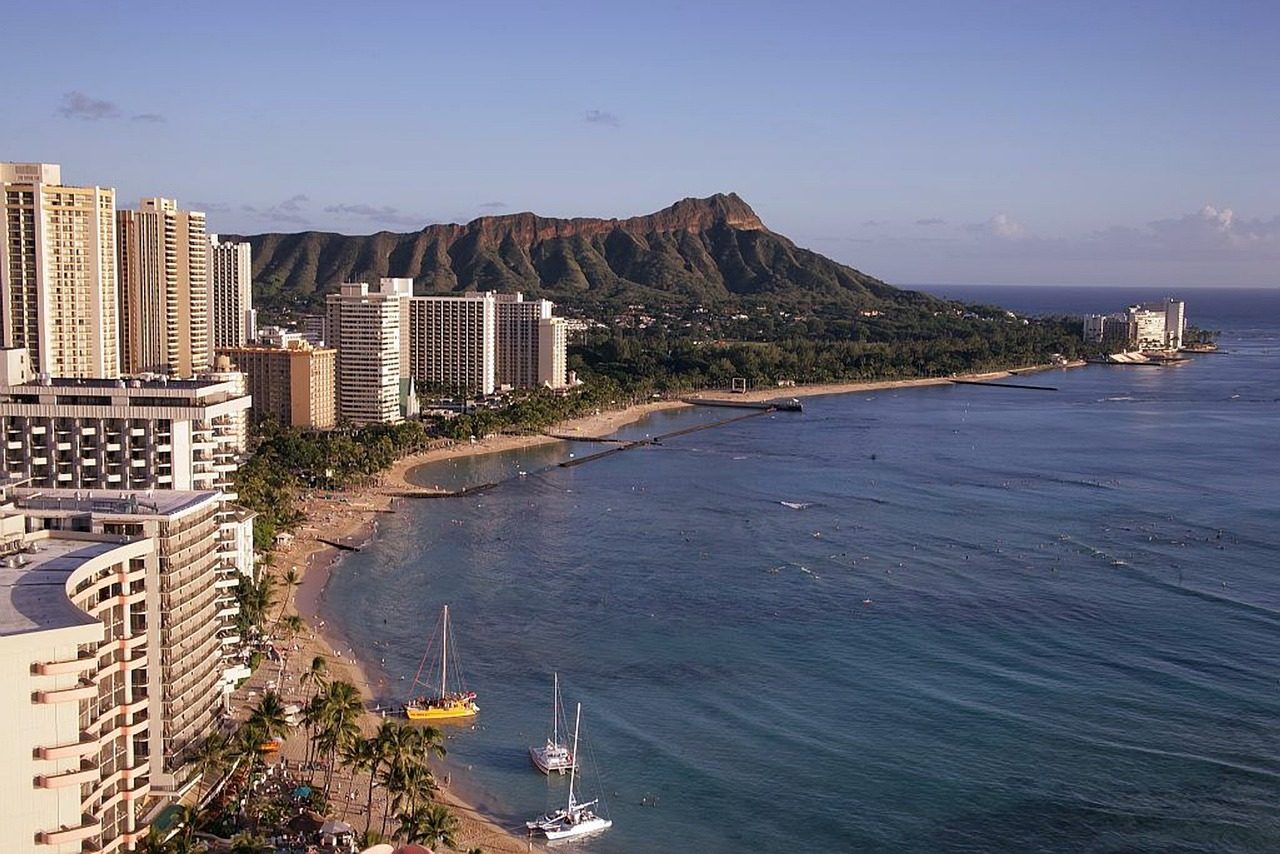
Photo: 12019, via Pixabay
Hawaii · Honolulu
Honolulu solar in 2026
Written by the Solar Learning Lab research deskUpdated August 21, 202611 min read
Honolulu solar has high retail power prices and lower daytime export value.
Plan a Honolulu solar system
Start with your actual bill and this page's documented rules.
Get an estimateWhat changes the Honolulu math
Hawaiian Electric Schedule R first-tier effective energy is 46.4958 cents per kWh, but SRE Export pays 13.5 cents daytime on Oahu, 18.9 cents overnight, and 32.9 cents from 5 to 9 p.m. That is a storage and load-shaping market, not retail net metering. rates source sre source Oahu had 82,475 grid-connected PV systems and 1,117 MW as of January 2026, so circuit capacity is part of early due diligence. saturation source hosting source
Honolulu DPP says Solar Quick Permits are processing and names HNL Build as its system. Eligible clean-energy projects through 20 kW can use expedited permitting. Ordinance 20-44 requires approval or denial within 14 calendar days of a complete application, subject to exceptions. permit source clean source ordinance source Fees are valuation based. Plan review is 20% of tentative building permit fee, capped at $25,000, plus the permit fee; no flat solar fee is published. Exact all-in fee is n.a. fees source
Schedule R has a $13.90 effective monthly single-phase charge and effective energy tiers from 46.4958 to 50.1598 cents per kWh. rates source New interconnections enter SRE Export, with credits locked for seven years and annual true-up. Remaining credits expire except BYOD Plus credits. sre source The Oahu capacity map updates on weekday nights and says circuits below 5% primary capacity will most likely need a study. Secondary circuits can still need upgrades. hosting source
Hawaii RETITC for single-family PV is the lesser of 35% actual cost or $5,000. PPA lessees cannot claim it. tax source BYOD Plus pays $400 per committed kW with no cap, plus a $400 per kW LMI adder below 140% AMI, subject to program conditions. byod source The homeowner 25D credit ended December 31, 2025; a lease/PPA provider may claim 48E. federal source
Our Honolulu PVGIS reference run produces 1,520.1 kWh per kW annually. August is highest at 141.3 and February lowest at 112.9. pvgis source Honolulu airport normals show 77.7°F and 17.10 inches of precipitation. ACS lists 136,228 households, 48.6% owner occupancy and 34.5% single-family housing. The detached roof is not the default form. climate source census source
A decision should begin with the utility rule, then move to physical design. For Honolulu, put twelve months of bills beside a proposed annual output of 1520.1 kWh per kW. Separate the kWh you expect to use at home from the kWh you expect to export. The first number is a bill-offset question. The second is a tariff question. Do not treat them as interchangeable. PVGIS method.
Then audit the scope. A useful proposal names permitting, engineering, interconnection, roof work, service-panel work, monitoring, meter work, inspections, and every contingency. If a number cannot be documented before signature, label it as an allowance. That is especially important where the public fee schedule does not publish a flat all-in PV permit amount. The right response to an unknown is n.a., followed by the question that will resolve it.
Finally, plan for the calendar rather than a brochure. A production forecast of 116.3 kWh per kW in January and 135.2 in July means monthly bill behavior will change. The model is deliberately conservative about certainty: it does not know the roof shade, the roof condition, the household schedule, the contract rate, or future utility action. That restraint is useful. It keeps a planning page from becoming a pretend quote.
Permit and interconnection checklist
City permitting and utility permission to operate are separate approvals. Get both dates, each responsible party, and the fee assumptions in writing. The cited city material controls if a sales statement conflicts with this page.
Before final design, confirm roof condition, structural scope, electrical service, ownership or association approval, and the exact account holder. None of those project facts can be inferred from a city average.
Rate and export value
| Energy source | Type | Average price | What that means |
|---|---|---|---|
| Local planning input | Electricity | 46.4958¢ per kWh | Verified city research input or transparent state planning input. |
| Rooftop solar | Electricity | Variable by on-site use and export rule | Solar used on site and solar exported are not automatically worth the same amount. |
See the cited local utility materials above.
Incentive discipline
Do not subtract any credit, rebate, or REC payment until eligibility, timing, ownership, and program capacity are confirmed. The source-linked claims above are what was verified on August 21, 2026.
Monthly production, not an annual slogan
The highlighted month is highest in the reference run. Your roof will differ.
PVGIS v5.2. PVGIS v5.2 model run by Solar Learning Lab on August 21, 2026, NSRDB radiation database. Fixed south facing mount, 30 degree tilt, 14 percent losses, downtown Honolulu coordinates. Your roof will differ.
Honolulu solar economics: retail use, time-of-day exports, and storage
Hawaiian Electric’s June 2026 Schedule R numbers show why Honolulu cannot be judged by sunshine alone. The effective single-phase customer charge is $13.90 per month. Effective energy is 46.4958 cents for the first 350 kWh, 47.8902 cents for the next 850 kWh, and 50.1598 cents above 1,200 kWh. Those are retail purchase prices. They are not the price for every solar kWh that reaches the grid. That distinction is the foundation of a current Honolulu system design. Hawaiian Electric June 2026 effective rate summary.
New Oahu systems use SRE Export. The stated 2024 to 2026 credits are 18.9 cents per kWh overnight from 9 p.m. to 9 a.m., 13.5 cents during daytime from 9 a.m. to 5 p.m., and 32.9 cents during the 5 to 9 p.m. evening peak. Rates are updated every three years and locked for seven years at interconnection. Credits true up annually, and remaining credits expire except for BYOD Plus credits. A battery can turn midday production into evening household use or potentially evening export, but the research does not support a universal battery-payback promise. Hawaiian Electric SRE Export program.
The circuit check is not optional theater in a saturated market. Hawaiian Electric reported 82,475 grid-connected PV systems totaling 1,117 MW on Oahu as of January 27, 2026, with 97% of systems residential and half of single-family-home customers on Oahu using rooftop solar. The Locational Value Map shows capacity on the primary system only, updates nightly on weekdays, and says a circuit with less than 5% availability will most likely require an interconnection study. Even a favorable primary reading cannot rule out constraints on the many secondary neighborhood circuits. Hawaiian Electric rooftop-solar milestone and Oahu Locational Value Map guidance.
BYOD Plus is the live battery incentive, not the former Battery Bonus. Enrollment opened May 15, 2025 and was approved for five years. It provides $400 per committed kW with no cap, plus a $400 per kW LMI adder for customers below 140% AMI. Participants commit at least 1 kW in a selected daily two-hour window and need an advanced meter. The utility example says a 5 kW commitment yields $2,000 upfront, but an example is not a quote for a particular battery or load. Battery Bonus closed to new participants July 1, 2024. Hawaiian Electric BYOD Plus.
Hawaii RETITC has a separate ownership rule. For PV classified as “all other solar energy systems,” including single-family residential PV, the credit is the lesser of 35% of actual system cost or $5,000. A PPA lessee cannot claim the credit. If PV substitutes for a solar water heater required by Hawaii law, the credit is reduced by the lesser of 35% of actual cost or $2,250. The incentive should be checked against tax capacity and the Form N-342 instructions rather than treated as a universal net-price reduction. Residential 25D ended December 31, 2025, while a lease or PPA provider may claim 48E. Hawaii Form N-342 instructions and Congressional Research Service credit summary.
Honolulu DPP says Solar Quick Permits are processing, including in Special Management Areas and Special Districts. HNL Build is the current system named by DPP. Clean-energy expedited permitting covers eligible PV, solar water heating, battery storage, and EV charging projects through 20 kW. Ordinance 20-44 requires permits needed to operate a clean-energy project to be approved or denied within 14 calendar days of a complete application, subject to exceptions. The research does not confirm adoption of SolarAPP+, so this page does not call it a city option. DPP solar permit page, DPP clean-energy permitting, and Ordinance 20-44 record.
Fees remain valuation based. DPP’s calculator says plan review is 20% of the tentative building-permit fee, capped at $25,000, and is added to the building-permit fee. The code says project valuation includes electrical and permanent equipment, and starting work before a required permit can triple the fees. The table dollar amounts did not render in the reviewed code material, so the exact all-in Honolulu solar fee is n.a. That is more useful than presenting a fake flat number. DPP building-permit fee calculator.
Honolulu airport climate normals are 77.7°F annual mean temperature and 17.10 inches annual precipitation. Our PVGIS run produces 1,520.1 kWh per kW, with August at 141.3 and February at 112.9. The ACS profile has 34.5% single-family housing and 48.6% owner occupancy. A city that has a very deep rooftop-solar market can still have a limited detached-roof audience inside its urban census geography. Condo governance, shared systems, and meter arrangements are project facts outside this city model. NOAA climate normals, PVGIS, and ACS 2023 Census data.
Honolulu Oahu storage and interconnection comparison
The Honolulu cards are not endorsements. Compare whether the contractor has treated SRE Export as a time-of-day program, checked the circuit map, and separated RETITC ownership from BYOD Plus eligibility.
Ratings snapshot: Google Maps, August 2026, via the DataForSEO SERP feed. Zero companies paid us and none are endorsed by us.
Independent Energy Hawaii
Honolulu
5.0(336 Google reviews)
Sunspear Energy
Honolulu
4.9(123 Google reviews)
OceanHead Solar & Electric
Honolulu
4.9(39 Google reviews)
Hawaii Energy Connection
Aiea
4.8(78 Google reviews)
Inspired Energy Solutions
Honolulu
4.8(22 Google reviews)
PV Tech
Honolulu
4.6(37 Google reviews)
Malama Solar
Honolulu
4.6(204 Google reviews)
SolarTech Industries
Honolulu
4.4(26 Google reviews)
Ratings and review counts are Google Maps ratings for Honolulu local results, retrieved August 17, 2026 via the DataForSEO SERP API. We list the highest rated established companies we found. No company paid to appear here, and appearing here is not an endorsement. Check current reviews and licensing before you sign anything.
Oahu storage and interconnection comparison
This city run is a fixed south-facing reference, not a roof-specific shade study.
Cash quotes in Honolulu cluster near $3.40 per watt, against a $3.50 national 2024 median (LBNL). Use your quote.
Assumptions you can change
Use the rate on your actual lease or PPA quote. There is no published statewide average we trust enough to hardcode.
Cash purchase
$7,956 after state credit
- Year 1 benefit
- $212/mo
- Payback
- 4 years
- 20 year net position
- $53,790
Local utility export terms may differ from retail consumption value. Read the city page before treating savings as a quote.
Solar loan
$110/mo 15 yr payment
- Year 1 net
- $102/mo
- Upfront
- $0
- 20 year net position
- $41,885
Loan cost and dealer fees vary by offer.
Lease / PPA
$0 down you buy the power
- Year 1 net
- $103/mo
- Upfront
- $0
- 20 year net position
- $31,406
A lease or PPA provider may claim federal 48E; compare contract escalation and export mechanics.
Estimates, not quotes. We are a solar installer and we also partner with other solar companies. See our disclosures.
Honolulu SRE Export questions
Which Oahu export window has the stated 32.9-cent rate?
Will a favorable primary-map result guarantee interconnection?
What distinguishes BYOD Plus from Battery Bonus?
Can a PPA lessee claim Hawaii RETITC?
How quickly must a complete clean-energy permit be decided?
Honolulu source-by-source evidence register
This extended register preserves the supplied local research in short audit notes. Each note is anchored to a city research URL retained in this page’s source map.
- Honolulu evidence note 001: Honolulu, HI : residential solar research Permits and AHJ - AHJ : City and County of Honolulu Department research citation.
- Honolulu evidence note 002: of Planning and Permitting (DPP) . DPP runs a dedicated solar permitting page and states that Solar Quick research citation.
- Honolulu evidence note 003: Permits are processing , including in Special Management Areas and Special Districts. ( DPP solar permit ( - research citation.
- Honolulu evidence note 004: Portal : HNL Build is the current permitting system referenced on the DPP solar page ( DPP solar research citation.
- Honolulu evidence note 005: permit ( DPP's building permit requirements page also references an Instant Online Permit path and ePlans (Permit Center research citation.
- Honolulu evidence note 006: 808-768-8220, eplans honolulu.gov). ( DPP building permit requirements ( - Expedited clean energy permitting : per ROH 18-5.10 research citation.
- Honolulu evidence note 007: , DPP provides expedited permitting for solar PV and solar water heating (described as primarily for townhomes), battery research citation.
- Honolulu evidence note 008: storage, and EV chargers, with eligible projects limited to 20 kW . ( DPP clean energy permitting ( research citation.
- Honolulu evidence note 009: - Statutory clock : Ordinance 20-44 (approved December 23, 2020) requires an internet-based permitting process under which permits research citation.
- Honolulu evidence note 010: required for the operation of a clean energy project are approved or denied within 14 calendar days of research citation.
- Honolulu evidence note 011: a complete application, subject to exceptions. ( Honolulu City Council document, hnldoc id 16071 ( - SolarAPP status research citation.
- Honolulu evidence note 012: : not adopted as of the sources fetched . A City Council resolution urges the Administration to implement research citation.
- Honolulu evidence note 013: NREL's SolarAPP separately from the City's Robotic Process Automation building permit system, noting the RPA system potentially reduces research citation.
- Honolulu evidence note 014: average residential building permit processing to 167 days . Confirmed City adoption of SolarAPP : n.a. ( hnldoc research citation.
- Honolulu evidence note 015: id 16071 ( - Fees : no flat published solar PV permit fee. Fees are valuation-based: Plan Review research citation.
- Honolulu evidence note 016: Fees under ROH 18-6.1 and Permit Fees under ROH 18-6.2 are based on the project value of work research citation.
- Honolulu evidence note 017: in each structure; the Plan Review Fee is 20% of the tentative Building Permit Fee, capped at $25,000 research citation.
- Honolulu evidence note 018: , and is in addition to the Building Permit Fee. ( DPP building permit fee calculator ( ROH research citation.
- Honolulu evidence note 019: 18-6.2 sets building permit fees per Table No. 18-A , states permit valuation includes electrical and all permanent research citation.
- Honolulu evidence note 020: equipment, and triples fees for work started before obtaining a required permit. ( ROH 18-6.2 ( The dollar research citation.
- Honolulu evidence note 021: amounts in Table 18-A did not render in the fetched code page: n.a. - Electrical permit : required research citation.
- Honolulu evidence note 022: for electrical work unless exempt (licensed contractor, no service-entrance equipment, and work $2,500 within 12 months). ( DPP research citation.
- Honolulu evidence note 023: building permit requirements ( Utility and rates - Utility : Hawaiian Electric (Oahu). - Residential tariff : Schedule research citation.
- Honolulu evidence note 024: R . Hawaiian Electric Company effective rate summary, effective June 1, 2026 (letter dated May 29, 2026): customer research citation.
- Honolulu evidence note 025: charge base $11.50 / effective $13.90 per month (single phase); energy first 350 kWh base 10.6812 / effective research citation.
- Honolulu evidence note 026: 46.4958 /kWh ; next 850 kWh base 11.8347 / effective 47.8902 /kWh ; over 1,200 kWh base 13.7121 research citation.
- Honolulu evidence note 027: / effective 50.1598 /kWh . ( Hawaiian Electric effective rate summary, June 2026 PDF ( index: effective rate research citation.
- Honolulu evidence note 028: summary ( - Export program : Smart Renewable Energy Export (SRE Export) , the current program under the research citation.
- Honolulu evidence note 029: Smart DER framework. Export credits are set for 2024 2026, updated every three years, and locked for 7 research citation.
- Honolulu evidence note 030: years for new interconnections. Oahu time-of-day export credits: Overnight (9pm 9am) 18.9 /kWh , Daytime (9am 5pm) 13.5 research citation.
- Honolulu evidence note 031: /kWh , Evening Peak (5 9pm) 32.9 /kWh . Credits are trued up annually and remaining credits expire research citation.
- Honolulu evidence note 032: (BYOD Plus credits do not). There is no program capacity limit and no project size limit within Rule research citation.
- Honolulu evidence note 033: 14H sizing; an advanced meter is required; available on Schedules R, G, and J. Legacy CGS, CGS , research citation.
- Honolulu evidence note 034: and Smart Export customers transition to SRE Export seven years after their initial contract date, beginning October 1, research citation.
- Honolulu evidence note 035: 2024. ( Hawaiian Electric SRE Export ( - Framework context : Hawaiian Electric describes the Smart DER framework research citation.
- Honolulu evidence note 036: as streamlining rooftop solar and storage program choices. ( Hawaiian Electric Smart DER news ( Local incentives - research citation.
- Honolulu evidence note 037: Bring Your Own Device Plus (BYOD Plus) : the successor to Battery Bonus. Enrollment opened May 15, 2025 research citation.
- Honolulu evidence note 038: , approved for five years. Upfront incentive $400 per kW committed with no cap , plus an additional research citation.
- Honolulu evidence note 039: $400/kW LMI adder for customers under 140% AMI (self-certify to affordability hawaiianelectric.com, valid one year). Minimum 1 kW research citation.
- Honolulu evidence note 040: commitment; customer selects a daily 2-hour dispatch window; example 5 kW commitment $2,000 ; example monthly export credit research citation.
- Honolulu evidence note 041: around $52 for a 15 kWh battery committing 5 kW. New batteries only; advanced meter required. Compatible with research citation.
- Honolulu evidence note 042: SRE Export/Non-Export and legacy NEM/CGS/CGS /CSS/Smart Export, but Battery Bonus participants cannot transition in. ( Hawaiian Electric BYOD research citation.
- Honolulu evidence note 043: Plus ( - Battery Bonus (predecessor, closed) : closed to new participants July 1, 2024 ; verification and research citation.
- Honolulu evidence note 044: validation documents no longer accepted after September 30, 2025 . Terms were a one-time $850 per kW of research citation.
- Honolulu evidence note 045: committed capacity plus $5/kW/month for 10 years ; the Oahu cap was 40 MW with 46.8 MW enrolled research citation.
- Honolulu evidence note 046: as of April 1, 2024. ( Hawaiian Electric Battery Bonus ( program status index: customer incentive programs ( research citation.
- Honolulu evidence note 047: - Hawaii Renewable Energy Technologies Income Tax Credit (RETITC, HRS 235-12.5) : for all other solar energy systems research citation.
- Honolulu evidence note 048: including PV on single-family residential property , the credit is the lesser of 35% of actual system cost research citation.
- Honolulu evidence note 049: or $5,000 . It cannot be claimed if the full system cost is used for another credit, if research citation.
- Honolulu evidence note 050: the taxpayer is a PPA lessee, or for systems 5 MW requiring PUC-approved PPAs. If PV substitutes for research citation.
- Honolulu evidence note 051: a required solar water heater under HRS 196-6.5, the credit must be reduced by the lesser of 35% research citation.
- Honolulu evidence note 052: of actual cost or $2,250. ( Hawaii Form N-342 instructions PDF ( - City and County of Honolulu research citation.
- Honolulu evidence note 053: cash rebate for residential solar : n.a. (none found on honolulu.gov pages fetched); the City's lever is expedited research citation.
- Honolulu evidence note 054: permitting, not cash. City texture 1. Saturation is the defining Honolulu fact : as of a January 27, research citation.
- Honolulu evidence note 055: 2026 Hawaiian Electric release, Oahu had 82,475 grid-connected PV systems totaling 1,117 MW (97% of systems residential), and research citation.
- Honolulu evidence note 056: fully half of customers in single-family homes on Oahu have rooftop solar . ( Hawaiian Electric, rooftop solar research citation.
- Honolulu evidence note 057: tops 120,000 ( 2. Circuit-level hosting capacity gates projects : the Oahu Locational Value Map shows percent capacity research citation.
- Honolulu evidence note 058: available on the primary system only, not on the thousands of secondary neighborhood circuits; circuits showing less than research citation.
- Honolulu evidence note 059: 5% available will most likely require an interconnection study, and local upgrades may be needed even where the research citation.
- Honolulu evidence note 060: primary shows headroom. Data updates nightly on weekdays. ( Oahu Locational Value Map ( 3. Highest retail rates research citation.
- Honolulu evidence note 061: in this five-city set drive storage attach : Schedule R effective energy charges run 46.5 to 50.2 /kWh research citation.
- Honolulu evidence note 062: as of June 1, 2026, while SRE Export pays 13.5 daytime versus 32.9 during the 5 9pm evening research citation.
- Honolulu evidence note 063: peak : the economics push customers toward batteries that discharge into the evening peak. ( effective rate summary research citation.
- Honolulu evidence note 064: June 2026 ( SRE Export ( 4. Climate normals (1991 2020) : Honolulu International Airport (USW00022521) annual normal research citation.
- Honolulu evidence note 065: mean temperature 77.7 F , annual normal precipitation 17.10 in : the warmest and by far the driest research citation.
- Honolulu evidence note 066: of the five cities. ( NOAA NCEI normals API ( 5. Permitting is legally fast but institutionally contested research citation.
- Honolulu evidence note 067: : Ordinance 20-44 mandates a 14 calendar day decision on clean energy permits, yet a Council resolution documents research citation.
- Honolulu evidence note 068: general residential building permit processing averaging up to 167 days under the City's RPA system and urges SolarAPP research citation.
- Honolulu evidence note 069: adoption. ( hnldoc id 16071 ( 6. Hawaii state solar rights statute (HRS 196-7) : not verified. The research citation.
- Honolulu evidence note 070: statute page on capitol.hawaii.gov is robots-restricted and could not be fetched, so this is marked n.a. rather than research citation.
- Honolulu evidence note 071: asserted from memory. Sources - - - - - - - - - - - - - - research citation.
Honolulu storage and export decision memo
These local checks turn the supplied permit and utility record into a proposal-review sequence. They are not a savings guarantee or an equipment recommendation.
Honolulu begins with timing, not a net-metering label
Hawaiian Electric’s current program is Smart Renewable Energy Export. On Oahu, its stated credit windows are 18.9 cents per kWh overnight from 9pm to 9am, 13.5 cents in the daytime from 9am to 5pm, and 32.9 cents during the 5pm to 9pm evening peak. Those are time-specific export values, not one flat retail offset. Source.
Compare export value to avoided retail use
The June 2026 Schedule R summary lists effective energy charges of 46.4958 cents for the first 350 kWh, 47.8902 cents for the next 850, and 50.1598 cents over 1,200 kWh. A daytime SRE export at 13.5 cents is structurally different from consuming that kilowatt-hour inside the home at the stated retail energy level. That spread explains why battery timing is central rather than optional in Honolulu analysis. Source.
Use an evening example carefully
A battery that shifts energy into the 5pm to 9pm SRE window faces the published 32.9-cent evening export value, versus 13.5 cents for daytime export. That 19.4-cent difference is a tariff comparison, not a guarantee that any particular battery will deliver a specified bill result. Site load, dispatch choice, battery losses, and the actual program terms still matter. Source.
Do not overlook the seven-year term
For new interconnections, the SRE Export credit values are locked for seven years and updated every three years for the program. The annual true-up can cause remaining ordinary SRE credits to expire. A quote should show that expiration rule in the cash-flow logic, rather than carrying an ever-growing unused credit balance to the end of a 20-year model. Source.
Separate SRE credits from BYOD Plus credits
The research says BYOD Plus credits do not expire in the same way as remaining SRE Export credits. That distinction matters when a proposal includes both a PV array and a grid-service battery commitment. Combining all credits into one generic bucket hides which part of the bill follows which expiration treatment. Source.
BYOD Plus is a commitment program
Enrollment opened May 15, 2025 for a five-year approved program. It pays $400 per kW of committed capacity with no stated cap, plus another $400 per kW for eligible customers below 140% of area median income. The minimum commitment is 1 kW, and the participant selects a daily two-hour dispatch window. This is not merely a rebate for owning storage. Source.
Read the stated examples as illustrations
Hawaiian Electric gives a 5 kW committed example of $2,000 up front and an example monthly export credit of about $52 for a 15 kWh battery committing 5 kW. Those illustrations can help a household understand program structure. They should not be re-presented as a universal monthly payment or used to estimate an unverified battery design. Source.
Screen program eligibility first
BYOD Plus requires a new battery and an advanced meter. It is compatible with SRE Export, SRE Non-Export, and several legacy programs, but existing Battery Bonus participants cannot simply transition into it. Battery Bonus itself closed to new participants on July 1, 2024, so a current sales conversation needs to be about BYOD Plus rather than an expired predecessor offer. Source.
Do not state a flat solar permit price
Honolulu’s supplied fee information is valuation-based. The Plan Review Fee equals 20% of the tentative building-permit fee and is capped at $25,000, separate from the permit fee itself. Permit valuation includes electrical work and permanent equipment. A proposal may estimate an allowance, but it should not claim a uniform City solar-permit price the City has not published. Source.
Treat 20 kW as an eligibility threshold
DPP’s expedited clean-energy path covers eligible PV, solar water heating, storage, and EV charging projects up to 20 kW. Ordinance 20-44 requires approval or denial within 14 calendar days of a complete clean-energy application, subject to exceptions. The key word is complete. A project that needs a different process or is incomplete cannot be marketed as a guaranteed two-week permit. Source.
Avoid the SolarAPP+ shortcut claim
The supplied Honolulu research does not confirm SolarAPP+ adoption. A Council resolution urges adoption separately from the City’s robotic-process permit work, and cites a potential 167-day average residential building-permit processing figure for that broader system. The record supports a 14-calendar-day statutory clean-energy target for complete applications, not a blanket claim that every solar permit is instant. Source.
Hosting capacity can overrule a broad market narrative
Oahu had 82,475 grid-connected PV systems totaling 1,117 MW as of the January 2026 release, with 97% of systems residential and half of single-family-home customers using rooftop solar. Yet the Locational Value Map says primary-system availability below 5% will most likely require an interconnection study, and it does not show the thousands of secondary circuits. A saturated market still requires a circuit-specific check. Source.
Use Honolulu weather as context, not a yield guarantee
Honolulu International Airport has 1991 to 2020 normals of 77.7 degrees Fahrenheit annual mean temperature and 17.10 inches annual precipitation. Those unusually warm, dry conditions explain neither a particular roof’s shading nor its grid interconnection outcome. The required PVGIS production scenario remains the more appropriate standardized production input. Source.
The state credit has strict boundaries
For single-family residential PV classified as other solar energy systems, the Hawaii RETITC is the lesser of 35% of actual cost or $5,000. It is not available when the taxpayer is a PPA lessee, and the credit is reduced where PV substitutes for a required solar water heater under the stated rule. A finance model needs to confirm ownership and tax posture before including it. Source.
The Honolulu conclusion
This market rewards an honest battery-and-export model: measure daytime self-use, show the three SRE windows, examine BYOD Plus as a dispatch commitment, confirm the circuit path, and avoid turning either the 14-day ordinance or the tax-credit ceiling into a guarantee. Honolulu is not a generic rooftop-solar market. Source.
Honolulu interconnection and battery review notes
A primary-map green light is not a final yes
Hawaiian Electric describes the Oahu map as a primary-system capacity tool and warns that thousands of secondary circuits are not shown. Even a location with apparent primary headroom may need local work. Conversely, a broad Oahu rooftop-solar statistic cannot decide a single project. The project team should check the map, then treat any study request as a real schedule and cost variable. Source.
The five-percent warning belongs in customer planning
The utility says circuits with less than 5% available primary capacity will most likely require an interconnection study. That is not a generic probability for all Honolulu projects. It is a location-specific warning that should be discussed before a customer assumes a fixed installation-to-operation schedule. Source.
SRE timing makes daytime behavior tangible
A household that runs flexible loads in daylight may reduce purchases priced at the Schedule R effective energy levels. A household that exports the same energy in the daytime receives the stated 13.5-cent SRE value. The operational question is not whether solar produces at noon. It is whether the home consumes, stores, or exports that noon production. Source.
BYOD Plus has a daily operating obligation
The customer selects a daily two-hour dispatch window when enrolling in BYOD Plus. That means its $400-per-kW upfront amount is connected to a grid-service commitment rather than a passive purchase. A battery quote should identify the committed kW, the selected window, the advanced-meter requirement, and whether the household can live with that dispatch arrangement. Source.
LMI treatment must be verified, not presumed
The additional $400 per kW BYOD Plus adder applies to customers below 140% AMI who self-certify through the stated process, with a one-year validity. A contractor should not include the adder in a base price until the household has confirmed eligibility. A provisional incentive is not a discount until the customer qualifies. Source.
Permit timing depends on a complete qualifying application
The 14-calendar-day ordinance standard applies to a complete clean-energy application, subject to exceptions. Honolulu’s experience with broader permit processing is exactly why the distinction matters. The proper schedule language is that a qualifying complete application has a statutory target, not that every solar project is guaranteed to clear permit review in two weeks. Source.
Honolulu proposal audit
Review three export windows, retail consumption avoided, seven-year SRE terms, annual expiration of remaining ordinary SRE credit, selected BYOD commitment, and the actual circuit screen. Storage here is not an add-on story. It is part of the tariff logic. Source.
Get a Honolulu estimate
We are a solar installer and we also partner with other solar companies.
What does your monthly electric bill look like?
Hawaii average is $167 per month (EIA, 2024).