Arizona solar / Yuma
Yuma has Arizona's best sun and its hardest budget math
Written by the Solar Learning Lab research deskUpdated August 26, 202612 min read
Of the three Arizona cities we modeled on August 26, 2026, Yuma wins on production: 1,861.3 kWh per kW per year in our PVGIS run, ahead of Buckeye at 1,815.4 and Goodyear at 1,775.8. Then the census data cuts the other way. Median household income here is $65,482, roughly 63 percent of Goodyear's $103,319, and the median owner-occupied home is worth $230,000, about half of Goodyear's $471,300. The physics argue for solar harder in Yuma than anywhere we cover in the state. The financing conversation is harder too, and pretending otherwise helps nobody.
What Yuma gives buyers that its West Valley neighbors do not is a legally binding review clock. The city publishes a permit time frame table under A.R.S. 9-835 with a dedicated row for residential solar PV: 1 business day for completeness, 5 for first substantive review, 11 business days overall. What it does not publish is a solar permit fee. No line item exists, so no honest page can quote you one.
Price the whole project, not the panels
In a market this price sensitive, the monthly payment and the APS plan choice decide the deal. Start with the numbers that are actually published.
See the Yuma math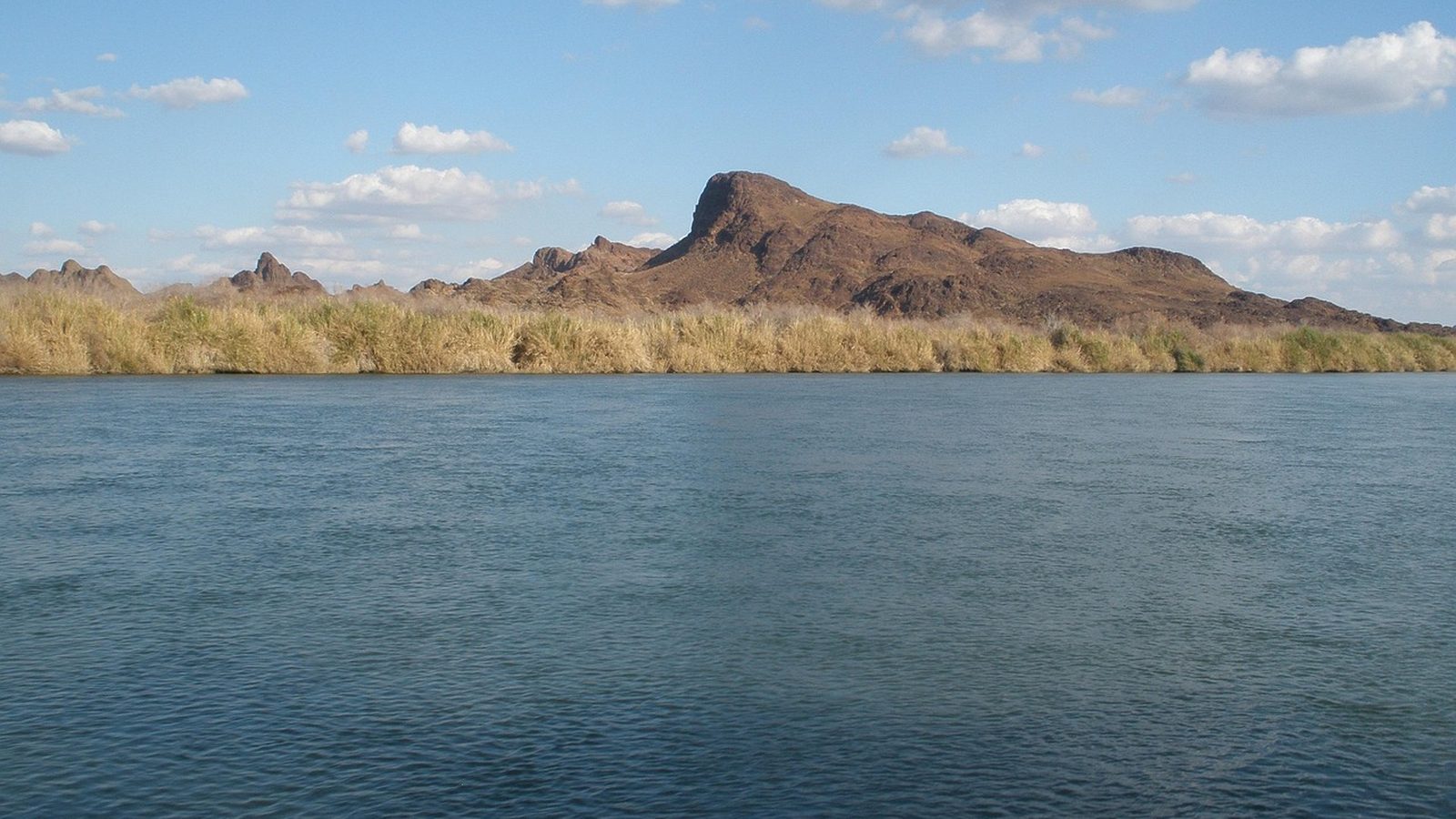
Photo: sbj04769, via Pixabay
kWh per kW per year in our Yuma PVGIS run, tops in this batch
Overall business-day review commitment for residential solar PV
Median household income, 2024 dollars
The tension that defines this market
Yuma is not a boomtown. It grew 8.4 percent from the 2020 census base to an estimated 105,227 people in July 2025, while Goodyear grew 30.4 percent and Buckeye 37.1. Median gross rent is $1,114, against $1,956 in Goodyear and $1,963 in Buckeye. This is a replacement and retrofit market: older roofs, established neighborhoods, 39,110 households, and the densest footprint of the three cities at 791.8 persons per square mile, which at least keeps installer drive times short. Census QuickFacts carries the comparison.
The operator's read: total system price framing sells poorly here and deserves to. What matters is whether the monthly loan payment beats the realistic APS bill reduction, and that comparison depends on plan choice and daytime usage more than on Yuma's admittedly excellent sun. A high-output roof with a bad export assumption is still a bad deal.
Eleven business days, in writing, with a statute behind it
Arizona law, A.R.S. 9-835, requires every municipality to state its administrative completeness and substantive review time frames separately and post them publicly. Yuma actually does it, with a table that names Residential Electrical - Solar PV as its own row: 1 business day for administrative completeness, 5 for the first substantive review, 5 for a second review if needed, 11 business days overall. Commercial solar runs 2, 5, 5 and 12. Most Arizona cities never publish a solar-specific commitment; Yuma's is the cleanest statutory compliance among the three cities in this research batch. The time frame table and the statute.
Context keeps it honest: ordinary residential electrical work gets the identical 1, 5, 5, 11 treatment. There is no expedited solar lane and no automated platform like SolarAPP+ anywhere on Yuma's building safety pages. Solar rides the normal electrical permit, filed through the Tyler EnerGov development portal, and the plain-language version the city advertises, residential plan review generally in 5 work days, matches the statutory table. The building permits page.
Nobody can quote you a Yuma solar permit fee, including us
The published fee handout sets electrical permit fees "as indicated per the applicable fee tables of the respective ordinances," and no solar photovoltaic line item appears in any fee document we fetched. Building fees generally derive from ICC valuation data pushed through Table 1-A, with plan review at 65 percent of the building permit fee. The handout is also visibly stale: it still carries 2018 code titles while the city's adopted codes moved to the 2024 editions. Any installer quoting a precise Yuma permit fee from a website is improvising. The fee handout shows the gap.
The fix is procedural, and state law supplies it. Under A.R.S. 9-468, a solar permit fee cannot exceed the actual cost of issuing the permit, and the permittee may request a written itemized list of individual costs. So call the permit desk at (928) 373-5163, or have your contractor make the itemized request in writing. Budget watchers should also know the side charges that are published: reinspections at $50 per hour, weekend or holiday inspections at $100 per hour with a two hour minimum, and plan revisions at $50 per hour. The fee statute and the fee handout.
The code baseline moved on February 1, 2026
Yuma adopted the 2024 International Building Code, Residential Code, Existing Building Code and Property Maintenance Code effective November 3, 2025. A transition period let applicants use either the 2018 or 2024 editions through January 31, 2026. Since February 1, 2026, the 2024 codes are mandatory for all new applications. A plan set drawn to the old cycle now buys you a correction cycle inside that 11 day clock, so confirm the design edition before submittal, not at resubmittal. The city's code adoption notice.
Logistics of a four and a half day city
Yuma's Building Safety Division works Monday through Thursday 7 a.m. to 5 p.m., plus every other Friday. Inspection requests generally get a 24 hour response, and a request made before 3 p.m. is scheduled for the next business day. Those two facts together are a real scheduling constraint: miss the 3 p.m. cutoff before an off Friday and the job waits until Monday. Applications also expire 180 days after filing if no permit issues. Building Safety and the permits page publish the details.
One quirk worth a sentence: the electrical permit application carries a Federal Aviation Administration notice for property in the vicinity of Yuma International Airport, which shares runways with Marine Corps Air Station Yuma. Homes near the field should expect that box to matter. The application itself lists eight numbered drawing requirements, down to wire size, conduit and GFCI locations. The electrical application.
Peak pricing hits after your panels have quit for the day
APS serves Yuma; the city itself runs water, sewer and trash only, and the statewide APS maps label Yuma, Wellton, Somerton and San Luis inside APS territory. On both residential time of use plans the on-peak window is 4 to 7 p.m. weekdays, precisely when a fixed south-facing array is past its output peak and Yuma's late-running summer cooling load is still climbing. West-facing panels or a battery are the honest engineering answers, and both cost money that a $65,482 median income household will want justified line by line. The APS districts map.
| Energy source | Type | Average price | What that means |
|---|---|---|---|
| APS R-TOU-E | Energy only, no demand charge | 34.4¢ per kWh summer on-peak | Off-peak 12.3 cents, super off-peak 3.5 cents. |
| APS R-3 | Lower energy, adds demand charge | $19.585 per kW summer demand | On-peak energy 14.2 cents; one bad hour sets the charge. |
| Exports | RCP tranche to August 31, 2026 | 6.171¢ per kWh | About a fifth of summer on-peak retail on R-TOU-E. |
APS averaged 16.45 cents per residential kWh in 2024 in EIA's Table 6, among the highest of Arizona's large utilities, which is what makes self-consumed solar kWh valuable here. Both plans also charge a grid access fee per kW-dc of installed solar, $0.215 on R-3 and $0.242 on R-TOU-E, a small recurring cost that scales with system size whether or not the system performs. EIA Table 6.
Exports pay 6.171 cents, locked for a decade if you move inside the window
Arizona replaced net metering with net billing years ago. APS credits exports at the Resource Comparison Proxy rate, $0.06171 per kWh through August 31, 2026, a figure that has stepped down from $0.129 in 2017 under a rule that caps each annual cut at 10 percent. The next tranche is not yet published. What a Yuma buyer controls is timing: the rate locks for 10 years from interconnection, at the application-date rate if the system is installed and city approved within 180 days. Yuma's 11 business day review leaves enormous margin inside that window. Credits roll forward monthly, and balances over $25 pay out by check after the December bill. The RCP rider has the mechanics.
Hanging over everything is the APS rate case: 31 hearing days between May 18 and July 7, 2026, a recommended order expected by late November, a Commission vote due by December 31, 2026, and new rates expected in early 2027. Locking a known export rate before an unknown rate structure arrives is a defensible reason to act this year; inventing a specific 2027 rate is not. The Commission's update.
Yuma output, month by month
April edges May, 175.1 to 175.0 kWh per kW. Yuma's winter floor of 132.3 is the highest in our Arizona batch.
PVGIS v5.2. PVGIS v5.2 model run by Solar Learning Lab on August 26, 2026, NSRDB radiation database. Fixed south facing mount, 30 degree tilt, 14 percent losses, downtown Yuma coordinates. Your roof will differ.
1,861.3 kWh per kW per year is the strongest annual figure of the three Arizona cities we ran on August 26, 2026. Just as telling is the flatness: December still produces 132.3 kWh per kW, so a Yuma system earns real money in months when northern-state arrays hibernate. The model is a fixed south-facing roof at downtown coordinates with 14 percent losses; your orientation, shade and dust will move the result, and a west-facing compromise for the 4 to 7 p.m. window will trade away some of this total on purpose.
A third of Yuma rents, and the tax code notices
Owner occupancy in Yuma is 66.8 percent, against 77.7 in Goodyear and 86.0 in Buckeye, so roughly a third of the city's housing units are renter occupied. The Arizona Department of Revenue's rules make the ownership line unusually concrete: a renter who personally installs a device in the residence they occupy may claim the state credit, while a landlord who does not live in the property may not, and lease or PPA customers are treated as incurring no cost at all. Before anyone signs, settle who owns the equipment and who receives each benefit. QuickFacts and Publication 543.
For Yuma's older housing stock, the state's new installer chapter earns its keep: before an initial roof installation the contractor must evaluate the roof, recommend an inspection by a licensed roofing contractor, and is deemed to accept the roof surface and responsible for installation-caused damage, with minimum warranties of two years on collectors and storage units and one year on the rest. On a 1970s roof, that pre-installation evaluation is not a formality. And for the oldest neighborhoods, note that Arizona's void-the-covenant rule for anti-solar deed restrictions carves out instruments executed before April 17, 1980, a carve-out likelier to be live here than in the new-build West Valley. Chapter 175 and A.R.S. 33-1816.
The incentive ledger, 2026 edition
Gone: the federal 25D residential credit, repealed for expenditures made after December 31, 2025, with the expenditure counted at installation completion, so 2026 completions do not qualify. Remaining: Arizona's 25 percent device credit capped at $1,000 per residence on Form 310 with a five year carryforward, the sales tax deduction for registered solar retailers under A.R.S. 42-5061(M), and the property tax rule under A.R.S. 42-11054 that grid-tied PV adds no assessed value. Not existing: any APS residential solar rebate, any City of Yuma rebate, fee waiver or expedited solar program. None appears in the sources we fetched, so treat any claim of a local rebate as a red flag. CRS on the repeal, A.R.S. 43-1083, the sales tax statute and the property tax statute.
Yuma installer snapshot
Questions that separate Yuma bidders: what did the city permit desk actually quote for this job in writing, which 2024-code edition is the plan set drawn to, does the production model use Yuma-specific numbers or a generic Phoenix figure, and how does the design handle the 4 to 7 p.m. window, by orientation, by battery, or by admitting it does not.
Ratings snapshot: Google Maps, August 2026, via the DataForSEO SERP feed. Zero companies paid us and none are endorsed by us.
RV Connection and Satellite Electronics
Yuma, AZ
4.4(82 Google reviews)
Renewable Power USA Headquarters
Yuma, AZ
4.7(55 Google reviews)
Renewed Solar Panel Cleaning Yuma
Yuma, AZ
5.0(31 Google reviews)
Solar Steals Inc.
Yuma, AZ
5.0(13 Google reviews)
SunRate Energy
Yuma, AZ
4.7(12 Google reviews)
Ratings and review counts are Google Maps ratings for Yuma local results, retrieved August 17, 2026 via the DataForSEO SERP API. We list the highest rated established companies we found. No company paid to appear here, and appearing here is not an endorsement. Check current reviews and licensing before you sign anything.
Run the Yuma numbers
The upper bound is our fixed south-facing PVGIS model at downtown Yuma coordinates, the strongest annual figure of the three Arizona cities we modeled on August 26, 2026. The lower bound is a planning margin, not a survey.
Cash quotes in Yuma cluster near $2.20 per watt, against a $3.50 national 2024 median (LBNL). Use your quote.
Assumptions you can change
Use the rate on your actual lease or PPA quote. There is no published statewide average we trust enough to hardcode.
Cash purchase
$13,960 after state credit
- Year 1 benefit
- $161/mo
- Payback
- 7 years
- 20 year net position
- $32,818
Yuma cash buyers get the best production per dollar in our Arizona batch, but no published city solar fee line exists. Make the bidder show the actual permit cost in writing, and make the self-consumption share explicit.
Solar loan
$199/mo 15 yr payment
- Year 1 net
- -$38/mo
- Upfront
- $0
- 20 year net position
- $10,991
At Yuma's median income, the monthly payment is the whole conversation. Compare the loan payment against the realistic bill reduction under an APS time of use plan, not against the old flat bill.
Lease / PPA
$0 down you buy the power
- Year 1 net
- -$93/mo
- Upfront
- $0
- 20 year net position
- -$23,394
A lease or PPA does not qualify for Arizona's 25 percent device credit because the provider owns the system. On a tight budget, escalator clauses deserve more scrutiny here than anywhere else in the state.
Estimates, not quotes. Yuma inputs mix the Arizona EIA rate baseline, EnergySage state cost data and our own downtown Yuma PVGIS run. APS plan choice, daytime usage and roof orientation will move every number. We are a solar installer and we also partner with other solar companies. See our disclosures.
Yuma answers
How long does a Yuma solar permit take?
What does the permit cost?
Which building codes apply to a 2026 Yuma solar project?
Is Yuma really better for solar output than Phoenix-area cities?
Does APS pay retail for the power I export?
I rent in Yuma. Is any of this available to me?
Yuma document trail
timeFrameTable · buildingSafety · buildingPermits · feeHandout · electricalApplication · formsAndApplications · developmentPortal · timeFrameLaw · solarFeeLaw · installerChapter175 · apsDistrictsMap · apsServiceArea · rcpTariff · r3Schedule · rtouESchedule · accRateCase · eiaResidential · form310Statute · adorPub543 · salesTaxDeduction · propertyTaxRule · hoaSolarRights · crs25d · quickfactsBatch · pvgisModel
Get a Yuma proposal built on the published clock
We are a solar installer and we also partner with other solar companies. Bring an APS bill and your roof's age. In this market the right proposal leads with the monthly payment, the plan choice and a written permit cost, in that order.
What does your monthly electric bill look like?
Arizona average is $167 per month (EIA, 2024).