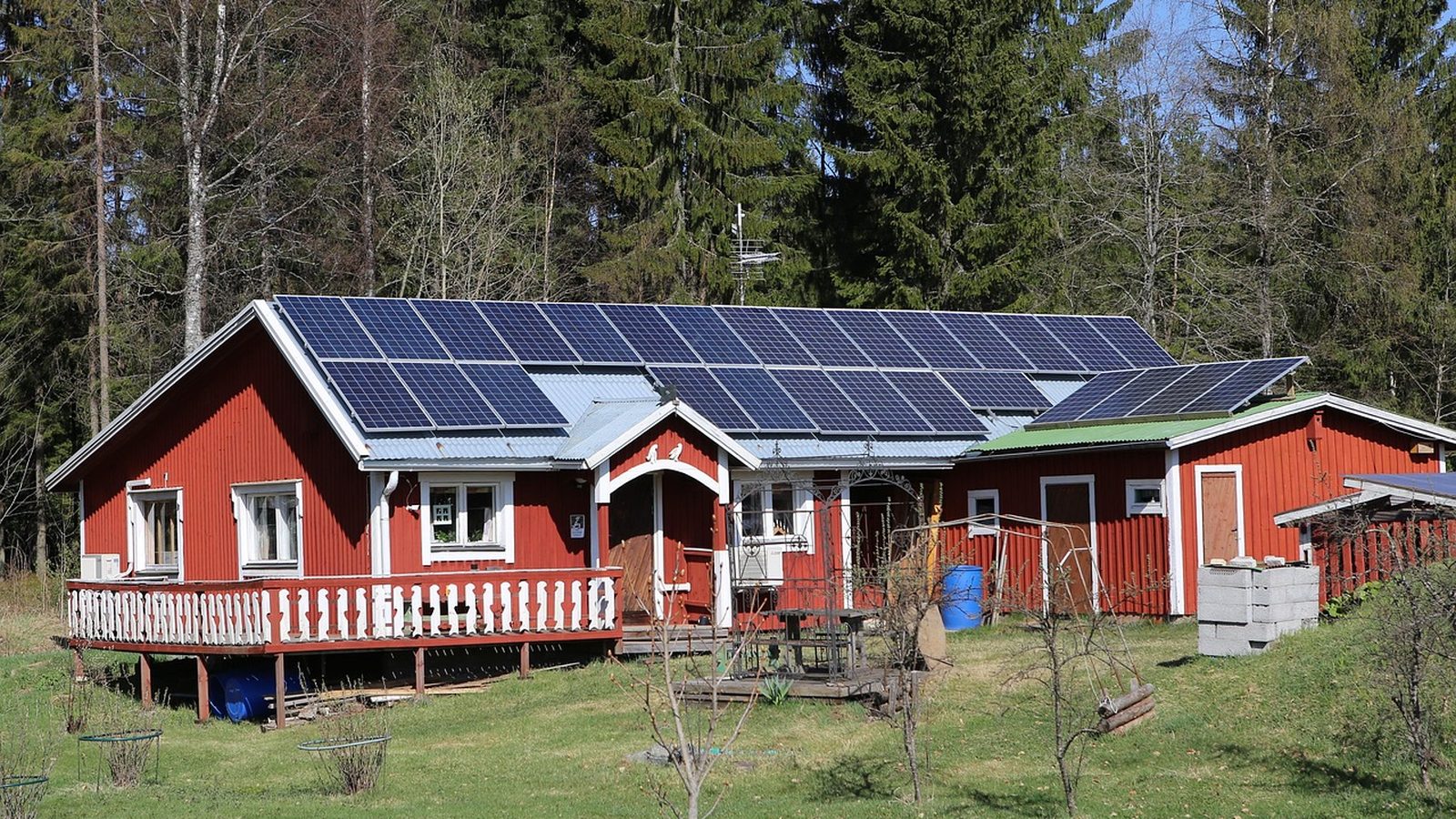
Photo: reijotelaranta, via Pixabay
California · Carson
Solar in Carson: an instant permit and a 50 percent renewable default
Written by the Solar Learning Lab research deskUpdated August 27, 202611 min read
Carson is the rare city in this corner of Los Angeles County where both halves of the solar story are unusually modern. The permit half runs through SolarAPP+, with the City publishing an actual step by step workflow from automated review to online inspection scheduling. The utility half is a two-seller arrangement: Carson is a Clean Power Alliance member city, so CPA provides generation at a default product of Clean Power, 50 percent renewable energy content, while Southern California Edison delivers, bills, and maintains the grid.
Both halves reward a homeowner who understands them and quietly punish one who does not. The instant permit only covers what the automated review covers. And the two-seller bill means one specific export question, which we flag below, currently has no confirmed answer. Read that section before you let anyone model your payback.
Check the math before the paperwork
The permit takes hours here, not weeks. Spend your patience on the bill analysis instead.
Estimate Carson solarTwo names on one electric bill
Carson appears on SCE's community choice aggregation page as a Clean Power Alliance partner city. The division of labor: CPA procures the generation, SCE owns the wires, sends the bill and handles the meter. Per CPA's member jurisdiction default product document, Carson selected Clean Power as its default, a 50 percent renewable energy content product. Customers can switch CPA products or opt out to SCE bundled service entirely.
Why does a solar shopper care which entity generates? Because the savings claim in a quote is built on a rate, and in Carson that rate is a composite of SCE delivery charges plus CPA generation charges. The 32.43 cents per kWh average that EIA Table 6 reports for SCE's 2024 residential sales is a systemwide bundled figure; a CPA customer's generation line differs. A proposal that quotes "the SCE rate" without acknowledging the CPA layer was copied from another city's template. That is worth knowing about the company that produced it.
For delivery-side structure, Carson sits in SCE Baseline Regions 6 and 8 depending on location within the city, per the filed Index of Communities. Same city, two baseline allocations. Your address decides which credit you get.
The SolarAPP+ sequence, exactly as the City documents it
Carson does not merely claim automated permitting; it publishes the operating procedure. From the City's SolarAPP+ page: register at gosolarapp.org, submit the design for automated code review, download the SolarAPP+ Approval Document, then open a "PHOTOVOLTAIC -SolarAPP Permit" record in the Civic Access Portal, enter the project details, upload the approval documents with the approval ID, pay the invoiced fees, and schedule inspection online. Building inspections run Monday through Thursday.
The state's scorekeeper agrees this is real. The CEC's August 2026 tracking file records Carson with a "SolarAPP+ Platform" status, a 2024 annual report on file, and a $60,000 CalAPP grant awarded April 28, 2023. In our five city research batch, Carson is the only jurisdiction where the CEC listing, an annual report, and a city published workflow all line up. That triple confirmation is rarer than it should be.
The boundary still matters. The Government Code 65850.52 framework covers residential systems up to 38.4 kW AC with paired storage. A project outside the automated scope, unusual structural conditions, ground mounts, whatever the checklist rejects, drops into conventional review. Ask your contractor to confirm the job passed SolarAPP+ eligibility before anyone promises you a same-day permit.
County fire, county standards
Two Carson quirks come from its relationship with Los Angeles County. First, fire service is contracted to the Los Angeles County Fire Department, and the City's solar page routes fire prevention questions to the Fire Prevention Division at (323) 890-4125. Battery projects in particular should anticipate County fire standards rather than a city fire marshal's local interpretations. Second, the City states outright that it follows LA County requirements and procedures for solar submittals, pointing applicants to the County's PV submittal requirements for one and two family dwellings.
In practice this is good news. County standards are documented, widely known to regional contractors, and not subject to a single counter official's reading. An installer who works anywhere in unincorporated LA County already knows Carson's rulebook.
Export credits, and the question CPA has not answered on paper
New Carson interconnections land on the Net Billing Tariff, adopted December 15, 2022 in Decision 22-12-056, covering applications from April 15, 2023 onward. Exports earn averaged monthly values for each hour, weekday and weekend differentiated. The decision was engineered around a nine year simple payback for residential solar at a modeled $3.30 per watt, and it sets ACC Plus adders for SCE residential customers at $0.040 per kWh, or $0.093 per kWh for CARE customers, with TOU-D-PRIME as the eligible SCE time of use rate.
Now the honest gap. How Clean Power Alliance compensates a Carson customer's exports on the generation side is not confirmed in our research file; CPA's rate pages could not be fetched during our session, so that item stands as not available. Do not assume CPA mirrors SCE's export values, in either direction. Before signing, ask the installer to show CPA's current export compensation in writing, or model the project conservatively as if only the SCE-side treatment were known. A payback promise built on an unverified generation credit is a promise built on air.
June Gloom is a shape problem, not a viability problem
Carson's coastal position brings the marine layer: overcast mornings in late spring and early summer that burn off by early afternoon, the pattern the climate record calls June Gloom. You can see it in our model. June yields 149.9 kWh per kW, below both May at 161.6 and August at 168.0. The gloom carves a dent in early summer, then the system spends August catching up.
June models below May here, 149.9 versus 161.6 kWh per kW. That dip is the marine layer at work. The annual total barely notices.
The annual total is what pays the bills: 1,719.3 kWh per year per installed kW in our downtown Carson run. PVGIS v5.2 model run by Solar Learning Lab on August 27, 2026, NSRDB radiation database. Fixed south facing mount, 30 degree tilt, 14 percent losses, downtown Carson coordinates. Your roof will differ. Model output via PVGIS. For context, an independent PVGIS check in our research file at a 20 degree tilt put Carson second among the five cities we researched this week. Cooler summers than inland, nearly the same energy. The ocean takes the heat, not the sun.
The fee caps Carson itself puts in writing
Carson does not post a single dollar figure for a residential PV permit; the Civic Access Portal invoices each project. What the City does publish is the legal frame it operates in. Its solar page cites the Solar Rights Act lineage, AB 2188 streamlining for systems of 10 kW AC or less, and AB 1414, which the City describes as capping permitting charges for small rooftop systems at $500. The statewide statute, Government Code 66015, separately caps residential PV fees at $450 plus $15 per kW above 15 kW.
So the working rule for a Carson homeowner: the portal tells you the exact number at invoicing, and the citations above tell you what that number is allowed to be. If a quote's permit line lands materially above those caps, someone owes you an explanation with a statute in it.
What incentives remain in 2026
The homeowner federal credit is finished for new work. Per CRS IN12611, the 25D credit does not apply to expenditures after December 31, 2025, and because an expenditure counts at installation completion, a 2026 completion gets nothing new, though pre 2026 carryforwards survive. Our research file takes no position on the commercial 48E credit, so neither does this page.
Still live: the SGIP Residential Solar and Storage Equity budget, $280 million for low income residential customers at $3,100 per kW of solar and $1,100 per kWh of storage, with demand response enrollment required and a one year completion window after reservation. And the property tax new construction exclusion still shields qualifying systems from reassessment until its scheduled sunset on January 1, 2027. With Carson's owner occupancy at 74 percent in the ACS data, that exclusion touches more households here than in most neighboring cities.
| Energy source | Type | Average price | What that means |
|---|---|---|---|
| SCE TOU-D-4-9PM | summer weekday on peak | 58¢ per kWh | 4 p.m. to 9 p.m. June through September; 48¢ after the baseline credit. |
| SCE TOU-D-5-8PM | summer on peak | 74¢ per kWh | 5 p.m. to 8 p.m. June through September; 64¢ after the baseline credit. |
| SCE metered TOU plans | daily Base Services Charge | $0.79 per day | Applies before any energy is consumed; solar does not offset it. |
| Onsite solar | self-consumed energy | retail avoided cost not a fixed tariff | Energy used in the house avoids the composite CPA generation plus SCE delivery price. Exports follow the Net Billing Tariff instead. |
SCE's posted time of use plans, delivery-side only. CPA generation charges are separate and product dependent.
Bidders in and around Carson
The map results for Carson mix a high volume Torrance operation with four figure review counts, smaller Long Beach shops, and at least one listing that is a panel cleaning service rather than an installer. Sort accordingly. In a SolarAPP+ city, one useful differentiator is simply whether the bidder has run Carson's Civic Access sequence before; ask them to describe it and compare their answer to the City's published steps.
Mr. Solar Clean
Carson, CA
5.0(498 Google reviews)
Leaders Solar Company Carson
Carson, CA
0.0(0 Google reviews)
Tesla Solar Torrance
Torrance, CA
5.0(8 Google reviews)
Solar Source
Long Beach, CA
5.0(112 Google reviews)
Innovative Electric Solar
Long Beach, CA
4.7(11 Google reviews)
Ratings snapshot: Google Maps, August 2026, via the DataForSEO SERP feed. Zero companies paid us and none are endorsed by us.
Then ask the CPA question from earlier in this page: what export compensation did you assume on the generation side, and can you show me the source. The bidders who survive that question are your shortlist.
Screen the numbers before anyone else does
The calculator below runs one rate, one production curve, one cost basis. Carson reality involves two sellers and hourly export values, so treat this strictly as a sizing and financing screen. Where your quote diverges from it, the burden of proof is on the quote.
The slider tops out at our downtown Carson PVGIS result of 1,719.3 kWh per kW per year. The floor is 85 percent of that number, a rough allowance for marine layer mornings and a less than ideal roof plane.
Cash quotes in Carson cluster near $2.46 per watt, against a $3.50 national 2024 median (LBNL). Use your quote.
Assumptions you can change
Use the rate on your actual lease or PPA quote. There is no published statewide average we trust enough to hardcode.
Cash purchase
$8,364 after state credit
- Year 1 benefit
- $162/mo
- Payback
- 5 years
- 20 year net position
- $38,803
Carson bills run through SCE delivery with Clean Power Alliance supplying default generation, and this calculator only knows the single California average rate. It is a screening tool for system size and payment style, not a two-seller bill simulation.
Solar loan
$112/mo 15 yr payment
- Year 1 net
- $50/mo
- Upfront
- $0
- 20 year net position
- $27,034
Loan pricing here includes the documented loan-over-cash spread from the state calculator. In Carson the permit side is cheap and fast through SolarAPP+, so a financed quote padded with vague soft costs deserves a harder look than usual.
Lease / PPA
$0 down you buy the power
- Year 1 net
- $45/mo
- Upfront
- $0
- 20 year net position
- $14,758
Our Carson research file makes no claim about the commercial 48E credit and neither does this note. Compare the third party rate against the combined SCE delivery plus Clean Power Alliance generation charges you actually pay before treating any quoted savings as real.
Estimates, not quotes. Inputs are the California average retail rate, our downtown Carson PVGIS run and statewide cost data. The tool cannot split SCE delivery from Clean Power Alliance generation or price hourly export credits. We are a solar installer and we also partner with other solar companies. See our disclosures.
We are a solar installer and we also partner with other solar companies.
Carson questions
Is SolarAPP+ actually live in Carson?
Who generates my electricity in Carson?
How much is the solar permit fee?
How will Clean Power Alliance credit my exports?
Does the marine layer make solar a bad idea here?
Which fire department reviews battery installs?
Document trail
Primary documents behind this page, each reviewed August 27, 2026.
- Carson SolarAPP+ workflow, Carson solar page and City Hall information
- the August 2026 CEC permitting file and the SB 379 statute text
- Clean Power Alliance default products and SCE community choice page
- the SCE baseline community index, SCE rate plan detail pages and EIA utility rate tables
- the CPUC solar billing page and the December 2022 decision
- Government Code 66015, SGIP, CRS IN12611 and BOE exclusion
- DOF E-5 estimates, Carson background and PVGIS
Price a Carson system against your combined bill
Have a bill handy that shows both the SCE delivery and CPA generation lines. That is the number solar has to beat.
What does your monthly electric bill look like?
Carson average is $161 per month (EIA, 2024).