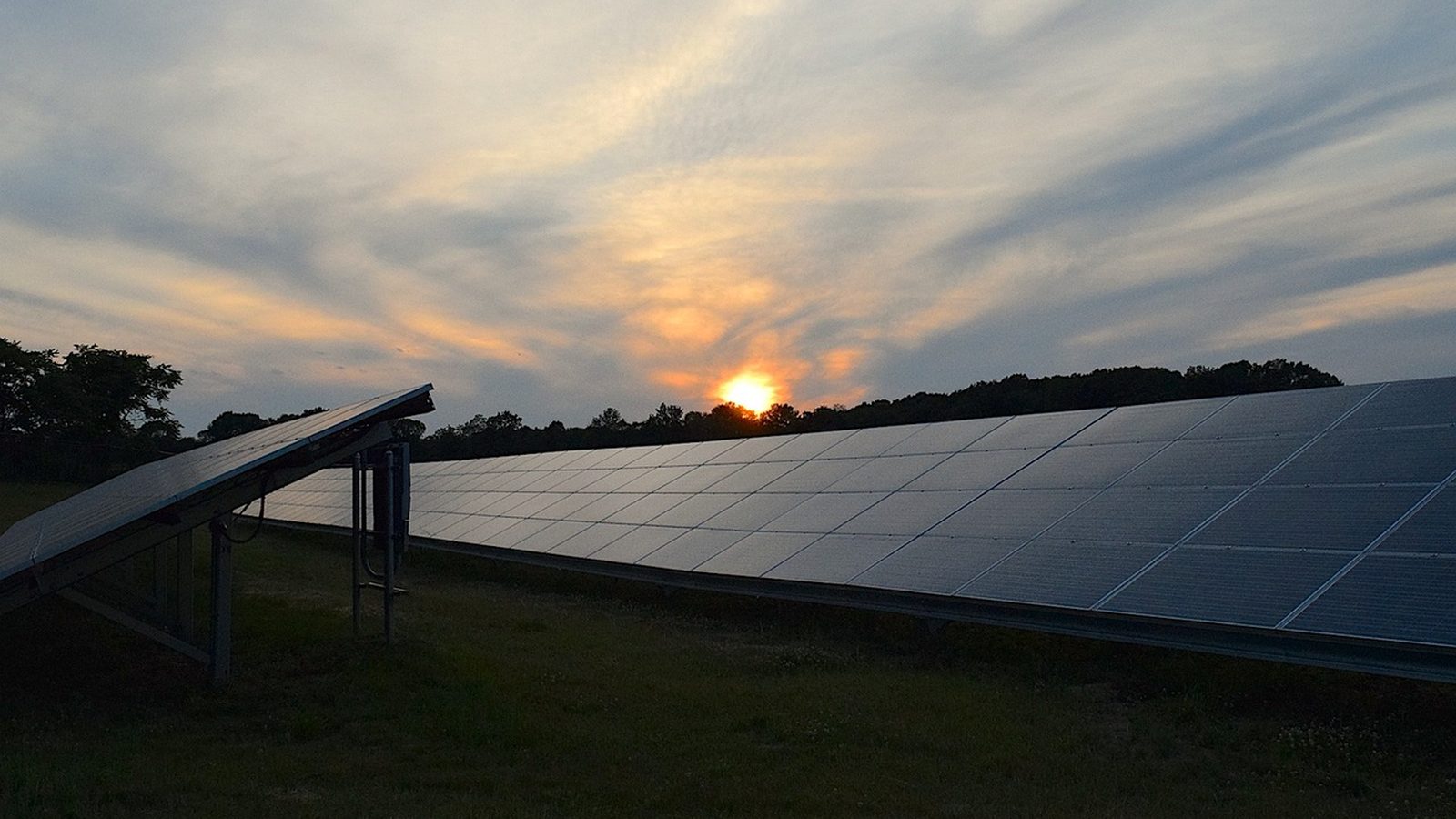
Photo: bones64, via Pixabay
California · El Cajon
El Cajon solar: the lightest permit we cover meets the heaviest rates
Written by the Solar Learning Lab research deskUpdated August 26, 202611 min read
Of every city we have researched this month, El Cajon has stripped solar permitting down the furthest. All solar plus battery reviews must go through SolarAPP+, plans are not required, and the City says a permit can be obtained in 30 minutes. There is no City inspection afterward either. A third party inspection declaration goes up to the PACO portal, a Final Review releases the system to SDG&E, done.
The urgency comes from the other side of the meter. SDG&E's 2024 residential average was 43.6 cents per kWh in federal sales data, roughly 11 cents above SCE, and El Cajon has no community choice aggregator to soften it. Fast paperwork, brutal rates. If solar pencils anywhere in our coverage, it pencils in the Box.
Test the math at 43 cents
High retail rates change what a sensible system size looks like. Screen yours before an installer does it for you.
Screen my numbersThirty minutes, no plans, mandatory SolarAPP+
Note the word mandatory. El Cajon does not offer SolarAPP+ as a fast lane beside a normal queue; the City states all solar photovoltaic with battery reviews must be processed using SolarAPP+. The sequence: run the project through SolarAPP+, open the City's SolarAPP+ permit record through PACO, the Project Assistance Center Online, enter the SolarAPP+ pre-approval ID, upload documents, pay, and the permit issues electronically. Three revisions are free if the design shifts.
This is what Government Code 65850.52, the SB 379 automated permitting statute, was written to produce, and El Cajon got there without state help. The CEC's tracking file shows the City on the SolarAPP+ platform with no CalAPP grant awarded, unlike the $80,000 checks that funded platform work in the Inland Empire cities we cover. Worth noting honestly: the same file shows El Cajon's most recent annual report as 2023 data.
The gate is the license. Only licensed contractors may use SolarAPP+ here. An owner-builder drops into a regular building permit with plan check, and the City's own timelines put typical plan check at three to four weeks plus one to two weeks per recheck. The DIY route is legal and slow; know which trade you are making. Mobile home solar goes to State Housing entirely, and the state counts 1,883 mobile homes here, per the DOF housing file.
On fees, resist the urge to fill the blank. The City updates its fee structure periodically and directs applicants to call Building Safety at 619-441-1726, option 2 for solar, for an estimate. The backstop is Government Code 66015: $450 maximum for a residential system up to 15 kW unless a city adopts findings to charge more. Any site quoting an exact El Cajon dollar figure is guessing.
No city inspector will visit. Read that again.
In most California cities the inspection is where solar timelines go to die. El Cajon removed the step: the applicant completes a third party inspection declaration, uploads it to PACO under ATTACHMENTS, and requests a Final Review that releases the system to SDG&E. The City states no other City inspections are required. For a contractor, that eliminates the scheduling dance entirely. For a homeowner, it moves the quality burden onto the third party inspection and your own contract terms.
Our operator take: when a city outsources inspection, your contract is the inspection. Get the third party inspection named in the scope, ask who employs the inspector, and hold retainage or the final payment until the declaration and SDG&E release both exist. None of that is required by the City. All of it is cheap insurance in a system built for speed.
Two coordination details from the building permit page round this out: new meters or meter upgrades need documentation of an approved location from SDG&E, and the City requires 65 percent construction and demolition waste diversion. Small items, but they are the kind that surface at the worst possible week if nobody owns them.
SDG&E at 43.6 cents, with no CCA escape hatch
Here is the local twist people miss: neighboring La Mesa and Chula Vista get generation through San Diego Community Power, which serves six cities plus unincorporated county territory. El Cajon joined neither SDCP nor Clean Energy Alliance, so SDG&E's own CCA roster confirms El Cajon households are on SDG&E bundled service. SDG&E sets the import price and the export credit, and its 2024 residential average of 43.626583 cents per kWh in EIA Table 6 is the highest of any utility we have covered in this batch.
| Energy source | Type | Average price | What that means |
|---|---|---|---|
| SDG&E EV-TOU-5 | required solar billing rate, summer | 13¢ to 80¢ per kWh | Effective 8/1/2026: on peak $0.80205, off peak $0.49627, super off peak $0.13090. A six-to-one daily spread. |
| SDG&E EV-TOU-5 | winter pricing | 12¢ to 52¢ per kWh | On peak $0.52383, off peak $0.46566, super off peak $0.12332. Base services charge $0.79343 per day. |
| SDG&E TOU-DR1 | standard residential reference | 37¢ to 69¢ per kWh | Summer on peak $0.69135. A 10.7¢ baseline adjustment credit applies up to 130 percent of baseline. |
| Onsite solar | self-consumed energy | retail avoided cost not a fixed tariff | Every solar kWh consumed on site displaces these import prices. Exports earn separate hourly credits, priced far lower. |
SDG&E's EV-TOU-5 total rates table and TOU-DR1 table, both effective August 1, 2026, with time periods from SDG&E's rate page.
The on peak window runs 4 p.m. to 9 p.m. every day, weekends included, and summer here stretches June 1 to October 31. At 80 cents on peak against 13 cents super off peak, EV-TOU-5 is practically a written invitation to charge a battery at midday and discharge it at dinner. SDG&E's solar page also notes a $16 basic monthly service fee as part of the plan, per its Solar Billing Plan material, so a bill never reaches zero.
Why El Cajon payback leans on self-consumption
Residential solar customers here land on the Solar Billing Plan, SDG&E's name for the CPUC Net Billing Tariff, and are placed on EV-TOU-5, the eligible import rate named in Decision 22-12-056. Export credits are built from hourly avoided cost values, averaged by month, day type, and hour, per SDG&E's export pricing methodology. Credits roll over month to month until used or service ends, and they cannot offset the non-bypassable public purpose charges everyone pays.
Now the number that separates San Diego County from the rest of the state. The same CPUC decision granted transition adders on exports: PG&E residential customers get $0.022 per kWh, SCE customers $0.040, with larger CARE adders. SDG&E residential customers get $0.000. Zero, for CARE and non-CARE alike. An El Cajon export earns bare avoided cost with nothing on top, which is the sourced, unglamorous reason every serious quote here should be built on offsetting your own 43 cent imports, with storage doing the evening shift, rather than on selling power back.
Sizing has real rules, and one useful allowance: SDG&E permits sizing up to 50 percent above expected usage if the design is checked against your past 12 months and you attest to increased usage coming within 12 months of interconnection. That is the legitimate answer to "can I size for the EV I have not bought yet." The nine year legacy period, for what it protects, follows the customer rather than the address, so it transfers poorly in a home sale.
What panels produce in the Box
El Cajon, about 17 miles east of downtown San Diego, models at 1,750.7 kWh per year per installed kW in our run, with August peaking at 167.6 and December bottoming at 114.5. August afternoons average 88.6 degrees here, so peak production overlaps peak cooling demand, which is exactly the overlap you want at these retail rates.
August models at 167.6 kWh per kW while SDG&E's June through October summer pricing is in force. Self-consuming that overlap is the whole game in this territory.
PVGIS v5.2 model run by Solar Learning Lab on August 26, 2026, NSRDB radiation database. Fixed south facing mount, 30 degree tilt, 14 percent losses, downtown El Cajon coordinates. Your roof will differ. The model is the PVGIS tool, and it standardizes comparisons rather than predicting your roof. One more local wrinkle before finalizing a roof plan: the City adopted CAL FIRE's March 24, 2025 fire hazard severity maps on May 13, 2025, and the prior 2007 map showed only Very High zones, so some El Cajon properties are newly inside a mapped zone with the disclosure and construction implications that follow.
Be honest about who this market serves
El Cajon is not a subdivision-and-two-car-garage solar market. Of 37,245 housing units in the state's January 2026 count, only 41.3 percent are single detached, and 15,066 sit in buildings of five or more units, per the DOF file. A huge share of the people paying these SDG&E rates rent, and rooftop ownership math does not reach them. If that is you, your levers are rate plan selection and landlord conversations, not this page's calculator.
For owner households, the income picture argues for the equity programs before anything else. Median household income runs $66,045 on 2022 estimates with a 22.7 percent poverty rate, per the city's profile. That makes El Cajon a strong candidate pool for SGIP's Residential Solar and Storage Equity budget, $3,100 per kW and $1,100 per kWh for qualifying households, and for DAC-SASH no-cost installs through GRID Alternatives where CalEnviroScreen and CARE or FERA eligibility line up.
And the ledger has lost its old anchor: the 25D federal homeowner credit ended for systems completed after December 31, 2025, per the Congressional Research Service, though pre-2026 carryforward survives. The property tax exclusion for qualifying systems runs until its scheduled January 1, 2027 sunset. We found no El Cajon city rebate of any kind.
The El Cajon installer field
El Cajon has the deepest installer bench of any city in this batch, including two companies with over a thousand reviews each. Depth cuts both ways: more competition on price, more polished sales operations to see through. With no City inspector backstopping the work here, weigh workmanship warranty terms and the named third party inspection more heavily than a tenth of a rating point.
SolarTech
El Cajon, CA
4.7(1,079 Google reviews)
Johnson Solar - San Diego County's Best Veteran Owned Solar Installation Company
4.9(132 Google reviews)
Sunlight Solar Inc
El Cajon, CA
4.5(127 Google reviews)
Wave Electric Energy
5.0(91 Google reviews)
Raneri & Long Roofing and Solar
El Cajon, CA
4.7(83 Google reviews)
Ratings snapshot: Google Maps, August 2026, via the DataForSEO SERP feed. Zero companies paid us and none are endorsed by us.
Three questions for every El Cajon bid: who performs the third party inspection and who pays them, what happens if the SolarAPP+ design changes on the roof, and does the quote assume export income that SDG&E's zero adder cannot deliver.
Sanity-check an El Cajon quote
Fair warning in the buyer's favor: this tool prices power at the statewide average, and El Cajon pays SDG&E rates well above that, so the estimate likely runs conservative on the value of self-consumed solar. It still cannot model hourly exports, the daily service charge, or a battery's arbitrage between 13 cent and 80 cent hours. Use it for scale, then make bidders show their hourly assumptions.
The upper slider bound is our downtown El Cajon PVGIS run. The lower bound is 85 percent of that number, a haircut for a compromised roof orientation rather than a site-specific shade model.
Cash quotes in El Cajon cluster near $2.46 per watt, against a $3.50 national 2024 median (LBNL). Use your quote.
Assumptions you can change
Use the rate on your actual lease or PPA quote. There is no published statewide average we trust enough to hardcode.
Cash purchase
$8,118 after state credit
- Year 1 benefit
- $160/mo
- Payback
- 5 years
- 20 year net position
- $38,498
The calculator runs on the statewide average rate. El Cajon buys from SDG&E, whose 2024 residential average of 43.6 cents per kWh sits well above that input, so retail value of self-consumed solar is likely understated here. Export credits follow SDG&E's hourly avoided cost tables, which this tool does not model.
Solar loan
$109/mo 15 yr payment
- Year 1 net
- $52/mo
- Upfront
- $0
- 20 year net position
- $27,075
The loan input carries the state calculator's documented loan-over-cash spread. For an El Cajon quote, insist on the cash price, financed price, dealer fee, and prepayment terms as four separate lines before you compare anything to an SDG&E bill.
Lease / PPA
$0 down you buy the power
- Year 1 net
- $45/mo
- Upfront
- $0
- 20 year net position
- $14,585
No homeowner federal credit applies to systems finished after December 31, 2025, and we make no claim about what a lease or PPA provider can claim. In SDG&E territory the only test that matters is the contract rate and escalator against EV-TOU-5 or TOU-DR1 pricing on your own usage.
Estimates, not quotes. This tool mixes the California average retail rate, a downtown El Cajon PVGIS run, and statewide cost inputs. It cannot reproduce SDG&E hourly export credits, non-bypassable charges, or the daily service charge. We are a solar installer and we also partner with other solar companies. See our disclosures.
We are a solar installer and we also partner with other solar companies.
El Cajon FAQ
Is the 30 minute solar permit claim real?
Does the city inspect my finished solar system?
What if I want to install solar myself in El Cajon?
Can I get cheaper generation through a community choice program?
Are solar exports worth much on SDG&E?
Receipts
The primary documents behind every claim on this page, reviewed August 26, 2026.
- City of El Cajon photovoltaic permitting page, building permits page, and PACO portal
- El Cajon fire hazard severity zone maps
- Government Code 65850.52, Government Code 66015, and the CEC permitting tracker
- SDG&E Solar Billing Plan, export pricing methodology, EV-TOU-5 rates, TOU-DR1 rates, and time periods
- SDG&E active CCAs, San Diego Community Power, and EIA Table 6
- CPUC Net Billing Tariff, Decision 22-12-056, SGIP, and DAC-SASH
- CRS federal credit note, BOE exclusion, DOF E-5 estimates, El Cajon background, and PVGIS
Price an El Cajon system against a 43 cent bill
Start from your actual SDG&E bill and roof. The output is a bargaining position, not a purchase.
What does your monthly electric bill look like?
El Cajon average is $161 per month (EIA, 2024).