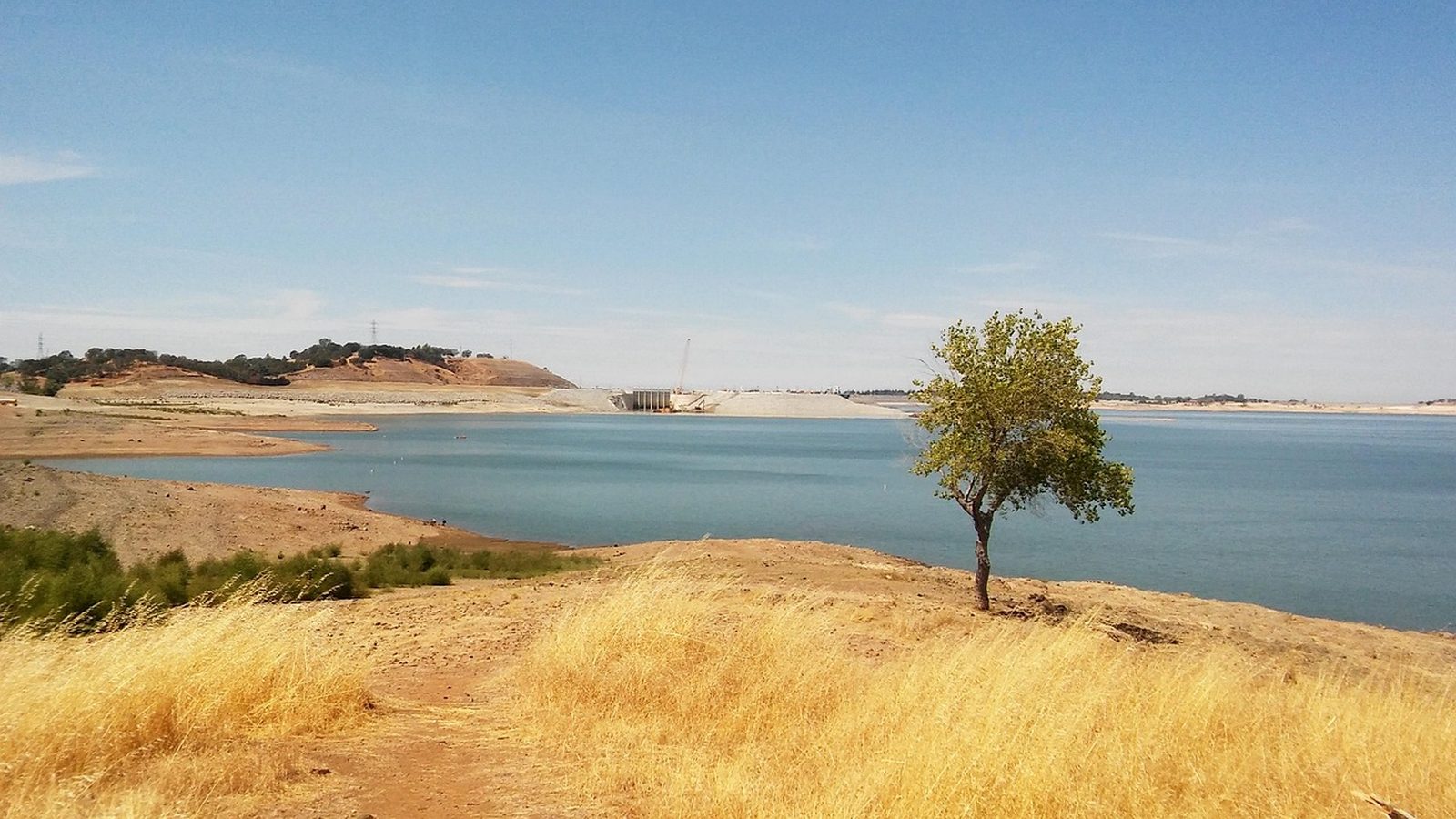
Photo: VBaevaDesign, via Pixabay
California · Folsom
Folsom solar: a 24 hour permit meets a 9.6 cent export
Written by the Solar Learning Lab research deskUpdated August 29, 202610 min read
Two dates define solar in Folsom right now. October 25, 2024, when the City switched on an automated permitting portal built with Symbium that issues residential PV and battery permits within 24 hours of a complete application. And June 1, 2026, when SMUD raised its Solar and Storage export compensation from 7.4 to 9.6 cents per kWh. The first date makes the project fast. The second decides whether it pencils, because 9.6 cents is what every kilowatt hour you cannot use or store will earn, at any hour, in any season.
Notice what is absent from that paragraph: SolarAPP+ and the CPUC. Folsom chose a different permitting platform than most of its neighbors, and SMUD is a municipal utility that answers to its own elected board rather than state net billing rules. Get those two facts wrong and everything downstream in a quote is suspect.
Know your number before the knock
Run the estimator once now. Door to door pitches in Folsom rarely survive contact with the SMUD rate sheet.
Run Folsom numbersThe city permit runs on Symbium, and the distinction matters
Folsom's instant solar permitting page lays out a short workflow: confirm the address actually sits inside city limits, then apply through the Symbium portal for instantaneous plan review approval. The launch announcement adds the operational promise, real time code compliance checks with permits issued within 24 hours of application, provided the necessary approval documents are in. The City built this to satisfy SB 379, approved September 16, 2022 and codified at Government Code 65850.52, the statute requiring automated residential solar permitting.
The CEC's tracking spreadsheet confirms the platform choice: Folsom is logged as a Symbium jurisdiction with a 2024 annual report filed and a $60,000 CalAPP grant awarded February 15, 2024. Contractors who assume every Sacramento suburb is a SolarAPP+ town will file in the wrong system. It happens more than you would think, and it burns the schedule advantage the City built.
Everything that is not eligible residential solar still moves through Building Services and the eTRAKiT portal, where you apply, pay, track status and book inspections. Two practical footnotes from that same page: the 2025 California codes take effect January 1, 2026, so current cycle references belong on plan documents, and no solar permit fee is published, which leaves the $450 cap from Government Code 66015 as the number to sanity check any government cost line against.
SMUD's Solar and Storage Rate is a bolt-on, not a tariff swap
Anyone approved to install solar or storage on or after March 1, 2022, and anyone who buys a Folsom house that already has panels, takes service under SMUD's Solar and Storage Rate. The SSR page describes it as a component riding on top of the standard Time of Day rate rather than a replacement for it. You keep buying grid power at Time of Day prices. Your surplus earns the export compensation rate. The two never blend into a retail-for-retail swap.
That export rate is the headline: 9.6 cents per kWh starting June 1, 2026, lifted from 7.4 cents, paid for excess electricity the household neither uses nor stores, regardless of time of day or season, with SMUD committing to revisit the figure every four years, per the utility's announcement. A 30 percent raise is genuinely good news. It is also still roughly a quarter of what SMUD charges during the summer evening peak, which tells you where the design effort belongs.
From 5 to 8 p.m. on a summer weekday, the meter gets expensive
SMUD's average residential price in 2024 was about 17.9 cents per kWh per EIA data, roughly half the California norm. Cheap baseline power shrinks what a solar panel can save at noon. The exception is the peak window.
| Energy source | Type | Average price | What that means |
|---|---|---|---|
| SMUD Time of Day, summer | June 1 to September 30 | 15.5¢ to 37.65¢ per kWh | Peak 37.65¢ weekdays 5 to 8 p.m., mid peak 21.39¢ weekdays noon to midnight outside peak, off peak 15.5¢ elsewhere including weekends. |
| SMUD Time of Day, non-summer | October 1 to May 31 | 12.85¢ to 17.76¢ per kWh | Peak 17.76¢, off peak 12.85¢. Hydrogeneration charges currently add $0.00 per kWh. |
| SSR export compensation | surplus sent to the grid | 9.6¢ per kWh | Effective June 1, 2026, flat across all hours and seasons, revisited every four years. |
| Self consumed solar | used onsite as generated | matches the displaced rate per kWh avoided | Worth 37.65¢ during a summer peak hour, 15.5¢ on a summer Saturday afternoon. Same electron, very different value. |
Prices from SMUD residential rates and the June 2026 export announcement, reviewed August 29, 2026.
Look at the spread: 37.65 cents at peak, 9.6 cents for exports. A Folsom system that dumps its afternoon surplus to the grid and then buys peak power back at dinner time is running the arbitrage backwards. The whole local game is moving solar energy into that 5 to 8 p.m. window, by load timing, by battery, or both.
The battery math SMUD practically wrote for you
Three SMUD policies stack in storage's favor. Sizing: systems may reach 110 percent of the trailing 12 months of consumption, but SSR customers who add a battery at the premises may size to 120 percent, per the solar program page. Cash: the My Energy Optimizer Partner+ program offers a one time enrollment incentive of up to $10,000 per household, provided enrollment happens within 90 days of permission to operate, per the 2026 announcement. Rate design: every stored kWh discharged during peak displaces 37.65 cent summer power instead of earning 9.6 cents as an export.
The 90 day clock is the detail that catches people. Miss the enrollment window after PTO and the largest single incentive in this market is gone. Put the deadline in the contract and make the installer own it.
Legacy NEM in Folsom: valuable, fragile, expiring
Households whose systems were approved before March 1, 2022 hold something worth protecting: retail valued credits for monthly net excess generation, carried until the end of the annual settlement period, guaranteed through December 31, 2030 per SMUD's solar customers page. That status ends early if the household takes SMUD storage incentives, modifies or replaces the system, or moves.
The growth allowance is precise. Expanding by more than 10 percent of originally approved capacity or 1 kW, whichever is greater, or passing 110 percent of the approved capacity, forces a new interconnection application and a move to the SSR, per the rate page. So a legacy customer weighing an addition should price both futures honestly: a slightly bigger array on the SSR, or the untouched original on retail credits through 2030. Often the untouched original wins, and an installer who never raises the question is not doing the analysis.
What the sun delivers at the base of the foothills
Our downtown Folsom run models 1,618.8 kWh per installed kW annually. August tops the year at 175.4 kWh per kW, December brings up the rear at 78.2, a steep summer-winter ratio typical of the Central Valley edge, where hot cloudless summers meet genuinely gray winters.
August models 175.4 kWh per kW, and summer weekday evenings are exactly when SMUD's 37.65 cent peak applies. Production timing and price timing overlap here.
PVGIS v5.2 model run by Solar Learning Lab on August 29, 2026, NSRDB radiation database. Fixed south facing mount, 30 degree tilt, 14 percent losses, downtown Folsom coordinates. Your roof will differ. Methodology details sit at PVGIS. Treat the December figure seriously when sizing: a system that covers August usage will run a large winter deficit at Time of Day prices, and the flat 9.6 cent export rate means summer overproduction only partially subsidizes it.
Folsom's housing stock is the opposite of a constraint
Per the Department of Finance E-5 tables, 25,105 of Folsom's 35,837 housing units, 70.1 percent, are single detached homes, and the census record puts owner occupancy at 68 percent with a median household income of $139,263. Add a housing stock that skews to newer suburban vintages after decades of rapid growth and you get roofs that are young, large and owned by the people deciding whether to put panels on them.
The flip side of new construction is the HOA. Folsom's master planned communities carry governing documents, and Civil Code 714 is the statute that voids any provision effectively prohibiting solar while permitting only reasonable restrictions that neither meaningfully raise cost nor cut output. Boards can shape aesthetics at the margin. They cannot veto the project.
Two more state items round out the picture. The active solar property tax exclusion, which keeps the system from raising the assessment, runs through the current fiscal year and sunsets January 1, 2027 per the BOE. And on the federal side, the CRS reads the homeowner credit as closed to money spent after 2025, though unused credit carries forward indefinitely, so a 2026 purchase falls outside it.
Interviewing installers, Folsom edition
Ask every candidate two Folsom specific questions. One: which portal do you file the city permit in? The only right answer names Symbium. Two: walk me through the SMUD side, because the city permit and the utility interconnection are separate tracks. SMUD wants an online application with system details, a single line diagram, site plans and a copy of the bill, takes a one time interconnection fee at application, and controls meter installation and permission to operate on its own schedule, per its process page. A bidder fuzzy on either track will discover the gaps on your timeline.

Aztec Solar, Inc.
Rancho Cordova, CA
4.4(153 Google reviews)
Excite Energy
El Dorado Hills, CA
4.9(79 Google reviews)

Sol Purpose Energy
5.0(51 Google reviews)

Sun Up Electric Inc.
Granite Bay, CA
5.0(21 Google reviews)
Ratings snapshot: Google Maps, August 2026, via the DataForSEO SERP feed. Zero companies paid us and none are endorsed by us.
Pencil out a Folsom system honestly
Fair warning: this calculator leans on the statewide average rate, and SMUD charges far less than that outside peak hours, so the on-screen savings run optimistic for Folsom. Use it for relative comparisons between sizes and payment structures, then let a real quote model the Time of Day schedule and the 9.6 cent export rate explicitly.
The high end of the slider is the downtown Folsom PVGIS run. The low end is 85 percent of it, a sanity margin for shade from the mature oaks common in the older neighborhoods near the lake.
Cash quotes in Folsom cluster near $2.46 per watt, against a $3.50 national 2024 median (LBNL). Use your quote.
Assumptions you can change
Use the rate on your actual lease or PPA quote. There is no published statewide average we trust enough to hardcode.
Cash purchase
$8,856 after state credit
- Year 1 benefit
- $161/mo
- Payback
- 5 years
- 20 year net position
- $38,167
Folsom buys power from SMUD, whose average residential price sits well under the statewide figure this calculator uses. Real Folsom savings hinge on dodging the summer 5 to 8 p.m. peak price and on SMUD's flat export credit, neither of which lives inside this simple model.
Solar loan
$118/mo 15 yr payment
- Year 1 net
- $43/mo
- Upfront
- $0
- 20 year net position
- $25,705
Loan math here carries the statewide financed-versus-cash spread. In a market where the utility rate is modest, financing costs eat a bigger share of the benefit, so push every Folsom bidder for the cash price on its own line.
Lease / PPA
$0 down you buy the power
- Year 1 net
- $45/mo
- Upfront
- $0
- 20 year net position
- $14,713
A third party ownership pitch in SMUD territory has to clear a low bar honestly stated: the household's avoided SMUD cost per kWh is small outside peak hours. Ask the provider to show their rate against the Time of Day schedule, and note the homeowner federal credit applied to expenditures made before the end of 2025.
Estimates, not quotes. This tool runs on the California average retail rate and a Folsom PVGIS production model. It cannot represent SMUD's Time of Day pricing, the Solar and Storage Rate export credit or battery program terms. We are a solar installer and we also partner with other solar companies. See our disclosures.
We are a solar installer and we also partner with other solar companies.
Folsom questions, answered from the documents
Is Folsom's instant permit the same SolarAPP+ system other cities use?
How fast does the Folsom permit actually arrive?
What does SMUD pay for the solar I export?
Can I oversize my system for future loads?
I have pre-2022 panels. Does adding capacity cost me my old rate?
Is there a battery incentive in Folsom?
Citations for the Folsom page
All documents below were pulled and reviewed on August 29, 2026.
- Folsom instant solar permitting, Building Services and the portal launch announcement
- SMUD solar for your home, solar customers, Solar and Storage Rate, residential rates and the export rate increase
- CEC permitting program data and EIA Table 6
- Government Code 65850.52, Government Code 66015 and Civil Code 714
- BOE solar exclusion and CRS IN12611
- DOF E-5 estimates, Folsom background and PVGIS
Get a Folsom quote built on SMUD arithmetic
Tell us about the bill, the roof and how you want to pay. What comes back is a research tool, and the questions it raises are yours to ask any bidder.
What does your monthly electric bill look like?
Folsom average is $161 per month (EIA, 2024).