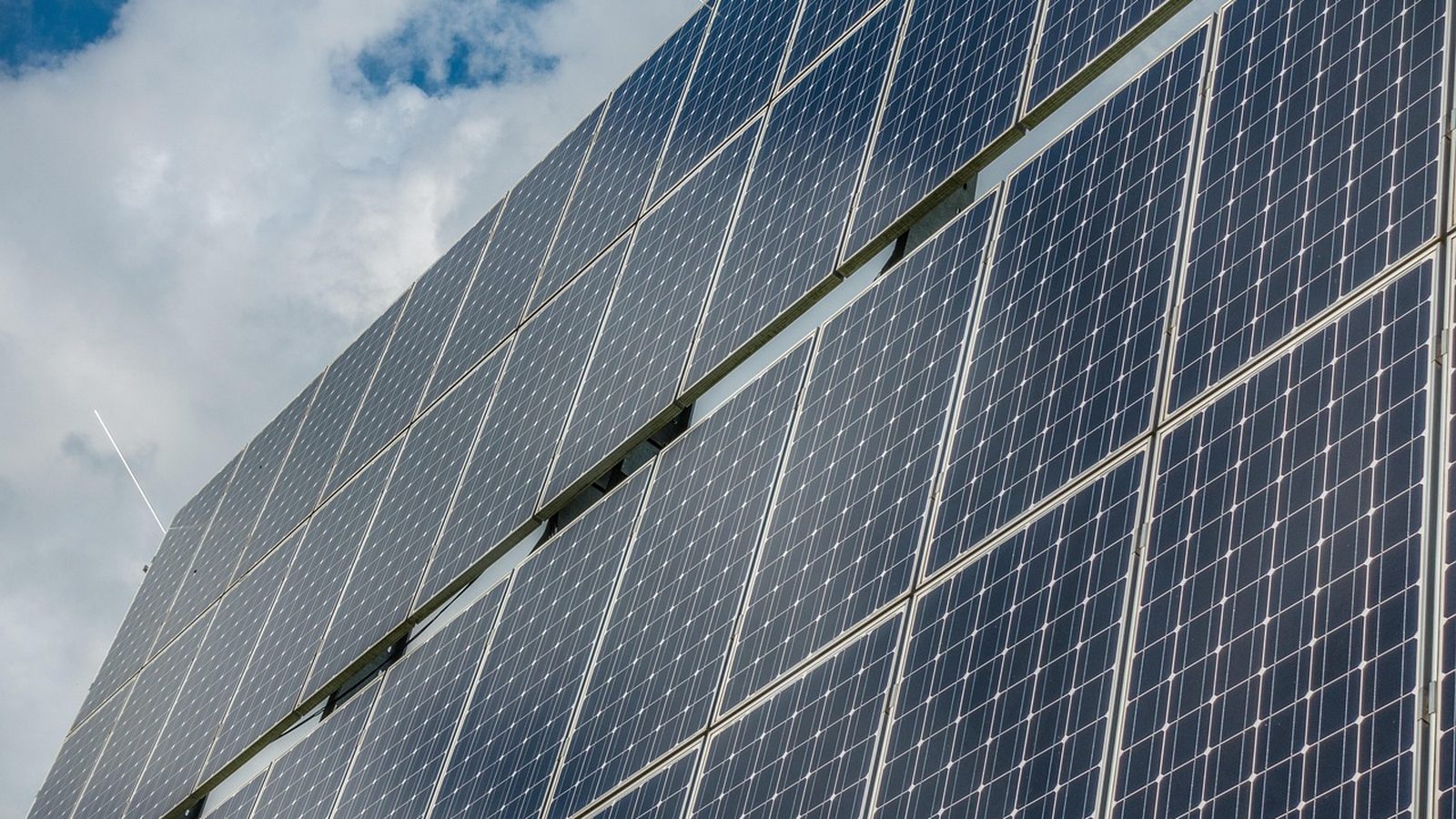
Photo: mrganso, via Pixabay
California · Hawthorne
Hawthorne solar: honest answers for a renter majority city
Written by the Solar Learning Lab research deskUpdated August 28, 202610 min read
Let's start where most solar pages will not. At the 2020 census, only 27.4 percent of occupied Hawthorne homes were owner occupied, per the city's census record, and just 29.7 percent of the housing stock is single detached per the state's 2026 housing estimate. Roughly seven in ten households here rent. Rooftop solar, as usually sold, is a product for people who own their roof. If that is not you, most of the ads targeting your zip code are wasting your time, and we would rather say so than pretend otherwise.
For the minority who do own, and it is a real minority, 9,443 detached houses in a city that builds rockets, the fundamentals are quietly good: the strongest modeled production of the five cities in our batch, a functioning automated permit path, and SCE evening rates that make self consumption valuable. This page serves both readers: the owner who can act, and the renter who deserves a straight answer about what exists for them.
Owners: check the math first
If you own your roof, two minutes here tells you whether a full quote is worth your evening.
Estimate Hawthorne solarRead this section before any sales call
The numbers describe a dense South Bay city of 6.09 square miles where five plus unit buildings, 16,608 of them by unit count, outnumber detached houses, per the DOF E-5 file. Median household income is $72,719 per the 2023 ACS figures. SpaceX headquarters and its 6,094 employees give the city a clean tech identity, and the Tesla Design Studio sits next door. None of that changes who can sign a rooftop contract.
So here is the honest sorting. If you rent: you cannot install rooftop solar, and no door knocker changes that. Your realistic moves are choosing your CPA rate tier, which we cover next, and pointing your landlord at the incentive programs later on this page. If you own a condo or a unit in a small multifamily building: possible, but slower, since it runs through your association, where Civil Code 714 limits how much an HOA can restrict you. If you own one of the detached houses: keep reading, the rest of this page is mostly yours.
Hawthorne picked the cheapest default power on the menu
Hawthorne is a Clean Power Alliance city inside SCE territory, per SCE's CCA page. When cities chose their default tiers, Hawthorne selected Lean Power, listed in CPA's 2021 member jurisdiction table at 36 percent clean, and described on CPA's current rate options page as 40 percent clean energy. Both figures are as each source states them. Either way, it is CPA's lowest cost, lowest renewable tier, and residents can move up to Clean Power (50 percent), 100% Green Power, or opt out to SCE.
Why this matters for solar: a savings pitch competes against your current generation price. Against a lean, cheap default, the generation side of the bill offers less to save than in cities defaulted to premium 100 percent renewable products. The delivery side and the evening time of use structure still do the heavy lifting. It also cuts the other way for renters: Lean Power means Hawthorne households were not defaulted into paying a green premium, which was, in effect, a cost decision made on your behalf.
The permit is automated, in two steps and one closed Friday
Hawthorne processes residential solar permits through SolarAPP+, per the Building and Safety Division page. The flow has two distinct steps: the contractor obtains a SolarAPP+ Approval ID first, then completes the permit through the City's Tyler CSS self service portal. Budget for both, because a crew that treats the Approval ID as the permit will stall at issuance.
Operational details worth writing into a contract schedule: inspection requests need 24 hour notice and run 9 a.m. to 5 p.m., per the requirements page, and City Hall works Monday through Thursday 7 a.m. to 6 p.m., closed Fridays, per the city contact page. The CEC's August 3, 2026 tracking file shows Hawthorne on SolarAPP+ with a $60,000 CalAPP grant awarded April 27, 2023, though its most recent annual report on file is 2023 data, the oldest reporting year in our batch. The system works; the public reporting just runs behind.
No published PV permit fee was confirmable this session. The ceiling under Government Code 66015 is $450 plus $15 per kW above 15 kW without adopted findings; confirm the actual charge with Building and Safety at (310) 349-2990. The statutory scope, up to 38.4 kW AC of residential solar with automated real time issuance for licensed contractors, comes from Government Code 65850.52.
The strongest roof yield in our five city batch
Here is Hawthorne's quiet advantage: our downtown PVGIS run models 1,727.5 kWh per year per installed kW, the highest annual figure among the five cities we researched this week. The city's roughly 263 sunny days per year, per its climate record, spread production across a gentle curve: August peaks at 166.4 kWh per kW, December holds 113.7.
August models 166.4 kWh per kW, but note the April and May plateau at 162.5: coastal South Bay production arrives early and stays late, which suits year round household loads.
PVGIS v5.2 model run by Solar Learning Lab on August 28, 2026, NSRDB radiation database. Fixed south facing mount, 30 degree tilt, 14 percent losses, downtown Hawthorne coordinates. Your roof will differ. Assumptions are documented at the PVGIS tool. The June dip to 149.2 is the marine layer signing its work. For the small detached housing stock here, mostly modest postwar footprints, right sizing matters more than maximizing: a 4 to 6 kW system frequently covers a Hawthorne bill that a salesperson would happily cover twice.
SCE runs the wires, and evening hours run the value
Hawthorne sits in SCE territory, baseline regions 6 and 8, per the communities served filing. SCE's 2024 bundled residential average was 32.4 cents per kWh per EIA Table 6. New solar lands on the Net Billing Tariff, per the CPUC: consumption is not netted against production, exports earn hourly avoided cost based credits averaged monthly, and there is an annual true up, per the decision materials.
| Energy source | Type | Average price | What that means |
|---|---|---|---|
| SCE TOU-D-5-8PM | summer on peak | 74¢ (64¢ after credit) per kWh | The sharpest evening price in the residential lineup. |
| SCE TOU-D-4-9PM | summer weekday on peak | 58¢ (48¢ after credit) per kWh | Each plan carries a $0.79 per day Base Services Charge. |
| ACC Plus adder | SCE residential export add-on | 4¢ / 9.3¢ per exported kWh | Standard and low income figures. Not available for inherited systems or NEM transfers. |
| SCE bundled average | 2024 residential | 32.4¢ per kWh | EIA bundled figure; CPA generation customers not included in this table. |
| Onsite solar, self used | avoided purchase | highest 4 to 9 p.m. not a tariff | Evening self consumption, often via a battery, captures the rates above. Midday exports earn far less. |
SCE time of use plans, CPUC export credit materials, and EIA Table 6. A rate snapshot, not a bill promise.
Solar Billing Plan customers must take TOU-D-PRIME with a 12 month lock after switching, per SCE. Any Hawthorne proposal should model that plan, not your current one, and should say plainly how much output it assumes you export at low value hours.
At this income level, the equity programs are the real lever
With a $72,719 median household income, the programs that change outcomes here are the income qualified ones. CPA's Solar and Battery Access provides free solar and battery systems to income qualified homeowners with average bill savings around 70 percent, and its Sun Storage Rebate adds $750 toward a paired battery, per CPA's residential page. SGIP's Residential Solar and Storage Equity program pays $3,100 per kW for solar and $1,100 per kWh for storage from a $280 million budget, per the CPUC. DAC-SASH, run by GRID Alternatives, serves CARE or FERA eligible households in top quartile CalEnviroScreen communities, per the program page. And the low income ACC Plus export adder is $0.093 per kWh versus the standard $0.040, per the CPUC materials.
What is gone: the federal 25D homeowner credit, terminated for systems completed after December 31, 2025, per CRS IN12611. What remains neutral: the state's new construction exclusion means a qualifying system does not raise your assessed value, through its scheduled January 1, 2027 sunset. If a Hawthorne pitch skips the equity programs and leads with a big loan, the pitch was built for a different city.
The local list runs from Tesla to a two review shop
Hawthorne's map results reflect its industrial mix: Tesla Energy's South Bay operation sits inside the city, Treepublic and Xero Solar bring solid review volume from Hawthorne and El Segundo, and the list also includes a panel cleaning service and a two star company with four reviews. Sort accordingly. Review count is not everything, but with only a handful of reviews you are reading anecdotes, not a track record.

Tesla Energy South Bay
Hawthorne, CA
4.0(48 Google reviews)

BrightSun Solar Panels
Hawthorne, CA
2.0(4 Google reviews)

Resonance Solar Installation
Inglewood, CA
5.0(2 Google reviews)

Smart Solar Panel Cleaning Los Angeles
Redondo Beach, CA
5.0(105 Google reviews)
Ratings snapshot: Google Maps, August 2026, via the DataForSEO SERP feed. Zero companies paid us and none are endorsed by us.
Ask every bidder two Hawthorne questions: have they completed the SolarAPP+ plus Tyler CSS two step in this jurisdiction before, and how do they schedule around a city that does not open on Fridays. Process fluency shows up in the answers, or does not.
Owners: check your own math here
This estimator uses the state average rate and the local production run, which flatters Hawthorne slightly because Lean Power generation is cheap. Use it as a ceiling check: if the math looks marginal here, it will look worse on your real bill.
The top of the range is our downtown Hawthorne PVGIS run at 30 degree tilt, the strongest annual figure in this research batch. The bottom is 85 percent of it, covering marine influence and imperfect roof geometry.
Cash quotes in Hawthorne cluster near $2.46 per watt, against a $3.50 national 2024 median (LBNL). Use your quote.
Assumptions you can change
Use the rate on your actual lease or PPA quote. There is no published statewide average we trust enough to hardcode.
Cash purchase
$8,364 after state credit
- Year 1 benefit
- $163/mo
- Payback
- 5 years
- 20 year net position
- $39,028
This screen uses the California average retail rate. A Hawthorne bill combines SCE delivery with Clean Power Alliance Lean Power generation, the cheapest CPA default, so your avoided cost baseline may sit below the state average this tool assumes. Read results conservatively.
Solar loan
$112/mo 15 yr payment
- Year 1 net
- $51/mo
- Upfront
- $0
- 20 year net position
- $27,259
The loan input includes the state calculator's documented loan-over-cash spread. At Hawthorne's median income, financing structure decides the deal, so get the cash price, financed price, dealer fee and prepayment terms itemized before comparing offers.
Lease / PPA
$0 down you buy the power
- Year 1 net
- $45/mo
- Upfront
- $0
- 20 year net position
- $14,828
The federal 25D homeowner credit ended for systems completed after December 31, 2025, and the CRS source we cite does not address third party ownership, so we make no claim about a provider's 48E position. Any lease rate must beat your actual SCE plus CPA cost to be worth signing.
Estimates, not quotes. This tool mixes the California average retail rate, our downtown Hawthorne PVGIS run and statewide cost inputs. It cannot model Lean Power generation rates, hourly export credits, or whether solar fits your tenure situation at all. We are a solar installer and we also partner with other solar companies. See our disclosures.
We are a solar installer and we also partner with other solar companies.
Hawthorne questions, answered plainly
I rent in Hawthorne. Is there any solar move for me?
What is Lean Power and why am I on it?
How does the Hawthorne permit process work?
Is Hawthorne actually good for solar production?
What help exists for lower income homeowners?
Sources used
Documents reviewed for this page on August 28, 2026.
- Hawthorne Building and Safety, inspection requirements, city contact and hours, and the Tyler CSS portal
- CPA rate options, CPA residential programs, and the 2021 default product table
- SCE communities served, SCE CCA page, SCE TOU plans, and EIA Table 6
- CPUC Net Billing Tariff, decision materials, SGIP, DAC-SASH, CRS IN12611, and BOE exclusion
- Government Code 65850.52, Government Code 66015, Civil Code 714, and the CEC permitting data file
- DOF E-5 housing estimates, Hawthorne Wikipedia entry, and PVGIS
Get a Hawthorne estimate without the hard sell
Four questions about your bill, roof and tenure, then an estimate from this page's local inputs.
What does your monthly electric bill look like?
Hawthorne average is $161 per month (EIA, 2024).