Skip to content
Solar Learning Lab
Rooftop solar panels on a single family home

Photo: chrischesneau, via Pixabay

California · Irvine

Irvine solar in 2026

Written by the Solar Learning Lab research deskUpdated August 22, 202612 min read

Irvine is the export-premium city in this three-city Orange County comparison. That is not a claim that rooftop solar suddenly pays retail value for every noon kilowatt-hour. It does not. It means a customer can stack two unusually local facts: Orange County Power Authority says its Net Surplus Compensation rate is 10 percent above SCE's prevailing rate, and eligible SCE interconnections submitted before the end of 2027 receive the SCE export bonus for nine years. The edge is real, yet it only matters after you clear Irvine's other gates: roof control, HOA process, load shape, and whether the project fits the automatic permit path. This is a master-planned market, not a frictionless market. Sources: housing; ocpa; cpucNbt

1,731.6 kWh

Annual PVGIS output per installed kW

34.4¢

SCE average residential rate from June 2026

43.8%

Owner occupancy in ACS 2023 inputs

Irvine has the cleanest administrative runway of the three cities and the most favorable export wrinkle. PermitsDIRECT can issue qualifying permits the same day. OCPA membership survived a high-profile reconsideration. Still, 48,669 units are in five-plus buildings and another 20,781 are single attached. The addressable owner-controlled roof is smaller than a drive through the city might suggest. Treat the OCPA premium as a useful marginal advantage, not permission to skip the HOA and roof analysis. Sources: sceBilling; housing; permit

Separate OCPA upside from a sales shortcut

Irvine has a real surplus-compensation edge. Verify the HOA path, the PermitsDIRECT fit, and the exportable portion of your load before assigning it a dollar value.

Map my Irvine case

Irvine kept the generation layer that makes exports less thin

Irvine remains an Orange County Power Authority member after the council voted 5-2 on September 9, 2025 to rescind its earlier withdrawal notice. The CPUC describes the same sequence: a 2024 withdrawal vote followed by a September 2025 decision to continue with OCPA. That local political reversal has a practical solar consequence. Irvine has a CCA generation provider while SCE still owns and operates the delivery side of the bill. Sources: ocpaAffirm; cpucOCPA

OCPA's Basic Choice is the default plan at 49.2 percent renewable. OCPA says roughly 30 percent of a bill is generation and 70 percent delivery, and it says 2026 generation rates are locked at 2025 levels. Most important for a system that produces more than it consumes over an annual period, OCPA says its Net Surplus Compensation rate is 10 percent higher than SCE's prevailing NSC rate. That is the local premium. It applies to the surplus-compensation piece, not as a universal 10 percent increase to all solar production. Sources: ocpa

The rest of the math is still SCE territory. Schedule D is 30 cents per kWh through 384 kWh and 40 cents for the next tier, plus a 79-cent daily base services charge. SCE says the average residential rate becomes 34.4 cents per kWh on June 1, 2026. Those purchase prices make avoided grid energy meaningful. They do not erase the hourly Net Billing structure or guarantee that a high-production household has high consumption at the right time. Sources: sceTiered; sceRate

For new solar, the CPUC Net Billing Tariff requires SCE TOU-D-PRIME and gives the original interconnecting customer a nine-year term. SCE lists summertime exports at 6 cents per kWh in the daytime and 21 cents from 4 p.m. to 9 p.m., then adds an approximately 4-cent residential Energy Export Bonus Credit for eligible applications submitted before the end of 2027. Irvine's OCPA premium sits on top of the SCE framework. It improves the edge; it does not replace the framework. Sources: cpucNbt; sceBilling

Energy sourceTypeAverage priceWhat that means
SCE Schedule DEntry household tier30¢ per kWhThe published tier is the avoided-purchase reference; it remains an SCE delivery relationship even with OCPA generation.
SCE Solar Billing PlanSummer solar export per kWhSCE's hourly credit remains the starting point before the eligible bonus and OCPA's net-surplus treatment are considered.
Owned rooftop solarIrvine output benchmark~5.7¢ per kWhA simple long-run output calculation using local PVGIS production. It is not a claim about the OCPA surplus credit or a financed contract.

Sources: sceTiered; sceBilling

PermitsDIRECT is fast because it is narrow, not magical

Irvine's Community Development Department uses PermitsDIRECT, powered by Symbium, for qualifying residential rooftop solar and battery work. The city says the permit is paid online and issued automatically without manual review or an in-person visit, on the same day. That beats the usual permit waiting game. It should also change the installer conversation: ask whether the exact design qualifies before treating same-day issue as a contractual milestone. Sources: permit

The automatic path is limited to rooftop PV at 38.4 kW or less, no more than one battery storage system, and an application from a licensed contractor. The city also requires roof mounting details stamped and signed by a California-licensed civil engineer, structural engineer, or architect. A clean rendering can conceal a difficult structural detail. The signed design is the document that matters. Sources: permit

Projects outside the screen go through IrvineReady. The city says it completes a completeness check in about two business days, then generally takes five working days for the initial plan check once the fee link is paid. That is still a useful published baseline, but it is not the same as a guaranteed installation timeline. HOA approval may also be required, and that approval sits outside the city permit workflow. Sources: permit; install

The effective August 15, 2025 schedule lists $289.45 for residential solar-panel inspection and $337.96 for plan check, plus $11.70 per kW over 15 kW. Residential permit issuance is $30.87 and the minimum inspection fee is $61.74. A related panel or switchboard scope up to 400 amps has its own $61.53 line. Prices should be confirmed with the city when the application is filed, but the published schedule is far more useful than an installer calling permitting free. Sources: fees

The resource is excellent. The operating plan decides the value

Our downtown Irvine PVGIS run produces 1,731.6 kWh per kW annually under a fixed, south-facing, 30-degree-tilt setup. August is the model high point at 168.3 kWh per kW. The production total is almost indistinguishable from Santa Ana's. The difference lies in OCPA membership and the customer mix, not a dramatic solar-resource divide across the city line. Sources: pvgis; ocpa

The Tustin Irvine Ranch climate normals show 1,246.1 annual cooling degree days, 14.12 inches of precipitation, and a 64.8 F annual mean temperature. That is enough warmth for cooling to shape an individual bill, especially in a larger detached home. It is not evidence that every Irvine household has a large afternoon load. Interval data wins this argument every time. Sources: climate

Jan
Feb
Mar
Apr
May
Jun
Jul
Aug
Sep
Oct
Nov
Dec

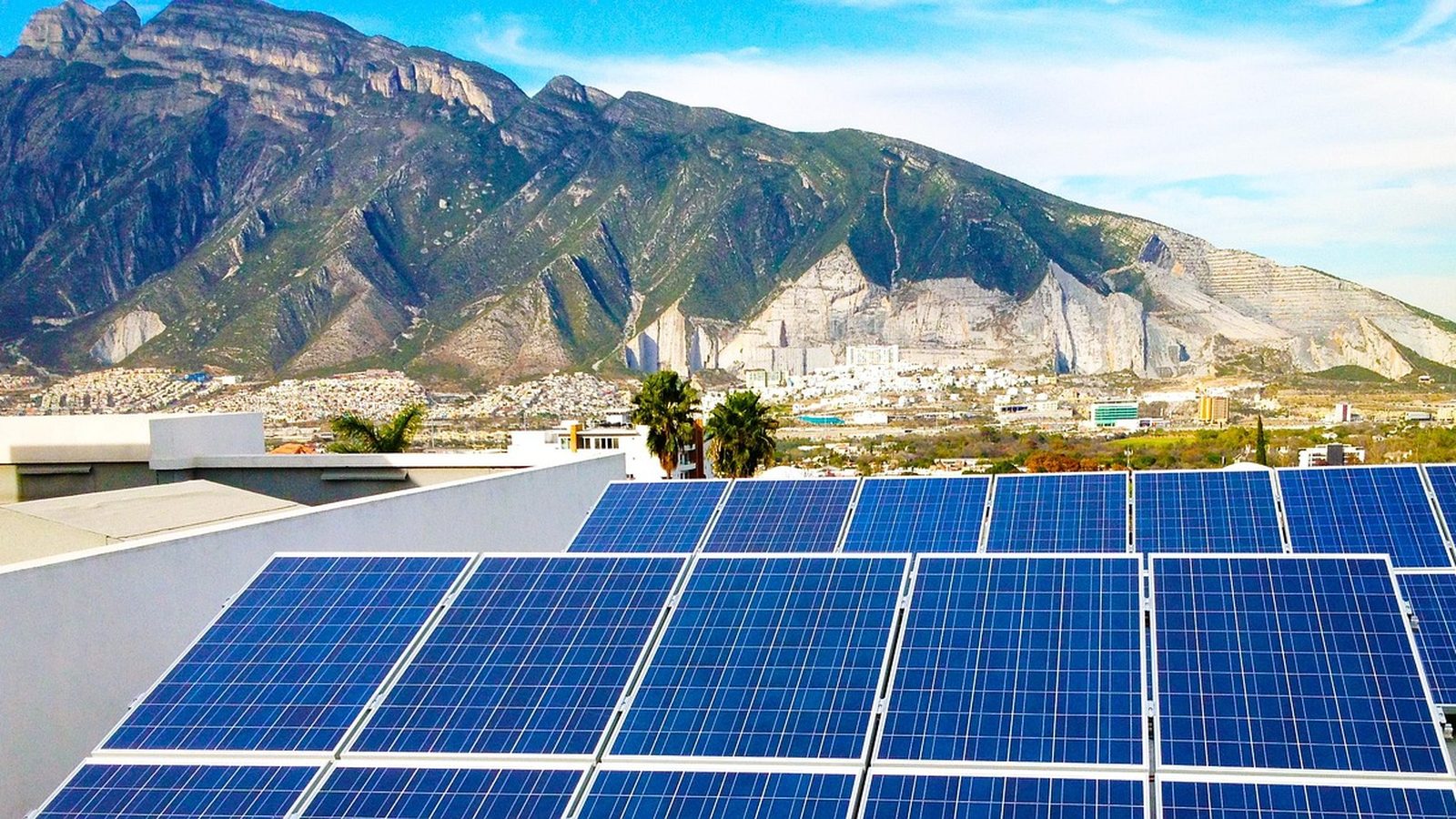
August is the model peak. This generic stock photograph is not evidence about a particular Irvine roof.

Method: PVGIS v5.2. PVGIS v5.2 model run by Solar Learning Lab on August 22, 2026, NSRDB radiation database. Fixed south facing mount, 30 degree tilt, 14 percent losses, downtown Irvine coordinates. Your roof will differ.

A planned community still has to negotiate the roof

Irvine's January 2026 housing estimate counts 129,428 units: 51,469 single detached, 20,781 single attached, and 48,669 in five-plus buildings. A detached-home buyer may see extensive rooflines while a large portion of city residents have an attached or shared building form. The calculator's ACS figures are separately sourced and show 43.8 percent owner occupancy. Do not use citywide wealth or a master-planned streetscape as a proxy for personal roof control. Sources: housing; census

The City of Irvine itself flags that HOA approval may be required. California Civil Code 714 prevents covenants or governing documents from effectively prohibiting solar, subject to reasonable restrictions that do not significantly increase cost or reduce efficiency. That is a meaningful protection, but it is not the same as no review. Design standards, placement requests, and timing should be handled before equipment is ordered. Sources: install; hoa

Irvine's Climate Action and Adaptation Plan is at Final Draft stage. Its appendix sets a 2040 carbon-neutrality target, with emissions 90 percent below 2019 levels by 2040. Those are city planning targets, not a buyer rebate. The city advantage verified here is administrative speed and its OCPA relationship, not a local cash payment for a residential array. Sources: caap; caapAppendix; fees

The premium is real. The rebates are conditional or absent

Irvine does not publish a residential solar rebate or permit-fee waiver in the city solar pages or the reviewed fee schedule. OCPA's 10 percent higher Net Surplus Compensation rate is a rate feature, not an up-front check. That distinction matters because it keeps the project economics tied to actual excess energy instead of borrowing imaginary value from the headline. Sources: ocpa; fees; permit

The federal homeowner credit is gone for 2026: residential 25D ended December 31, 2025. Lease and PPA providers may claim 48E. If a sales quote treats those facts as interchangeable, stop there. Ownership, financing, rate escalation, and what happens at sale of the home must be compared on the actual contract. Sources: federal

SGIP is similarly not a blank line on every battery quote. CPUC lists equity incentives of $850 per kWh and Equity Resilience at $1,000 per kWh, while SCE says its ratepayer budgets are closed to new applicants and the state-funded residential equity budget is exhausted and on a waitlist. Qualifying customers also face rate-plan, demand-response, and permission-to-operate conditions. Verify eligibility first. Then count money. Sources: sgip; sceSgip

The Irvine test is export-aware, HOA-aware, and permit-aware

A strong Irvine proposal makes three calculations visible. It models consumption before and after solar by hour, not merely by annual kWh. It separately shows the SCE export-bonus assumption and the OCPA net-surplus premium. And it states whether PermitsDIRECT is genuinely available to the designed system. When those three answers are clear, a buyer can decide whether storage has a job to do or is merely expensive insurance against an unexamined load profile. Sources: sceBilling; ocpa; permit

Do the HOA work alongside design, not after the sales appointment. Ask for the architectural rules, roof plans, and submission timing. Then use Irvine's same-day permit advantage where it applies. The city can remove a municipal review delay. It cannot remove a shared-property decision or manufacture load behind the meter. Sources: install; hoa

An Irvine OCPA workflow for the quote review

Put OCPA on the first page of the proposal, not in an afterthought. The customer should be able to see the generation plan, the claim that Basic Choice is the default at 49.2 percent renewable, and a clear explanation that SCE still delivers the power. OCPA says roughly 30 percent of the bill is generation and roughly 70 percent is delivery. That split keeps a buyer from reading a CCA claim as if the entire SCE bill has changed. Sources: ocpa

Next, separate three buckets of solar production: energy used immediately in the home, energy credited under the SCE Solar Billing Plan, and any net annual surplus that reaches OCPA's compensation rule. OCPA's stated 10 percent advantage belongs only in the third bucket. A proposal that applies it to every panel kWh is not explaining the program. It is stretching a true fact until it becomes a misleading savings number. Sources: ocpa; sceBilling

Finally, keep dates next to the economics. The 2025 council vote retained membership, but program status does not replace the SCE interconnection rules. The pre-2028 Energy Export Bonus Credit has its own eligibility conditions and a separate nine-year window. That is why a well-prepared Irvine quote reads like a small operating file: rate plan, OCPA status, permit route, HOA approval, and interconnection date all have a place. Sources: ocpaAffirm; cpucOCPA; cpucNbt

Use the installer call to test the OCPA story

An Irvine quote should identify the OCPA plan assumption, explain how it treats annual net surplus, and say whether the design qualifies for PermitsDIRECT. Ask about HOA sequencing and stamped mounting details before comparing panel labels. The cards below reflect Google Maps results with a meaningful review base, but a contractor earns consideration by putting these local assumptions in writing. Ratings snapshot: Google Maps, August 2026, via the DataForSEO SERP feed. Zero companies paid us and none are endorsed by us.

OC Solar logo

OC Solar

Irvine, CA

4.8(409 Google reviews)

Read the graded profile

Elevation logo

Elevation

Irvine, CA

4.4(140 Google reviews)

Forme Solar Electric logo

Forme Solar Electric

Irvine, CA

4.8(104 Google reviews)

Suntrek Solar logo

Suntrek Solar

Irvine, CA

4.6(87 Google reviews)

Read the graded profile

EL-FI Homes

Irvine, CA

4.6(65 Google reviews)

Ratings snapshot: Google Maps, August 2026, via the DataForSEO SERP feed. Zero companies paid us and none are endorsed by us.

Explore the export premium without treating it as a blank check

The starting calculation uses the local solar-output model and SCE rate context. It cannot reproduce OCPA's annual surplus settlement or your hourly imports and exports. Use it to set a plausible range, then have a proposal isolate OCPA net-surplus compensation, the SCE pre-2028 bonus, and the consumption that remains behind the meter. Sources: sceRate; pvgis

$187.4
1,732

The top production number is the south-facing downtown Irvine PVGIS case. The lower bound is an orientation haircut. Neither number verifies HOA approval, PermitsDIRECT eligibility, or the portion of output that becomes OCPA net surplus.

$2.46

Cash quotes in Irvine cluster near $2.46 per watt, against a $3.50 national 2024 median (LBNL). Use your quote.

Assumptions you can change
2.5%
7%
15
24c

Use the rate on your actual lease or PPA quote. There is no published statewide average we trust enough to hardcode.

2%
Estimated system: 3.8 kWAnnual usage: 6,537 kWhState credit: $0

Cash purchase

$9,348 after state credit

Year 1 benefit
$189/mo
Payback
5 years
20 year net position
$45,582

Cash ownership has no 25D homeowner credit in 2026. The Irvine question is whether enough annual surplus exists for OCPA's higher Net Surplus Compensation rate to matter after self-consumption, not whether a generic tax line saves the deal.

Solar loan

$125/mo 15 yr payment

Year 1 net
$64/mo
Upfront
$0
20 year net position
$32,428

An Irvine loan comparison should hold the HOA scope, stamped roof detail, equipment, term, and dealer fees constant. A different finance package is not a lower equipment price.

Lease / PPA

$0 down you buy the power

Year 1 net
$57/mo
Upfront
$0
20 year net position
$18,448

A lease or PPA provider may claim 48E. Compare its rate and escalator against an owned system that retains OCPA membership and the stated net-surplus treatment, rather than assuming the provider's tax benefit reaches the customer.

Planning estimate only. Inputs use SCE rate context, Irvine PVGIS production, and California market-cost data. OCPA's surplus compensation and SCE's pre-2028 export bonus need a proposal-level check because hourly imports and annual surplus cannot be recreated here. We are a solar installer and we also partner with other solar companies. See our disclosures.

Irvine answers for a roof that sits inside a planned community

This FAQ follows the practical order for Irvine: confirm OCPA status, establish the permit lane, clear the HOA process, and then quantify the surplus-compensation detail. It does not use a statewide average to fill a gap in a local program.

Did Irvine leave Orange County Power Authority?
No. Irvine's council voted 5-2 in September 2025 to rescind its earlier withdrawal notice, and the CPUC confirms the city continued with OCPA. Sources: ocpaAffirm; cpucOCPA
What is the OCPA solar export advantage?
OCPA says its Net Surplus Compensation rate is 10 percent higher than SCE's prevailing NSC rate. It is a surplus-compensation premium, not a 10 percent increase to all solar output or all bill savings. Sources: ocpa
Can Irvine issue a solar permit the same day?
Qualifying rooftop PV systems at 38.4 kW or less with no more than one battery can use PermitsDIRECT. The city says it issues those permits automatically the same day. Nonqualifying projects use IrvineReady, with roughly two business days for completeness and generally five working days for initial plan check. Sources: permit
Does an HOA have to approve solar in Irvine?
The city says HOA approval may be required. State law limits restrictions that effectively prohibit solar, but a buyer should still follow the association review process and document any placement requirement. Sources: install; hoa
Is there an Irvine cash solar rebate?
None was verified in the city solar pages or current reviewed fee schedule. The local financial difference is the OCPA net-surplus premium and permit speed, not a city cash rebate. Sources: permit; fees; ocpa
Does the expired federal credit apply to an Irvine cash purchase?
No. The residential 25D credit ended December 31, 2025. A lease or PPA provider may claim 48E, which requires a contract comparison rather than a homeowner tax-credit claim. Sources: federal

Irvine source ledger: premium, permit lane, and missing rebate

Federal credit: residential 25D credit ended December 31, 2025; lease/PPA providers may claim 48E. Congressional Research Service credit summary.

Irvine publishes a same-day route for qualifying projects and a stated standard-plan-check sequence. What it does not publish is a city cash rebate or fee waiver for a residential array. The program record supports a speed and surplus-compensation argument, not an invented up-front discount.

One last operational point: the decision does not end when the permit arrives. A household that expects the OCPA surplus premium should preserve the documents that establish its enrollment and compare the annual true-up treatment in the actual utility materials at the time of interconnection. A household that expects the SCE pre-2028 export bonus should verify that the application date and the system classification satisfy SCE rules. The project can be well designed and still disappoint if its assumed program status never makes it into the final account setup. This is why the contract should name the tariff, CCA status, and assumed interconnection timing in ordinary language, not bury them in a generic savings worksheet. Sources: sceBilling; ocpa; permit

Get a Irvine estimate

Four questions first, then a local estimate. We are a solar installer and we also partner with other solar companies. Read our disclosures.

What does your monthly electric bill look like?

California average is $187 per month (EIA, 2024).