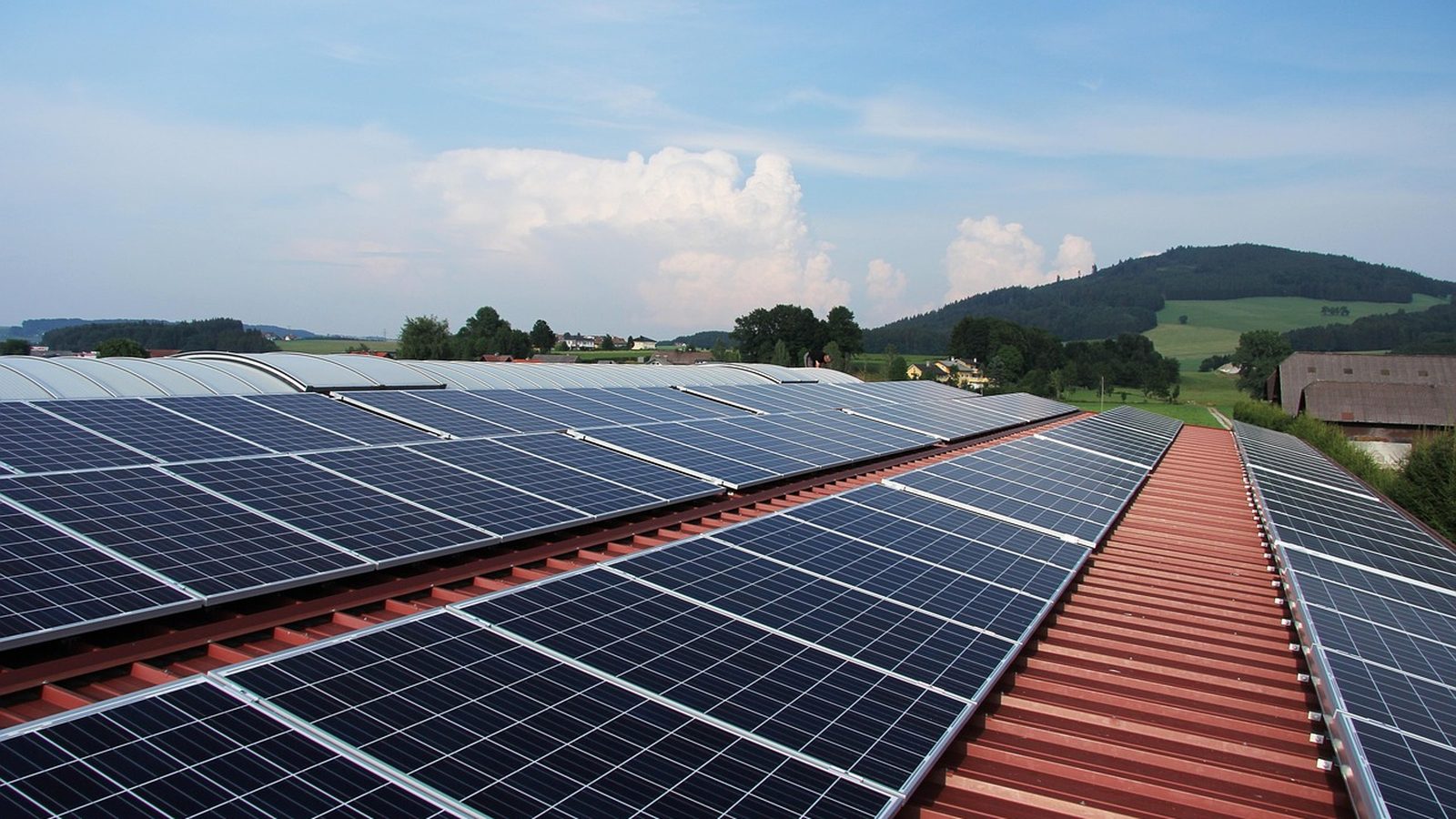
Photo: schropferoval, via Pixabay
California · Murrieta
Murrieta solar: one mandatory lane, one clear price
Written by the Solar Learning Lab research deskUpdated August 25, 202611 min read
Two documents decide most of what a Murrieta solar project costs the city side. The first is the FY 2026 to 27 User Fee Schedule, effective July 1, 2026, which prices a residential PV permit at $450 for a system of 15 kW or less, then $500 base plus $15 per kW over 15 for anything larger. The second is the City's own solar page, which does something most cities in the region do not: it makes SolarAPP+ compulsory. "All eligible residential roof mount solar applications are required to be submitted via SolarAPP+." Not offered. Required.
That combination changes how you should read a quote here. The permit price is fixed and knowable, the review path is automated for conforming jobs, and the remaining variables live in your roof, your SCE bill, and the fine print of the submittal rules. This page walks each of those, with the source document linked at every claim.
Put a number on your roof first
Run the estimator with the Murrieta production figures before anyone shows you a payback slide.
Estimate Murrieta outputThe fast lane is compulsory, and it has a gate list
Here is the sequence the City publishes. The contractor registers the design at solarapp.nrel.gov, gets the automated approval, then applies for the City permit in the Customer Self-Service portal, a Tyler EnerGov system the City launched on March 1, 2023. Only projects conforming to SolarAPP+ requirements qualify for automated instant permitting. The homeowner ends up paying twice, in a sense: a SolarAPP+ processing fee to the platform for plan review, plus the City's $450 permit fee. The City lays the whole flow out.
The gate list matters more than the flow chart. Per the City's eligibility document dated 09/08/2022, the automated path covers new rooftop retrofit PV on a home with a unique utility meter, installed by a licensed contractor. It excludes ground mounts, homes with existing PV or storage, multifamily R-2 buildings, mobile homes, and zero lot line properties. That last one is quietly important in a tract-built city: a zero lot line home falls out of the instant lane and back into portal plan review, with a written narrative required. Instruction Bulletin IB-125 carries the details.
None of this is Murrieta improvising. Municipal Code Chapter 15.62, adopted by Ordinance 503 in 2015 under the state's expedited permitting mandate, already limited eligible small rooftop systems to a single consolidated inspection. The ordinance text is public. The automation layer sits on top of Government Code 65850.52, which required cities over 50,000 people to run an automated platform by September 30, 2023, handling systems up to 38.4 kW AC. Statute here. The CEC's tracking file, updated August 3, 2026, records Murrieta as a SolarAPP+ platform city, though with no annual report submitted and no CalAPP grant. CEC dataset.
Read the fee schedule the way the counter staff does
The residential line: $450 at 15 kW or less, payable when the permit is issued, covering City plan review and inspection. Above 15 kW: $500 base plus $15 for each kW over 15. For context, Government Code 66015 states $450 up to and including 15 kW plus $15 per kW above that, unless a jurisdiction adopts a higher fee with a written finding. Murrieta's under-15 kW price lands exactly on the statutory number, so nobody should present the $450 as a local markup. Statute and fee schedule, side by side.
What the $450 does not buy is everything. A main panel upgrade needs its own application, its own permit, its own fee, and only an Electrical C-10 licensed contractor can pull it. Carports, ground mount support structures, exterior lighting, and EV charging equipment each require separate permits and fees even when they exist solely to serve the solar installation. A quote that shows one permit line for a solar plus panel upgrade job in Murrieta is already wrong. City permitting page and fee schedule.
The rejection rules are boring. They still eat calendar days.
IB-125 is blunt about mechanics. Submittals must be one combined PDF in the listed document order, named by project address, with plans in landscape view and every page upright. Get any of that wrong and the entire submission comes back. The applicant's contact name, phone, and email go in the portal message field. These are the kinds of rules a high-volume installer handles on autopilot and an occasional one fumbles, and the fumble costs a resubmittal cycle, not a warning. IB-125.
Before submitting anything, the ordinance puts verification duties on the applicant: confirm the roof structure handles wind, seismic, dead and live loads, and confirm, at the applicant's cost, that the existing wiring, main panel, and subpanels carry the new PV loads. That second duty is exactly where surprise change orders are born, so ask the installer in writing whether the panel check happened before or after the contract price was set.
Murrieta is a rooftop inventory with a city attached
The Census ACS 2023 estimates put 78.3 percent of Murrieta's housing in single family structures, with 69.3 percent of the city's 35,452 households owning their homes and a median household income of $109,780. Those three numbers describe a market where the typical solar prospect owns a detached roof and can actually sign for work on it, which is not true in most California cities this size. US Census Bureau, ACS 5-year estimates, 2023.
The state's own 2026 housing file adds texture: 38,280 total units, of which 27,718 are single detached, a 3.72 percent vacancy rate, and 3.03 persons per household, in a city of 112,315 people that incorporated in 1991 and grew from about 2,200 residents in 1980. Master planned growth left behind broad, young, tract-built roof planes. It also left behind HOAs, which under Civil Code 714 cannot effectively prohibit a solar system, though they may impose reasonable restrictions that do not significantly raise cost or cut performance. DOF E-5 estimates and Civil Code 714.
The SCE side: high retail prices, thin midday export credits
Murrieta's general plan states plainly that Southern California Edison furnishes the city's electric supply, with three substations inside city limits: Auld, Stadler, and the upgraded Tenaja. City utility chapter. No community choice aggregator serves Murrieta, and it was never a member of the western Riverside County CCA that failed in 2021, so ignore any pitch built on CCA generation rates. SCE's active CCA list confirms it.
| Energy source | Type | Average price | What that means |
|---|---|---|---|
| SCE tiered plan | Tier 1 and Tier 2, June 2026 | 30¢ to 40¢ per kWh | Tier 1 covers usage up to 384 kWh; Tier 2 runs 385 to 1,535 kWh. |
| SCE TOU-D-4-9PM | summer weekday on-peak | 58¢ per kWh | 4 to 9 p.m. June through September, plus a $0.79 daily base charge. |
| SCE Solar Billing Plan | summer export credit averages | 6¢ to 21¢ per kWh | 6¢ daytime, 21¢ evening, 12¢ overnight; winter drops to 3¢ daytime. |
| Onsite solar | self-consumed production | avoided retail varies by rate plan | A kWh used at home displaces the plan price for that hour, which is why timing beats raw annual output. |
SCE tiered plan page, TOU rate detail, and Solar Billing Plan credits, all as published for 2026. Snapshot, not a bill forecast.
The economics compress into one comparison: a summer daytime export earns about 6 cents while a summer evening purchase on TOU-D-4-9PM costs 58 cents. Since April 15, 2023, new interconnections take the net billing tariff under CPUC Decision D.22-12-056, served on TOU-D-PRIME, and residential customers enrolling before 2028 pick up an extra export credit of roughly 4 cents per kWh, locked for nine years. Helpful, but it does not close a 52 cent gap. Load shifting and, for some homes, storage do. CPUC net billing page and SCE credit values. EIA's 2024 data pegs SCE's average residential price at about 32.4 cents per kWh. EIA Table 6.
1,773 kWh per kW: the strongest kind of boring number
Our downtown Murrieta model run returns 1,773.0 kWh per year for each installed kW. August leads at 168.3 kWh per kW, December trails at 116.7, and the December figure still beats what many northern California roofs produce in shoulder months. The winter-to-summer swing is moderate by inland standards, which flattens the true-up drama a little.
August peaks at 168.3 kWh per kW, right when SCE evening prices are at their worst. Production and price stress arrive in the same months here.
PVGIS v5.2 model run by Solar Learning Lab on August 25, 2026, NSRDB radiation database. Fixed south facing mount, 30 degree tilt, 14 percent losses, downtown Murrieta coordinates. Your roof will differ. The run comes from the PVGIS tool. Treat it as a standardized location benchmark. An installer's site-specific model should be reconciled against it, and a proposal more than about 10 percent above it deserves a written explanation of why.
Fire maps and shutoffs are part of the Murrieta solar file
The City Council adopted the State Fire Marshal's updated Fire Hazard Severity Zone maps, effective July 4, 2025, covering High and Very High zones in the local responsibility area, and Murrieta Fire and Rescue has run AB 38 defensible space inspections on home sales in those zones since January 1, 2021. City fire hazard page. Separately, SCE will consider a Public Safety Power Shutoff when wind, humidity, and fuel conditions line up, and a home connected to a circuit crossing high fire risk terrain can lose power even on a calm street. SCE PSPS criteria.
That is the honest battery argument in this city: evening self-consumption against a 58 cent peak, plus outage cover in mapped fire zones. It is not automatic. A battery adds cost, may add permitting scope, and knocks a retrofit out of the SolarAPP+ eligibility list if PV or storage already exists on the home. Run the arithmetic before the emotion.
The 2026 ledger: what is gone, what is left
Gone: the 30 percent federal homeowner credit. P.L. 119-21 repealed the 25D credit for expenditures after December 31, 2025, and the IRS treats the expenditure as made when installation is completed, so a 2026 completion cannot claim it. CRS summary IN12611. Any Murrieta pitch that still leans on a federal homeowner credit is out of date by eight months.
Left: three targeted items. SGIP's Residential Solar and Storage Equity budget, $280 million with reservations open since June 2, 2025, pays $3,100 per kW for solar and $1,100 per kWh for storage to income-qualified customers. CPUC SGIP page. DAC-SASH offers no-cost solar through GRID Alternatives for income-qualified homeowners in the top 25 percent most disadvantaged tracts statewide, running through 2030. Program page. And the property tax new construction exclusion keeps a qualifying system from raising your assessment, currently scheduled to sunset January 1, 2027, which is a real deadline for anyone planning a 2027 install. BOE guidance. No Murrieta municipal rebate exists as of this writing.
Six local Maps results, five of them from the I-15 corridor
The snapshot below is what the local Google Maps result set looked like in August 2026: six companies with meaningful review counts, headquartered in Murrieta and Temecula. A locally based installer is not automatically better, but in a city with a mandatory SolarAPP+ lane and picky submittal formatting, ask each bidder how many Murrieta permits they have pulled through the CSS portal since March 2023 and who on their staff owns resubmittals.
Solarflexion, Inc
Murrieta, CA
4.6(132 Google reviews)
Pacific Sun Technologies, Inc
Murrieta, CA
4.9(117 Google reviews)
Transform Power - Solar Installer
Temecula, CA
5.0(111 Google reviews)
Good Energy Group Inc
Murrieta, CA
4.2(103 Google reviews)
Ratings snapshot: Google Maps, August 2026, via the DataForSEO SERP feed. Zero companies paid us and none are endorsed by us.
Screen a Murrieta system size before you take a meeting
This estimator is a sizing screen, not a bill simulation. It uses the Murrieta production run and statewide rate and cost inputs, and it cannot see hourly export credits or your roof's shading. Its job is to give you a defensible starting range so a sales projection has something to be compared against.
The upper slider bound is our Murrieta PVGIS annual figure of 1,773 kWh per kW. The lower bound trims 15 percent as a shading and orientation sensitivity check, not a prediction for your address.
Cash quotes in Murrieta cluster near $2.46 per watt, against a $3.50 national 2024 median (LBNL). Use your quote.
Assumptions you can change
Use the rate on your actual lease or PPA quote. There is no published statewide average we trust enough to hardcode.
Cash purchase
$8,118 after state credit
- Year 1 benefit
- $162/mo
- Payback
- 5 years
- 20 year net position
- $39,092
The calculator applies the California average retail rate as its value input. Murrieta accounts sit with SCE, where the tiered plan runs 30 to 40 cents per kWh and TOU peaks reach 58 cents, so an SCE bill can price a self-consumed kWh above the state average this tool uses.
Solar loan
$109/mo 15 yr payment
- Year 1 net
- $54/mo
- Upfront
- $0
- 20 year net position
- $27,669
Financing math here uses the documented California loan-over-cash spread. Before signing in Murrieta, get the cash price, the financed price, and any dealer fee on separate lines, and remember the $450 city permit and a possible panel upgrade permit are separate cost items.
Lease / PPA
$0 down you buy the power
- Year 1 net
- $45/mo
- Upfront
- $0
- 20 year net position
- $14,771
The federal homeowner credit ended for expenditures after December 31, 2025. The CRS note we rely on covers only that homeowner credit and says nothing about how a lease or PPA provider is taxed, so require any third party to put its claimed incentives and your rate escalator in writing.
Estimates, not quotes. This tool blends the California average retail rate, our downtown Murrieta PVGIS production run, and statewide cost inputs. It cannot model SCE hourly export credits, the pre-2028 export adder, or your roof. We are a solar installer and we also partner with other solar companies. See our disclosures.
We are a solar installer and we also partner with other solar companies.
Murrieta questions we actually get
Is SolarAPP+ optional in Murrieta?
What does the city permit cost in 2026?
Why was my submittal returned without review?
Does Murrieta have a community choice energy program?
Can my HOA block the install?
Is there still a federal tax credit for buying solar?
Document trail for this page
Every operational claim above traces to one of these documents, each reviewed on August 25, 2026.
solarApp · submittal · feeSchedule · permitCenter · ordinance · feeCap · sb379 · cecTracking · cityUtility · sceTiered · sceTou · sceSbp · sceCca · scePsps · netBilling · sgip · dacSash · propTax · federal · housing · fireZones · eia · hoa · pvgis · census
Get a Murrieta estimate anchored to your bill
Answer four short questions and we will frame a system range around your actual usage, not a template.
What does your monthly electric bill look like?
Murrieta average is $161 per month (EIA, 2024).