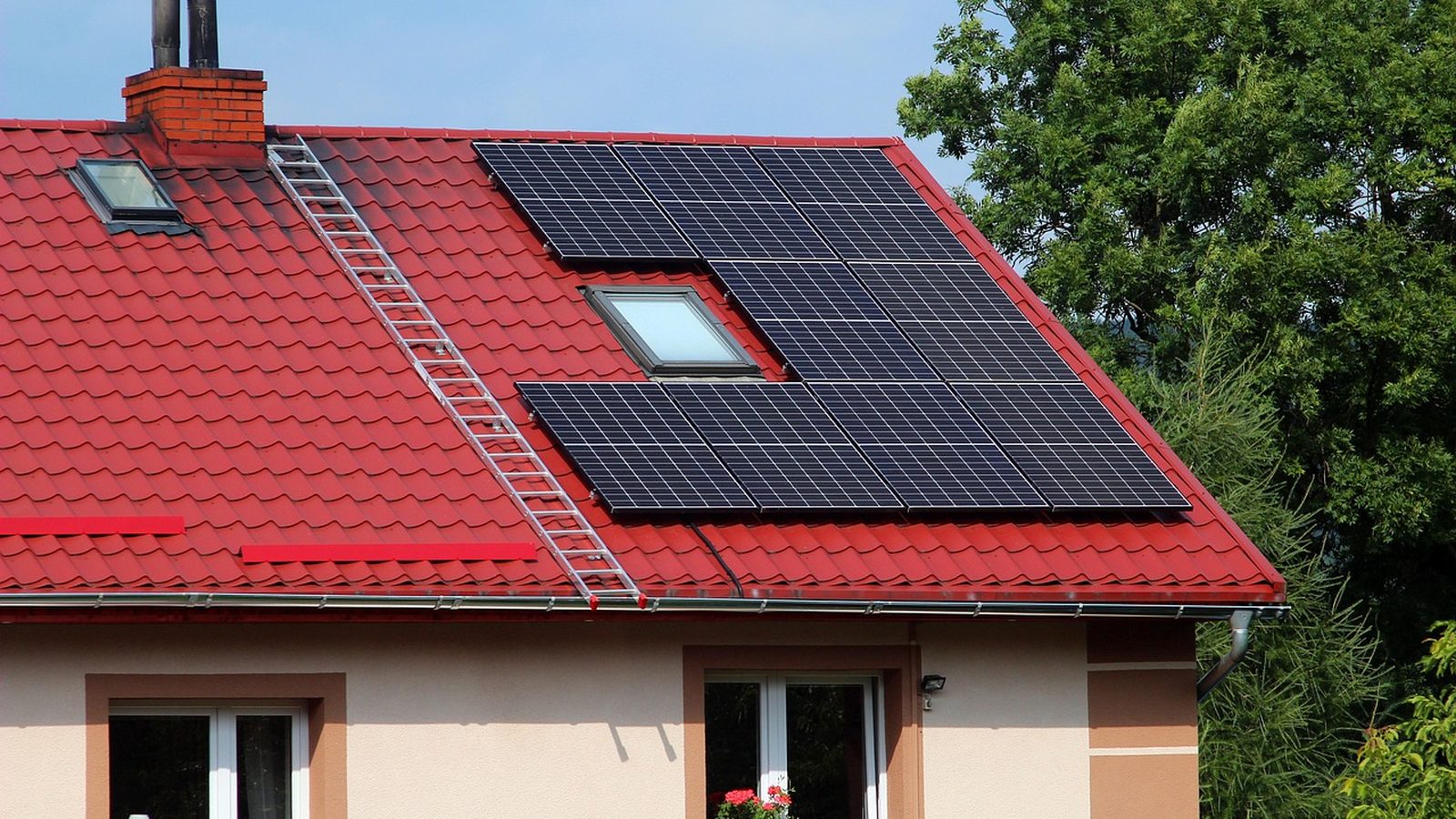
Photo: Admiral_Lebioda, via Pixabay
California · Rancho Cordova
Rancho Cordova solar: the permit has two steps, not one
Written by the Solar Learning Lab research deskUpdated August 29, 202610 min read
Here is the mistake that stalls solar projects in Rancho Cordova: treating a SolarAPP+ approval as a finished permit. The city's own guidance is explicit that residential rooftop solar goes through SolarAPP+ for review and approval, and that afterward the contractor must still complete the permit submission through Rancho Cordova Online, the city's permitting system. Skip the second step and there is no permit, no inspection, and eventually an unhappy phone call. Crews accustomed to towns where the automated approval is the whole transaction get caught by this regularly.
The other half of the story is the utility. Rancho Cordova sits inside SMUD territory, where an elected board, not the state's Public Utilities Commission, decides what rooftop generation is worth. Board pricing cuts both ways: exports pay modestly, but the rules are stable, published, and free of the regulatory whiplash investor owned utility customers live with.
Arrive at the quote informed
Work through the estimator first. It sets a floor under every conversation with a sales rep.
Start the estimateSolarAPP+ opens the door, Rancho Cordova Online closes the deal
The city's permit page describes the sequence plainly. Residential rooftop PV uses SolarAPP+, the automated platform developed by the National Renewable Energy Laboratory, for code review and approval. Once that approval exists, the applicant completes the actual permit submission through Rancho Cordova Online. Inspections get scheduled in that same system, and the city maintains a daily inspection distribution list for contractors who want the schedule pushed to them.
The state's records back the setup. The CEC tracking data shows Rancho Cordova on the SolarAPP+ platform with 2024 reporting on file and CalAPP funding of $60,000, dated March 24, 2023, all in service of the automated permitting requirement in Government Code 65850.52. Questions go to Permit Services at 916.851.8760 or PermitServices@cityofranchocordova.org. No public counter address for permit drop-off appears on the fetched pages, which fits a city that has pushed the whole workflow online.
On cost, the city pages we reviewed publish no residential solar permit fee. Government Code 66015 supplies the guardrail: $450 for systems up to 15 kW, plus $15 per kW above that, unless a jurisdiction formally justifies more.
Email died here in 2023, and that is worth knowing
Since January 1, 2023, Rancho Cordova accepts no emailed permit submittals of any kind, per the permit page. Every application, document upload, payment and inspection request lives in Rancho Cordova Online. For homeowners this is mostly good news, because the project's status is visible in one portal instead of buried in a contractor's inbox. Ask your installer for the record number early and you can watch the milestones yourself.
What SMUD charges, and what it pays back
SMUD's residential pricing runs on a Time of Day structure, and the numbers worth memorizing come from the rate schedule. Summer weekday evenings, 5 to 8 p.m. from June through September, bill at 37.65 cents per kWh. Summer mid peak runs 21.39 cents, summer off peak 15.5 cents, and the October through May season drops to 17.76 cents peak against 12.85 off peak. Across the whole year the average works out near 17.9 cents per federal utility data, which is remarkably cheap power by California standards.
On the payback side, households interconnected on or after March 1, 2022 sit on the Solar and Storage Rate. Surplus generation sent to the grid earns 9.6 cents per kWh as of June 1, 2026, a figure the board lifted from the prior 7.4 cents and has committed to reviewing on a four year cycle, per the rate announcement. The export price holds steady around the clock. There is no premium hour to chase with an export strategy, which simplifies design decisions considerably: consume or store first, export what remains.
Where the export credit lands on the bill
A detail from the SSR documentation that quotes rarely surface: export credits apply against usage charges first. The credit is a bill offset mechanism, not a payout stream, so its real world value depends on having usage charges to offset. Pair that with SMUD's sizing rules from the solar program page, 110 percent of the previous year's consumption, stretching to 120 percent when a battery is part of the SSR installation, and the message is consistent: this utility designed its program around self supply, not generation for revenue.
One more SMUD process fact belongs in your file. Interconnection is its own application with a system diagram, site plans and a copy of your bill, an interconnection fee is collected up front, and SMUD sets the meter and grants operating permission on its own timeline. The city permit being done does not make the utility side done.
A 92 degree July is a battery salesman's best friend
Rancho Cordova's climate is textbook hot summer Mediterranean, with July afternoons averaging 92.6 degrees per the local climate record. Air conditioning load peaks in the late afternoon and early evening, exactly when SMUD's priciest hours begin. A panel-only system watches its output fade just as the 37.65 cent window opens. A system with storage shifts cheap midday generation into that window and captures the full spread between what SMUD charges at dinner and the 9.6 cents an export would have earned.
SMUD sweetens the arithmetic with its My Energy Optimizer Partner+ enrollment incentive, worth up to $10,000 for a participating battery household, with a hard requirement to enroll within 90 days of receiving permission to operate, per the program announcement. That deadline should be written into the installation contract with a name attached to it.
Two housing generations, two different solar conversations
The city's rooftops split roughly into eras. The Mills area and its older neighbors carry 1960s era tract homes from the city's fastest growth decade, when population jumped 309.9 percent between 1960 and 1970, and there the solar conversation starts with roof age, panel upgrades and sometimes a main service panel that predates the microwave. The newer master planned side, the Villages of Zinfandel at Stonecreek and the Barrel District among them, brings modern roofs and electrical systems but adds homeowners associations to the approval chain, per the community record.
For the HOA cases, Civil Code 714 is the lever: governing documents cannot effectively prohibit rooftop solar, and permitted restrictions must be reasonable, meaning they cannot significantly raise the cost or significantly cut the performance of the system. Boards get input on placement details. They do not get a veto.
The base is broad either way: 21,184 of the city's 32,825 housing units are single detached homes, 64.5 percent, per state housing estimates, with owner occupancy at 56.4 percent and median household income of $89,120. Standard state and federal frames apply, the property tax exclusion for active solar until its January 1, 2027 sunset, and a federal homeowner credit that the Congressional Research Service describes as limited to qualifying expenditures made before the close of 2025, which excludes new 2026 purchases.
Modeled solar output along the Highway 50 corridor
Our Rancho Cordova model produces 1,628.0 kWh per installed kW per year. The seasonal swing is dramatic: August leads at 176.0 kWh per kW while December sags to 79.8, better than a two to one ratio between the best and worst months. Winter tule fog and low sun angles do real damage to Central Valley December output, and honest system sizing accounts for it.
August models at 176.0 kWh per kW while SMUD's summer evening pricing is in force, the alignment that makes storage compelling here.
PVGIS v5.2 model run by Solar Learning Lab on August 29, 2026, NSRDB radiation database. Fixed south facing mount, 30 degree tilt, 14 percent losses, downtown Rancho Cordova coordinates. Your roof will differ. Full model documentation is at PVGIS. These are location level figures; individual roofs vary with pitch, azimuth and shade.
The two questions that sort Rancho Cordova bidders
First: after SolarAPP+ approval, what happens next? A competent local crew immediately describes completing the submission in Rancho Cordova Online and scheduling inspections there. Second: how does your production model value exports? The right answer references SMUD's flat export compensation and a design that prioritizes onsite use, not a spreadsheet assuming retail value for every surplus kilowatt hour. Bidders who whiff on either question are learning the market on your project.

Sierra Pacific Home & Comfort, Inc.
Rancho Cordova, CA
4.5(1,930 Google reviews)
V3 Electric
Rancho Cordova, CA
3.8(449 Google reviews)
Aztec Solar, Inc.
Rancho Cordova, CA
4.4(153 Google reviews)

SUPERIOR SOLAR, INC
Rancho Cordova, CA
5.0(79 Google reviews)
Ratings snapshot: Google Maps, August 2026, via the DataForSEO SERP feed. Zero companies paid us and none are endorsed by us.
Put your own figures through the model
A caveat before you start: the tool below prices electricity at a statewide blended figure, and SMUD sells most hours well under that number. Expect the savings line to flatter the local reality. Where the tool earns its place is comparing system sizes and cash versus financed versus leased structures on equal footing.
Top of the range is the downtown Rancho Cordova PVGIS output. Bottom is 85 percent of that, a buffer worth using on older tract streets where shade trees have had sixty years to grow.
Cash quotes in Rancho Cordova cluster near $2.46 per watt, against a $3.50 national 2024 median (LBNL). Use your quote.
Assumptions you can change
Use the rate on your actual lease or PPA quote. There is no published statewide average we trust enough to hardcode.
Cash purchase
$8,856 after state credit
- Year 1 benefit
- $162/mo
- Payback
- 5 years
- 20 year net position
- $38,434
Rancho Cordova sits inside SMUD territory, where power costs far less per kWh than the statewide average this tool assumes. That gap means the on-screen savings will overstate what a typical local bill can actually shed, unless the design leans hard on the summer evening peak window.
Solar loan
$118/mo 15 yr payment
- Year 1 net
- $44/mo
- Upfront
- $0
- 20 year net position
- $25,972
The financed scenario reflects generic California loan spreads. Because the underlying utility bill here is smaller than in coastal IOU cities, interest and dealer fees can quietly consume the margin, so insist on seeing total finance cost in dollars, not just a monthly payment.
Lease / PPA
$0 down you buy the power
- Year 1 net
- $45/mo
- Upfront
- $0
- 20 year net position
- $14,796
Third party ownership deserves extra skepticism where retail power is cheap. Before signing a lease or PPA in Rancho Cordova, put the provider's per kWh rate next to SMUD's published Time of Day prices. Also remember that 2026 residential purchases fall outside the federal homeowner credit window the CRS describes.
Estimates, not quotes. Inputs are the California average retail rate, a Rancho Cordova PVGIS model and state market costs. SMUD's Time of Day schedule, its flat export compensation and its battery program are not simulated here. We are a solar installer and we also partner with other solar companies. See our disclosures.
We are a solar installer and we also partner with other solar companies.
Direct answers for Rancho Cordova homeowners
My installer says the SolarAPP+ approval means we are permitted. True?
Can my contractor just email the plans to the city?
What is the export rate for solar here?
How big a system will SMUD approve?
My HOA wants to dictate where panels go. Can they?
Who do I contact at the city with permit questions?
Paper trail for this page
Sources below were fetched and reviewed on August 29, 2026.
- Rancho Cordova Building and Safety and the city's forms and downloads page
- CEC automated permitting data and Government Code 65850.52
- SMUD solar for your home, Solar and Storage Rate, residential rate schedule and the export increase announcement
- EIA Table 6, Government Code 66015, CRS IN12611, Civil Code 714 and the BOE exclusion
- DOF E-5 housing estimates, Rancho Cordova background and PVGIS
Quote a Rancho Cordova system with both steps priced in
Give us the bill, the roof details and your preferred payment route. Use what comes back to pressure test every bidder's SMUD math and permit plan.
What does your monthly electric bill look like?
Rancho Cordova average is $161 per month (EIA, 2024).