Skip to content
Solar Learning Lab
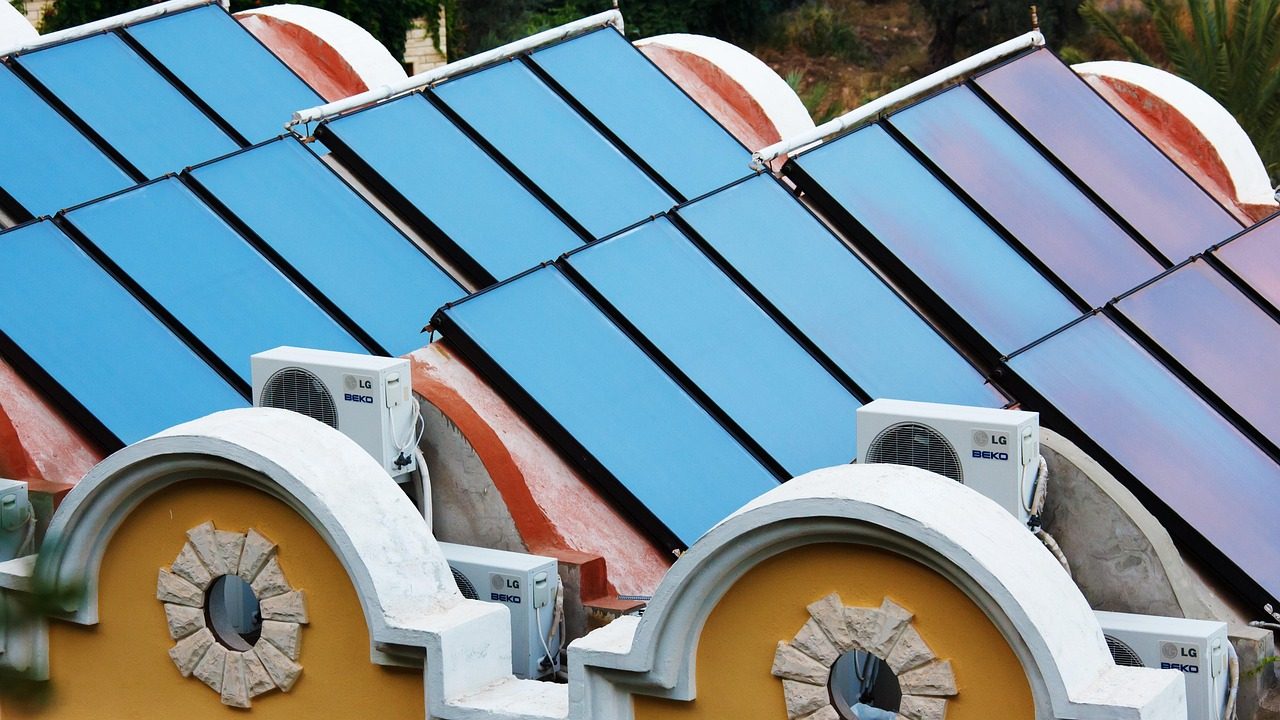
Solar panels mounted on a rooftop

Photo: PublicDomainPictures, via Pixabay

California · Riverside

Riverside solar in 2026

Written by the Solar Learning Lab research deskUpdated August 21, 202611 min read

Riverside is another California exception that makes national and statewide solar copy unreliable. Riverside Public Utilities is municipal. Legacy Schedule NEM closed to new systems in 2022, and today’s projects move into Self-Gen with avoided-cost export credits and a required D-TOU rate. The city has useful speed and a planned storage program, but the winning design is not simply more solar. It is solar sized for load, with a clear plan for late-afternoon energy and a realistic view of what exported kWh earn. Sources: solarapp; selfGen

1,749.8 kWh

Annual PVGIS output per kW installed

23.04¢

Calculator tariff input, not a bill estimate

68.9%

Single-family housing in ACS 2023

Riverside is another California exception that makes national and statewide solar copy unreliable. Riverside Public Utilities is municipal. Legacy Schedule NEM closed to new systems in 2022, and today’s projects move into Self-Gen with avoided-cost export credits and a required D-TOU rate. The city has useful speed and a planned storage program, but the winning design is not simply more solar. It is solar sized for load, with a clear plan for late-afternoon energy and a realistic view of what exported kWh earn. Sources: pvgis; census

See what this roof may pencil out to

Use a published local rate, the Riverside PVGIS benchmark, and your own bill as a first pass. A real quote must still model the local export tariff.

Get my Riverside estimate

Riverside SolarAPP+ is narrow, fast, and cheaper

Riverside offers SolarAPP+ through its Public Portal, with a $25 processing fee, but the eligibility rules are specific. The city limits it to residential PV under 38 kW with no ground mount or ballasted system, no main-panel upgrade or derating, no existing PV, no storage, no historic structure, and a legal existing structure. A project that fits those conditions can take the automated path. A project that does not may still be viable, but it needs a conventional permit conversation. This is exactly why an installer should assess the panel and existing equipment before leading with an instant-permit claim. Sources: solarapp; checklist

Riverside's published schedule lists $190 for an expedited solar energy system up to 38 kW, $350 for a standard residential system up to 15 kW, a $39 permit-issuance fee, and separate maintenance, technology, state, and valuation-based charges. The practical distinction is more important than a single headline number: an eligible expedited project begins from a lower named solar fee, while ancillary charges and scope can still change the closing total. The city does not publish a business-day service standard for conventional solar plan check in the materials reviewed. Label it n.a. instead of translating SolarAPP+ automation into a schedule for every job. Sources: feeSchedule; solarapp

RPU Self-Gen is not CPUC NEM 3.0 or legacy NEM

Riverside Public Utilities is a publicly owned water and electric utility, so it operates outside the CPUC investor-owned utility framework. Its legacy Schedule NEM closed to new customers November 1, 2022. New systems use Schedule SELF-GEN, where exported energy receives the Avoided Cost of Energy multiplied by a time-of-delivery factor, credits roll forward, and customers remain responsible for all otherwise applicable tariff charges. Residential Self-Gen customers are placed on D-TOU, and systems may be sized up to 150% of historic annual usage. This is Riverside's tariff, not NEM 3.0 by another name. Sources: rpu; nem; selfGen

For July 1, 2026 through June 30, 2027, RPU publishes an average avoided cost of 6.78 cents per kWh and D-TOU-period values of 5.41 cents summer off-peak, 6.47 cents mid-peak, and 9.95 cents on-peak. The D-TOU schedule lists summer on-peak retail energy at 23.04 cents for Tier 1 and 36.86 cents for Tier 2. That gap is the whole design problem. A kWh used on-site in the right period avoids a much larger purchase than a midday kWh exported under Self-Gen earns. Storage and load shifting may help, but their value depends on the actual interval profile and equipment cost. Sources: acoe; rpuDtou; selfGen

Energy sourceTypeAverage priceWhat that means
RPU D-TOUSummer on-peak Tier 123.04¢ per kWhRPU's 2026 D-TOU schedule lists this rate for the first 330 kWh in the summer on-peak period.
RPU Self-GenSummer on-peak export9.95¢ per kWhJuly 2026 to June 2027 avoided-cost energy value for the D-TOU on-peak period.
Rooftop solar, ownedIllustrative lifetime output~5.6¢ per kWhOur calculation: California cash median spread across 25 years of local PVGIS production. It excludes financing, maintenance, and the local export-credit effect.

Sources: rpuDtou; selfGen; acoe; cost

Production month by month, with the assumptions visible

Jan
Feb
Mar
Apr
May
Jun
Jul
Aug
Sep
Oct
Nov
Dec

August is the modeled high point at 166.4 kWh per kW. The seasonal output fits the inland climate, but the calculator cannot know a roof's orientation, shade, or electrical constraints.

Method: PVGIS v5.2. PVGIS v5.2 model run by Solar Learning Lab on August 21, 2026, NSRDB radiation database. Fixed south facing mount, 30 degree tilt, 14 percent losses, downtown Riverside coordinates. Your roof will differ.

The Riverside output profile fits the climate, not every tariff hour

PVGIS models 1,749.8 kWh per kW annually for downtown Riverside. The output is above 160 kWh per kW from May through August, peaks at 166.4 in August, and reaches 115.0 in December. NOAA normals at Riverside Municipal Airport show a 78.8°F annual average high, 1,757 cooling degree days, and 12.40 inches of precipitation. Those figures support a genuine warm-season overlap between production and cooling. They do not tell us whether a household is home at 2 p.m., whether its air conditioner is efficient, or whether it can shift load into the value windows on D-TOU. Sources: pvgis; climate

The export value changes the system-size conversation

The calculator uses the California EnergySage cash median of $2.46 per watt. At that statewide input, a simple 7 kW example is $17,220 before roof, permit, electrical, or battery changes. The calculation is intentionally a starting point, not a forecast of Self-Gen credits. The rate model shows a retail-rate offset for readability, while Riverside's actual export credit depends on time of delivery. A good local proposal should state modeled annual consumption, direct solar use, battery charge and discharge if applicable, imports by D-TOU period, and exports by period. The missing rows matter more than a polished savings total. Sources: cost; selfGen; acoe

The residential 25D credit ended December 31, 2025. Lease and PPA providers may still claim 48E, but customers need to compare the contract price, annual escalator, production guarantee, transfer terms, and end-of-term options. Riverside also has a published $500-per-kWh Residential Energy Storage Rebate Program with a higher amount for low-income customers and $5 million of funding, but the city's June 2026 release says program guidelines were still under development. It should be treated as a pending local program, not an automatic credit on a 2026 proposal. Sources: federalCredit; storageProgram

Riverside gives new systems a broad size ceiling, not a reason to max it out

RPU permits Self-Gen systems up to 150% of historic annual usage. That is more generous than a strict annual-load cap, but it is not a directive to use the whole allowance. With export credits below peak retail purchases, a larger system can increase lower-value exports faster than it reduces the bill. The useful use case for the 150% ceiling may be a documented future load, such as electrification or transportation, rather than a generic desire to fill roof space. Put the future load in the calculation and label its timing assumptions. Sources: selfGen

The city has a more rooftop-ready housing base than its coastal counterparts. California's 2026 estimate reports 103,040 units, including 65,294 single-family detached homes. Census reports 56.3% owner occupancy and 68.9% single-family housing. That creates a lot of roofs where a household can actually make a solar decision. It does not remove the need to check roof age, main-panel capacity, or HOA requirements. State law limits unreasonable solar restrictions by HOAs, but common-area and design review details still belong in the pre-contract process. Sources: housing; census; hoa

Hot summers and a detached-house base create a real load match

The Riverside case has more physical fit than tariff simplicity. High cooling degree days and a large detached-home base make daytime self-consumption plausible, which is valuable under Self-Gen. The mistake would be treating a climate statistic as an engineering design. A household with a vacant daytime schedule, a shaded roof, and a modest evening load will not use solar like a home running air conditioning through the afternoon. Start with the bills and interval data if available. Then use the PVGIS curve to question, not replace, the installer's production and tariff model. Sources: climate; housing; pvgis

riverside project file

Riverside solar turns on a municipal tariff and an eligibility screen

Riverside provides one of the clearer examples of why California solar cannot be described with one statewide script. RPU has a successor tariff, an avoided-cost export calculation, a D-TOU requirement, and a permit path whose speed depends on the system being plain enough to qualify.

Decision 1

SolarAPP+ is useful precisely because its limits are strict.

Riverside uses SolarAPP+ through its Public Portal with a $25 processing fee. Eligibility is confined to residential PV below 38 kW, with no ground mount, ballasted system, main-panel upgrade or derating, existing PV, energy storage, historic structure, or illegal existing structure. That list is the real story. A simple new rooftop array may move quickly. A battery-backed project, a panel upgrade, or an addition to existing solar needs another conversation. A contractor should inspect the conditions before advertising the expedited route. Sources: solarapp

Decision 2

The permit number depends on the lane.

Riverside lists $190 for an expedited solar energy system up to 38 kW and $350 for a standard residential system up to 15 kW, plus a $39 permit issuance fee and separate maintenance, technology, state, and valuation-based charges. It also publishes a checklist for expedited residential PV at or below 10 kW. That produces a sensible buyer question: which lane is the design actually expected to use and which extras have been included? A single low fee quoted without eligibility language can be technically true and still misleading. Sources: feeSchedule; checklist

Decision 3

RPU is not a CPUC investor-owned utility.

Riverside Public Utilities is a publicly owned water and electric utility serving the city. Its legacy Schedule NEM closed to new customers November 1, 2022. New customers use Schedule SELF-GEN, not CPUC NEM 3.0 and not a legacy retail-net-metering arrangement. Any proposal that imports a PG&E or SCE export assumption into Riverside is not doing a local calculation. It is changing the tariff. Sources: rpu; nem; selfGen

Decision 4

SELF-GEN has a formula, a tariff enrollment, and a size ceiling.

Schedule SELF-GEN calculates export credit as Avoided Cost of Energy multiplied by a time-of-delivery factor, rolls credits forward, and makes the customer responsible for applicable tariff charges. It places residential self-generation customers on D-TOU and allows systems up to 150% of historic annual usage. The 150% limit should not be read as a recommended target. It is a ceiling. A system designer still has to show why extra annual output is useful after low-value exports and household timing are accounted for. Sources: selfGen

Decision 5

The current export schedule reveals why time shifting matters.

For July 1, 2026 through June 30, 2027, RPU lists summer avoided-cost values of 5.41 cents off-peak, 6.47 cents mid-peak, and 9.95 cents on-peak. Its D-TOU summer on-peak Tier 1 retail rate is 23.04 cents per kWh, with Tier 2 at 36.86 cents. Those figures are not a complete savings forecast because consumption and system output vary by hour. They do establish the direction: using solar energy later can be more valuable than exporting it when the sun is high. Sources: acoe; rpuDtou

Decision 6

Legacy systems and new systems have different stories.

RPU’s 2026 legacy NEM attachment lists a 7.7-cent net-surplus compensation rate for January through December. That figure applies to a legacy program that closed to new customers in 2022. A homeowner seeing a neighbor’s older bill should not assume the same export settlement is available for a new installation. Interconnection date is not a footnote in Riverside. It decides which tariff family applies. Sources: nem; acoe; selfGen

Decision 7

The battery announcement is a program direction, not a finished incentive manual.

RPU announced a $5 million Residential Energy Storage Rebate Program at $500 per kWh, with a higher amount for low-income customers. The same June 25, 2026 release said program guidelines were under development. The city also described separate neighborhood and community-resiliency investments. Those are material facts, but they are not final eligibility rules. Keep the rebate at n.a. until RPU publishes the application mechanics, equipment standards, funding status, and the confirmed low-income amount. Sources: storageProgram

Decision 8

The local climate makes air-conditioning load a serious design variable.

NOAA normals at Riverside Municipal Airport show a 78.8°F annual average high and 1,757 cooling degree days. That is the second-highest cooling figure in this five-city set after Bakersfield. It supports investigating daytime cooling load and late-afternoon demand. It does not prove a specific home consumes heavily in those hours. Pull the bill interval data before deciding whether a battery should be bought for time shifting, backup, or both. Sources: climate

Decision 9

Riverside has a large detached-home base, but no two roofs are equal.

Department of Finance estimates list 103,040 Riverside housing units as of 2026, including 65,294 single-family detached homes. Census 2023 data reports 56.3% owner occupancy and a 68.9% single-family share. That makes private-roof screening more common than in denser coastal cities. It does not remove the need to verify roof age, shade, electrical service, and association rules. The market context is a reason to inspect more carefully, not to assume more. Sources: housing; census

Decision 10

The PVGIS benchmark should challenge a quote, not replace a design.

This page’s Riverside production benchmark is PVGIS v5.2 for a 1 kW fixed south-facing crystalline-silicon system at 30 degrees with 14% losses using the NSRDB radiation database. It provides a transparent local reference point. It does not measure an address, quantify a tree shadow, or know the customer’s D-TOU load. The output figure is useful when a proposal departs from it and explains why. Sources: pvgis

Decision 11

California association law has a defined boundary.

Civil Code 714 prevents a reasonable photovoltaic restriction from adding more than $1,000 to the original system cost or reducing efficiency by more than 10%. That is a strong boundary, not an excuse to bypass architecture review or roof-access coordination. A Riverside homeowner should document the proposed equipment and cite the rule only after determining whether the association issue is design, common-area ownership, or an unreasonable restriction. Sources: hoa

Decision 12

The Riverside decision sequence is not complicated, but it is specific.

First identify whether the project qualifies for SolarAPP+. Then price the actual permit lane. Next model D-TOU imports against SELF-GEN exports and decide whether the 150% sizing maximum is economically useful. Finally, treat the storage program as pending rules, not booked money. That sequence tracks the local system and prevents a municipal-utility project from being sold with a generic California narrative. Sources: solarapp; feeSchedule; selfGen; acoe; storageProgram

Decision 13

The 150% rule creates room, not automatic value.

RPU allows a SELF-GEN system up to 150% of historic annual usage. A seller can turn that ceiling into a reason to maximize panel count. The tariff does not say that. It says new export credits are based on avoided cost and time-of-delivery factors, while D-TOU charges still apply. Model the additional capacity separately. If it mostly creates off-peak exports, the larger system may produce lower-value kWh even while it remains technically eligible. Sources: selfGen; acoe

Decision 14

A simple design can be cheaper for an administrative reason.

Riverside lists $190 for expedited solar up to 38 kW and $350 for a standard residential solar system up to 15 kW. The difference exists alongside SolarAPP+ eligibility constraints that exclude storage, existing PV, a main-panel upgrade, and several other conditions. A customer evaluating a battery should not assume it stays in the expedited lane. The system architecture can change both the energy plan and the permit path. Sources: feeSchedule; solarapp

Decision 15

The legacy rate is not a new-customer benchmark.

RPU’s legacy NEM surplus compensation rate of 7.7 cents for 2026 belongs to customers who qualified under the older schedule. New SELF-GEN projects use the current avoided-cost framework. Both may appear in public RPU materials, which can make a quick online comparison confusing. The correct first question is permission-to-operate date. The correct second question is which rate sheet governs the project now. Sources: nem; selfGen; acoe

Decision 16

D-TOU has charges beyond the energy line.

RPU’s residential rate materials list a monthly customer charge, reliability charge, Network Access Charge, and tiered energy prices. A solar customer remains responsible for otherwise applicable charges under SELF-GEN. That is why a calculation that only multiplies annual production by one retail price is incomplete. The bill structure needs to be visible, especially when an array changes kWh but does not erase every monthly charge. Sources: selfGen; rpuDtou

Decision 17

The storage program has a public dollar figure and a missing rulebook.

The RPU announcement states $500 per kWh for the residential storage program and notes a higher low-income amount, but says program guidelines were under development. This distinction matters. A published headline amount can be factual while the application process remains unavailable. Do not assume it can be reserved, combined with other benefits, or paid for a specific battery until RPU has released the program terms. Sources: storageProgram

Decision 18

The hot climate should sharpen, not replace, the demand analysis.

Riverside’s cited NOAA normals show 1,757 cooling degree days and a 78.8°F annual average high. That raises the odds that cooling is important. It does not tell us whether the homeowner is away during the day, uses gas heating, operates a pool, or charges an EV overnight. These are precisely the factors that decide how much PV is self-consumed and whether a battery changes the economics. Ask for interval data, then run scenarios. Sources: climate

Decision 19

Riverside’s citywide detached-home share is a screening advantage.

The Department of Finance count of 65,294 single-family detached homes points to a broad private-roof opportunity. It does not speak to the condition of a single roof, its sun exposure, or a homeowners association’s documents. California law limits unreasonable solar restrictions, but common-area rights and architectural review still need to be handled with specific documents. Good market context is not a substitute for a property file. Sources: housing; hoa

Decision 20

A clean Riverside proposal distinguishes three separate decisions.

First, decide whether the equipment layout qualifies for the expedited permit route. Second, choose a PV size after comparing D-TOU imports with SELF-GEN export hours. Third, decide whether storage is warranted for backup, timing, or both, without treating the unfinished rebate program as secured money. Those are different decisions owned by different parts of the project. Combining them into a one-line savings claim is how local tariff detail disappears. Sources: solarapp; selfGen; rpuDtou; storageProgram

Decision 21

The avoided-cost table needs period matching.

RPU’s export values are listed by time period, and the retail D-TOU schedule also assigns different summer values by period and tier. A good model matches expected PV generation and battery discharge to those intervals. A bad model averages the highest export number across all production. Ask to see the hourly or period-level mapping, especially if the projected savings depends on charging storage from solar. Sources: acoe; rpuDtou

Decision 22

Existing solar creates a separate permit reality.

Riverside SolarAPP+ eligibility excludes sites with existing PV. A homeowner adding panels, replacing equipment, or coupling a battery to an older array should not expect the simple new-PV process by default. The contractor needs to identify the existing interconnection status and planned scope before quoting the $190 expedited line. This is a common place where a simple marketing message can lose contact with the actual property. Sources: solarapp; feeSchedule

Decision 23

The city’s top output month is still not an export strategy.

The Riverside PVGIS benchmark peaks at 166.4 kWh per kW in August, with 122.9 in January. Those numbers show a solid annual resource. They do not reveal whether the home will consume late-afternoon generation or export it at avoided-cost rates. A design should look at the production curve and the D-TOU load curve together. Solar resource is necessary, but tariff fit decides more of the outcome. Sources: pvgis; selfGen; rpuDtou

Decision 24

Riverside quote audit: interconnection line.

Identify Schedule SELF-GEN for a new project and state the expected D-TOU rate treatment. If the household already has solar, verify whether it sits on legacy NEM instead of assuming the new-system tariff. This one fact changes the export logic and the relevant rate attachment. Sources: nem; selfGen; rpuDtou

Decision 25

Riverside quote audit: permit line.

Show the $25 SolarAPP+ processing charge separately from the $190 expedited solar fee, the $39 issuance fee, and other named charges. Then list every feature that could remove the project from automated eligibility, especially storage and a main-panel upgrade. A buyer should know whether the low permit line is a condition or an assumption. Sources: solarapp; feeSchedule

Decision 26

Riverside quote audit: sizing line.

Use the 150% historic-usage ceiling as a scenario boundary, not a recommended size. The proposal should display how each added kW changes imports, exports, and the D-TOU bill. Extra capacity has a different purpose when exported energy earns avoided-cost credits. Sources: selfGen; acoe; rpuDtou

Decision 27

Riverside quote audit: storage line.

Write the announced $500-per-kWh rebate as pending guidelines. The June 2026 release says a higher low-income amount is planned but does not supply the completed rules. Until the rulebook exists, a battery decision needs to work based on its load-shifting or backup value alone. Sources: storageProgram

Decision 28

Riverside quote audit: output line.

Match the PVGIS monthly profile to the household’s demand profile. August is the benchmark high month, but a strong production month can still create low-value exports if the home does not use power at the relevant D-TOU periods. Production and tariff should sit beside each other in the table. Sources: pvgis; acoe; rpuDtou
Installer ratings are a starting list, not an endorsement

The cards below come from the local Google Maps results. A rating by itself is weak evidence. Review count, licensing, scope detail, contract terms, and the willingness to explain the utility tariff matter more than a polished sales deck. Ratings snapshot: Google Maps, August 2026, via the DataForSEO SERP feed. Zero companies paid us and none are endorsed by us.

Empower Home Services

Riverside

4.9(135 Google reviews)

Read the graded profile

RIV Solar

Riverside

4.9(98 Google reviews)

Solar Service Professionals

Riverside

4.8(100 Google reviews)

Greentech Renewables Riverside

Riverside

4.6(54 Google reviews)

Semper Solaris

Riverside

4.6(368 Google reviews)

Read the graded profile

GRID Alternatives Inland Empire

Riverside

4.3(26 Google reviews)

Elbac Solar

Riverside

4.3(49 Google reviews)

Tesla Energy - Riverside

Riverside

3.4(35 Google reviews)

Ratings snapshot: Google Maps, August 2026, via the DataForSEO SERP feed. Zero companies paid us and none are endorsed by us. Check current licensing, reviews, equipment scope, and contract terms before signing.

Run a screening estimate, then break it

This calculator uses the local tariff input and PVGIS output above. It cannot see the shape of your hourly consumption or your final export-credit schedule, so use it to ask sharper questions of a quote rather than to accept a savings promise. Sources: cost

$161
1,750

The high end is our south-facing PVGIS run for this city. The lower bound is 85 percent of that model for a less favorable roof orientation. Your roof will differ.

$2.46

Cash quotes in Riverside cluster near $2.46 per watt, against a $3.50 national 2024 median (LBNL). Use your quote.

Assumptions you can change
2.5%
7%
15
24c

Use the rate on your actual lease or PPA quote. There is no published statewide average we trust enough to hardcode.

2%
Estimated system: 4.8 kWAnnual usage: 8,385 kWhState credit: $0

Cash purchase

$11,808 after state credit

Year 1 benefit
$161/mo
Payback
6 years
20 year net position
$35,152

No federal credit for cash purchases in 2026. This calculator is a screening tool: use the local tariff and an actual consumption-versus-export estimate before treating savings as a quote.

Solar loan

$158/mo 15 yr payment

Year 1 net
$3/mo
Upfront
$0
20 year net position
$18,537

California loan pricing can include dealer fees. Compare a cash price and an all-in financed price for the identical equipment, term, and scope.

Lease / PPA

$0 down you buy the power

Year 1 net
-$7/mo
Upfront
$0
20 year net position
$394

A lease or PPA provider may claim the federal 48E business credit. Compare the delivered energy price, escalator, term, and transfer conditions instead of assuming the provider passes through that value.

Estimates, not quotes. Production comes from our PVGIS run, cost from EnergySage California data, and the rate input is a local published tariff value. Export treatment is hourly or tariff-specific, so this calculator cannot forecast a bill without interval usage. We are a solar installer and we also partner with other solar companies. See our disclosures.

Riverside solar questions, answered from the local files

These answers keep the local permit, utility, and program boundaries visible. Where the research could not verify a current figure, it says n.a. instead of filling the gap with a national average.

Is Riverside on NEM 3.0?
RPU is a municipal utility. Its legacy NEM schedule closed to new customers in November 2022, and new systems use Schedule SELF-GEN with avoided-cost export credits and D-TOU service. Sources: nem; selfGen
What does Riverside pay for solar exports?
For July 2026 through June 2027, RPU lists avoided-cost values from 5.41 cents to 9.95 cents per kWh across summer D-TOU periods, with different winter values. Sources: acoe
Can Riverside issue an instant solar permit?
Riverside uses SolarAPP+ for qualifying residential PV below 38 kW. Its eligibility excludes storage, ground mounts, existing PV, panel changes, historic structures, and several other conditions. Sources: solarapp
What is Riverside's expedited solar permit fee?
The fee schedule lists $190 for an expedited solar energy system up to 38 kW, plus a $39 permit issuance fee and other applicable charges. Sources: feeSchedule
Does Riverside offer a battery incentive?
RPU announced a $500-per-kWh Residential Energy Storage Rebate Program with a higher amount for low-income customers, but its June 2026 release said guidelines were still under development. Sources: storageProgram

Sources and the gaps we did not paper over

No published conventional solar-plan-check timeline was found. The RPU storage-rebate guidelines and a confirmed low-income rebate amount were still n.a. in the June 2026 announcement.

Federal credit: residential 25D credit ended December 31, 2025; lease/PPA providers may claim 48E. Congressional Research Service credit summary.

Get a Riverside estimate

Four questions first, then a local estimate. We are a solar installer and we also partner with other solar companies. Read our disclosures.

What does your monthly electric bill look like?

California average is $161 per month (EIA, 2024).