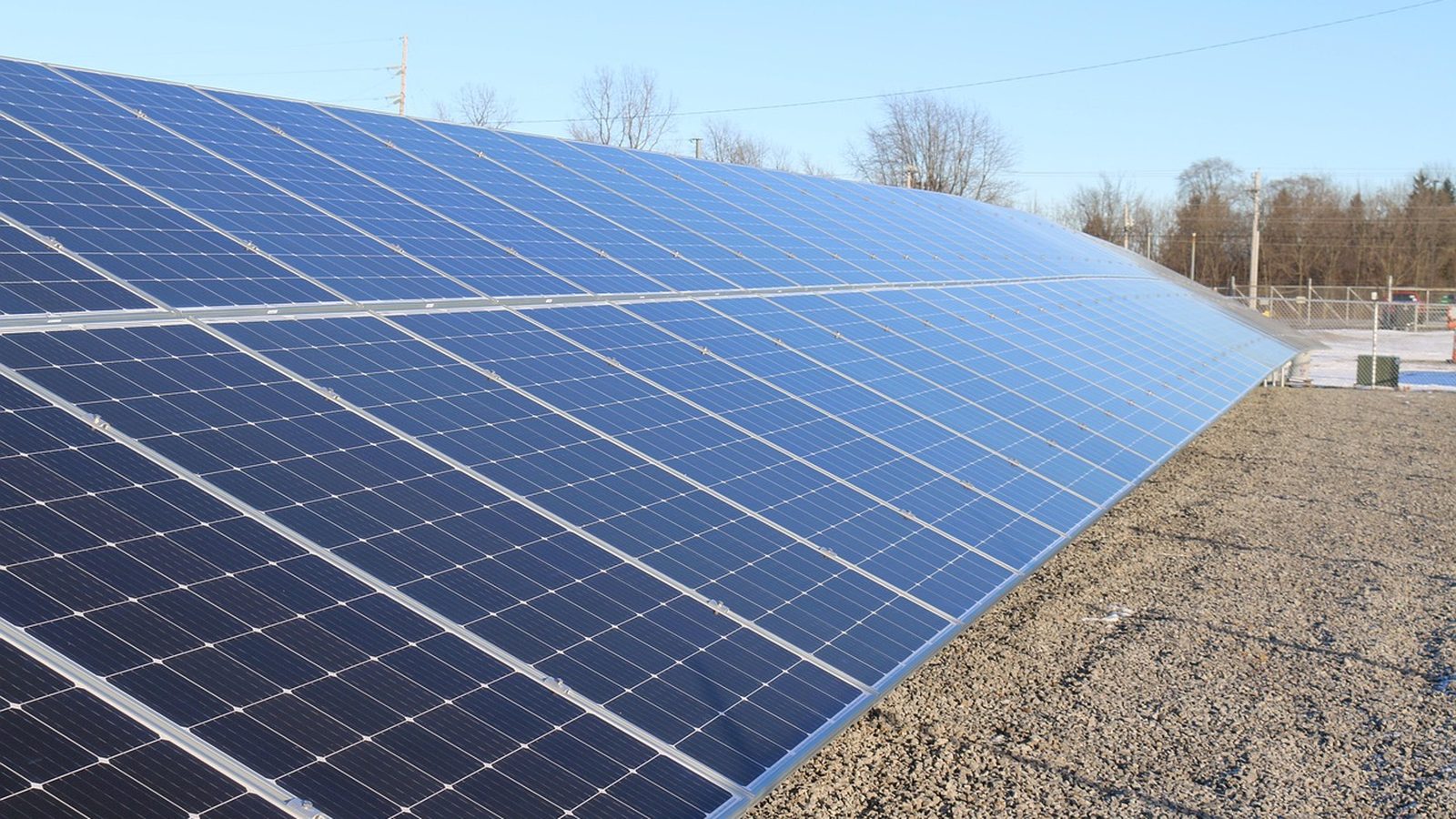
Photo: LCEC, via Pixabay
Florida · Port St. Lucie
Port St. Lucie solar: posted prices, tempered expectations
Written by the Solar Learning Lab research deskUpdated August 28, 202610 min read
Port St. Lucie does something almost no city does: it publishes exact solar permit totals by system size. $304.25 for a small array, $406.25 in the middle band, $508.75 at 5 kW and up. You can price the government side of a project before a single sales call. The catch, and there is one, is that the schedule dates to 2015 and carries a "reference only" label, so the number you budget still needs a confirmation call.
The other thing this page will do that sales decks will not: level with you about output. Two separate PVGIS model runs put Port St. Lucie at the bottom of the five cities in this research batch. Solar can still pencil here on FPL's full monthly netting and this city's unusually young housing stock. It just cannot pencil on someone else's production numbers.
Price it against local sunshine
Start with an estimate built on Port St. Lucie's own model run, not a statewide average that flatters the deal.
Test the local mathPermit prices you can read off a table
The residential fee schedule, effective October 15, 2015 and revised July 12, 2017, itemizes Solar Electric Systems in three bands. From 1 kW to 2.9 kW: $304.25 total, built from a $150 building fee, $150 plan review and small BIC and FBC surcharges. From 3 kW to 4.9 kW: $406.25. At 5 kW or greater: $508.75, which is where the typical modern residential system lands. Even solar pool heat ($104.00) and solar water heaters ($179.63) get their own lines on the published schedule.
Respect the document's own disclaimer, though. The city marks it for reference only and it is a decade old, so confirm current amounts with the Building Department before you budget. Two add-ons stack on whatever the base is: a 2.35 percent electronic payment service fee in place since March 1, 2023, and the State of Florida surcharge that applies to all permit fees, both noted on the city's permits page. A permit extension runs $25. Small numbers, but they are the difference between a quote that matches the invoice and one that does not.
Outside the HVHZ. Not outside hurricane country.
Here is a distinction worth real money. The Florida Building Code 2023 defines the High Velocity Hurricane Zone as Broward and Miami-Dade counties, period, per the code's definitions chapter. St. Lucie County is not in it. That means the Miami-Dade Notice of Acceptance product approval regime that governs a Hialeah install does not govern here, which widens equipment choices and trims engineering overhead relative to South Florida.
Do not read that as a soft-code zone. The same definitions chapter puts hurricane prone regions wherever the Risk Category II design wind speed exceeds 115 mph along the Atlantic coast, and wind borne debris provisions can reach areas near the coastline at higher speeds. No fetched document states this city's exact design wind speed, so we will not invent one; the governing fact is that the city's own solar permit application requires design to the Florida Building Code 2023 8th Edition and NEC 2020. Your array will be engineered for serious wind either way. It just will not need a Miami-Dade NOA stamp to prove it.
The city has a solar form. Read it before your installer does not.
Port St. Lucie publishes a dedicated Solar Electric Permit application, and its requirements telegraph exactly what plan review will check: notarized contractor and owner signatures, the contractor's PSL competency number alongside the state license, system type checkboxes covering roof mounted PV with kW rating, building integrated PV and solar thermal, plus two copies of plans and a pointer to the checklist for the rest.
Process logistics, per the city's application pages: state licensed contractors work through the Contractor E-Permitting Portal after registering with contractor licensing, while homeowner builders must apply in person under Florida Statute 489.103(7)(b). An out-of-area installer who has not registered for the portal yet is going to discover that on your timeline, not theirs. The Building Department sits at City Hall Building B, 121 SW Port St. Lucie Blvd., with separate mailboxes for plan review, inspections and licensing, per the department page.
FPL terms on the Treasure Coast
Electric service here is Florida Power and Light. The city's street lighting page names FPL alongside the city as the owners of local lighting infrastructure, and FPL's Ten Year Site Plan lists company solar energy centers in St. Lucie County itself. The county also hosts FPL's St. Lucie nuclear units, licensed to run to 2036 and 2043 per the PSC's May 2026 Facts and Figures.
| Energy source | Type | Average price | What that means |
|---|---|---|---|
| FPL | 2024 residential average | 13.71¢ per kWh | EIA Table 6; across 5,236,277 residential customers statewide. |
| FPL | customer charge | $25.00 per month | Fixed charge no solar system removes. |
| FPL | 1,000 kWh bill benchmark | $130.68 December 31, 2025 | Before local taxes and franchise fees, per the Florida PSC. |
| Rule 25-6.065 netting | monthly kWh credit | retail equivalent rolls up to 12 months | December leftovers cash out at the COG-1 as available energy rate, a fraction of retail. |
Sources: EIA Table 6, Florida PSC Facts and Figures and Florida Administrative Code Rule 25-6.065.
The netting rule rewards accurate sizing. Excess generation becomes a next-month credit, the bank runs 12 months, and each calendar year end FPL settles whatever remains at its as-available energy rate. Meanwhile Tier 1 systems, 10 kW or less, are shielded from extra utility fees and insurance mandates, the net meter comes at no cost, and the interconnection agreement must be executed within 30 calendar days. Sizing rules to remember: ratings count at AC nameplate with DC multiplied by 0.85, and the system caps at 90 percent of your distribution service rating.
The yield question, measured twice
We modeled this city two ways and both landed at the bottom of our five-city batch. The research run, at 20 degree tilt using PVGIS v5.3 with ERA5 data, models 1,422.34 kWh per year per kWp. Our page-standard 30 degree NSRDB run models 1,495.3. Against Newport Beach, the research run sits about 15 percent lower. Cloud, humidity and summer storms are the price of the Treasure Coast.
March models 144.5 kWh per kW as the annual high. September is the low working month at 113.8, deep in storm season.
PVGIS v5.2 model run by Solar Learning Lab on August 28, 2026, NSRDB radiation database. Fixed south facing mount, 30 degree tilt, 14 percent losses, downtown Port St. Lucie coordinates. Your roof will differ. Tool at PVGIS. The practical rule for this market: any proposal whose production assumption exceeds our local run needs a written justification, because recycled Southwest numbers overpromise here by design.
Almost every roof here is a young roof
Port St. Lucie counted 330 residents in 1970, 55,866 in 1990, 204,851 at the 2020 census and an estimated 268,062 in 2025, now the sixth most populous city in Florida, per the city's profile. A growth curve like that produces a housing stock with almost no prewar or midcentury inventory: most of the city was built to post Hurricane Andrew codes on modern electrical services.
For solar, that is quietly one of the best fundamentals in the state. Reroof-before-solar conversations, panel-upgrade change orders and knob-and-tube surprises, the friction items that inflate quotes in older cities, largely do not exist here. Standardized installs on structurally sound, code-modern roofs are the default job, not the lucky one.
The Sunshine State tax package, minus the federal piece
Three Florida facts work in your favor. Equipment is sales tax exempt under F.S. 212.08(7)(hh), covering solar energy systems and their components as certified by the Florida Solar Energy Center. The value a system adds to your home stays out of the assessment under F.S. 193.624 for residential devices installed since January 1, 2013. And there is no state personal income tax, per the Department of Revenue, so the absence of a state solar credit costs you nothing.
The federal piece is the hole in the package. P.L. 119-21 shut off the 25D homeowner credit at the end of 2025, and the install's finish date decides which side of that line you land on, per the Congressional Research Service. No city or state cash rebate for Port St. Lucie turned up in anything we reviewed. The 2026 deal stands on its own legs: local production, FPL netting, tax exemptions and whatever price you negotiate.
The local shortlist runs deeper than most
Unusually for a city this young, most of the visible installers are actually based in Port St. Lucie rather than trucking in from Miami or Orlando, and several carry review counts in the dozens. Local base matters here for a mundane reason: E-Permitting Portal registration and familiarity with the city's notarization requirements are exactly the kind of thing local shops already have squared away.

Sunergy
Port St. Lucie, FL
4.3(138 Google reviews)
Florida Solar Pro
Port St. Lucie, FL
4.3(15 Google reviews)
RED Solar
Port St. Lucie, FL
4.3(69 Google reviews)
Home-X
Port St. Lucie, FL
4.1(22 Google reviews)
Tradewinds Solar Port St. Lucie
Port St. Lucie, FL
5.0(1 Google reviews)
Ratings snapshot: Google Maps, August 2026, via the DataForSEO SERP feed. Zero companies paid us and none are endorsed by us.
Sort your bids with two checks: does the permit line match the published band for your system size plus the 2.35 percent payment fee and state surcharge, and does the production estimate stay at or below the local model run. A bidder who fails both is guessing at your city.
Test a system size against local numbers
This estimator runs on FPL's 13.71 cent average and our Port St. Lucie production model. It will not show the $25 customer charge or year end credit settlement, so treat its savings figure as a ceiling, then push every bidder to justify anything rosier.
The slider tops out at our downtown Port St. Lucie PVGIS run of 1,495.3 kWh per kW, the lowest of the five cities in this research batch. The floor trims 15 percent for shade and orientation.
Cash quotes in Port St. Lucie cluster near $2.17 per watt, against a $3.50 national 2024 median (LBNL). Use your quote.
Assumptions you can change
Use the rate on your actual lease or PPA quote. There is no published statewide average we trust enough to hardcode.
Cash purchase
$19,747 after state credit
- Year 1 benefit
- $155/mo
- Payback
- 10 years
- 20 year net position
- $25,525
Port St. Lucie yields run at the modest end of Florida, so a cash quote built on Southwest or even Miami production assumptions will overpromise. Anchor the payback on this page's local run, not a statewide brochure figure.
Solar loan
$276/mo 15 yr payment
- Year 1 net
- -$120/mo
- Upfront
- $0
- 20 year net position
- -$4,344
No homeowner tax credit exists for 2026 completions, which makes loan structure the deciding variable. Get the dealer fee, the cash price and the prepayment terms in writing before comparing monthly payments.
Lease / PPA
$0 down you buy the power
- Year 1 net
- -$117/mo
- Upfront
- $0
- 20 year net position
- -$30,170
A third party agreement here competes against a 13.71 cent FPL average with full monthly netting. That is a low bar for the provider to clear on paper and a hard one over 25 years of escalators, so read the rate schedule to the last year.
Estimates, not quotes. Inputs are FPL's 2024 average residential rate, our Port St. Lucie PVGIS run and Florida market cost data. The $25 FPL customer charge, permit surcharges and year end credit payout mechanics are not modeled. We are a solar installer and we also partner with other solar companies. See our disclosures.
We are a solar installer and we also partner with other solar companies.
Port St. Lucie solar, quickly answered
What does a solar permit cost in Port St. Lucie?
Are there extra charges on top of the permit fee?
Do I need Miami-Dade approved equipment here?
Can I pull my own permit as a homeowner?
How does FPL credit my extra production?
Why does your production estimate look lower than my quote?
Filing cabinet
Documents behind this page, all reviewed August 28, 2026.
- Port St. Lucie Building Department, permits, applications and fees and contractor application rules
- Solar Electric Permit application and residential permit fee schedule
- Florida Building Code 2023 definitions
- City street lighting page, FPL Ten Year Site Plan and Florida PSC Facts and Figures, May 2026
- Rule 25-6.065 and EIA Table 6
- F.S. 212.08(7)(hh), F.S. 193.624 and Florida DOR income tax FAQ
- CRS IN12611, city profile, PVGIS research run and PVGIS tool
Get a Port St. Lucie quote graded against this page
Send the basics and we will sanity-check sizing, permit costs and production claims against the documents above.
What does your monthly electric bill look like?
Port St. Lucie average is $156 per month (EIA, 2024).