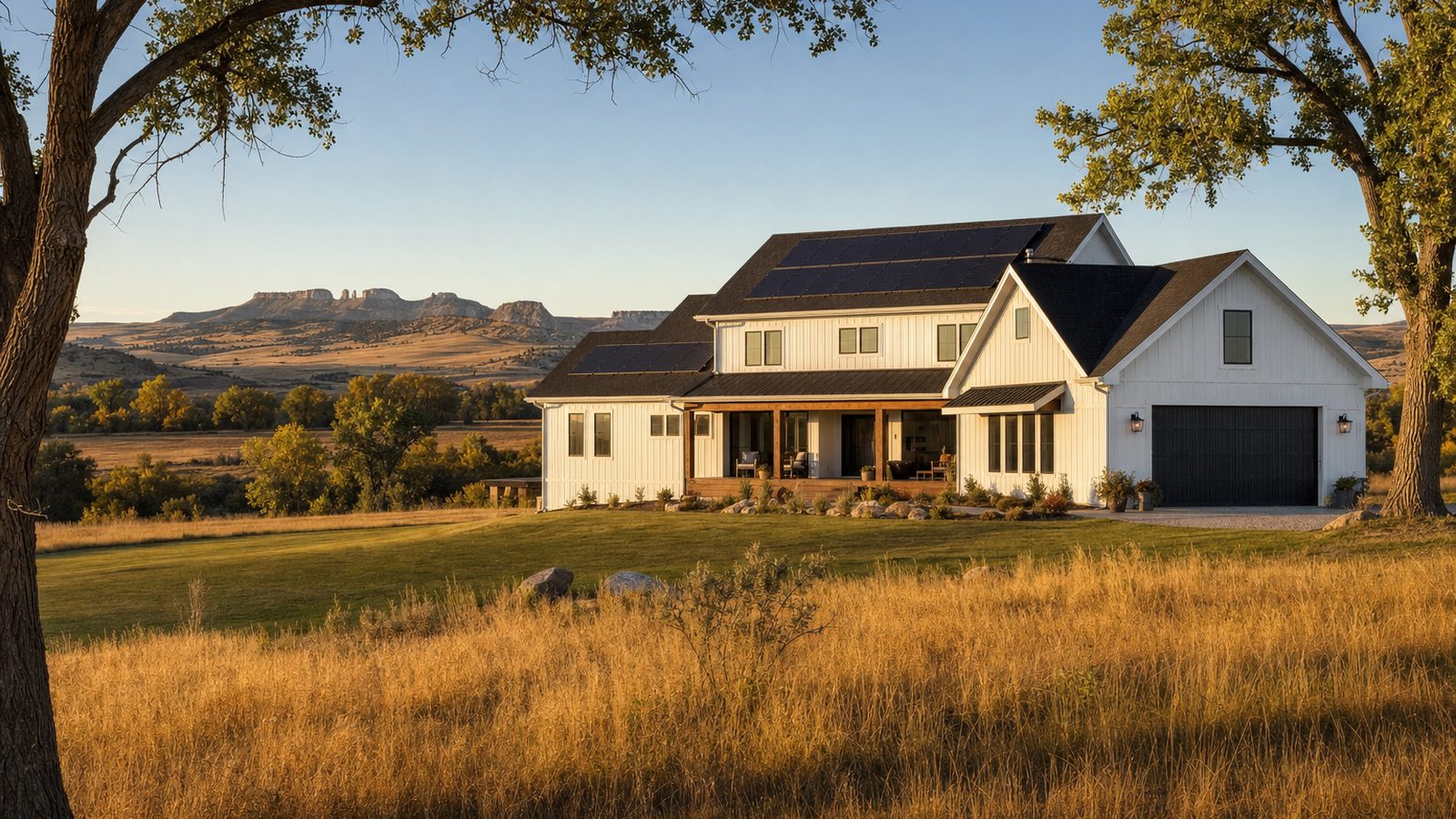
South Dakota
South Dakota solar in 2026
South Dakota is where a sales pitch can go wrong before the panels are even on the roof. The state does not net meter solar. A kilowatt-hour you avoid buying is valuable at your retail rate; a kilowatt-hour you send away is bought at avoided cost. Those are different businesses. Build around the first one.
The bill and the export are not worth the same thing
This is a state where the retail electricity row can mislead. It tells you what a self-used solar kWh can avoid. It does not tell you what your utility has to pay for a surplus kWh. The gap is why a giant array sized for annual production is usually the wrong opening move.
| Energy source | Type | Average price | What that means |
|---|---|---|---|
| South Dakota household electricity | Electricity | 15.73¢ per kWh | Statewide residential result for May 2026. |
| South Dakota residential gas | Natural gas | $10.95 per Mcf | May 2026 gas series, about 3.6 cents per thermal kWh. |
| Owned solar production | Electricity | ~10.6¢ per kWh | Twenty-five-year estimated cost using EnergySage pricing and South Dakota yield data. |
The retail-electricity reference is EIA Table 5.6.A for May 2026. The gas row uses EIA natural-gas prices, with 1 Mcf converted to roughly 304 thermal kWh. The solar comparison follows our methodology page calculation.
What the prairie sun produces
Rapid City is the production high point in this group, while Aberdeen is the low point. That is enough spread to justify a roof-specific model, not enough to rescue a system that is sized to dump a large summer surplus.
| Model location | Annual yield per kW | 17.31 kW example generation |
|---|---|---|
| Sioux Falls | 1,413 | 24,450 kWh |
| Rapid City | 1,487 | 25,743 kWh |
| Aberdeen | 1,376 | 23,812 kWh |
| Pierre | 1,438 | 24,895 kWh |
Method: PVGIS v5.2. PVGIS v5.2 model runs by Solar Learning Lab on August 18, 2026, using the NSRDB radiation database. Assumptions: fixed roof mount, south facing, 30 degree tilt, 14 percent losses. Your roof will differ. EnergySage's average size is the basis for this 17.31 kW case.
South Dakota does not promise retail net metering
The South Dakota PUC says solar generation is not compensated at a net-metered rate. Regulated utilities must interconnect with and buy from small facilities if the generator accepts the terms, but the minimum purchase rate is avoided cost, the utility's incremental cost of supplying power. For facilities below 100 kW, purchase rates are filed with the PUC, and investor-owned utility rates also need PUC approval.
That sets the operating rule: design first for the electricity you consume while it is produced, then ask for the current avoided-cost tariff before signing. Storage can have a real job here if it moves midday production into your own evening load. Do not let an estimate quietly credit every exported kWh at the retail rate.
Policy source: South Dakota PUC solar FAQ.
The incentive is assessment treatment, not a check
| Item | Value | Fine print |
|---|---|---|
| Property tax | Renewable property exemption | For facilities below five megawatts, the exemption is the greater of $50,000 of assessed value or 70% of assessed value. Solar is included in the statutory definition. (SDCL 10-4-44) |
| Federal residential 25D | Closed after December 31, 2025 | Lease and PPA owners can claim 48E and may factor some value into pricing (CRS) |
The state offers a real property-tax exemption, but no verified residential state rebate or income-tax credit. That is a useful protection against an assessment increase. It is not a substitute for getting the avoided-cost math right.
South Dakota interconnection has a real checklist
The state policy is not ambiguous: the South Dakota PUC says solar generation is not compensated at a net-metered rate. Regulated utilities must interconnect with and purchase power from small solar facilities when the generator accepts the terms. The floor is avoided cost, meaning the incremental expense the utility avoids by supplying the power itself. For facilities under 100 kW, purchase rates are filed with the PUC, and investor-owned utility rates also need PUC approval. The right first document is the current purchase rate, not an annual-savings illustration. South Dakota PUC solar FAQ
Black Hills Energy shows what the fine print can look like. It installs a bidirectional meter and credits excess each billing cycle at its current avoided-cost rate. Its Tier 1 covers inverter-based residential and commercial installations of 10 kW AC or less. The design needs a lockable disconnect near the meter and compliance with UL 1741 and IEEE 1547. The application fee is $50.00, and the one-time bidirectional-metering fee is another $50.00, with proof of liability insurance required. These are manageable items, but they belong in the quote scope. Black Hills Energy interconnection terms
The property-tax rule is a separate decision point. For renewable-energy facilities below five megawatts, the exemption is the greater of $50,000 of assessed value or 70% of assessed value. The statute defines solar as using the sun to produce electricity or energy. That protects against part of an assessment increase. It does not turn avoided-cost exports into retail-rate savings. One warning deserves to stay blunt: a state agency page still carries obsolete federal-credit language. Use it for the state interconnection framework, not for current federal tax advice. SDCL 10-4-44 PUC page
South Dakota had 509 reported net-metered PV customers in 2024, including 469 residential customers, even though the regulator does not compensate solar at a net-metered rate. EIA counted 217.3 MW of utility-scale PV and 4.1 MW of small-scale PV in May 2026, or 221.4 MW total. That split reinforces the central homeowner question: a large statewide project base does not tell you what a household export receives. The tariff does. EIA South Dakota profile EIA PV capacity table
Run the calculator as a self-consumption case
The calculator starts with the statewide retail rate and production range. For South Dakota, reduce the system size if your quote assumes a large export share. The avoided-cost credit needs the tariff for your actual utility.
The slider range comes from four South Dakota PVGIS runs. Rapid City produced the high result and Aberdeen the low result; roof direction and shade can move an individual project outside that range.
Cash quotes in South Dakota cluster near $3.77 per watt, against a $3.50 national 2024 median (LBNL). Use your quote.
Assumptions you can change
Use the rate on your actual lease or PPA quote. There is no published statewide average we trust enough to hardcode.
Cash purchase
$25,636 after state credit
- Year 1 benefit
- $127/mo
- Payback
- 15 years
- 20 year net position
- $11,431
No verified state cash rebate or income-tax credit. South Dakota does offer renewable-property tax treatment, but exports are paid at avoided cost rather than a retail net-metering rate.
Solar loan
$304/mo 15 yr payment
- Year 1 net
- -$176/mo
- Upfront
- $0
- 20 year net position
- -$17,611
We price loans at $4.97 per watt: the EnergySage cash figure plus the $1.20 national loan-over-cash spread LBNL documents, since dealer fees get built into loan pricing.
Lease / PPA
$0 down you buy the power
- Year 1 net
- -$67/mo
- Upfront
- $0
- 20 year net position
- -$16,770
A lease or PPA provider can still claim the federal 48E business credit. That does not turn South Dakota avoided-cost exports into retail-rate credits.
Estimates, not quotes. Inputs use the South Dakota average rate from EIA (Table 5.6.A, May 2026), our own PVGIS production runs, and EnergySage August 2026 cost data. We are a solar installer and we also partner with other solar companies. See our disclosures.
South Dakota checks before you sign
- Get the current avoided-cost purchase rate from the utility, in writing, before comparing bids. (PUC framework)
- At Black Hills Energy, Tier 1 is limited to inverter-based installations of 10 kW AC or less and requires a lockable disconnect plus UL 1741 and IEEE 1547 compliance. (Black Hills Energy)
- Black Hills lists a $50.00 application fee and a $50.00 one-time bidirectional-metering fee. Those are small against the system price, but they prove why an interconnection checklist belongs in the contract. (Black Hills Energy)
- The PUC page still contains obsolete federal-credit language. The current federal homeowner credit ended December 31, 2025, so do not use that page as your tax advice. (PUC page)
South Dakota installers to investigate
The local roster is short. Compare the scope, not the logos. Ask how each company sizes around avoided-cost exports, who handles interconnection paperwork, and which local permits apply. We did not verify a statewide solar-installer licensing authority in our review, so confirm credentials with the authority having jurisdiction.
Wegner Roofing & Solar
Sioux Falls, SD
4.9(337 Google reviews)
GenPro Energy Solutions
Piedmont, SD
4.5(39 Google reviews)
Solar Xpress
Worthing, SD
5.0(13 Google reviews)
Black Hills Solar, Inc.
Rapid City, SD
5.0(9 Google reviews)
Lakota Solar Enterprises
Pine Ridge, SD
5.0(4 Google reviews)
Ratings snapshot: Google Maps, August 2026, via the DataForSEO SERP feed. Zero companies paid us and none are endorsed by us. Verify licensing, insurance, and permit requirements with the authority having jurisdiction.
South Dakota city guides
Permits, utility export rules, and a city-specific PVGIS production model for each market we have researched so far.
Get your South Dakota estimate
Answer four questions to see a South Dakota estimate built from the EIA and PVGIS assumptions here. We are a solar installer and we also partner with other solar companies. Details in our disclosures.
What does your monthly electric bill look like?
South Dakota average is $128 per month (EIA, 2024).