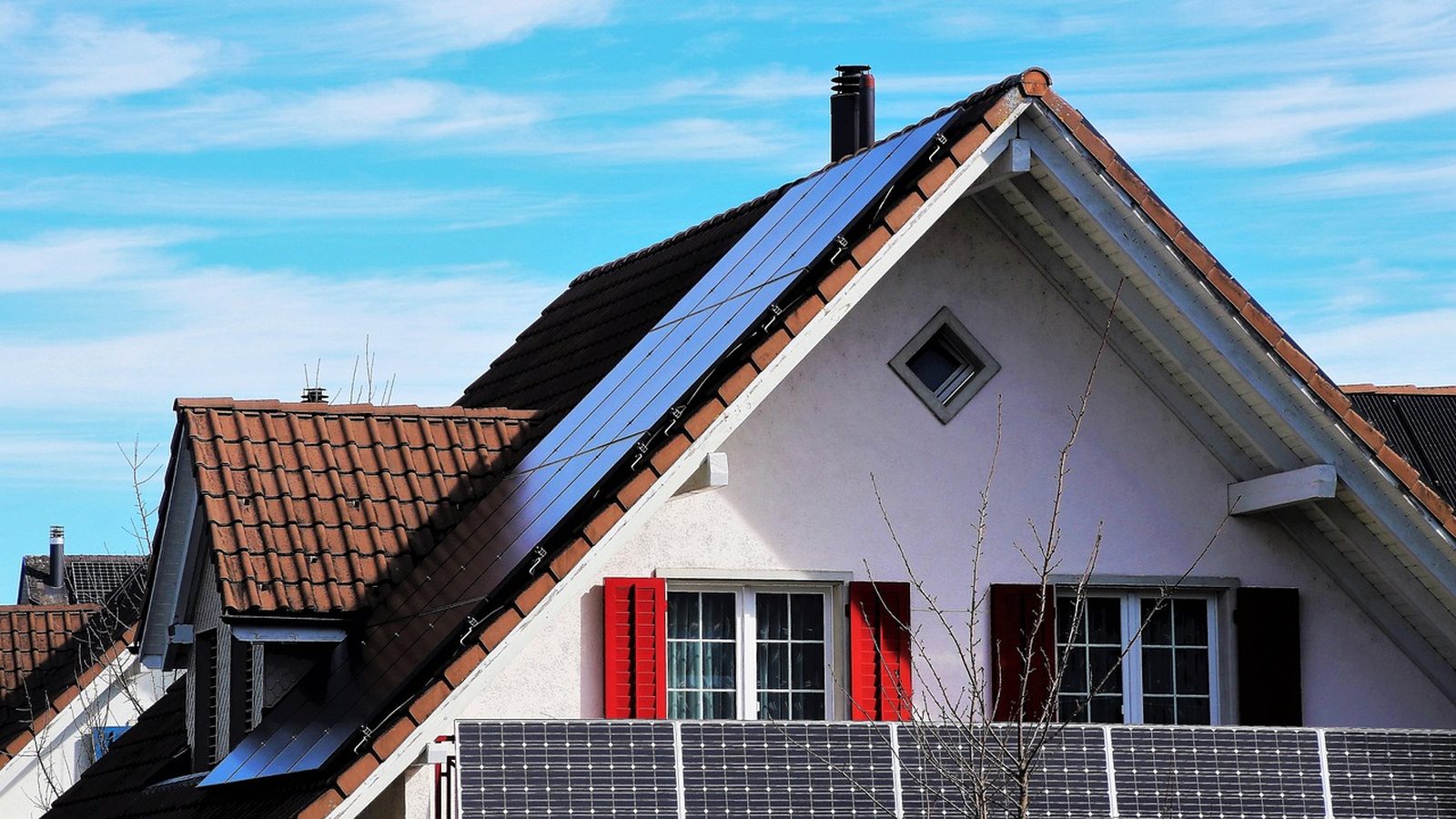
Photo: pasja1000, via Pixabay
California · Chula Vista
Chula Vista solar in 2026
Written by the Solar Learning Lab research deskUpdated August 22, 202612 min read
The Chula Vista solar decision starts with a fee fork, not a panel brochure. A single-family or duplex expedited SolarAPP+ permit is listed at $453. The traditional route is $722. Since June 28, 2023, every expedited residential solar permit has had to run through SolarAPP+, while the older Streamline application is gone. That $269 spread is real. So is the economic backdrop: SDG&E's published TOU-DR1 total rates reach 69.135 cents per kWh in summer on-peak periods, and new net-billing customers take EV-TOU-5 with no PG&E or SCE-style export adder. Sources: solarPermit; fees; sdgeDr1; cpucNbt
$453
Expedited SolarAPP+ PV permit total
$722
Traditional PV permit total
1,773.4 kWh
PVGIS annual output per kW, before your roof changes it
See what this address may pencil out to
A first pass using the local production model and tariff input. A serious proposal still has to confront the permit path and how your household uses power.
Get my local estimateChula Vista gives you a clear permit fork. Take it seriously.
Chula Vista's Development Services Department has a simple policy line: all expedited residential solar permits must be processed through SolarAPP+. The city discontinued the earlier Streamline application effective June 28, 2023. In Accela Citizen Access, the expedited route is labeled "Solar Permit with Solar App Plus," while the standard route is "Residential Solar Energy, Citizen Access." That is a categorical split, not a branding choice an installer can make after the fact. Sources: solarPermit; accela
The September 2024 fee bulletin lists $30 intake, zero plan check, and $423 inspection for a $453 expedited single-family or duplex PV permit. The traditional equivalent is $70 intake, $158 plan check, and $494 inspection, or $722. A panel upgrade tied to new residential PV is separately listed at $203. The fork is not small. It is $269 before a proposal gets to hardware, roof work, or the electrical service scope. Sources: fees
The standard route calls for a Building Permit Application and two plan sets. It requires an inspection before final approval and says approved plans must remain on site. The municipal code gives the Building Official authority to maintain eligibility checklists, but the reviewed material did not state a numeric kW or kWh limit for expedited eligibility. It also did not publish a review timeline. Those are n.a. gaps. A contractor should confirm project eligibility before presenting $453 as a guaranteed city total. Sources: solarPermit; code
SDG&E creates the savings pressure. It also removes the export-adder cushion.
Chula Vista sits in SDG&E territory. SDG&E calls TOU-DR1 its standard residential schedule and says a typical household is most likely on it. Effective August 1, 2026, the published summer total rates are 69.135 cents per kWh on-peak, 46.421 off-peak, and 37.433 super off-peak. Winter still has a 61.471-cent on-peak number. The base-services charge is 79.343 cents a day. Those are some of the highest rates in this batch, which makes avoided consumption valuable. Sources: sdgeDr1
New net-billing customers are required to take SDG&E's EV-TOU-5 schedule. Its effective August 1, 2026 summer totals are 80.205 cents on-peak, 49.627 off-peak, and 13.090 super off-peak. The rate sheet, not a statewide average, should be the first rate document in a proposal review. EV charging, water heating, and battery dispatch can turn the time periods into the project's central economic lever. Sources: sdgeEv5; cpucNbt
The CPUC Net Billing Tariff credits exports through avoided-cost values, carries them through a monthly bill with annual true-up mechanics, and guarantees the original interconnecting customer nine years. PG&E and SCE residential customers who apply before the end of 2027 can receive a higher-export-credit adder. SDG&E customers cannot. The CPUC's stated reason is that SDG&E's higher retail rates already produce greater bill savings. That is not a consolation prize for an export-heavy design. Sources: cpucNbt
| Energy source | Type | Average price | What that means |
|---|---|---|---|
| SDG&E TOU-DR1 | Summer on-peak | 69.135¢ per kWh | Standard residential schedule total rate, effective August 1, 2026. |
| SDG&E EV-TOU-5 | Summer on-peak | 80.205¢ per kWh | Net-billing required schedule total rate, effective August 1, 2026. |
| Rooftop solar, owned | Illustrative lifetime output | ~5.5¢ per kWh | Our calculation: California's $2.46 per watt market figure spread across 25 years of this city's PVGIS production. It excludes financing, maintenance, and hourly export-credit effects. |
Market price: EnergySage California. Local tariff sources appear with the analysis above.
Chula Vista gets a stable, high-output PVGIS curve
PVGIS places a fixed south-facing kilowatt at 1,773.4 kWh annually. August is the high month at 167.4 kWh per kW, while December is 117.8. The nearby Chula Vista normal reports a 63.3-degree annual mean and 9.20 inches of precipitation. The climate data use cooling degree days base 57, so do not compare its 2,510.7 number mechanically with base-65 series from another city. For this page, the practical point is steadier roof output and a rate structure that values when the household uses it. Sources: noaa; sdgeEv5
August is the model high at 167.4 kWh per kW. Production alone does not set SDG&E bill savings.
Method: PVGIS v5.2. PVGIS v5.2 model run by Solar Learning Lab on August 22, 2026, NSRDB radiation database. Fixed south facing mount, 30 degree tilt, 14 percent losses, downtown Chula Vista coordinates. Your roof will differ.
Chula Vista has a real battery stack, with eligibility work attached
San Diego Community Power serves Chula Vista, and its PowerOn default product is 53 percent renewable. Power100 is available for an additional penny per kWh and customers can opt out to SDG&E generation. SDCP's Solar Battery Savings program lists an upfront market-rate rebate of $350 per kWh for new solar plus battery and $250 per kWh for a battery added to existing solar. Nonmarket rates are higher. That is a city-relevant program, not a generic California battery headline. Sources: sdcpCommunity; sdcpHow; sdcpBattery
The program also lists a 10-cent-per-kWh performance incentive when a new battery discharges 50 percent of usable capacity during the weekday 4 p.m. to 9 p.m. dispatch window. It requires a five-year minimum enrollment to keep the upfront rebate. Read that as a dispatch commitment, not free money. A battery proposal should say usable capacity, programmed reserve, warranty, and how it will behave during the performance window. Sources: sdcpBattery
For income-qualified households, SGIP Residential Solar and Storage Equity lists $3,100 per kW of solar and $1,100 per kWh of storage. The fact sheet says a single-family household can receive incentives for a 5 kW solar system and 15 kWh battery, with more needing load justification, and it defines eligibility pathways including income, SASH or DAC-SASH, and CARE, FERA, or ESA participation. This is not an automatic rebate. It is a distinct eligibility process. The homeowner 25D credit remains ended. Sources: rsse; federal
The local file says self-consume first, then decide how much battery earns its place
State housing estimates count 92,878 Chula Vista units, including 47,596 detached homes, or about 51 percent. The ACS input for this page places single-family share at 66.2 percent and owner occupancy at 60.2 percent. The exact definitions differ, which is why a sales rep should not imply a single citywide rooftop percentage is a roof survey. The consistent signal is a substantial detached-home base alongside a large multifamily and attached housing segment. Sources: dofHousing
The city's 2024 Climate Action Plan update presents a net-zero-by-2045 target and names solar and battery storage among the zero-emission technologies expected to carry reductions. That is context, not an individual-project credit. The useful household question is narrower: how much of the expensive SDG&E usage can be avoided or shifted, and can a battery access the SDCP or SGIP program for which this home actually qualifies. Sources: cap; sdgeDr1; sdcpBattery; rsse
California building standards require solar PV on newly constructed single-family homes under the 2022 standards, subject to stated rules and an exception for a required size below 1.8 kWdc. State law also limits HOA restrictions that significantly increase cost or reduce efficiency. Neither point means an existing-home install has no design or association process. It means a homeowner has rights worth documenting, not an excuse to skip the permit path or the architectural review. Sources: cecCode; hoa
local decision tests
Five Chula Vista decision tests that matter more than the panel logo
Make the permit route a line item before the contract is signed. The difference between $453 and $722 is not theoretical, and the expedited route requires SolarAPP+. Ask the contractor to state the Accela permit type, the fee components, and the factual reason the design is eligible. If the project needs traditional review, it may still be a sound project. It just needs a proposal that does not quietly retain the cheaper fee assumption. Sources: solarPermit; fees; accela
Run the rate plan before you run the savings total. TOU-DR1 is the standard residential schedule, while SDG&E net-billing customers are required to take EV-TOU-5. Those schedules have very different super-off-peak values and high on-peak values. A battery, EV, or electric water heater changes which periods matter. A proposal that treats the home as a flat 24-hour load is skipping the part of the tariff that creates the actual opportunity. Sources: sdgeDr1; sdgeEv5; cpucNbt
Separate the SDCP program from SGIP RSSE. Solar Battery Savings has market and nonmarket rebate levels plus a performance incentive and five-year minimum enrollment. RSSE has its own income and program eligibility criteria, reservation structure, and system-size rules. One household could be eligible for one, both, or neither. A single combined incentive line without program names and eligibility evidence is not underwriting. It is a sales estimate. Sources: sdcpBattery; rsse
Do not design around an SCE or PG&E export-adder assumption. The CPUC says SDG&E customers are excluded from that adder because SDG&E's high retail rates already make the savings larger. That is a policy reason, not a substitute for export value. It reinforces the local strategy: prioritize bill avoidance and controlled late-day discharge, then export what remains, rather than enlarging the array to chase a benefit that does not exist here. Sources: cpucNbt
Keep the city and CCA roles separate. Chula Vista chooses the permit path. SDG&E owns the delivery tariff and the interconnection rate requirement. San Diego Community Power supplies default PowerOn generation and runs its battery program. When these roles get blurred, a proposal can make a city rebate sound like a utility export payment or make a CCA default sound like a rooftop-solar incentive. Label the program owner on every dollar. Sources: solarPermit; sdcpHow; sdcpBattery; sdgeEv5
project-file detail
Details that belong in a real Chula Vista solar comparison
Chula Vista's $453 expedited total has a simple internal logic: $30 intake, zero plan check, and $423 inspection. The $722 traditional number is $70 intake, $158 plan check, and $494 inspection. That breakdown gives a buyer a concrete audit tool. If a quote states the expedited price but includes a separately invented plan-check charge, ask why. If it states the traditional price, ask whether SolarAPP+ eligibility was tested. This is the rare local fee rule that is both material and readable enough to carry into the contract review. Sources: fees
The city's standard residential solar instructions require two plan sets and say the approved plans must be available on site for inspection. That is a practical detail with a simple consequence: do not treat the permit as a back-office artifact. The homeowner should receive the approved plan set, know where it will be kept, and understand that a late design change can create a mismatch between what is installed and what was approved. The extra diligence is cheap compared with a failed final inspection. Sources: solarPermit
Accela labels are a useful check against proposal ambiguity. Chula Vista names the expedited permit type "Solar Permit with Solar App Plus" and the standard path "Residential Solar Energy, Citizen Access." A buyer can ask which label will appear in the application. That question does not require expertise in portal software. It simply forces the contractor to commit to the route behind the fee number and gives the homeowner a way to recognize whether a midstream change is a paperwork detail or a different review process. Sources: solarPermit; accela
The TOU-DR1 base-services charge is 79.343 cents per day, with a lower 39.688-cent amount shown for DRAH and FERA customers. The schedule also includes a baseline adjustment credit of 10.702 cents per kWh up to 130 percent of baseline. Those details are exactly why flat cents-per-kWh payback claims need skepticism. The page uses one published summer off-peak rate for a transparent calculator input, but an actual SDG&E bill depends on periods, eligibility, baseline quantities, and the account's consumption pattern. Sources: sdgeDr1
EV-TOU-5 makes time-shifting more than a lifestyle preference. The effective summer table shows 13.090 cents per kWh in super off-peak against 80.205 cents on-peak. A household with an EV, programmable water heating, or storage can use that spread differently from a household with neither. The page does not assume every owner can shift load. It does say a proper savings study should identify what is controllable and when, rather than treating all annual kilowatt-hours as financially identical. Sources: sdgeEv5
San Diego Community Power's PowerOn default at 53 percent renewable is a generation setting, not a different grid connection. Power100 costs one cent per kWh more according to SDCP, and customers can opt out back to SDG&E generation. Those options belong in a household's electricity decision. They do not alter the City's permit fee or eliminate SDG&E's delivery rate periods. In a quote review, write the CCA product name next to the utility rate schedule so the two systems do not get accidentally merged. Sources: sdcpHow; sdcpCommunity
SDCP's performance incentive comes with a behavioral requirement: the battery must discharge 50 percent of usable capacity during the weekday 4 p.m. to 9 p.m. window, and only new batteries qualify for that performance payment. The program says this payment is separate from NEM generation payments and Solar Billing Plan export credits. Ask an installer to model those revenue streams separately. A chart that combines them without labels can make a battery look more certain than its operating requirements allow. Sources: sdcpBattery
RSSE is a program with scale and boundaries. The fact sheet identifies an approximately $252 million budget, reservations opening June 2, 2025, and a one-year compliance period for reservation holders. It also calls for qualified demand-response enrollment. The amounts are substantial enough to justify an eligibility screen, but not substantial enough to justify assuming a reservation. The responsible sequence is eligibility evidence, program-administrator confirmation, reservation status, then equipment order. Reversing that sequence turns a conditional program into a financing risk. Sources: rsse
General SGIP tiers should not be substituted for RSSE. The CPUC lists equity at $850 per kWh and equity resiliency at $1,000 per kWh, with priority factors involving high fire-threat areas, PSPS events, low-income and medically vulnerable customers, and critical facilities. Those categories serve a different program purpose. A Chula Vista household should not select the largest number from a web page. It should identify the exact program, administrator, eligibility track, and available funding before treating any dollar as usable project capital. Sources: sgip
The city's climate update gives the broad direction: net-zero emissions by 2045, with solar and battery storage named among the zero-emission technologies. Its community-level ambition should not be confused with a private-project performance guarantee. In practice, that distinction helps. It lets a homeowner support the direction of travel while still asking hard questions about rate-plan enrollment, battery dispatch, warranty exclusions, and permit eligibility. Climate policy is context. The project only works if its own inputs work. Sources: cap
A new Chula Vista home may already have code-required PV under the 2022 standards, subject to the stated exception for a required system below 1.8 kWdc. The CPUC says code-required solar does not receive the export adder, and SDG&E customers do not get that adder in any event. A buyer adding to a builder system should obtain the original plans, interconnection status, production estimate, and equipment compatibility before selecting batteries or more panels. Treating builder PV as a blank roof can make a clean retrofit needlessly complex. Sources: cecCode; cpucNbt
California Civil Code 714 says associations must process solar applications like architectural modifications and deems an association application approved if it is not denied in writing within 45 days, absent a reasonable request for more information. That is a useful procedural protection, not a reason to submit a vague request. Provide the array layout, conduit route, equipment locations, and roof plan that the city review already expects. Good documentation protects the project and reduces the chance that an association debate delays a permit-ready design. Sources: hoa; solarPermit
Use the three-company list to interrogate the permit and battery plan
Only three companies are in the loaded local list. That is a thin result set, so it should not be portrayed as a complete market. Use it as a structured interview list. Ask each firm whether the system is eligible for SolarAPP+, whether its price includes the $453 city route or assumes $722 traditional review, and whether its battery quote shows SDCP Solar Battery Savings eligibility separately from SGIP RSSE. Do not accept one incentive figure mashed into a single "after incentives" price.
Ratings snapshot: Google Maps, August 2026, via the DataForSEO SERP feed. Zero companies paid us and none are endorsed by us.

Ratings snapshot: Google Maps, August 2026, via the DataForSEO SERP feed. Zero companies paid us and none are endorsed by us. Verify licensing, insurance, scope, and contract terms before signing.
Run a screening estimate, then pressure-test it
This screening tool uses the SDG&E TOU-DR1 summer off-peak total rate and the Chula Vista PVGIS production model. It cannot model the required EV-TOU-5 schedule for net-billing customers, hourly avoided-cost export credits, or the value of a programmed battery. That is why a precise-looking 20-year chart should start a conversation rather than finish it.
The upper slider value is the Chula Vista PVGIS result. The lower value is 85 percent of it, a useful range before a proposal models the actual roof and the household's timing of electric use.
Cash quotes in Chula Vista cluster near $2.46 per watt, against a $3.50 national 2024 median (LBNL). Use your quote.
Assumptions you can change
Use the rate on your actual lease or PPA quote. There is no published statewide average we trust enough to hardcode.
Cash purchase
$5,658 after state credit
- Year 1 benefit
- $158/mo
- Payback
- 3 years
- 20 year net position
- $40,290
Cash ownership has no residential 25D credit in 2026. The Chula Vista decision starts with a $453 SolarAPP+ permit versus a $722 traditional permit, then moves to whether a battery can use SDCP Solar Battery Savings or the income-qualified SGIP RSSE program.
Solar loan
$76/mo 15 yr payment
- Year 1 net
- $82/mo
- Upfront
- $0
- 20 year net position
- $32,329
The loan estimate is a screening model. It uses California market pricing and a selected SDG&E tariff value, while actual savings hinge on interval usage, EV-TOU-5, export timing, and battery dispatch.
Lease / PPA
$0 down you buy the power
- Year 1 net
- $76/mo
- Upfront
- $0
- 20 year net position
- $23,334
Lease and PPA providers may claim 48E. On SDG&E territory, compare any provider rate and escalator against the required EV-TOU-5 net-billing schedule, not a generic state-average solar savings graphic.
Estimates, not quotes. This calculator uses the SDG&E TOU-DR1 summer off-peak total rate, Chula Vista PVGIS output, and EnergySage California cost data. New net-billing customers take EV-TOU-5 and have hourly export credits, and SDG&E does not get the PG&E and SCE export adder. We are a solar installer and we also partner with other solar companies. See our disclosures.
Chula Vista solar questions, answered from the local record
The point here is to keep the answer tied to the city file. When the research did not yield a verified current number, we say n.a. rather than float a national average into a local decision.
What is the expedited solar permit cost in Chula Vista?
Is SolarAPP+ required for expedited Chula Vista solar permits?
What rate do SDG&E solar customers take?
Does Chula Vista get the SCE or PG&E export adder?
What is the San Diego Community Power battery rebate?
Who can use SGIP Residential Solar and Storage Equity?
Sources and gaps we did not paper over
The reviewed City sources do not publish an expedited SolarAPP+ numerical size limit or a solar review timeline. The SDG&E monthly export-price files are published as ZIP packages, but specific usable cent-per-kWh values were not extracted in the research file. We also did not find a City of Chula Vista cash rebate for residential PV. Those facts remain n.a. here.
Federal credit: residential 25D credit ended December 31, 2025; lease/PPA providers may claim 48E. Congressional Research Service credit summary.
- solarPermit: https://www.chulavistaca.gov/departments/development-services/build-green/residential-solar-energy
- fees: https://www.chulavistaca.gov/home/showpublisheddocument/2416/638638971096170000
- accela: https://aca-prod.accela.com/CHULAVISTA/Default.aspx
- code: https://chulavista.municipal.codes/CVMC/15.29.020
- sdgeDr1: https://www.sdge.com/sites/default/files/regulatory/8-1-26%20Schedule%20TOU-DR1%20Total%20Rates%20Table.pdf
- sdgeEv5: https://www.sdge.com/sites/default/files/regulatory/8-1-26%20Schedule%20EV-TOU-5%20Total%20Rates%20Table.pdf
- cpucNbt: https://www.cpuc.ca.gov/industries-and-topics/electrical-energy/demand-side-management/customer-generation/net-energy-metering-and-net-billing
- sdcpCommunity: https://sdcommunitypower.org/our-community/
- sdcpHow: https://sdcommunitypower.org/how-it-works/
- sdcpBattery: https://sdcommunitypower.org/solar-battery-savings/
- rsse: https://www.cpuc.ca.gov/-/media/cpuc-website/divisions/energy-division/documents/self-generation-incentive-program/sgip-fact-sheet---residential-solar-and-storage-equity_ver2.pdf
- sgip: https://www.cpuc.ca.gov/industries-and-topics/electrical-energy/demand-side-management/self-generation-incentive-program/participating-in-self-generation-incentive-program-sgip
- dofHousing: https://dof.ca.gov/media/docs/forecasting/Demographics/estimates/e-5-population-and-housing-estimates-for-cities-counties-and-the-state-2020-2026/E-5_2026_Geo_InternetVersion.xlsx
- noaa: https://www.ncei.noaa.gov/access/services/data/v1?dataset=normals-annualseasonal-1991-2020&stations=USC00041758&format=json&startDate=0001-01-01&endDate=9996-12-31&dataTypes=ANN-TAVG-NORMAL,ANN-TMAX-NORMAL,ANN-PRCP-NORMAL,ANN-CLDD-BASE57,ANN-TMIN-NORMAL&includeStationName=true&includeStationLocation=1&units=standard
- cap: https://pub-chulavista.escribemeetings.com/filestream.ashx?DocumentId=41336
- hoa: https://leginfo.legislature.ca.gov/faces/codes_displaySection.xhtml?lawCode=CIV§ionNum=714
- cecCode: https://www.energy.ca.gov/programs-and-topics/programs/building-energy-efficiency-standards/energy-code-support-center/2022-0
- federal: https://www.congress.gov/crs-product/IN12611
- cost: https://www.energysage.com/local-data/solar-panel-cost/ca/
- PVGIS production model: https://re.jrc.ec.europa.eu/pvg_tools/en/
- US Census Bureau, ACS 5-year estimates, 2023: https://data.census.gov/
Get a Chula Vista estimate
Four questions first, then an estimate built from this page's local inputs. We are a solar installer and we also partner with other solar companies. Read our disclosures.
What does your monthly electric bill look like?
California average is $161 per month (EIA, 2024).