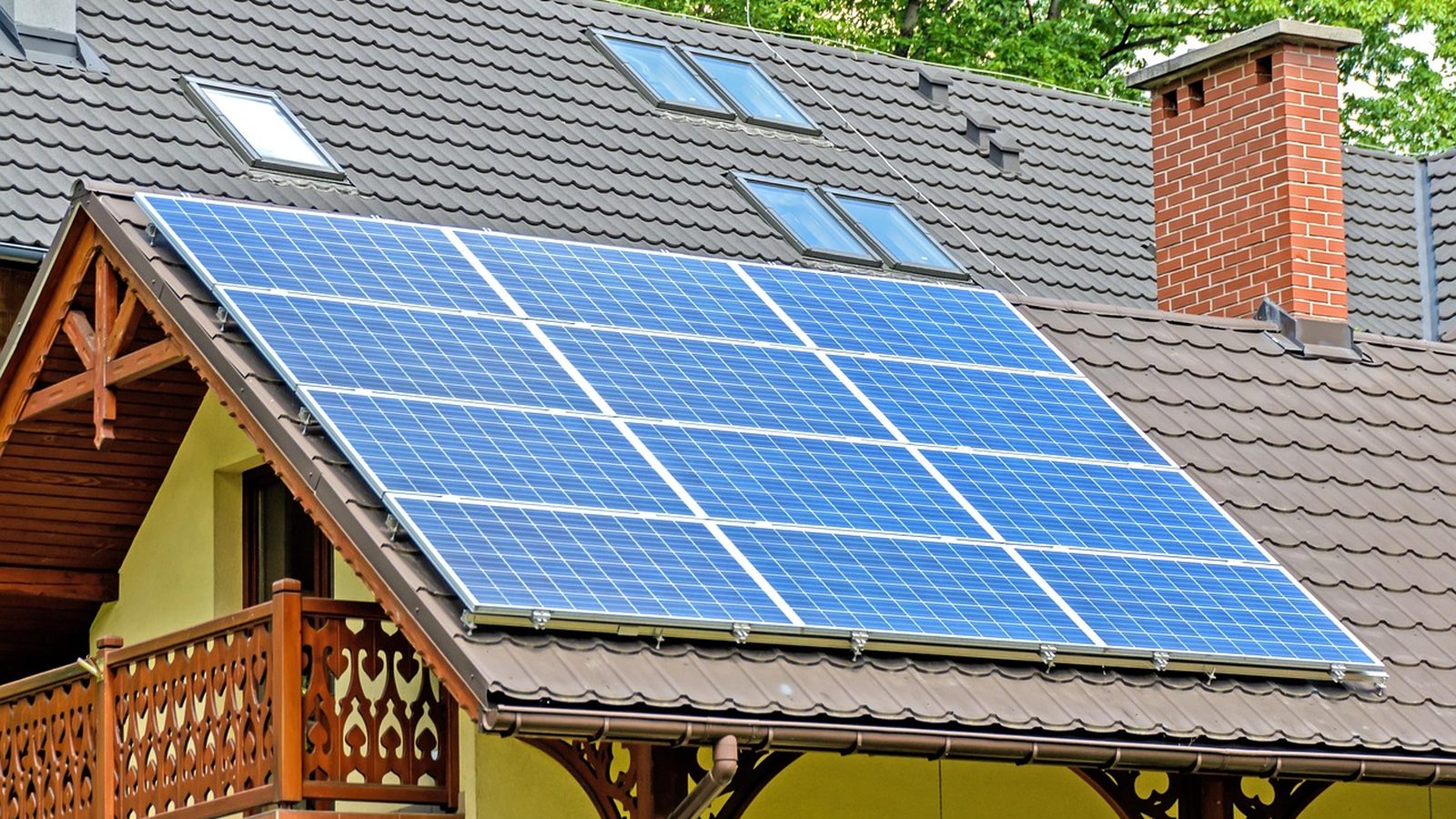
Photo: AS_Photography, via Pixabay
California · Fontana
Fontana solar in 2026
Written by the Solar Learning Lab research deskUpdated August 22, 202612 min read
Fontana is the roof-heavy city in this batch. Roughly 79 percent of its housing stock is single detached, and Ontario Airport records 3,925.3 cooling degree days. That is a lot of roof and a lot of air-conditioning. The practical hitch is bureaucratic, not solar-resource-related: SolarAPP+ has a verified $25 processing fee, but Fontana does not publish a current City residential-PV building permit fee that this research could verify. Say n.a. rather than recycling a 2010 number. Sources: housing; climate; solarapp; fees; historicalFees
79%
Single-detached share of Fontana housing stock
3,925
Cooling degree days, base 57, at Ontario Airport
$25
SolarAPP+ processing fee
Put the cooling bill under a microscope
Start with your actual monthly consumption, then test whether the proposed array and any storage meet the expensive hours.
Run the Fontana screenFontana's solar story starts with volume: roofs and air-conditioning load.
Fontana has 60,852 housing units, and 47,892 are single detached in the state's January 2026 estimate. That is about 79 percent. In this research batch, it is the most rooftop-heavy city. The statistic is useful because detached roofs make the physical conversation simpler: one owner, one electric meter, more ordinary roof geometry. It is not a reason to skip the basics. Roof age, shading, panel capacity, insurance requirements, ownership, and the shape of the bill still decide whether an array is a good project. Sources: housing
The load side is unusually forceful. Ontario International Airport, immediately west of the city, recorded 3,925.3 annual cooling degree days on the NOAA base-57 measure. That is the highest cooling-load figure among the four cities examined in the local research. The nearby normal also reports 66.8 degrees annual mean temperature and only 11.64 inches of annual precipitation. A Fontana solar estimate should begin with summer cooling demand, not with a brochure's annual kWh claim. Sources: climate
That combination, plentiful detached roofs and hard summer cooling, produces a market with plenty of plausible solar candidates. It also exposes a bad habit: matching a system to the annual bill alone. The most expensive SCE summer period is weekday 4 to 9 p.m., when a home can still be cooling after panel output has fallen. A successful design may include operational changes or storage. A giant midday array with no load strategy can create a lot of low-value exports. Sources: sceTou; sceSolar
The city population estimate was 221,223 as of July 1, 2025. ACS inputs used by this site show 67.2 percent owner occupancy and 80.3 percent single-family housing. These are strong conditions for individual rooftop decisions. They do not support a claim that solar fits every household. Renters and shared-roof owners need a different decision path, and a home purchased with a builder-owned system needs contract review before an installer quote. Sources: census; housing
SolarAPP+ offers a fast lane. Fontana's current building permit price is still unknown.
Fontana supports SolarAPP+ for residential solar PV and residential solar PV with energy storage. A licensed contractor submits, and the permit issues automatically after the DocuSign signature. Building-integrated solar PV is excluded from this route and must use the BUILD FONTANA portal. That is a real workflow distinction, not a marketing detail. A standard roof-mounted array can land in the automated lane; a more unusual design begins with a different clock. Sources: solarapp
SolarAPP+ charges a $25 processing fee. The city also directs conventional projects through Build Fontana, choosing Building Permit and the SolarPermit record type, with plans and structural calculations. SolarAPP+ permits require Building Inspection code 899 Permit Final, scheduled at 909-350-7693. Only licensed contractors may submit the automated applications. If a seller says a homeowner can simply open the portal and obtain the permit, that is not how the published SolarAPP+ instruction reads. Sources: solarapp; permits
Here is the gap that should not be buried: no current dollar amount for Fontana's residential PV building permit could be verified. The permit, development, Build Fontana, applications, and fee materials reviewed do not publish it. Fees appear on the generated permit and are paid during permitting. The Fire Protection District fee schedule does show a $204 photovoltaic-system inspection, but it is not proof of the City building permit fee. The historical 2010 city schedule showed zero-dollar residential PV entries. It is historical, and it is not evidence of a 2026 price. Sources: permitIndex; development; fees; historicalFees
The conventional timeline also deserves plain language. The citywide plan-review goal is 15 working days. Building and Safety is closed every Friday, the Fire Department provides no over-the-counter or expedited review, and payment is cash or check only. Those facts make SolarAPP+ materially attractive for a plain residential job, but the city does not publish a kW or kWh cap on the SolarAPP+ page. That limit is n.a. in the materials reviewed. Do not invent one from a different jurisdiction. Sources: development; permits; solarapp
SCE is the actual utility choice, and the summer tariff carries more weight in Fontana.
The California Energy Commission workbook assigns Fontana ZIP codes 92334 through 92337 to Southern California Edison. The CPUC's 2026 report lists no CCA serving Fontana. Western Community Energy is the regional cautionary tale: it launched in May 2020 and returned customers after bankruptcy on June 15, 2021. A proposal that offers a Fontana customer a CCA generation choice is working from an old map or a generic California script. Sources: sceZip; ccaReport
SCE reports a current average residential rate of 34.5 cents per kWh, or 33.2 cents with the California Climate Credit. New Solar Billing Plan accounts must take TOU-D-PRIME. Its June 2026 summer on-peak total is 59.291 cents per kWh, mid-peak is 40.182 cents, and off-peak is 26.698 cents. A seven-hour summer evening air-conditioning run is a tariff event, not an abstract energy habit. This is why the load shape belongs in a Fontana design meeting. Sources: sceRate; sceTou; sceSolar
SCE uses the CPUC Net Billing Tariff for new interconnections. Export credits come from the Avoided Cost Calculator and are billed monthly with annual true-up treatment, rather than being a one-for-one retail swap. In SCE's 2026 averages, summer exports are about 6 cents per kWh from 6 a.m. to 4 p.m., 21 cents from 4 to 9 p.m., and 12 cents overnight. Net surplus compensation is about 2 cents. That is enough to make self-consumption and late-day strategy matter without pretending a battery automatically pays for itself. Sources: cpucNetBilling; sceSolar
Applicants who interconnect before the end of 2027 may qualify for higher export credits for nine years, except where solar is required by the building code. SCE calls the residential export bonus roughly 4 cents per kWh, and 9 cents for income-qualified customers enrolling before 2028. The eligibility is project-specific. The sales version of this fact should include the application date and the code-required exception, or it is not a real explanation. Sources: cpucNetBilling; sceSolar
| Energy source | Type | Average price | What that means |
|---|---|---|---|
| SCE TOU-D-PRIME | Summer on-peak | 59.291¢ per kWh | Weekday 4 to 9 p.m. pricing for new solar customers. |
| SCE TOU-D-PRIME | Summer off-peak | 26.698¢ per kWh | Lower retail price during the dominant daytime production period. |
| Fontana rooftop solar | Export value | Hourly credits | SCE's tariff credits export by timing, not a single retail number. |
Sources: sceTou; sceSolar; cpucNetBilling
Fontana output rises through the heat, then peaks in August.
The August model reaches 169 kWh per installed kW. That is a production estimate, not a roof inspection or a bill forecast.
Method: PVGIS v5.2. PVGIS v5.2 model run by Solar Learning Lab on August 22, 2026, NSRDB radiation database. Fixed south facing mount, 30 degree tilt, 14 percent losses, downtown Fontana coordinates. Your roof will differ.
The storage question is not whether a battery sounds modern. It is what expensive hour it replaces.
Fontana's high cooling-degree-day profile creates an obvious late-day target. A battery could hold noon production for the weekday 4 to 9 p.m. window, reduce purchased on-peak energy, and change how much value leaves the home at low daytime export rates. It can also be the wrong choice if the home lacks a meaningful evening load, has a lower-cost load-shifting option, or needs roof and electrical work first. The right comparison is a modeled interval bill with and without storage, not a generic statement that batteries are the future. Sources: climate; sceTou; sceSolar
Statewide, the CPUC says nearly 70 percent of net-billing customers had paired a battery with solar by the end of 2024. It is evidence that the tariff gives storage a role. It does not establish a price, payback, or resilience benefit for a particular Fontana home. Ask how many kilowatt-hours the system is expected to discharge in the 4 to 9 p.m. period, what loads are backed up, whether the HVAC is included, and whether the proposal assumes backup capability that has not been designed. Sources: cpucNetBilling
For households that meet the requirements, SGIP Residential Solar and Storage Equity offers $3,100 per kW solar and $1,100 per kWh storage. Eligibility includes a household at or below 80 percent of area median income, prior SASH or DAC-SASH participation, or current CARE, FERA, or ESA participation. The general SGIP tiers list $850 per kWh Equity and $1,000 per kWh Equity Resiliency. These are conditional programs. Reservation, eligibility, equipment scope, and program funding need to be confirmed before the incentive appears as a deduction in a contract. Sources: sgipEquity; sgip
The 2026 incentive discussion needs a clean line between a provider credit and a homeowner credit.
Federal credit: residential 25D credit ended December 31, 2025; lease/PPA providers may claim 48E. For an owned system, that ends the familiar homeowner-credit calculation. For a lease or PPA, it means the provider may have a business credit, but the homeowner needs to judge the agreement by the offered energy price, escalation, term, transfer terms, and equipment responsibility. No contract becomes cheap merely because a different taxpayer claims a credit. Sources: federalCredit
Fontana did not surface a city cash rebate for residential PV in the municipal solar, permit, or fee pages reviewed. The City General Plan does direct Fontana to promote renewable and distributed energy systems in new development and names warehouse rooftops as candidates for solar. Its 2015 Climate Action Plan is still labeled a draft and sets a community-emissions target 15 percent below 2008 levels. That policy context is not a homeowner incentive. Keep the distinction clean. Sources: permits; permitIndex; generalPlan; cap
New single-family construction has a separate state requirement for solar under the 2022 Energy Code, generally applying to permit applications on or after January 1, 2023, unless the prescriptive required size is under 1.8 kWdc. These code-required systems do not receive the SCE export adder. A buyer of a newly built Fontana home should identify whether the installed solar is owned, financed, or leased and which part of the export program applies before treating it as an included asset. Sources: cpucNetBilling
Friday is closed, so an apparently small permit detail can move a project week.
Fontana Building and Safety counter hours run Monday through Thursday, 8 a.m. to 5 p.m., and the counter is closed every Friday. That makes the automated SolarAPP+ lane more than a novelty for a conventional residential roof. When the project qualifies, the contractor can avoid tying a simple job to counter timing. When it does not, the citywide 15-working-day plan-review goal, Friday closure, cash-or-check payment requirement, and the Fire Department's lack of over-the-counter or expedited review are part of the scheduling reality. Sources: permits; solarapp; development
This does not justify pretending every project is SolarAPP+ eligible. Building-integrated PV must go through BUILD FONTANA. The city also does not publish a SolarAPP+ kW or kWh ceiling in the material reviewed. A contractor needs to identify the array type, storage scope, structural calculations, and electrical work before announcing a permit date. "It should be automatic" is not a project schedule. It is a hypothesis that needs a route. Sources: solarapp; permits
The homeowner's most useful action is paperwork discipline. Ask for the permit route in writing, the current generated permit fee before payment, the named $25 SolarAPP+ processing charge if it applies, the Fire District's $204 inspection charge if it applies, and the responsibility for correcting a scope change. Fontana's unpublished City PV fee means the contract should not hide behind an old zero-dollar file or an estimate with no source. Transparency here is a better protection than a confident low number. Sources: fees; historicalFees; development; solarapp
Four results, then a harder procurement exercise.
The local results list is thin: four companies with 20 or more reviews. That is enough to request disciplined comparisons, not enough to call a winner from a star rating. Ask every bidder whether the array qualifies for SolarAPP+, how the $25 processing fee and unknown City permit fee are handled, what they assume for SCE exports, and whether the proposed battery backs up any air-conditioning. Ratings snapshot: Google Maps, August 2026, via the DataForSEO SERP feed. Zero companies paid us and none are endorsed by us.


SunVolta Energy
Inland Empire, CA
5.0(88 Google reviews)
BC Solar Solutions
Fontana, CA
5.0(32 Google reviews)
Ratings snapshot: Google Maps, August 2026, via the DataForSEO SERP feed. Zero companies paid us and none are endorsed by us.
Run an initial Fontana estimate.
This screen pairs SCE's published average residential rate with Fontana production. It cannot know the family's cooling schedule, real hourly exports, roof shade, service-panel scope, or the City permit total. That is why it is useful before a quote, not after you have accepted one. Sources: sceRate; cost
The high end is our south-facing PVGIS run; the lower number is 85 percent for a less favorable orientation. Your roof will differ.
Cash quotes in Fontana cluster near $2.46 per watt, against a $3.50 national 2024 median (LBNL). Use your quote.
Assumptions you can change
Use the rate on your actual lease or PPA quote. There is no published statewide average we trust enough to hardcode.
Cash purchase
$8,118 after state credit
- Year 1 benefit
- $163/mo
- Payback
- 5 years
- 20 year net position
- $39,413
No federal 25D credit remains for homeowner cash purchases. Use the calculator as a load screen, not an assumed SCE export-credit model.
Solar loan
$109/mo 15 yr payment
- Year 1 net
- $55/mo
- Upfront
- $0
- 20 year net position
- $27,991
Ask for the cash price, all-in financed price, term, and equipment scope in one comparison. A financing fee changes the economics even when the panel count does not.
Lease / PPA
$0 down you buy the power
- Year 1 net
- $50/mo
- Upfront
- $0
- 20 year net position
- $16,055
A lease or PPA provider may claim the federal 48E business credit. Compare the rate escalator and transfer conditions against ownership rather than treating the tax treatment as a homeowner credit.
Estimates, not quotes. Inputs use SCE's published average rate, our Fontana PVGIS production run, and EnergySage California cost data. Actual solar billing changes with interval consumption and export timing. We are a solar installer and we also partner with other solar companies. See our disclosures.
Fontana solar questions, answered without filling gaps.
What does Fontana charge for a residential solar permit?
Can every Fontana solar project use SolarAPP+?
How hot is Fontana for cooling load?
Who supplies Fontana electricity?
Does a new SCE solar customer get retail credit for exports?
Does Fontana have its own rooftop solar cash rebate?
Sources and the fee gap.
The current City of Fontana residential PV building permit fee is n.a. The only verified current named amount besides SolarAPP+ is the Fire District's $204 photovoltaic inspection charge. The historical zero-dollar City PV schedule is not used as a current price. Federal credit: residential 25D credit ended December 31, 2025; lease/PPA providers may claim 48E. Congressional Research Service.
- permits: https://www.fontanaca.gov/2711/Photovoltaic-Solar-Systems
- solarapp: https://www.fontanaca.gov/3682/Solar-PV-Permit-with-SolarAPP
- development: https://www.fontanaca.gov/1140/New-Development-Construction
- fees: https://www.fontanaca.gov/DocumentCenter/View/38654/User-Fees-By-Type
- permitIndex: https://www.fontanaca.gov/142/Permits
- historicalFees: https://www.fontanaca.gov/Archive/ViewFile/Item/591
- sceZip: https://www.energy.ca.gov/sites/default/files/2020-05/municipal_ADA.xlsx
- sceRate: https://www.sce.com/save-money/rates-financing/sce-rate-advisory
- sceTou: https://edisonintl.sharepoint.com/teams/Public/TM2/Shared%20Documents/Public/Regulatory/Tariff-SCE%20Tariff%20Books/Electric/Schedules/Residential%20Rates/ELECTRIC_SCHEDULES_TOU-D.pdf
- sceSolar: https://www.sce.com/clean-energy-efficiency/solar-generating-your-own-power/billing-incentives/solar-billing-plan
- cpucNetBilling: https://www.cpuc.ca.gov/industries-and-topics/electrical-energy/demand-side-management/customer-generation/net-energy-metering-and-net-billing
- ccaReport: https://www.cpuc.ca.gov/-/media/cpuc-website/divisions/energy-division/documents/community-choice-aggregation-and-direct-access/2026-cca-and-esp-formation-status-report.pdf
- sgip: https://www.cpuc.ca.gov/industries-and-topics/electrical-energy/demand-side-management/self-generation-incentive-program/participating-in-self-generation-incentive-program-sgip
- sgipEquity: https://www.cpuc.ca.gov/-/media/cpuc-website/divisions/energy-division/documents/self-generation-incentive-program/sgip-fact-sheet---residential-solar-and-storage-equity_ver2.pdf
- housing: https://dof.ca.gov/media/docs/forecasting/Demographics/estimates/e-5-population-and-housing-estimates-for-cities-counties-and-the-state-2020-2026/E-5_2026_Geo_InternetVersion.xlsx
- climate: https://www.ncei.noaa.gov/access/services/data/v1?dataset=normals-annualseasonal-1991-2020&stations=USW00003102&format=json&startDate=0001-01-01&endDate=9996-12-31&dataTypes=ANN-TAVG-NORMAL,ANN-TMAX-NORMAL,ANN-PRCP-NORMAL,ANN-CLDD-BASE57,ANN-TMIN-NORMAL&includeStationName=true&includeStationLocation=1&units=standard
- generalPlan: https://www.fontanaca.gov/DocumentCenter/View/26749/Chapter-10---Infrastructure-and-Green-Systems
- cap: https://cdm16255.contentdm.oclc.org/digital/api/collection/p16255coll1/id/169/download
- federalCredit: https://www.congress.gov/crs-product/IN12611
- cost: https://www.energysage.com/local-data/solar-panel-cost/ca/
- pvgis: https://re.jrc.ec.europa.eu/pvg_tools/en/
- census: https://data.census.gov/
Get a Fontana estimate.
We are a solar installer and we also partner with other solar companies. Read our disclosures.
What does your monthly electric bill look like?
California average is $161 per month (EIA, 2024).