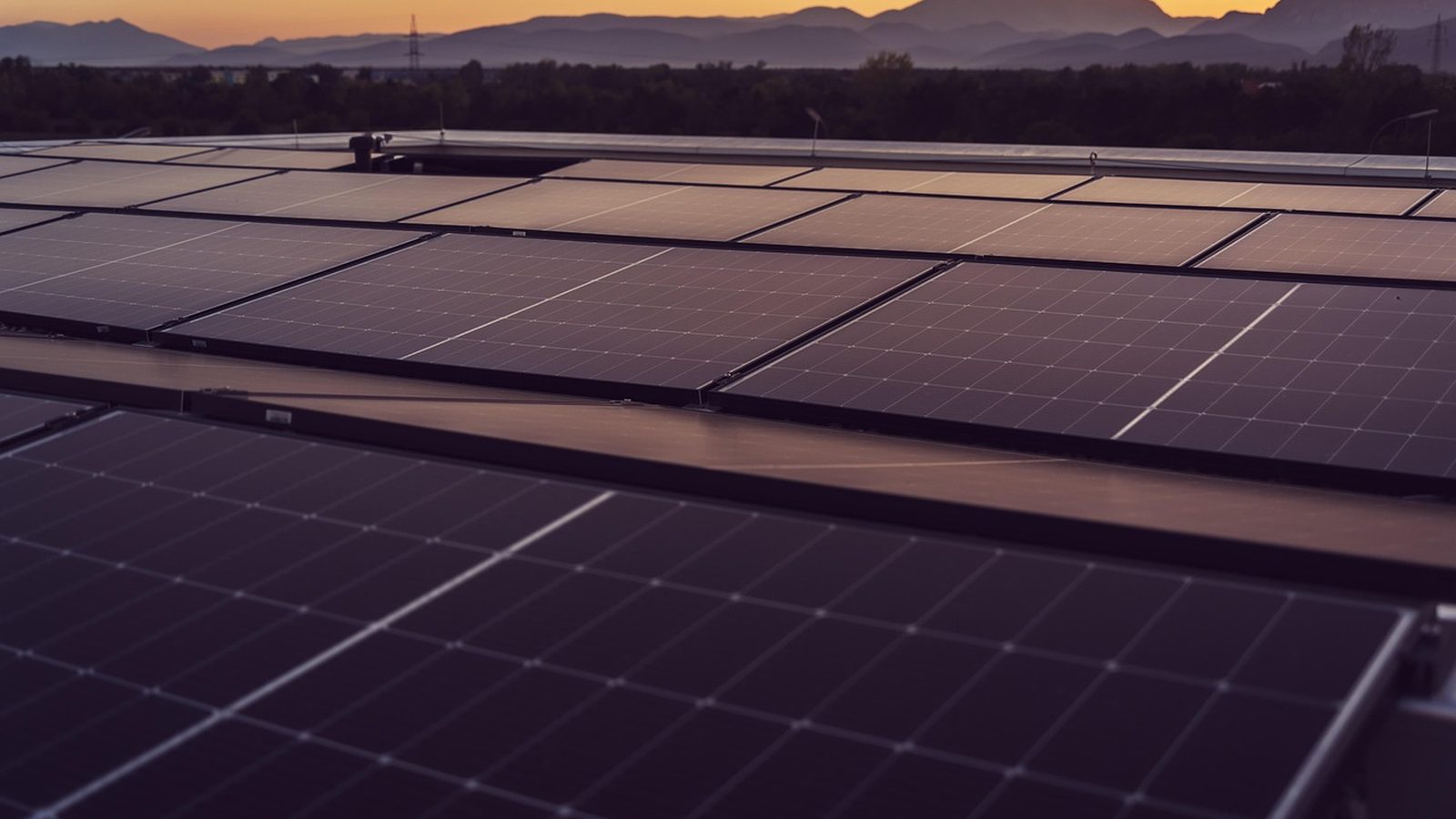
Photo: Michael_Pointner, via Pixabay
California · Glendale
Solar in Glendale, CA: a city that owns its utility
Written by the Solar Learning Lab research deskUpdated August 29, 202611 min read
First, the disambiguation, because it trips up search results and sales reps alike: this page covers Glendale in Los Angeles County, the one wedged between Burbank and Pasadena. Glendale, Arizona is a different city with different utilities, and nothing below applies there. What makes this Glendale unusual for solar is ownership. The household buys electricity from Glendale Water and Power, a department of its own city government, and GWP writes the solar rules on its own pages rather than following the CPUC playbook that governs Edison or PG&E customers a few miles away.
That ownership changes three things a proposal must get right: the interconnection paperwork goes to GWP before the city building permit exists, the post-solar bill lands on a tiered municipal rate called L-1-D, and the export credit follows GWP's own net energy metering program rather than the state Net Billing Tariff. Miss any one of those and the quote is describing some other city.
Check the size before the pitch
Two minutes with the estimator tells you whether a Glendale quote is sized for your bill or for the commission.
Open the Glendale estimatorMunicipal power, and why the CPUC rulebook stops at the border
There is no community choice aggregator here and no investor owned utility. Generation, delivery and billing all run through GWP, which serves 77,563 residential customers at a 2024 average of about 33.8 cents per kWh according to EIA bundled retail sales data. That price sits below PG&E territory and near SCE territory, but averages are a blunt instrument in a city whose solar rate is tiered by season and daily usage.
The practical consequence: articles and calculators built around the CPUC Net Billing Tariff will mislead a Glendale homeowner. The Net Billing Tariff applies to the state's investor owned utilities for applications submitted on or after April 15, 2023. GWP is not one of them. Its published program is still net energy metering with bill credits for excess generation, and GWP itself describes those rules as generally in line with net metering across California. In 2026 that is a meaningfully friendlier posture than what new SCE or PG&E customers receive, and it comes from GWP's own interconnection guide, not from Sacramento or San Francisco.
One caveat belongs up front. Participation in GWP's customer generation rates is first come, first served until total customer generator capacity across all classes passes 5 percent of GWP's aggregate customer peak demand. The rate page does not publish how much headroom remains, so a serious bidder should confirm program availability with GWP at the start, not after the contract is signed.
The sequence most contractors get backwards
In most California cities the building permit comes first and the utility application follows. Glendale inverts that. The City's permit guidance page is blunt: all solar photovoltaic permits need PowerClerk approval before applying. The contractor registers the interconnection application with GWP through PowerClerk, gets it approved, and only then files for the building permit in the GlendalePermits portal. Contractors new to this jurisdiction routinely file in the wrong order and lose days undoing it.
The PowerClerk submission is not a formality. For residential systems under 15 kW CEC-AC, GWP wants a signed interconnection agreement whose section 1.2 rating exactly matches the PowerClerk CEC-AC rating, an executed election form, the full plan set with equipment data sheets, photographs of the existing main service panel, required clearances including a 3 by 3 working space at the meter and disconnect, and a spot drawing if the main panel is being upgraded. Plan sets that fall short get kicked back with corrections. The GWP Solar Team's initial review typically runs 3 to 5 business days, reachable at 818-548-2750, per the under 15 kW application guide.
On the city side, the residential permit is type 26, Solar Photovoltaic, for single family homes and duplexes, listed on the building permit types page, and every application flows through the online portal. The applicant must supply the property owner's information at submittal, and a contractor filing on the owner's behalf needs the owner added as a contact through their own portal account email. The CEC's SB 379 tracking file records Glendale as running a custom platform rather than SolarAPP+, backed by an $80,000 CalAPP grant awarded December 22, 2022, which fits what you see in practice: PowerClerk plus GlendalePermits, stitched together as the city's automated path under Government Code 65850.52.
Two housekeeping items. The fetched city pages publish no solar permit fee, and state law at Government Code 66015 caps residential PV permit fees at $450 up to 15 kW absent a written finding, so treat any larger government line item on a quote as a question to ask. And the City warns of a scam sending fake permit invoices that demand wire transfers. Real invoice emails end in @glendaleca.gov, and the City never asks for a wire.
L-1-D: the tiered rate a solar household actually lives on
Glendale keeps four residential schedules in the L-1 class. Solar owners belong on L-1-D, the customer owned generation standard rate, because L-1-E, the time of use version, is not being offered at this time per the residential electric rates page. So forget the 4 to 9 p.m. arithmetic that dominates solar advice elsewhere in the state. In Glendale the meter charge is $0.75 per day and the price of energy climbs with how much you use each day, split into a high season from July through October and a low season from November through June.
| Energy source | Type | Average price | What that means |
|---|---|---|---|
| GWP L-1-D, high season | July through October, tiered daily | 30.71¢ to 45.47¢ per kWh | First 10 kWh times days in the billing period at 30.71¢, next 10 kWh times days at 38.06¢, everything beyond at 45.47¢. |
| GWP L-1-D, low season | November through June, tiered daily | 25.75¢ to 39.35¢ per kWh | Same tier structure at 25.75¢, 31.89¢ and 39.35¢. Customer charge is $0.75 per meter per day year round. |
| Self consumed solar | energy the house uses as it is made | avoids the top tier first value varies by usage | Production that displaces grid purchases erases the most expensive tier a household would have reached that day. |
Tier prices from GWP's residential electric rates page, reviewed August 29, 2026. This table summarizes a tariff. It does not predict a bill.
The tier design quietly rewards heavy users who go solar. A big house pushing deep into the 45.47 cent high season tier avoids far more per kWh than a frugal household that never leaves the first tier. That is the opposite of a flat rate market, and it means two identical systems on the same street can pay back years apart. Any Glendale proposal that quotes savings without asking how many kWh per day the home burns in September is guessing.
Exports earn a credit. Do not build the project on it.
GWP still runs net energy metering, applies bill credits for excess generation automatically, and installs a net meter after the interconnection agreement is approved, at which point Utilities Billing moves the account onto a NEM rate, as described in its metering and billing guide. What GWP no longer offers is any solar incentive payment. The program is access, not subsidy.
The number that should discipline system sizing is the compensation history GWP publishes in its interconnection guide: 0.0991 in 2021, 0.0972 in 2022, 0.0817 in 2023, 0.0762 in 2024, with no 2025 or 2026 figure posted and the unit left unstated on the page. Read that trend next to L-1-D tier prices in the 25.75 to 45.47 cent range and the strategy writes itself. A kWh consumed behind the meter is worth roughly three to five times what the recent compensation figures suggest an exported one earns. Oversizing to farm exports is a losing trade here.
In practice that pushes serious Glendale designs toward matching daytime load or pairing storage, and it makes the load questions, pool pumps, AC schedules, EV charging, the actual drivers of value. An installer who leads with export revenue is selling a story from a different utility territory.
The 10 kW self certification lane and 30 kWh of batteries
Since November 1, 2023, GWP exempts residential and commercial PV systems up to 10 kW CEC-AC from its 110 percent historical usage cap. The customer self certifies the system size need inside the PowerClerk application, and qualifying customers may install up to 30 kWh of PV paired energy storage, per the interconnection guide. Above 10 kW, GWP compares estimated production against 110 percent of the trailing 12 months of usage, so bigger systems need bill history to justify them.
Storage paperwork got lighter too. Inverters with power control system capability are allowed with a completed Power Control System Agreement, and GWP no longer requires a separate energy storage meter for residential systems. A shading analysis is waived for systems up to 10 kW CEC-AC or with a tree disclosure statement. None of this removes the plan set standards described earlier, but it does mean a well prepared 8 kW plus battery project can move through PowerClerk without exotic engineering documents.
The 30 kWh storage allowance deserves more attention than it gets. Given the wide gap between L-1-D retail tiers and recent export compensation, a battery that shifts surplus into evening consumption converts nine cent energy into thirty or forty cent energy. That arbitrage is the strongest quiet argument for storage in this city, and it exists because of GWP's own tariff design, not any state program.
Production between the Verdugos and the San Rafael Hills
Our downtown Glendale model returns 1,712.5 kWh per year for each installed kW, with August peaking at 168.4 kWh per kW and December bottoming at 112.5. The seasonal swing is gentler than inland valleys see, which suits a tiered rate that charges its highest prices from July through October, exactly when panels are producing near their best.
August models at 168.4 kWh per kW, landing squarely inside GWP's July through October high season when tier prices reach 45.47 cents.
PVGIS v5.2 model run by Solar Learning Lab on August 29, 2026, NSRDB radiation database. Fixed south facing mount, 30 degree tilt, 14 percent losses, downtown Glendale coordinates. Your roof will differ. Full model documentation lives at PVGIS. Terrain matters more in this city than in most: lots climb into the Verdugo Mountains and San Rafael Hills, where a north facing slope or a canyon shadow can undercut the flatland model badly. Hillside homes should insist on a shade study even where GWP would waive one.
The market context is also narrower than the population implies. The state counts 81,810 housing units in Glendale, but only 28,681 of them, about 35.1 percent, are single detached homes, while 51.9 percent sit in buildings of five or more units, per the Department of Finance E-5 estimates. This is a city of 193,286 people where the rooftop decision belongs to a fairly small slice of households, many of them in older hillside neighborhoods with mature trees.
State law still shows up in four places
Municipal utility or not, four statewide rules touch a Glendale project. Property tax: an active solar system receives a new construction exclusion, meaning it neither raises nor lowers the assessment, and the Board of Equalization notes the exclusion sunsets January 1, 2027. HOAs: Civil Code 714 voids governing document provisions that effectively prohibit solar, allowing only reasonable restrictions that do not significantly raise cost or cut efficiency. Permit fees: the Government Code 66015 caps discussed above. And permitting itself: Government Code 65850.52 is the statute obligating cities to run automated residential solar permitting, which is why the PowerClerk plus GlendalePermits pipeline exists at all, per the statute text.
The federal side is thinner than sales scripts admit. Per the Congressional Research Service, the 30 percent residential credit attached to spending completed by the close of 2025, with unused amounts eligible for indefinite carryforward. A purchase completed in 2026 sits outside that window. If a proposal dated this year still shows a homeowner tax credit line, ask the bidder to explain it in writing.
One local wrinkle worth knowing if you live upslope: the Glendale Fire Department runs an AB 38 defensible space inspection program for homes in High or Very High Fire Hazard Severity Zones. It governs real estate disclosures rather than solar permits, but it tells you which neighborhoods carry wildfire exposure, and those are the same neighborhoods where Santa Ana wind events make resilient backup power an argument worth hearing.
Who actually works Glendale roofs
The local results include firms headquartered in Glendale itself, which is not nothing in a city where the permit sequence punishes outsiders. Whatever company you shortlist, make the first screening question procedural: describe your last PowerClerk submission to GWP and how long it took to clear. A bidder who has never touched PowerClerk will be learning on your project.





First American Solar
Montrose, CA
4.8(25 Google reviews)
Ratings snapshot: Google Maps, August 2026, via the DataForSEO SERP feed. Zero companies paid us and none are endorsed by us.
Second question: how does the design treat exports? The right answer references GWP's compensation history and leans on self consumption or the 30 kWh storage allowance. The wrong answer imports Net Billing Tariff talking points from SCE territory.
Run the screening math for a Glendale roof
This estimator cannot reproduce L-1-D's daily tier mechanics, and we built it knowing that. What it can do is bound the problem: roughly what a system this size produces here, and how cash, loan and third party structures compare before anyone applies pressure. Bring the output to the bidding table as a reference, not a verdict.
The upper bound is our downtown Glendale PVGIS model. The lower bound trims it to 85 percent as a shading and orientation cushion, which matters on hillside lots in the Verdugo foothills.
Cash quotes in Glendale cluster near $2.46 per watt, against a $3.50 national 2024 median (LBNL). Use your quote.
Assumptions you can change
Use the rate on your actual lease or PPA quote. There is no published statewide average we trust enough to hardcode.
Cash purchase
$8,364 after state credit
- Year 1 benefit
- $161/mo
- Payback
- 5 years
- 20 year net position
- $38,617
Glendale Water and Power writes its own rulebook, and this tool does not model it. GWP solar customers land on the tiered L-1-D schedule rather than a CPUC tariff, and self consumed energy avoids tier prices that run far above the export credit. Treat the output as a first-pass screen.
Solar loan
$112/mo 15 yr payment
- Year 1 net
- $49/mo
- Upfront
- $0
- 20 year net position
- $26,848
Financing inputs here come from the statewide calculator, not from any Glendale lender. Before signing, get the cash price and the financed price side by side and ask what portion of the payment is a dealer fee rather than equipment.
Lease / PPA
$0 down you buy the power
- Year 1 net
- $45/mo
- Upfront
- $0
- 20 year net position
- $14,700
On a lease or PPA in Glendale, the provider owns the system and you buy its output. Compare that contract rate against the GWP L-1-D tiers you would actually avoid, and remember the federal homeowner credit window covered expenditures made before the end of 2025, not 2026 purchases.
Estimates, not quotes. The tool blends the California average retail rate with a Glendale PVGIS production run, so it cannot reproduce GWP's seasonal L-1-D tiers, the daily meter charge or GWP export crediting. We are a solar installer and we also partner with other solar companies. See our disclosures.
We are a solar installer and we also partner with other solar companies.
Straight answers for Glendale, California
Is this the same Glendale as the one in Arizona?
Which comes first, the building permit or GWP interconnection?
Does the CPUC Net Billing Tariff set what my exports earn?
What rate schedule will my home be on after solar?
How big can the system be?
Does GWP pay a solar rebate in 2026?
Records reviewed for this page
Every operational claim above traces to these primary documents, all reviewed on August 29, 2026.
- Glendale permit guidance, Permit Services Center, building permit types and GlendalePermits portal
- GWP residential electric rates, GWP interconnection guide, under 15 kW application guide and metering and billing guide
- CEC residential solar permitting data and EIA Table 6 retail sales
- Government Code 65850.52, Government Code 66015, Civil Code 714 and CPUC Net Billing Tariff page
- BOE active solar exclusion, CRS note IN12611 and Glendale AB 38 program
- DOF E-5 housing estimates, Glendale, California background and PVGIS
Get a Glendale estimate that respects GWP rules
Answer a few questions about the bill, the roof and the payment path. The output is a starting point for interrogating bids, not a contract.
What does your monthly electric bill look like?
Glendale average is $161 per month (EIA, 2024).