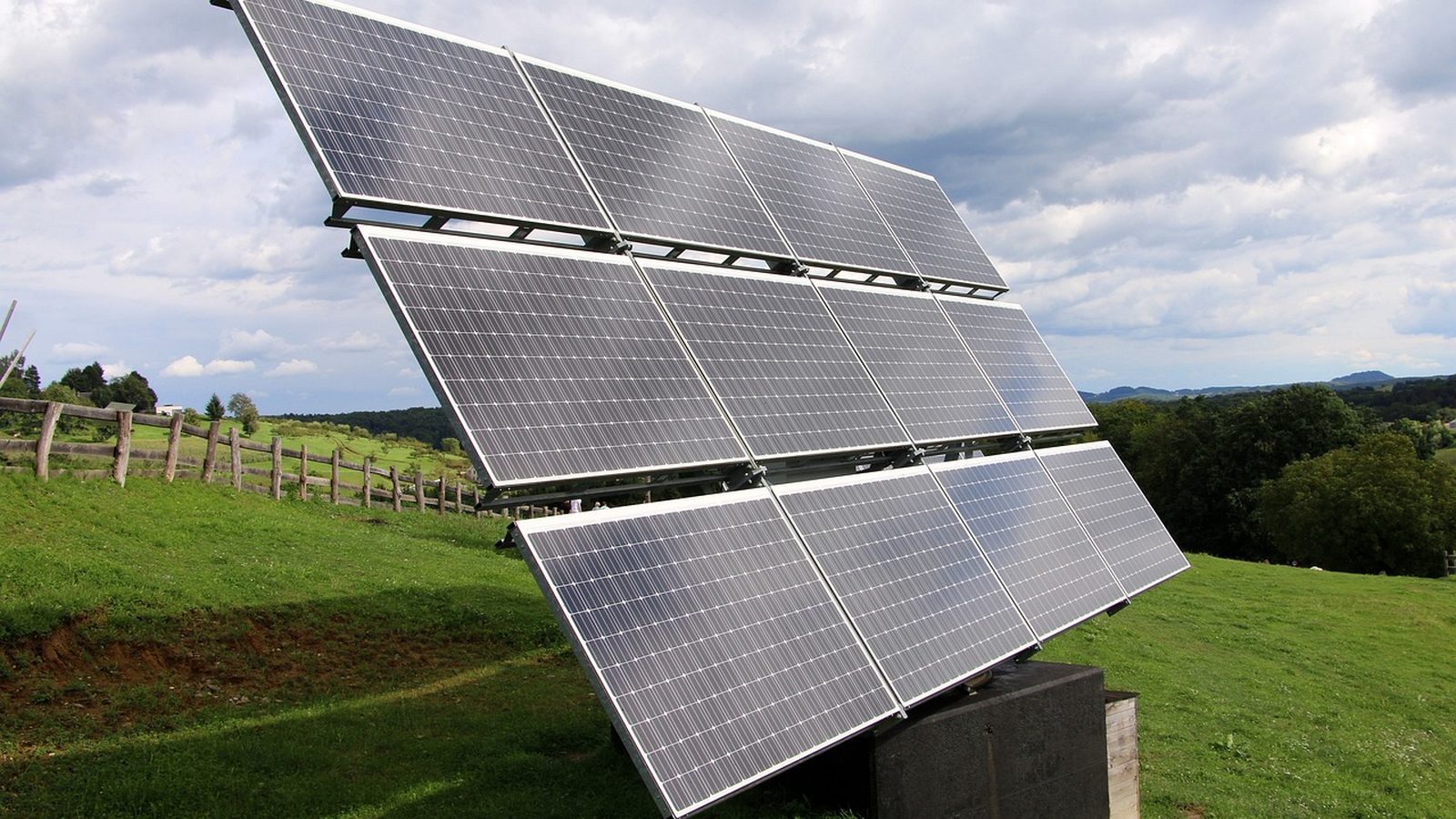
Photo: atimedia, via Pixabay
California · Inglewood
Inglewood solar: the sun is easy, the paperwork is not
Written by the Solar Learning Lab research deskUpdated August 26, 202612 min read
On paper, Inglewood is an instant-permit town. The California Energy Commission's SB 379 tracking file, updated August 3, 2026, lists the city's platform status as SolarAPP+, the automated system state law expects for residential rooftop PV. Then you read what the city itself publishes, and the story changes. No Inglewood page we reviewed mentions SolarAPP+ at all. What the Building Safety permit requirements describe instead is a staged, human-reviewed sequence: a Planning project number before you can even submit, an Accela application, a plan check payment email that arrives in about 48 hours, and two separate notices before a contractor may book the appointment to pay fees and pick up the permit.
That gap between the state record and the city counter is the single most useful thing to understand before getting quotes here. The second most useful thing: Inglewood posted the best modeled solar yield of the three Los Angeles County cities we researched this week. Strong sun, murky process. Plan for both.
Check the output before the paperwork
Run our downtown Inglewood production model against your bill before any installer runs theirs.
Estimate an Inglewood systemThe state record and the city counter disagree
Government Code 65850.52, the SB 379 statute, requires cities like Inglewood to run an online automated permitting platform that verifies code compliance and issues residential solar permits in real time to licensed contractors, for systems up to 38.4 kW alternating current. The statute text names SolarAPP+, the National Renewable Energy Laboratory portal, as the example platform. The CEC file shows Inglewood with a September 2023 deadline, a SolarAPP+ platform status, and an $80,000 CalAPP grant awarded April 28, 2023 to fund the adoption. So far, so compliant.
Here is the catch. The same CEC file shows no annual report on record from Inglewood, and the Commission is explicit that it does not certify whether any platform actually complies, that enforcement sits outside its jurisdiction, and that compliance gets tested through private claims. Meanwhile the city's How Do I index lists a Building Safety Solar (PV) Permit as its own application type, routed through the same reviewed Accela process as everything else. A recorded platform with no city page describing it is a claim worth asking about, not a promise worth planning around.
In practice, the question for any installer bidding your roof is blunt: have you pulled an instant SolarAPP+ permit in Inglewood in the last six months, or did your last job here go through plan check? The answer determines your timeline more than anything on this page.
What the published workflow actually requires
The city's own submittal instructions lay out a sequence with real waiting built into it. First, call the Planning Division at 310-412-5230 for a Planning project number, which most projects need before Building Safety will take a submittal. Then register in Accela Citizen Access, the city's online permitting system, select Building, create the application, accept the disclaimer, and upload plans and supporting calculations. Staff review the package. When it is accepted, an email with plan check payment instructions goes out, usually within 48 hours.
Payment does not end it. After plan check, a Pending Requirements notice issues through the portal listing every outstanding agency approval. Once staff verify those items, a Ready to Issue notice follows, and only then can a contractor schedule an appointment to pay all fees and collect the permit. Construction may not start before that. The city expects most projects to clear within three review cycles and charges additional plan check fees beyond three. An expedited option exists at 1.5 times the permit fee.
None of this is unusual for a full plan-checked building job. It is unusual as the only documented path in a city the state records as running instant solar permitting. Budget the sequence, not the label. The Building Safety Division answers at 310-412-5294, counter hours Monday through Thursday 7:30 a.m. to 5:30 p.m. and every other Friday, per the city directory.
Inglewood does not publish a flat solar permit price
Most cities in this county print a dollar figure for a residential PV permit. Inglewood prints a formula, and prints it wrong. The Building Safety Fees document states the residential rooftop fee "shall not exceed five hundred dollars ($450.00)" plus a per-kW charge above 15 kW. The words say five hundred. The numerals say $450. The numerals happen to match state law, because Government Code 66015 caps residential PV permit fees at $450 for systems up to 15 kW plus $15 per kW above that, unless a city adopts a written finding to exceed it.
The same document warns that the 66015 cap sunsets January 1, 2025 and that fees would then revert to normal building fees. The statute text we pulled contains no such sunset. The fee document is stale on that point, so do not let anyone quote you post-sunset pricing.
What you should actually budget: treat $450 as the ceiling for the base permit on a typical residential system, then ask about the ride-along charges listed on the permit fee handout. Building plan check runs 0.85 times the permit fee. Energy plan check adds 0.05 times the permit fee. Smaller line items for seismic instrumentation, green building and plan maintenance stack on top. No fetched Inglewood page publishes the final all-in dollar figure for a residential PV job, so confirm the current total with Building Safety at 310-412-5294 before comparing installer quotes that bundle "permit costs."
One city, two SCE baseline regions
Inglewood buys its power from Southern California Edison, full stop. Unlike neighboring Hawthorne, the city is not a Clean Power Alliance member, and it appears on none of the community choice aggregator lists SCE publishes. There is no local generation alternative to shop. SCE's 2024 residential average came to 32.43 cents per kWh across its territory, per EIA Table 6.
The wrinkle most estimates miss: SCE's Index of Communities Served lists Inglewood under Baseline Region 6 and Baseline Region 8. Two houses a mile apart, on the same rate plan, can carry different baseline allowances and different effective prices. Any savings number presented as citywide is an estimate by definition. Ours included.
| Energy source | Type | Average price | What that means |
|---|---|---|---|
| SCE TOU-D-4-9PM | summer weekday on peak, 4 to 9 p.m. | 58¢ (48¢) per kWh | Parenthetical is the price after the 10 cent baseline credit. Summer off peak is 34 cents (24 cents). |
| SCE TOU-D-5-8PM | summer on peak, 5 to 8 p.m. | 74¢ (64¢) per kWh | The steepest posted peak of the three plans. Winter mid peak runs 60 cents (50 cents). |
| SCE TOU-D-PRIME | summer on peak, 4 to 9 p.m. | 59¢ per kWh | No baseline credit. Requires an EV, battery storage, or an electric heat pump. |
| Onsite solar | self-consumed energy | avoided retail not a tariff | A kWh used in the house avoids the retail purchase at that hour. Exports follow a different rule entirely. |
SCE's posted time-of-use plans, which also carry a $0.79 per day base services charge on the two metered TOU plans. A snapshot, not a bill forecast.
Exports follow the Net Billing Tariff, and the adder matters here
New SCE interconnections fall under the CPUC's Net Billing Tariff, adopted in Decision 22-12-056 in December 2022. There is no netting of what you make against what you use. Imports bill at retail. Exports earn a separate compensation rate built from hourly Avoided Cost Calculator values, and that export schedule locks for nine years from your interconnection year, per the CPUC's implementation document.
The detail with disproportionate weight in this particular city is ACC Plus. SCE residential customers get a $0.040 per kWh export adder, and low income customers get $0.093 per kWh, held constant for nine years from interconnection and stepping down 20 percent annually for newly enrolled customers until it hits zero. Low income means CARE or FERA enrollment, resident owners of single family homes in disadvantaged communities, or customers in California Indian Country. With a 2023 median household income of $71,029 and a 14.9 percent poverty rate per the city's published statistics, more Inglewood households clear those tests than in the owner-heavy suburbs east of here. The higher adder is not a rounding error. It more than doubles the base one.
The best modeled sun of the three cities we researched
Our August 26 PVGIS v5.2 run at the downtown Inglewood coordinates returns 1,724.1 kWh per year for each installed kW, with August the top month at 167.0 kWh per kW and December the floor at 113.0. A separate research run on the PVGIS v5.3 engine at a 20 degree tilt returned 1,696 kWh per kW. Different model versions, different tilt, same verdict: Inglewood outproduced both Norwalk and Burbank in this batch on either run. Marine layer notwithstanding, this is a genuinely strong solar site.
August models at 167.0 kWh per kW, the annual peak. Whether that production stays behind your meter or exports at avoided cost depends on who is home at 2 p.m.
PVGIS v5.2 model run by Solar Learning Lab on August 26, 2026, NSRDB radiation database. Fixed south facing mount, 30 degree tilt, 14 percent losses, downtown Inglewood coordinates. Your roof will differ. The run uses the PVGIS tool and standardized assumptions. It ranks locations. It does not survey your roof, your trees, or your panel layout, and a bid that skips those three things is not a bid.
In this market, the income-qualified programs are the headline
Start with the housing math, because it reframes everything. The state's 2026 housing estimates count 39,818 total units in Inglewood and only 15,283 of them single detached, about 38.4 percent. The 2020 census put renter occupancy at 63.8 percent. Most Inglewood households do not control a roof. For the minority that do, and that meet income tests, two programs matter more here than almost anywhere we cover.
First, SGIP's Residential Solar and Storage Equity budget: $280 million authorized, reservations open since June 2, 2025, paying $3,100 per kW for solar and $1,100 per kWh for storage to low income residential customers, with a year after reservation to meet requirements including demand response enrollment. The CPUC program page has the entry point. Second, DAC-SASH, run by GRID Alternatives through 2030, for households in the top 25 percent most disadvantaged communities per CalEnviroScreen who are SCE, PG&E or SDG&E billing customers with CARE or FERA qualification. Inglewood clears the utility test automatically because it is SCE served; the tract-level test is address by address. Check eligibility at GRID Alternatives before assuming either way.
Two quieter items round it out. California's active solar new construction exclusion keeps a qualifying system from raising your assessed value, with a statutory sunset of January 1, 2027. And Civil Code 714 voids HOA covenants that effectively prohibit or unreasonably restrict a solar installation. What is gone: the 25D federal homeowner credit ended for systems completed after December 31, 2025, per Congressional Research Service IN12611. Any 2026 quote still waving a 30 percent federal discount at an Inglewood homeowner is quoting a dead program.
The bench that actually works these rooftops
The map results for Inglewood skew toward South Bay operators based in Hawthorne, El Segundo and Culver City, which is what you would expect given the geography. Ask each one the permit question from the top of this page, and ask who inside their office owns the Accela record if plan check kicks back corrections.
SolarTech
Inglewood, CA
4.7(46 Google reviews)
Tesla Energy - South Bay, Los Angeles
Hawthorne, CA
3.9(46 Google reviews)
ProSolar California
Culver City, CA
4.9(33 Google reviews)
Ratings snapshot: Google Maps, August 2026, via the DataForSEO SERP feed. Zero companies paid us and none are endorsed by us.
Cut a rough number, then stress it
This estimator uses the state retail-rate context and our downtown Inglewood production run. It cannot model your baseline region, hourly export values, or the ACC Plus adder you may or may not qualify for. Use it to compare sizes and payment paths, then make an installer defend the gap between this number and theirs.
The top of the slider is our downtown Inglewood model output. The bottom is 85 percent of that run, a haircut for a shaded or off-angle roof, not a measurement of yours.
Cash quotes in Inglewood cluster near $2.46 per watt, against a $3.50 national 2024 median (LBNL). Use your quote.
Assumptions you can change
Use the rate on your actual lease or PPA quote. There is no published statewide average we trust enough to hardcode.
Cash purchase
$8,364 after state credit
- Year 1 benefit
- $162/mo
- Payback
- 5 years
- 20 year net position
- $38,935
The 25D homeowner credit ended for systems completed after December 31, 2025, so the Inglewood cash case rests on SCE retail rates, Net Billing Tariff export credits and, for income qualified households, SGIP equity money at $3,100 per kW.
Solar loan
$112/mo 15 yr payment
- Year 1 net
- $51/mo
- Upfront
- $0
- 20 year net position
- $27,166
The loan input carries the state calculator's documented loan-over-cash spread. Before signing anything in Inglewood, make the lender put cash price, financed price, dealer fee and prepayment terms on four separate lines.
Lease / PPA
$0 down you buy the power
- Year 1 net
- $45/mo
- Upfront
- $0
- 20 year net position
- $14,799
The federal source we rely on covers the homeowner credit only and says nothing about third party ownership. If a lease rep promises federal money on an Inglewood roof, ask who claims what, in writing.
Estimates, not quotes. Inputs are the California average retail rate, our downtown Inglewood PVGIS run and state market cost data. Inglewood addresses sit in two different SCE baseline regions, so no citywide figure is exact for your meter. We are a solar installer and we also partner with other solar companies. See our disclosures.
We are a solar installer and we also partner with other solar companies.
Inglewood questions we actually get
Does Inglewood issue instant SolarAPP+ permits or not?
How much is the solar permit itself?
Why do two Inglewood neighbors pay different SCE prices?
I rent in Inglewood. Is any of this for me?
Is there still a federal tax credit in 2026?
The paper shelf
Every operational claim above traces to these primary documents, all reviewed for this page on August 26, 2026.
- Inglewood Building Safety permit requirements, Building Safety Fees, permit fee handout, How Do I index, department directory and the Accela Citizen Access portal
- CEC SB 379 residential solar permitting data and Government Code 65850.52
- Government Code 66015 and Civil Code 714
- SCE Index of Communities Served, SCE time-of-use plans, SCE community choice aggregation list and EIA Table 6
- CPUC Net Billing Tariff, implementation detail, SGIP and DAC-SASH at GRID Alternatives
- CRS IN12611, BOE property tax exclusion, DOF E-5 housing estimates, Inglewood reference statistics and the PVGIS research run
Get an Inglewood estimate grounded in your actual bill
Four questions, then a number you can argue with. We are a solar installer and we also partner with other solar companies. Read our disclosures.
What does your monthly electric bill look like?
Inglewood average is $161 per month (EIA, 2024).