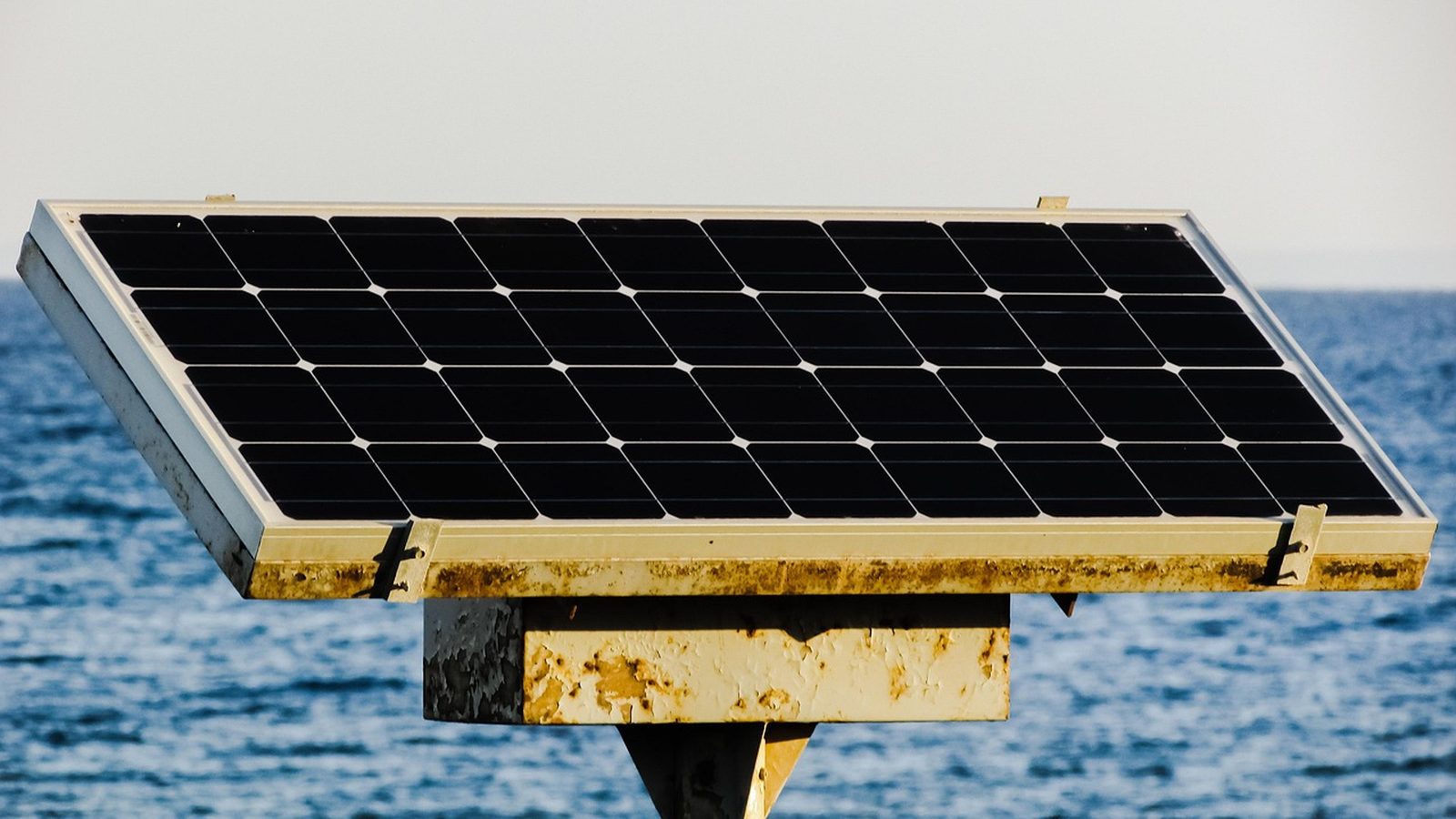
Photo: dimitrisvetsikas1969, via Pixabay
California · Lakewood
Solar in Lakewood: a tract house city wired for rooftops
Written by the Solar Learning Lab research deskUpdated August 29, 202611 min read
Few California cities are as physically suited to rooftop solar as Lakewood. Of its 28,357 housing units, 23,329 are detached single family homes. That is 82.3 percent of the stock, per the state Department of Finance 2026 estimate, and 70.7 percent of occupied homes are owner occupied. Almost every address here is a roof somebody owns and controls.
The regulatory picture is unusually simple too. One utility, Southern California Edison, with no community choice aggregator in between. One permit path, SolarAPP+, confirmed by both the City and the state's tracking file. What is not simple is the billing math after California's 2023 export rule change, and that is where this page spends most of its time.
Size it before anyone sizes it for you
The estimator below uses SCE's actual 2024 average price and a Lakewood-specific production run.
Run the Lakewood numbersLakewood was mass produced, and that matters for solar
Lakewood incorporated in 1954 as one of the country's first mass produced postwar suburbs. Developers Louis Boyar, Mark Taper and Ben Weingart started building in late 1949 and eventually put up about 17,500 houses, according to the city's history. The result, three quarters of a century later, is 9.45 square miles of largely uniform detached homes with a 2.48 percent vacancy rate and 2.909 people per household.
For a solar installer that uniformity is a gift. Similar roof pitches, similar orientations, similar framing. A crew that has done ten Lakewood jobs has effectively seen most of the city. For a homeowner it cuts the other way: a quote that works on your neighbor's house probably prices close to yours, so wildly different bids deserve suspicion rather than excitement.
The 2023 ACS puts median household income at $116,794. Combine that with the ownership rate and the housing type and you get a market where the constraint on solar is rarely the roof or the budget. It is whether the post-2023 export rules still make the project pencil, and how the house's original electrical service handles it.
Check the map: SCE bundled service, no CCA
Lakewood sits in SCE territory, listed in the utility's filed index of communities served under Baseline Region 8. Unlike Downey, Paramount, Hawaiian Gardens and Whittier next door, Lakewood never joined Clean Power Alliance. It also appears nowhere on SCE's list of community choice aggregators operating in its territory. Generation and delivery both come from SCE, full stop.
Why does that deserve its own section? Because a lot of Los Angeles County solar marketing is written for CPA households, where generation rates and export credits differ from SCE bundled service. If a proposal for a Lakewood address references Clean Power Alliance programs or CCA export adders, the installer copied a template from a neighboring city. That is not a crime. It is a signal to slow down and check every other number in the document.
The clean version of the claim: every economic assumption for a Lakewood system should trace to SCE tariffs and the CPUC's Net Billing Tariff. Per EIA's 2024 utility data, SCE's residential average price ran 32.4 cents per kWh across roughly 3.2 million customers. That is the baseline a solar kWh competes against.
The permit goes through SolarAPP+, and the state confirms it
Lakewood's solar permitting page tells licensed contractors to register with SolarAPP+, submit the design and pull the approval through the platform for standard rooftop solar and solar plus storage. Projects outside the SolarAPP+ scope route through the City's OpenGov Permits and Plan Check portal instead. The California Energy Commission tracking file, updated August 3, 2026, lists Lakewood on the SolarAPP+ platform with a 2024 annual report on file, against the September 2023 deadline that Government Code 65850.52 set for cities of this size.
One caution from the City's own document library. The posted solar checklist PDF dates to September 18, 2015 and describes two paper copies, 11 by 17 inch site plans and county plan check routing. That is the legacy process from before the platform era. If a contractor quotes you permit timelines based on that document, they have not pulled a Lakewood permit recently.
The City did not publish a current residential PV permit fee on any page we could verify, so we will not invent one. What bounds it is state law: Government Code 66015 caps residential photovoltaic permit fees at $450 plus $15 per kW above 15 kW unless a city adopts findings to exceed it. Practical detail worth knowing: inspections in Lakewood go through a contract provider, with requests sent to a trbplus.com address per the Building and Safety page, and the permit counter runs Monday through Thursday 7:30 a.m. to 4:30 p.m. plus alternating Fridays.
What SCE charges, and what it pays for exports
SCE's posted residential time of use plans both carry a $0.79 per day base services charge and a 10 cent per kWh baseline credit. On TOU-D-4-9PM, summer pricing runs 34 cents off peak and 58 cents during the 4 p.m. to 9 p.m. window, with weekend mid peak at 46 cents. Winter runs 33 to 51 cents depending on period. TOU-D-5-8PM posts a 74 cent summer on peak from 5 p.m. to 8 p.m. against 34 cents off peak, per SCE's rate plan pages.
| Energy source | Type | Average price | What that means |
|---|---|---|---|
| SCE residential average | 2024 bundled retail, all hours | 32.4¢ per kWh | EIA Table 6 figure across SCE's roughly 3.2 million residential customers. |
| SCE TOU-D-4-9PM | summer posted range | 34¢ to 58¢ per kWh | The 58 cent window is 4 to 9 p.m. on weekdays, exactly when panels fade. |
| SCE TOU-D-5-8PM | summer posted range | 34¢ to 74¢ per kWh | A 74 cent evening peak is the strongest battery argument on this page. |
| Onsite solar | self-consumed kWh | avoided retail varies by hour | A kWh used in the house displaces the current TOU price. An exported kWh earns far less under the Net Billing Tariff. |
SCE time of use plan pages and EIA Table 6, 2024. Posted snapshots, not a bill forecast.
Exports are the hard part. Since April 15, 2023, new interconnections fall under the Net Billing Tariff adopted in Decision 22-12-056. There is no netting of consumption against production. Exports are paid at hourly avoided cost values averaged monthly, split between weekday and weekend periods, floored at zero when negative, with a nine year lock for early enrollees and a twelve month true up, as laid out in Resolution E-5301. SCE residential customers also get an ACC Plus adder of 4.0 cents per kWh, or 9.3 cents for low income customers, held for nine years for early cohorts.
Put those two facts together and the Lakewood strategy writes itself. Midday exports earn avoided cost. Evening imports cost 58 to 74 cents in summer. The gap between those numbers is the case for either shifting big loads into daylight hours or adding a battery that soaks up noon production and discharges it at 6 p.m. A system sized to maximize exports is optimizing for the wrong side of the tariff.
Coastal plain sun: strong, with a mild summer plateau
Our PVGIS run for downtown Lakewood models 1,716.6 kWh per year for each installed kW. August leads at 167.8 kWh per kW and December bottoms out at 111.4, a gentler seasonal swing than inland California cities show. Sitting 46 feet above sea level near the coast, Lakewood trades a little peak summer intensity for remarkably steady spring and fall months.
August models at 167.8 kWh per kW. Note how May at 159.9 nearly matches it. The coastal profile is a plateau, not a spike.
PVGIS v5.2 model run by Solar Learning Lab on August 29, 2026, NSRDB radiation database. Fixed south facing mount, 30 degree tilt, 14 percent losses, downtown Lakewood coordinates. Your roof will differ. Full method at PVGIS. Treat the figure as a comparison standard between cities, not a guarantee for a specific roof plane. June dipping below May in the model is the marine layer showing up in the radiation data, a real Lakewood phenomenon anyone here recognizes.
The 1950s house is the real due diligence item
The Boyar, Taper and Weingart houses went up fast, in the late 1940s and early 1950s, and they were modest by design. Seventy plus years later, the two questions that decide whether a Lakewood install is routine or expensive are the roof surface and the main electrical panel. Neither shows up in a satellite quote.
Ask the roof question before signing anything. If the covering has a decade or less of life left, re-roofing under existing panels later costs far more than sequencing the work now. Then ask about panel capacity. An original or lightly upgraded service can force a main panel upgrade, which changes both the price and the permit scope. Get that determination in writing during the site visit, not as a change order after.
If a homeowners association raises objections, California law is on your side. Civil Code 714 voids restrictions that effectively prohibit a system, treats anything that adds over $1,000 of cost or cuts efficiency more than 10 percent as unreasonable, and deems an application approved if the association fails to deny it in writing within 45 days.
The 2026 incentive picture, without wishful thinking
Start with the subtraction. The federal 25D homeowner credit is gone for systems completed after December 31, 2025, terminated by P.L. 119-21, and the statute counts an expenditure as made when installation finishes. The Congressional Research Service note is blunt about it. Any Lakewood cash or loan quote still showing a 30 percent federal line in 2026 is wrong.
What remains is narrower but real. The SGIP Residential Solar and Storage Equity budget holds $280 million for low income California customers at $3,100 per kW of solar and $1,100 per kWh of storage. Income gates apply, so verify eligibility before it appears in your math. And on property taxes, an active solar energy system qualifies for a new construction exclusion under state Board of Equalization rules, meaning the system does not by itself raise your assessed value. That exclusion is currently scheduled to sunset January 1, 2027, which quietly argues for completing a purchase before then.
Who shows up on the Lakewood map
Five companies cleared our review threshold for this list, clustered in Cerritos, Paramount, Buena Park and Artesia. Review counts range from over a thousand down to thirteen, which tells you the sample sizes differ enormously. A 5.0 rating on 25 reviews and a 4.2 on 1,392 reviews are not the same kind of evidence.

ELIONE SOLAR
Buena Park, Aragon
5.0(25 Google reviews)

Optima Energy Inc.
Artesia, CA
4.6(14 Google reviews)
All Solar
Cerritos, CA
3.4(13 Google reviews)
Ratings snapshot: Google Maps, August 2026, via the DataForSEO SERP feed. Zero companies paid us and none are endorsed by us.
Two Lakewood-specific screening questions for any bidder. First: do they submit through SolarAPP+ themselves, or subcontract the permit? Second: how many pre-1960 tract homes have they re-roofed or upgraded panels on as part of a solar job? The right outfit answers both without hesitation.
A screening estimate against SCE prices
This tool uses SCE's 2024 average residential price and our Lakewood production run. It deliberately does not attempt hourly Net Billing Tariff export math, because no slider tool can do that honestly. Use it to compare system sizes and payment structures, then demand an hour-by-hour model from whoever bids the job.
1,717 kWh per kW is our downtown Lakewood PVGIS result. The 1,459 floor is an 85 percent planning case for shade or an off-south plane, not a measurement of any particular street.
Cash quotes in Lakewood cluster near $2.46 per watt, against a $3.50 national 2024 median (LBNL). Use your quote.
Assumptions you can change
Use the rate on your actual lease or PPA quote. There is no published statewide average we trust enough to hardcode.
Cash purchase
$8,610 after state credit
- Year 1 benefit
- $162/mo
- Payback
- 5 years
- 20 year net position
- $38,673
Lakewood accounts sit on SCE bundled service with no community choice layer, so the retail input here is SCE's 2024 residential average from EIA. Exported energy is paid at Net Billing Tariff avoided cost values, which this tool does not simulate hour by hour.
Solar loan
$115/mo 15 yr payment
- Year 1 net
- $47/mo
- Upfront
- $0
- 20 year net position
- $26,558
The financed figure carries the state calculator's documented loan-over-cash spread. On a Lakewood quote, insist on seeing the cash price and the financed price side by side so the dealer fee cannot hide inside the panel cost.
Lease / PPA
$0 down you buy the power
- Year 1 net
- $42/mo
- Upfront
- $0
- 20 year net position
- $13,973
Our federal source covers only the homeowner 25D credit, which ended for systems completed after December 31, 2025. It says nothing about third party tax treatment, so judge a lease on its rate, escalator and transfer terms alone.
Estimates, not quotes. Inputs are SCE's 2024 average residential price, our Lakewood PVGIS run and EnergySage California cost data. The tool cannot price TOU peak windows, avoided cost export values or a specific 1950s roof. We are a solar installer and we also partner with other solar companies. See our disclosures.
We are a solar installer and we also partner with other solar companies.
Lakewood solar, asked and answered
Is Lakewood on SolarAPP+ or is that marketing?
Does Lakewood have a community choice aggregator?
What does SCE pay for the solar I export?
Can I still claim the 30 percent federal credit in 2026?
How much can the permit legally cost?
My HOA is objecting. What are my rights?
Lakewood document trail
Every figure above traces to one of these primary documents, all reviewed August 29, 2026.
- City of Lakewood solar permitting page and Building Permits page
- CEC residential solar permitting tracking data and Government Code 65850.52
- SCE index of communities served, SCE CCA list, Clean Power Alliance membership, and SCE TOU plans
- CPUC Net Billing Tariff and Resolution E-5301
- CPUC SGIP page, BOE active solar exclusion, Government Code 66015, and Civil Code 714
- CRS IN12611, EIA Table 6, DOF E-5 estimates, and Lakewood history
Get a Lakewood quote grounded in the tariff
Bring a recent SCE bill and a photo of your main panel. Those two documents settle half the open questions before anyone climbs a ladder.
What does your monthly electric bill look like?
Lakewood average is $167 per month (EIA, 2024).