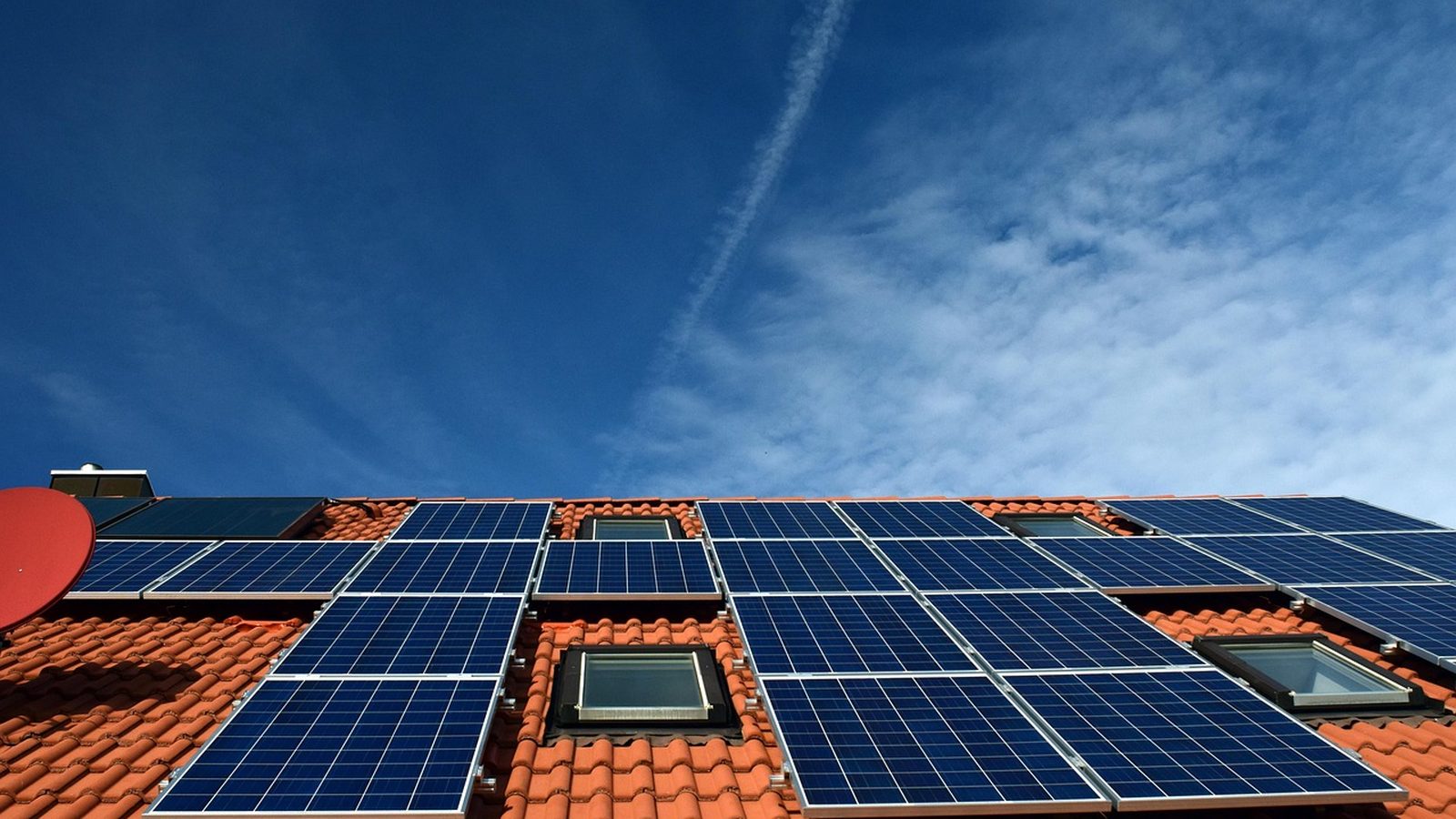
Visual source: ulleo, via Pixabay
California solar / Orange
Orange solar has its own fast rulebook, not SolarAPP+
Written by the Solar Learning Lab research deskUpdated August 24, 20269 min read
Orange's solar permitting story is easy to get wrong because the city is fast in a way that does not look like the neighboring SolarAPP+ pages. It wrote an expedited ordinance, Chapter 15.18. For qualifying small systems, it calls for same-day counter issuance or one-business-day electronic issuance.
That local rulebook sits beside plain SCE service. Orange is not an OCPA member, unlike Fullerton. No city permit fee is published in the supplied primary material, so this page will not invent one.
Read the Orange rule, not a platform label
The ordinance sets the timeline. The fee still needs a direct confirmation.
See Orange’s expedited routeOrange wrote its own expedited solar ordinance
Orange did not adopt SolarAPP+. Its local framework is Municipal Code Chapter 15.18, adopted by Ordinance 06-15. The ordinance defines eligible small residential rooftop systems as 10 kW AC or less and sets a remarkably direct service standard: same-day issuance over the counter or within one business day electronically. Read the ordinance.
There is a discipline point here. The CEC tracking sheet lists City of Orange as “Without Platform.” That does not mean “without an expedited process.” It means the city is using its own ordinance rather than a SolarAPP+ or other automated platform. The County of Orange is a separate jurisdiction, so its SolarAPP+ status does not apply to City of Orange permits. CEC dataset.
The permit fee is not published in the supplied record
We do not have a primary-source City of Orange PV permit fee to print. That is the answer. A third-party range is not a City fee schedule, so it does not belong in the calculation or a contract expectation.
Get the charge from Building and Safety or the Civic Portal before signing. Then make sure the contractor shows whether the scope includes solar only, service work, battery equipment or anything that changes the filing. The city offers a Civic Portal express-permit route, and practical precision is better than made-up certainty.
Orange is not Fullerton when the bill arrives
Neighbors can have different electricity structures. Orange keeps SCE for both generation and delivery, and it is not an OCPA member. Fullerton is. The OCPA member list includes Buena Park, Fullerton and Irvine, not Orange. OCPA's member information settles the point.
That makes Orange a single-utility rate analysis. New solar still lands under CPUC net billing, with hourly Avoided Cost Calculator export values. No CCA layer. No local OCPA export feature. The simpler structure is a benefit only if a proposal actually models the SCE account accurately. CPUC net billing.
One inspection is the ordinance standard
Chapter 15.18 calls for one inspection for qualifying systems. That is a clear operational target, though it should not be misread as a promise that every project condition is invisible. Roof repairs, electrical corrections and a changed scope can still create work. The ordinance text is the controlling local statement.
The January 2026 state estimate puts Orange at 26,800 single-detached homes out of 48,441 units. The city has a meaningful retrofit market, not a blank canvas. Old roofs and existing panels deserve more attention than a generic “same-day permit” headline. State housing data.
The credit is gone. The ownership questions remain.
Start a 2026 cash model without a federal homeowner reduction. Congress closed Section 25D after 2025. It does not change the need to check roof ownership, CC&Rs, system design or SCE rate assumptions. Federal credit timing.
California's Solar Rights Act limits HOA restrictions that effectively prohibit a solar installation. It does not save a homeowner from failing to submit the association documents the project still requires. Civil Code Section 714.
Orange has the uncomplicated SCE utility structure
| Energy source | Type | Average price | What that means |
|---|---|---|---|
| SCE | generation and delivery | 32.428¢ 2024 average residential kWh | Utilitywide EIA average, not a current account price. |
| OCPA | City of Orange status | not applicable not a member | OCPA lists Fullerton, not Orange, among current members. |
| CPUC Net Billing | new-solar export framework | hourly ACC not a flat rate | Exports are compensated using hourly avoided-cost values. |
| Onsite solar | self-used production | retail reduction account-specific | Using output at home avoids a purchase more directly than exporting it. |
SCE CCA information, OCPA membership information, and CPUC export method.
Orange can produce well. That does not price an export.
The downtown run yields 1,728.6 kWh from a kilowatt of capacity across the year. August reaches 168.8 kWh per kW. Those numbers make a good technical baseline. SCE net billing gives exports a different value from local consumption, so system design needs the household schedule as well as the resource.
August is the modeled high month at 168.8 kWh per kW.
PVGIS v5.2. PVGIS v5.2 model run by Solar Learning Lab on August 24, 2026, NSRDB radiation database. Fixed south facing mount, 30 degree tilt, 14 percent losses, downtown Orange coordinates. Your roof will differ.
Ask Orange installers for the ordinance path and a fee confirmation
Use the directory to form a bid list, not a winner's circle. The clean questions here are whether the project fits Chapter 15.18, which electronic route will be used, when the permit fee will be confirmed, and how the SCE export assumption was produced.
SunPower Corporation
Anaheim, CA
3.6(141 Google reviews)
Go Green Solar
Anaheim, CA
4.5(134 Google reviews)
Solar Tuneup
Orange, CA
5.0(122 Google reviews)
Ratings snapshot: Google Maps, August 2026, via the DataForSEO SERP feed. Zero companies paid us and none are endorsed by us.
This estimator is intentionally less certain than a sales deck
It models city production and California market inputs. It does not know your SCE tariff, shaded roof or live daytime use. That is why the right next step is a documented bill analysis, not a bigger array by default.
The top slider value is the downtown Orange PVGIS output. The lower setting is 85 percent of that model, not a claim about any one roof.
Cash quotes in Orange cluster near $2.46 per watt, against a $3.50 national 2024 median (LBNL). Use your quote.
Assumptions you can change
Use the rate on your actual lease or PPA quote. There is no published statewide average we trust enough to hardcode.
Cash purchase
$8,364 after state credit
- Year 1 benefit
- $163/mo
- Payback
- 5 years
- 20 year net position
- $39,058
A cash price is only useful when the proposal states what it expects to self-consume and what it expects to export. That distinction matters under SCE net billing.
Solar loan
$112/mo 15 yr payment
- Year 1 net
- $51/mo
- Upfront
- $0
- 20 year net position
- $27,289
Make lenders give the financed price separately from the cash price. A pleasant monthly number can hide an expensive project.
Lease / PPA
$0 down you buy the power
- Year 1 net
- $45/mo
- Upfront
- $0
- 20 year net position
- $14,838
Section 48E is a business credit with construction-start deadlines, not a direct residential lease or PPA substitute for the homeowner credit that ended after 2025.
Orange has standard SCE service and a local permit ordinance, yet the calculator remains a broad California screen. Hourly export values, fixed charges, roof shade and actual load timing are outside it. We are a solar installer and we also partner with other solar companies. See our disclosures.
Orange solar questions, starting with the local ordinance
Does Orange use SolarAPP+?
How fast can an Orange solar permit issue?
What is Orange's PV permit fee?
Is Orange in OCPA?
Does the 25D homeowner credit reduce a 2026 Orange quote?
Begin with an Orange permit and bill review
Submit the exact project scope for a fee confirmation, then use a full year of SCE bills to test a system size before signing.
What does your monthly electric bill look like?
Orange average is $161 per month (EIA, 2024).