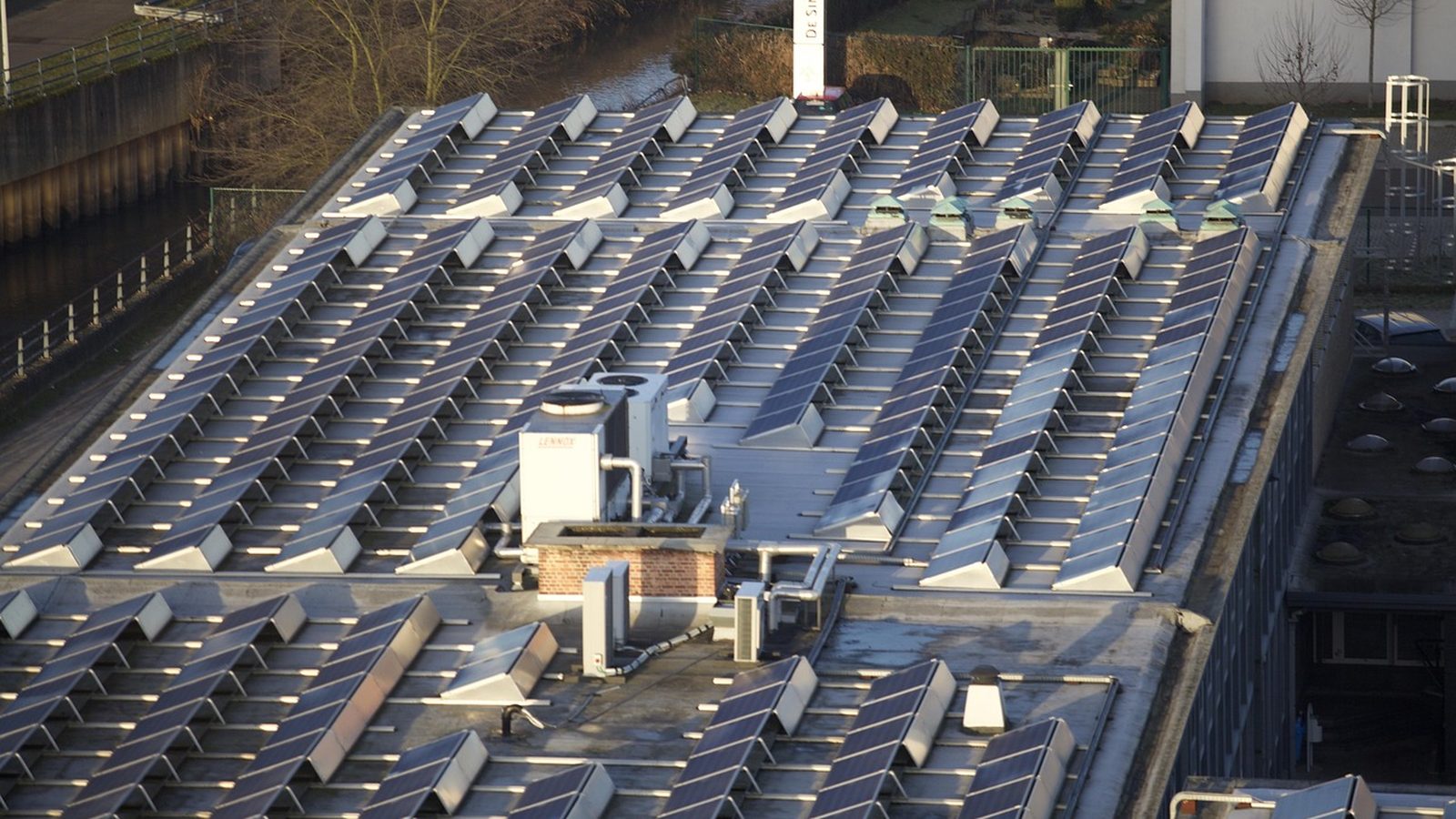
Photo: bertbraet, via Pixabay
California · San Bernardino
San Bernardino solar in 2026
Written by the Solar Learning Lab research deskUpdated August 22, 202612 min read
San Bernardino has a permit oddity worth taking seriously: the city schedule labels solar energy system line items No Charge. It is a real advantage, not a magic phrase. The $60 issuance floor and two 2 percent add-ons still exist, and any panel work changes the conversation. Then comes the other local fact that kills sloppy pitches: there is no CCA choice after Western Community Energy's bankruptcy. This is SCE territory, so a system has to earn its keep under SCE's time-sensitive Solar Billing Plan. Sources: fees; ccaReport; sceSolar
No Charge
City solar line items, before issuance and add-ons
1 to 3 days
City's approximate Symbium review timing
1730.4 kWh
Annual PVGIS output per installed kW
Start with the actual SCE bill
Use the city PVGIS benchmark and a screening rate, then challenge the proposal's export assumptions.
Run the San Bernardino screenThe no-charge permit is real. The final permit total is not necessarily zero.
The City of San Bernardino's Building and Safety fee schedule literally lists Solar Energy Systems as No Charge in both its electrical and plumbing tables. That is unusually direct. The mistake is turning that line into a promise that every rooftop project closes at zero. The same schedule imposes a $60 permit issuance fee on all permits and sets $60 as the minimum permit fee. It also adds a 2 percent technology fee and a 2 percent general plan maintenance fee to plan review and permit fees. The city does not publish one bundled residential solar total, so the honest practical floor is $60 plus those two percentage add-ons, before any scope that triggers other work. Sources: fees; masterFees
Panel work is the obvious way the number changes. The published electrical table lists $38.21 for service work up to 200 amps, $77.86 from 200 to 1,000 amps, and $22.80 for subpanels, subject to the table's $60 minimum. A homeowner should not confuse a solar line item with every electrical line item a design can create. Ask the contractor to separate array permitting, issuance, technology, plan maintenance, and panel work. If the answer is a single unexplained permit allowance, it is not yet a usable number. Sources: fees
The permit office is the Community Development and Housing Department, Building and Safety Division, at 201 North E Street. The city uses Symbium instant plan review under SB 379 for the streamlined channel and says review takes about one to three business days. Its standard review remains available. A system of 10 kW or less can also use the eligibility checklist for expedited residential solar permitting, but that application has to be brought in person. An active city business license is required before issuance, which is a contractor diligence point, not a homeowner errand. Sources: permits
There is paperwork friction even on the fast lane. For a Symbium permit, hard copies of the site map, single-line diagram, specification sheets, inspection checklist, and job card must be onsite. The conventional submittal calls for plans, specifications, structural calculations, application material, declaration, eligibility checklist, and a valid business license. None of that makes the permit bad. It does mean that a sales promise of instant approval is only credible after the project actually fits the city route. Sources: permits
San Bernardino has one current utility answer, not a menu of generation providers.
For the city ZIP codes 92401 through 92427, the California Energy Commission's service-area workbook assigns Southern California Edison. There is no active community choice aggregator serving the city in the CPUC's 2026 formation report. That absence has a specific local backstory: Western Community Energy launched in May 2020, went bankrupt, and returned customers to SCE on June 15, 2021. The CCA graveyard matters because a quote should not invent a second generation rate or community-solar program that a San Bernardino meter cannot choose. Sources: sceZip; ccaReport
SCE reports a current average residential rate of 34.5 cents per kWh, or 33.2 cents including the California Climate Credit. That is a useful calculator anchor, not a promise of the rate on each hour of the bill. New SCE solar customers take TOU-D-PRIME under the Solar Billing Plan. Its June 2026 summer on-peak price is 59.291 cents per kWh, while summer off-peak is 26.698 cents. That spread is the local design problem in miniature: a panel creates plenty of midday energy, while a hot house often asks for the most expensive electricity later. Sources: sceRate; sceTou; sceSolar
The CPUC Net Billing Tariff applies to SCE projects, with Energy Export Credits derived from the Avoided Cost Calculator rather than a flat retail swap. The original customer keeps that treatment for nine years. SCE says average 2026 export credits range from 6 cents during summer daytime to 21 cents in the summer 4 to 9 p.m. interval, then roughly 2 cents for net surplus compensation. California solar copy that values every exported kilowatt-hour at the retail rate is not merely optimistic here. It is using the wrong tariff. Sources: cpucNetBilling; sceSolar
There is a timing window worth verifying with the installer, not assuming. SCE and PG&E residential customers who apply before the end of 2027 can receive higher export credits for nine years, except code-required solar. SCE describes its residential Energy Export Bonus Credit as about 4 cents per kWh, and about 9 cents for qualifying income customers. A code-required new-home system does not receive that adder. The project date, utility confirmation, and reason the system exists all matter. Sources: cpucNetBilling; sceSolar
| Energy source | Type | Average price | What that means |
|---|---|---|---|
| SCE TOU-D-PRIME | Summer on-peak | 59.291¢ per kWh | Required solar rate, weekdays 4 to 9 p.m. |
| SCE TOU-D-PRIME | Summer off-peak | 26.698¢ per kWh | The lower daytime retail period does not imply high export value. |
| Owned rooftop solar | PVGIS output | Not a flat rate | Value depends on self-use, battery timing, and SCE hourly export credits. |
Sources: sceTou; sceSolar; cpucNetBilling
The sun model is strong. It is not a bill model.
August is the modeled high month at 168.6 kWh per kW. The chart measures modeled generation, not an unshaded roof's guaranteed result.
Method: PVGIS v5.2. PVGIS v5.2 model run by Solar Learning Lab on August 22, 2026, NSRDB radiation database. Fixed south facing mount, 30 degree tilt, 14 percent losses, downtown San Bernardino coordinates. Your roof will differ.
A hot-city solar design has to respect the late afternoon, not just annual output.
Redlands climate normals, the nearest station used in the research, show 3,528.4 cooling degree days on a base-57 scale, a 65.2 degree annual mean, and 12.87 inches of annual precipitation. That is inland air-conditioning territory. It also places a lot of household load in the summer 4 to 9 p.m. SCE's solar rate makes that period the high-value slot. A large noon-only production number can still coexist with a stubborn evening bill. Sources: climate; sceTou
The operating question is simple but often skipped: what runs after the panels taper? Air conditioning, cooking, pool equipment, charging, and household occupancy make different answers. Load shifting can help. Storage can help. Oversizing a bare array just because roof area exists is not automatically the cheapest answer under hourly exports. The statewide pattern supports the point: the CPUC reports that nearly 70 percent of net-billing customers paired storage with solar by the end of 2024. That does not make a battery mandatory. It shows where customers have been finding the missing value. Sources: cpucNetBilling
San Bernardino's 67,771 housing units include 40,998 detached homes, about 60 percent of the city stock, according to the state's January 2026 estimates. That is a meaningful base of roofs, but not a license to assume every roof is available or suitable. Owner occupancy from the ACS inputs is 48.5 percent. Renters, apartment residents, and owners facing a poor roof or a shared roof need a different path than this calculator. The good prospects are plentiful. They are not universal. Sources: housing; census
The easy federal homeowner credit is gone. The remaining programs are conditional.
Federal credit: residential 25D credit ended December 31, 2025; lease/PPA providers may claim 48E. A cash quote in 2026 should not subtract a homeowner tax credit that no longer exists. That does not mean every lease is preferable. It means the comparison has to be candid about who receives the business credit, the contract escalation, the price of energy, and what happens when the home is sold. Sources: federalCredit
For qualifying households, the SGIP Residential Solar and Storage Equity program has much more concrete numbers than generic rebate advertising: $3,100 per kW of solar and $1,100 per kWh of storage. It opened reservations June 2, 2025 with roughly $252 million. Qualification requires income at or below 80 percent of area median income, prior SASH or DAC-SASH participation, or current CARE, FERA, or ESA participation. A typical single-family allowance is 5 kW and 15 kWh, with larger systems requiring load justification. Program fit and funding availability need confirmation before a price is built around it. Sources: sgipEquity
The general SGIP storage tiers also list $850 per kWh for Equity and $1,000 per kWh for Equity Resiliency, with priority categories including high fire-threat areas, repeated PSPS communities, low-income and medically vulnerable customers, and critical facilities. San Bernardino's SCE service makes it a participating-utility territory. The city itself did not surface a residential rooftop-PV cash rebate in the permit or fee materials reviewed. The permit benefit is cost containment, not a check from City Hall. Sources: sgip; permits; fees
A useful roof is more valuable here than a generic market statistic.
The city had an estimated 65,095 occupied units and a 3.949 percent vacancy rate in the state's 2026 housing file. That gives the solar conversation a different texture than a mostly detached, mostly owner-occupied suburb. The prospect should start with roof control, roof age, and a real bill. A door-knock pitch that starts with statewide incentives before asking who owns the roof is backward. Sources: housing
California Civil Code section 714 offers meaningful protection when an association is part of the picture. It voids restrictions that significantly raise cost or reduce solar efficiency, requires an association to process the request as an architectural modification, and treats an application as approved if the association does not deny it in writing within 45 days, absent a reasonable request for more information. It is protection, not permission to skip the HOA process. Put the application on the calendar early. Sources: hoa
New single-family construction has a separate rulebook. California's 2022 Energy Code requires solar PV under the prescriptive requirements for permit applications from January 1, 2023, with an exception where the required size is below 1.8 kWdc. That code-required status matters in this city because it can exclude the SCE export adder. A buyer of a new home should ask whether the solar is owned, leased, or merely required, then identify the utility application date and tariff before signing anything. Sources: cpucNetBilling
A San Bernardino permit audit before you sign the contract.
There are two ways a low permit figure can mislead without being false. The first is to quote the No Charge solar row and omit the $60 issuance fee and the two percentage add-ons. The second is to include a vague permit allowance that becomes a change order after the installer discovers a subpanel, service change, or structural requirement. Neither is a reason to walk away. It is a reason to make the proposal describe its own assumptions. The city schedule is unusually favorable, but it still has moving parts. Sources: fees; masterFees
A usable San Bernardino permit exhibit should say whether the design is expected to go through Symbium or the standard route, whether it needs any panel or service work, which fee rows are included, whether City Business License compliance has been checked, and who supplies the onsite inspection documents. The city specifies hard-copy materials for Symbium inspections. That detail is mundane, which is exactly why it gets missed until a job is already scheduled. A contractor who knows the route can answer it quickly. Sources: permits
Then separate permitting from SCE interconnection. City approval makes construction legal. It does not determine Solar Billing Plan enrollment, export treatment, or the SCE application date needed to assess the export-bonus window. A proposal that calls the whole workflow a permit is compressing distinct risks into one word. San Bernardino's local advantage is that municipal fee treatment is unusually light. The homeowner still needs a tariff-aware project plan. Sources: permits; sceSolar; cpucNetBilling
A thin local list is a shortlist, not a recommendation.
These four cards are the available Google Maps results with 20 or more reviews in this thin market. They are not endorsements. Use the list to obtain comparable scopes, then ask each company to show the city permit route, whether an electrical upgrade is included, the SCE application date, and the hourly-export assumption. Ratings snapshot: Google Maps, August 2026, via the DataForSEO SERP feed. Zero companies paid us and none are endorsed by us.


Sea Bright Solar
Redlands, CA
4.4(143 Google reviews)
Progressive Energy Solutions, Inc.
Redlands, CA
4.2(32 Google reviews)
Ratings snapshot: Google Maps, August 2026, via the DataForSEO SERP feed. Zero companies paid us and none are endorsed by us.
Screen the bill, then stress-test the sales math.
The calculator uses SCE's published average residential rate and the local PVGIS production figure. It cannot see the home's fifteen-minute usage, shade, roof condition, panel capacity, or real export-credit schedule. Treat it as the first spreadsheet, not the decision. Sources: sceRate; cost
The high end is our south-facing PVGIS run. The lower number is 85 percent of that model for a less favorable roof orientation. Your roof will differ.
Cash quotes in San Bernardino cluster near $2.46 per watt, against a $3.50 national 2024 median (LBNL). Use your quote.
Assumptions you can change
Use the rate on your actual lease or PPA quote. There is no published statewide average we trust enough to hardcode.
Cash purchase
$7,872 after state credit
- Year 1 benefit
- $159/mo
- Payback
- 4 years
- 20 year net position
- $38,487
No federal 25D credit remains for homeowner cash purchases. In San Bernardino, the unusually light city solar fee is real, but export value still depends on when the home consumes or stores production.
Solar loan
$105/mo 15 yr payment
- Year 1 net
- $54/mo
- Upfront
- $0
- 20 year net position
- $27,410
Compare the identical equipment cash price and financed price. California loan quotes can carry dealer fees that make a low monthly payment look cheaper than it is.
Lease / PPA
$0 down you buy the power
- Year 1 net
- $48/mo
- Upfront
- $0
- 20 year net position
- $15,659
A lease or PPA provider may claim the federal 48E business credit. Compare the delivered-energy rate, escalator, term, buyout language, and roof-transfer rules.
Estimates, not quotes. Inputs use SCE's published average residential rate, a San Bernardino PVGIS run, and EnergySage California cost data. Hourly export credits are not a flat retail rate. We are a solar installer and we also partner with other solar companies. See our disclosures.
Questions that matter before a San Bernardino contract.
Is the San Bernardino solar permit free?
How fast is San Bernardino solar review?
Is there a community choice utility in San Bernardino?
What SCE rate applies after solar?
Does San Bernardino have a city solar rebate?
Sources and gaps we left visible.
The city has not published a single current all-in residential solar permit total. The exact total is n.a. because issuance, the percentage add-ons, and any electrical scope can change it. No city residential-PV cash rebate was found in the permit and fee materials. Federal credit: residential 25D credit ended December 31, 2025; lease/PPA providers may claim 48E. Congressional Research Service.
- permits: https://www.sanbernardino.gov/1650/Apply-for-Residential-Solar-Permits
- fees: https://www.sanbernardino.gov/DocumentCenter/View/341/Schedule-of-Fees---Building--Safety-Division-PDF
- masterFees: https://www.sanbernardino.gov/DocumentCenter/View/2884/Master-Fee-Schedule-PDF
- sceZip: https://www.energy.ca.gov/sites/default/files/2020-05/municipal_ADA.xlsx
- sceRate: https://www.sce.com/save-money/rates-financing/sce-rate-advisory
- sceTou: https://edisonintl.sharepoint.com/teams/Public/TM2/Shared%20Documents/Public/Regulatory/Tariff-SCE%20Tariff%20Books/Electric/Schedules/Residential%20Rates/ELECTRIC_SCHEDULES_TOU-D.pdf
- sceSolar: https://www.sce.com/clean-energy-efficiency/solar-generating-your-own-power/billing-incentives/solar-billing-plan
- cpucNetBilling: https://www.cpuc.ca.gov/industries-and-topics/electrical-energy/demand-side-management/customer-generation/net-energy-metering-and-net-billing
- ccaReport: https://www.cpuc.ca.gov/-/media/cpuc-website/divisions/energy-division/documents/community-choice-aggregation-and-direct-access/2026-cca-and-esp-formation-status-report.pdf
- sgip: https://www.cpuc.ca.gov/industries-and-topics/electrical-energy/demand-side-management/self-generation-incentive-program/participating-in-self-generation-incentive-program-sgip
- sgipEquity: https://www.cpuc.ca.gov/-/media/cpuc-website/divisions/energy-division/documents/self-generation-incentive-program/sgip-fact-sheet---residential-solar-and-storage-equity_ver2.pdf
- housing: https://dof.ca.gov/media/docs/forecasting/Demographics/estimates/e-5-population-and-housing-estimates-for-cities-counties-and-the-state-2020-2026/E-5_2026_Geo_InternetVersion.xlsx
- climate: https://www.ncei.noaa.gov/access/services/data/v1?dataset=normals-annualseasonal-1991-2020&stations=USC00047306&format=json&startDate=0001-01-01&endDate=9996-12-31&dataTypes=ANN-TAVG-NORMAL,ANN-TMAX-NORMAL,ANN-PRCP-NORMAL,ANN-CLDD-BASE57,ANN-TMIN-NORMAL&includeStationName=true&includeStationLocation=1&units=standard
- hoa: https://leginfo.legislature.ca.gov/faces/codes_displaySection.xhtml?lawCode=CIV§ionNum=714
- federalCredit: https://www.congress.gov/crs-product/IN12611
- cost: https://www.energysage.com/local-data/solar-panel-cost/ca/
- pvgis: https://re.jrc.ec.europa.eu/pvg_tools/en/
- census: https://data.census.gov/
Get a San Bernardino estimate.
We are a solar installer and we also partner with other solar companies. Read our disclosures.
What does your monthly electric bill look like?
California average is $161 per month (EIA, 2024).