Nevada solar / Sparks
Sparks solar changed on October 1, 2025. The pitch has to change with it.
Written by the Solar Learning Lab research deskUpdated August 25, 202611 min read
Any Sparks system under 25 kW with an application approved on or after October 1, 2025 lands on NMR-2025. That rider nets your production against your usage every 15 minutes, and whatever you export gets credited monthly at 75 percent of the applicable rate. The old mental model, where the grid works like a full-price battery, is dead here. And there is no state incentive to soften that: Nevada has no income tax, so it has no solar tax credit, and the federal 25D homeowner credit ended with 2025 expenditures.
The honest Sparks case in 2026 is self-consumption. Every kWh you use while the panels produce is worth the full retail rate you avoided. Every kWh you export is worth 75 percent, netted in 15 minute windows. Size and schedule for the first number.
Model avoided kWh, not export revenue
The calculator below prices what you stop buying from NV Energy, which is where the Sparks value actually sits.
Jump to the Sparks calculator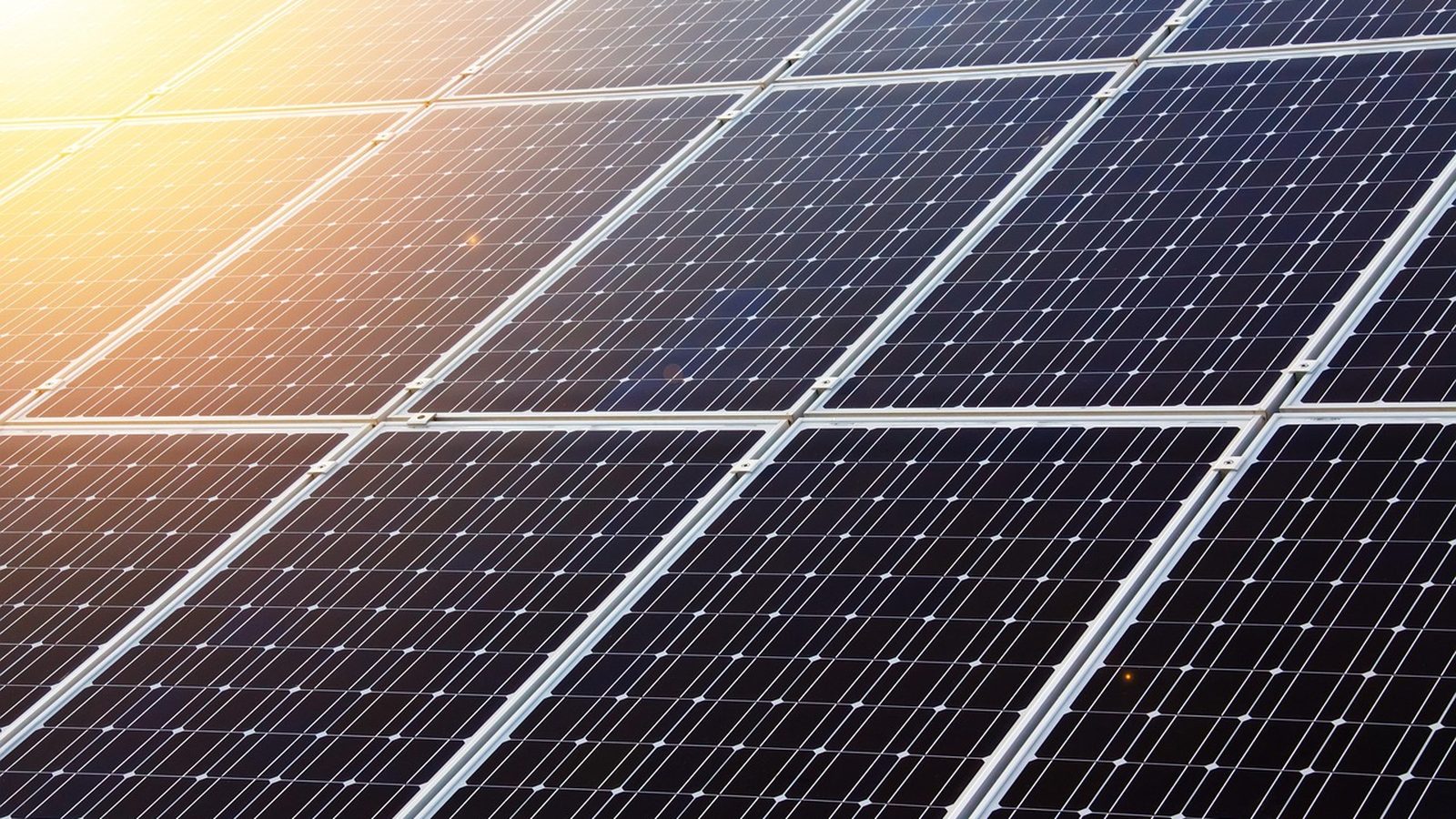
Photo: PublicDomainPictures, via Pixabay
Netting interval under NMR-2025
Monthly credit rate for net excess kWh
State solar tax credit, because Nevada has no income tax
Fifteen minutes is the number that rewrites the proposal
Under legacy monthly netting, a kWh exported at noon in June could cancel a kWh imported at 7 p.m. in the same month. NMR-2025 closes that window to 15 minutes. Midday overproduction now becomes net excess almost immediately, and net excess gets credited at 75 percent of the current applicable rate, settled monthly. NV Energy states this is the default for northern Nevada customers under 25 kW whose applications were approved on or after October 1, 2025. Read NV Energy's net metering page.
The statutory backdrop matters too. AB 405 set four declining tiers, and the PUCN's October 15, 2025 update shows Tiers 1 through 3 closed, with Tier 4 open at 75 percent and no capacity cap. One protection survives that decline: net metering customers stay in the same customer class as everyone else, and they get a 20 year rate lock at the original installation location. A household that already interconnected in Sparks holds a position a new buyer cannot get. See the PUCN tier status.
What does this mean in practice? An oversized array that dumps power into the grid all afternoon is a worse investment than it was in 2024, and the honest response is smaller systems, load shifted into production hours, or storage that soaks up the midday surplus. Systems above 25 kW and under 1,000 kW take NMR-B with monthly netting and a 100 percent credit, but that is not a single-family Sparks roof. Compare the riders.
Sparks stacks exactly zero incentives, and that is worth saying plainly
Run the list. The federal 25D residential credit, 30 percent of cost, was repealed by P.L. 119-21 for expenditures made after calendar year 2025, so a 2026 host-owned install gets nothing federal. Nevada cannot backstop it with a state credit because Nevada residents do not pay state income tax on wages or file a state return on earned income. No income tax, no credit. The CRS federal summary and the Nevada tax department both spell it out.
It goes further. The state's green-building property tax abatement under NRS 701A.110 expressly excludes structures used as a residential dwelling for not more than four families, so a Sparks house does not qualify. We could not confirm any residential solar property tax exemption in the NRS 701A text we pulled, so we will not claim one. And LISEP, the lower-income solar program, was discontinued in June 2022. Read NRS 701A and the LISEP notice.
Any Sparks proposal still advertising a 30 percent federal credit for a 2026 install is wrong, full stop. The economics here rest on three legs: the retail rate you avoid, the 75 percent export credit, and whatever load shifting or storage you add. That is the whole stack.
The rate you are offsetting is cheap, which cuts both ways
Sparks sits in Sierra Pacific Power territory, NV Energy's northern operating utility, on Schedule D-1 Domestic Service. The tariff carries an $18.50 monthly basic service charge that solar does not touch, and the January 1, 2026 statement of rates puts the all-in energy rate at 11.666 cents per kWh. The quarterly standard rate for July 1 through September 30, 2026 is 11.243 cents, a bit under the southern Nevada figure of 11.622 for the same window. The northern statement of rates and NV Energy's pricing page carry the current numbers.
| Energy source | Type | Average price | What that means |
|---|---|---|---|
| NV Energy north | D-1 all-in energy rate, Jan 1, 2026 tariff | 11.666¢ per kWh | Plus an $18.50 monthly basic service charge solar cannot offset. |
| NV Energy north | Standard residential rate, Jul to Sep 2026 | 11.243¢ per kWh | Quarterly figure from the pricing plans page. |
| Sierra Pacific | 2024 average residential price, EIA-861 | 14.5¢ per kWh | Averages include the fixed charge, so they run above the energy rate. |
| NMR-2025 export | Net excess credit | 75% of applicable rate | Netted every 15 minutes, credited monthly. |
An 11 to 12 cent retail rate means payback runs longer here than in high-rate states, and pretending otherwise burns trust. The flip side: Sparks is a heating-dominated climate, with 4,669 normal heating degree days against 1,038 cooling degree days at the Reno airport reference station. Households heating with electricity carry winter load that solar barely covers in December, when our model shows the year's lowest output. Load shape, not headline sunshine, decides whether a specific Sparks house pencils. The NWS climate report has the degree-day normals.
Strong summers, thin winters: the Sparks production curve
August tops the fixed model at 174.6 kWh per kW.
PVGIS v5.2. PVGIS v5.2 model run by Solar Learning Lab on August 25, 2026, NSRDB radiation database. Fixed south facing mount, 30 degree tilt, 14 percent losses, downtown Sparks coordinates. Your roof will differ.
Our PVGIS run puts Sparks at 1,715.9 kWh per kW per year. August leads at 174.6 and December trails at 89.9, which is nearly a two to one seasonal swing. Under 15 minute netting that swing matters more than the annual total: a system sized to cover annual usage will export heavily at 75 percent value all summer and still leave the winter bill mostly intact. The station normals back the shape, with an average annual temperature of 55.0 degrees and cool nights year round. Size to the summer daytime load you can actually consume. Reno-Tahoe airport normals.
Permitting runs through a regional portal, and there is no flat solar fee
The City of Sparks Building Division stopped taking paper applications. Everything files through ONE Regional Licensing and Permits, an ACCELA-based system shared by Reno, Sparks, Washoe County, and the county health district, open around the clock. The human fallback is the Permit Desk at (775) 353-2306 at City Hall, 431 Prater Way. The Building Permits page and the ONE portal are the entry points.
Do not expect a quotable flat number for the permit. The fee schedule revised January 9, 2026 has no photovoltaic line item, so residential PV prices off project valuation: a $2,000.01 to $25,000 job runs $69.25 plus $14.00 per additional $1,000, then inspection adds 95.6 percent of the principal and plan review adds 75 percent. Electrical work stacks a $22.00 issuance fee and $27.25 for a service or panel board at 200 amps or less. A bidder who quotes "permits included" should be able to show that math. Open the Sparks fee schedule.
Two technical details separate a clean submittal from a correction cycle. Sparks reviews against the 2018 I-codes with Northern Nevada amendments and the 2017 NEC, so plan notes written to a 2023 code will not match the examiner's book. And the structural criteria are real: 120 mph design wind speed, 30 psf ground snow load, seismic category D2. Foothill parcels can also pull wildland urban interface requirements through the 2018 IWUIC and the Washoe County fire hazard map. We could not confirm Sparks on the SolarAPP+ jurisdiction list, so treat any fast-track claim as unverified. The adopted codes page and the SolarAPP+ list.
If an HOA pushes back, Nevada law is on the roof's side
NRS 278.0208 bars a governing body from prohibiting or unreasonably restricting a solar energy system, and deed covenants that try are void and unenforceable. The statute even defines the line: a restriction that cuts system efficiency or performance by more than 10 percent, as determined by the Director of the Office of Energy, is unreasonable unless a comparable alternative exists. Bans on black solar glazing are called out specifically. Read NRS 278.0208.
There is also a working dispute path, not just a statute to wave around. The Governor's Office of Energy issues Renewable Energy System Determinations when an HOA or local government denial is challenged, and the Director must decide within 30 days. In practice, showing a board that a formal 30 day determination process exists tends to end the argument before it starts. The determination program.
Companies quoting Sparks roofs
Most of these firms work out of Reno, which is normal; the two cities share the ONE permitting portal and the same NV Energy tariff. The filter question for every bid: does the proposal model NMR-2025's 15 minute netting and 75 percent export credit, or does it quietly assume retail-rate net metering that new Sparks customers cannot get? A second one worth asking: does the production estimate account for the 30 psf snow load design and your actual roof pitch?
Ratings snapshot: Google Maps, August 2026, via the DataForSEO SERP feed. Zero companies paid us and none are endorsed by us.
SunPower®
Reno, NV
4.5(184 Google reviews)
LGCY Power
Reno, NV
4.9(77 Google reviews)
Go Solar Group
Sparks, NV
4.5(32 Google reviews)
Ratings and review counts are Google Maps ratings for Sparks local results, retrieved August 17, 2026 via the DataForSEO SERP API. We list the highest rated established companies we found. No company paid to appear here, and appearing here is not an endorsement. Check current reviews and licensing before you sign anything.
Price the kWh you stop buying
The upper bound is our fixed south-facing PVGIS run at downtown Sparks coordinates. The floor is 85 percent of that annual number, a planning band. High desert snow, shade, and roof pitch move real roofs around inside it.
Cash quotes in Sparks cluster near $2.37 per watt, against a $3.50 national 2024 median (LBNL). Use your quote.
Assumptions you can change
Use the rate on your actual lease or PPA quote. There is no published statewide average we trust enough to hardcode.
Cash purchase
$20,382 after state credit
- Year 1 benefit
- $138/mo
- Payback
- 12 years
- 20 year net position
- $19,880
Nothing stacks in Sparks. The federal 25D credit ended with 2025 expenditures and Nevada has no state income tax, so there is no state credit to model. The payoff is the kWh you stop buying on Schedule D-1.
Solar loan
$276/mo 15 yr payment
- Year 1 net
- -$138/mo
- Upfront
- $0
- 20 year net position
- -$9,411
Financed pricing carries the state calculator's $1.20 per watt loan-over-cash spread on top of the cash input. Interval netting under NMR-2025 is not modeled here.
Lease / PPA
$0 down you buy the power
- Year 1 net
- -$157/mo
- Upfront
- $0
- 20 year net position
- -$41,553
48E is commercial-side context for third-party-owned systems, not a homeowner credit. Weigh a Sparks lease against NMR-2025's 15 minute netting and 75 percent export credit, not against a credit you cannot claim.
Estimates, not quotes. Inputs are the current northern Nevada residential rate, our Sparks PVGIS run, and EnergySage August 2026 cost data. NMR-2025's 15 minute netting is not simulated, so treat exports as worth less than avoided use. We are a solar installer and we also partner with other solar companies. See our disclosures.
Sparks solar questions, answered from the documents
What export credit does a new Sparks system get?
Is there a Nevada state solar tax credit?
Can I still claim the 30 percent federal credit in 2026?
What does a Sparks solar permit cost?
My HOA says no. Now what?
Do existing Sparks solar customers lose their old rate?
Sparks document trail
permits · applications · codes · feeSchedule · onePortal · solarAppList · nrs278 · nrs701a · goeDeterminations · lisep · pucNem · nvEnergyNem · pricingPlans · tariffIndex · statementOfRates · d1Tariff · eia2024 · federal · nvTax · quickfacts · climate · census · pvgis
Get a Sparks number built on self-use
We are a solar installer and we also partner with other solar companies. Bring a recent NV Energy bill and, if you have it, hourly usage data. Under 15 minute netting, when you use power matters as much as how much you use.
What does your monthly electric bill look like?
Nevada average is $167 per month (EIA, 2024).