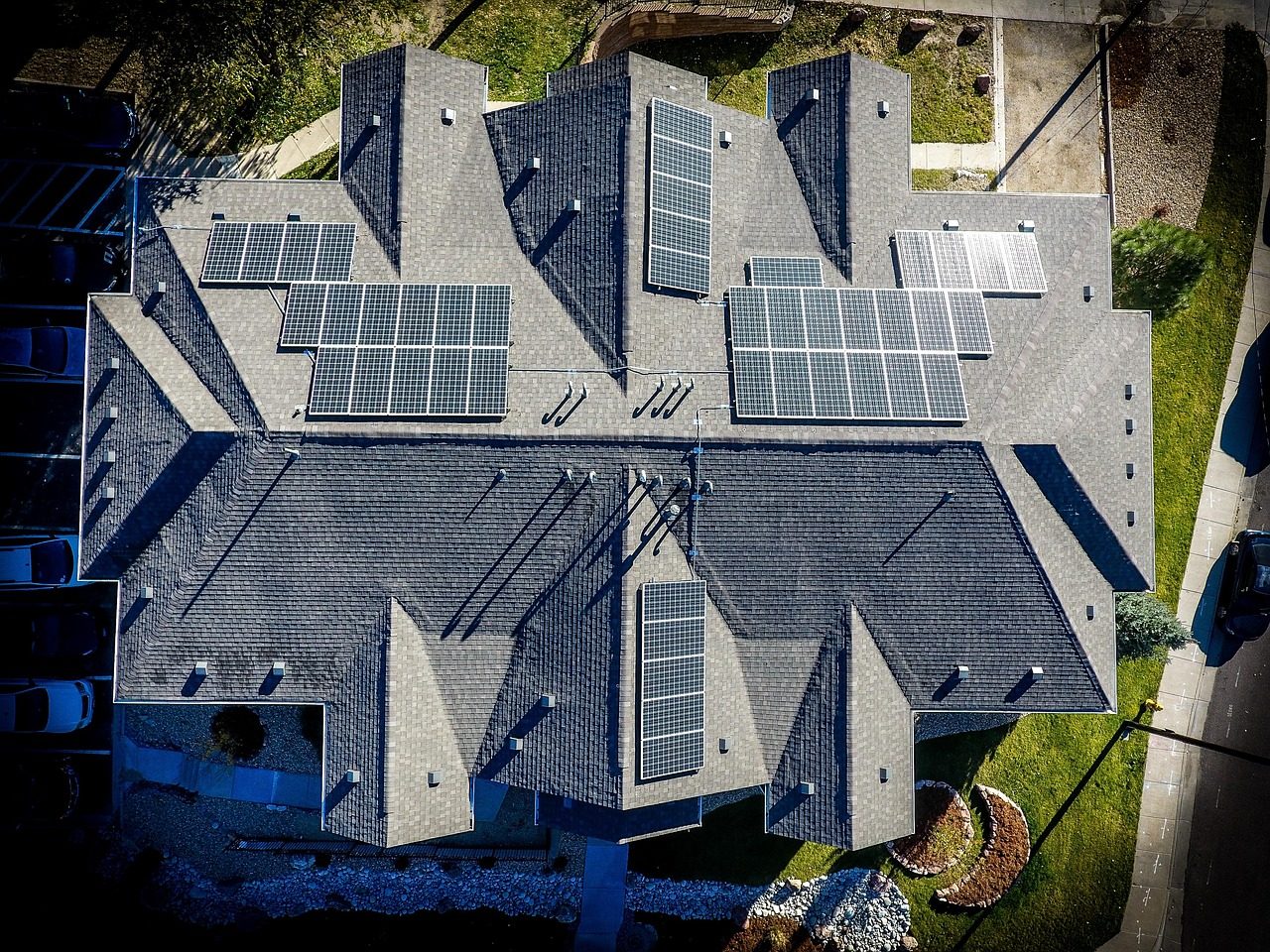
Photo: ecosolarceo, via Pixabay
new-jersey / Newark
Newark solar, examined locally
Written by the Solar Learning Lab research deskUpdated August 21, 202613 min read
Interrogate a Newark proposal
Use the calculator after checking the local conditions that can change the deal.
Open the estimate toolPaperwork arrives before the panels
Newark solar economics run through PSE&G’s meter and New Jersey program timing, but the calendar begins at City Hall. The City says its e-Government portal can accept online applications only for tank removal because raised seals are required on plans. Solar permit packages must be brought to the office. That is a distinctly Newark constraint. PSE&G’s system banks excess generation as kWh through a 12-month contract year, then trues it up. The policy side is date-sensitive: registrations submitted beginning July 27, 2026 use the published $77-per-MWh SREC-II step, after the earlier $85-per-MWh step. An installer who says only that SREC-II is available has not told you enough.
Newark in-person construction filing
The Office of Uniform Construction Code handles permits and inspections. The municipal code lists electrical fees by capacity tier, including $58 up to 10 kW, but does not publish an explicit photovoltaic fee item. It also contains broader permit and certificate fees. New Jersey enforcing agencies must approve or deny a complete permit application within 20 business days, with notice of required resubmittal due within seven business days. That is a state rule, not proof that every incomplete or corrected plan moves in 20 days. Build the physical filing, plan review, corrections, utility application, inspection, and permission to operate into the project schedule. A paper handoff is part of the actual work.
PSE&G banking and the annual reset
PSE&G bills net-metered customers on net consumption. The meter records In and Out channels, and excess generation is carried as kWh. At Anniversary True Up, remaining credits are valued at the market price published by the New Jersey Clean Energy Program and the bank resets. State rules require the system not exceed the customer’s historical 12-month usage. That makes overbuilding for a hypothetical EV, heat pump, or future tenant a question requiring support, not a default design rule. The research did not verify a current PSE&G cents-per-kWh tariff component. This page uses the state EIA rate as a calculator benchmark and refuses to present it as a PSE&G quote.
ADI timing belongs in the contract
New Jersey’s ADI program is concrete and time-sensitive. Net-metered residential systems up to 5 MW DC can qualify for SREC-II, which has a 15-year qualification life and requires a revenue-grade meter. The program describes the $85 per MWh value before the July 27, 2026 step down and $77 after that registration date. New Jersey also exempts qualifying solar systems from sales tax when Form ST-4 is provided. For households without roof control, community solar is not a footnote: new projects in the cited program category must provide at least a 20 percent bill-credit discount, or 25 percent for LMI subscribers. It is often the better fit for a renter.
The limited detached-roof market
Newark’s roof market is defined by limited detached-house supply. Of 118,991 housing units, only 15,498 are single-family detached, while 21,305 are in two-unit structures, 28,892 are in three to four-unit structures, and 17,005 are in 50-plus-unit buildings. The consequence is practical. A rooftop prospect may need co-owner agreement, meter clarity, or landlord authorization before module layout matters. About 22 percent of units were built in 1939 or earlier, lower than the New England cities in this set but still not a structural survey. City averages do not inspect one roof or service panel.
A Newark calendar for buyers
Treat the in-person Newark filing as a milestone. Ask who physically submits the sealed plans, which fees are included, and how corrections are handled. Then ask PSE&G questions in kWh: when the contract year begins, how exports bank, and what true-up does. Finally ask the program question with a date attached: when will ADI registration be filed and which SREC-II step applies? If the answer is vague, the quote is not ready. Newark can support an owner-controlled rooftop project. It can also support a community-solar decision for residents who do not control a roof. Those are different paths and should not be forced into one sales script.
A physical filing needs an owner-level checkpoint
Newark's filing method makes a useful checkpoint possible. Before sealed plans leave for City Hall, the owner should see the address, system capacity, electrical scope, and contract assumptions in the final package. That is a chance to catch a mismatch before it becomes a correction cycle. It also creates a record of what was represented to the City and PSE&G. The extra handling does not make the project impossible. It makes ownership of the paperwork more visible. In a market with shared and multifamily buildings, that visibility can be a strength if the contractor uses it well.
Treat community solar as a distinct product
Community solar should not be presented as a consolation prize to a Newark household that cannot use a roof. It has a different mechanism, a published minimum discount for the cited project category, and none of the building-permit or roof-control requirements of a private array. The comparison should focus on who controls the roof, who bears construction and maintenance risk, and how the electric account receives value. A sales conversation that forces every household into ownership ignores the actual housing stock. The better result can be choosing the program that fits the household rather than forcing an unsuitable rooftop transaction.
Additional local review
A Newark buyer can make the process safer by treating every important claim as a dated claim. The permit package has a delivery date. The PSE&G meter has an installation date and contract-year start. The ADI application has a registration date. The SREC-II value depends on the timing defined in program material. Keeping those dates in writing reduces the temptation to rely on vague assurances that everything will be “grandfathered” or “handled.” It also creates a record if an installer changes personnel or if a project pauses. The city’s filing method may be less frictionless than a fully digital one, but a careful schedule can turn that visibility into a strength. The homeowner knows which step is pending and why.
The local rule for Newark is to preserve evidence of process. Keep the final permit package, the receipt or acknowledgement of its in-person delivery, the PSE&G milestones, the meter information, and the ADI registration record. Those papers make it easier to understand the system after the salesperson has moved on. They also protect a buyer when a property is sold, refinanced, or converted. Solar value is not only the electricity produced. It is the ability to document what was installed, how it was permitted, and which program terms governed it. That is particularly important when the roof and the account are not controlled by a single uncomplicated household.
Newark’s best consumer habit is to make the installation file travel with the property. It should contain the permit record, system specifications, PSE&G milestones, and ADI documentation. That record is useful long after a particular lender or salesperson has disappeared from the transaction.
Newark’s physical filing requirement changes the right question at the beginning of a project. The owner should ask to see the completed version of the package before it goes to the City, not just a preliminary layout that was used to sell the system. The address, capacity, electrical scope, roof description, and signatures should agree with the agreement being financed. If a correction returns from review, the revised item should be identified rather than disappearing into a general update. This is a modest process standard, but it is valuable where sealed plans have to move from a contractor’s desk into an office rather than through a generic homeowner portal. It also guards against a familiar failure mode: the modeled system and the filed system slowly becoming different projects while the customer assumes they are identical. The PSE&G account needs its own binder section. Record the account number, meter milestone, contract-year start, copies of historic usage used for sizing, and the final utility correspondence. That material answers a question an annual savings graphic cannot answer: what production and consumption relationship was actually approved. The distinction matters in Newark’s large share of two-to-four-unit housing, where ownership, occupants, or the account holder can change. A system may still be a good project, but the file should not depend on one salesperson remembering why a particular capacity was chosen. Finally, separate the ADI registration record from the broader incentive language in a proposal. Keep the submission date, the evidence supporting that date, the party assigned to program administration, and the documentation for the revenue-grade meter in one place. State material makes the program timing consequential. A responsible seller can point to the record instead of treating the value as a verbal promise. That is the standard worth using in Newark: a proposal should leave behind an identifiable City file, an identifiable utility file, and an identifiable program file.
local process source ADI program source
The state review rule can be useful without becoming a sales promise. Twenty business days describes the decision window for a complete application. It does not erase the time required to assemble raised-seal documents, bring them to the office, answer a correction request, install equipment, obtain inspection, and receive permission to operate. A buyer should ask for a project sequence that lists those milestones in order. That makes it possible to tell a credible schedule from one that counts only the most favorable part of the process. Newark’s in-person requirement is local texture with direct calendar consequences, and it belongs in any honest planning conversation.
PSE&G’s contract year also turns dates into a consumer-protection issue. A homeowner should be told when the net meter is installed, when the 12-month cycle begins, and how remaining kWh will be handled at the annual true-up. Those details are useful even if the system is expected to closely match load. They explain why extreme oversizing is not a clever hedge. New Jersey’s historic-use rule already limits capacity, and the true-up does not preserve a limitless retail-value bank. Good system design begins with bills and supported load changes, then uses production as a check rather than a reason to maximize panel count.
ADI program administration deserves named responsibility. The owner should know who submits the registration, who provides the revenue-grade meter documentation, what evidence of the registration date will be retained, and how the 15-year SREC-II qualification is reflected in an ownership contract. The step-down is not merely an incentive headline. It is a reason to confirm the date before any estimate uses a dollar value. If the proposed arrangement is a lease or PPA, ask the same question with more care because the party receiving program value can differ from the person receiving an electric bill.
Newark’s housing facts point to a practical consumer rule: do not let rooftop ownership become the only solar answer. A resident without a controllable roof should receive a clear community-solar explanation, including the published discount framework and the account eligibility process. An owner of a two or three-unit building may have a rooftop path, but should confirm roof authority and meter treatment first. Both paths can be real. They are simply different services. That distinction respects the city rather than treating every address like a detached tract house.
Local diligence notes
Newark’s paper intake changes the project-manager conversation. The buyer should not need to guess whether a digital application exists or who is carrying the raised-seal drawings. Ask for the moment when the complete package is ready for the office and ask to see the address, capacity, and electrical work as they appear in that package. That creates a useful checkpoint before review starts. It also helps a homeowner in a multi-unit property make sure that a contract description and a City filing are not describing two different systems. Physical delivery is not automatically delay. It is a task that needs a named owner and a documented handoff.
The PSE&G account requires a different sort of discipline. The system is not a perpetual retail-credit machine. It banks kWh within a contract year, then uses the stated anniversary true-up treatment. A buyer should know the interconnection date that starts that year and should keep it with the account records. The state historic-use cap further means that a proposed future load should be supported, not merely imagined. If a household will add an EV or heat pump, collect the relevant evidence before asking an installer to size around it. That is cleaner than creating a large credit bank and discovering later that its treatment was misunderstood.
The SREC-II step-down is another date that belongs outside a sales deck. The published registration date distinguishes the $85 and $77 values. The homeowner should ask who prepares registration, who owns the revenue-grade meter responsibility, and who receives the 15-year value. These questions matter even more for any third-party ownership arrangement. A lease or PPA can have different federal treatment, but that does not make program administration disappear. The contract should identify it. If it cannot, the buyer is being asked to assume value without knowing who is responsible for obtaining it.
Newark’s limited detached-roof share makes the alternative decision important. A renter, a resident of a large building, or an owner without roof authority may be better served by community solar. That is not a failed rooftop opportunity. It is a different program with a documented discount floor in the research. The most honest local page tells a household when not to force itself into construction. It gives the buyer a way to choose the path that matches control of the roof, the account, and the actual building.
Local evidence before a solar commitment
Newark needs a custody chain for sealed plans
Newark changes the usual online-permit assumption. The City states that online applications are only available for tank removal because plans require raised seals, so a solar package must be brought to the office. A buyer should know who receives the final drawings, who checks address and capacity, who delivers the package, and where delivery evidence will be retained. Those details are not ceremony. They show whether the filed system matches the system being financed. If a correction returns, the revised item should be identified instead of disappearing into a general update. A physical filing does not make solar impractical. It makes project custody visible. That can protect an owner who later needs to understand what was represented to the City, what actually passed review, and whether the final installed capacity is the same capacity that appeared in the agreement.
A complete application is not the whole Newark schedule
The cited New Jersey construction rule gives an enforcing agency a 20-business-day approval or denial window for a complete application, plus a stated notice period where resubmittal is required. Complete is the key word. The rule does not place sealed plans in the office, resolve a correction, arrange utility work, complete installation, schedule inspection, or grant permission to operate. A credible Newark schedule lists those events in order and identifies who owns each one. That is more useful than the broad claim that the contractor handles permits. The state review period and the City’s in-person filing can fit into a practical plan, but only when a proposal stops treating a statutory review clock as the whole construction calendar. An owner should ask which event is pending now, what evidence closes it, and what event must happen next.
PSE and G is organized around a contract year
For a Newark account, the useful analysis follows the PSE and G meter rather than a vague annual-savings percentage. The cited material describes In and Out energy channels, kilowatt-hour banking, and Anniversary True Up. The project file should preserve the historic bills used for sizing, the net-meter installation milestone, the contract-year start, and the treatment of a remaining bank at true up. That structure is a reason to support capacity with actual use rather than a speculative surplus. If an owner expects a future electric vehicle, heat pump, or change in occupancy, the estimate should identify the evidence for the proposed load. A roof drawing with the maximum number of panels is not a complete capacity explanation. Newark consumers need to see why the proposed system fits the customer account that will actually receive the utility treatment.
ADI needs a named administrator and a dated record
ADI is not finished because it appears as a line in a sales deck. The state program conditions include a qualification period, revenue-grade metering, and a registration date that determines the stated SREC-II step. The scope should name the party responsible for submitting the registration, retaining submission evidence, coordinating meter documentation, and explaining who receives the relevant program value. Put the anticipated registration date on the project schedule. If a lease or power purchase agreement is proposed, read the allocation more carefully because the party receiving an electric bill benefit may not be the party managing each program component. A sound incentive plan survives a change in personnel because the filing, meter evidence, and date are documented. The buyer should never have to rely on a verbal assurance that the program has been taken care of.
Community solar is a real Newark route, not an apology
Newark’s housing mix makes it unsafe to speak as though every household controls a detached roof. The cited figures show that two-unit, three-to-four-unit, and larger buildings make up a significant part of the city’s stock. A rooftop plan may require co-owner agreement, landlord authorization, service clarity, or a realistic commitment about future roof work. Those questions need answers before a project is filed. A renter or resident without usable roof control should receive a clear community-solar option rather than being treated as a failed ownership lead. The research identifies a bill-credit discount requirement for the cited project category. That makes community solar a separate product with its own fit, not a consolation prize. In Newark, the first solar question is whether the household controls both a practical roof and a suitable electric account. A responsible recommendation follows that answer.
The city-specific decision standard
Newark’s best consumer protection is to insist that every handoff is documented. The City handoff is the sealed plan package delivered to the office. The utility handoff is the interconnection and meter record that establishes the relevant account and contract year. The program handoff is the ADI registration file and the proof of the applicable step. Those are three separate events. They should not disappear beneath a single phrase such as we handle everything. The owner should know the exact date and responsible person for each. This is especially important where a residence has more than one unit, a landlord relationship, or a prospective change in occupancy. A rooftop array is not merely hardware bolted to a structure. It is also a City record, an account arrangement, and a program registration. Newark’s in-person process makes those boundaries more visible. The smart response is not to pretend the process is digital and automatic. It is to use the visibility to create a complete file that can be checked later.
A final local checkpoint
A Newark owner can pressure-test a proposal with a three-date check. First, what date will the sealed plans be delivered to the City office? Second, what date does the utility record as the net-meter milestone and beginning of the contract year? Third, what date is expected for ADI registration, and what document will prove it? Those dates cannot be replaced by an estimated installation week. They govern separate pieces of the transaction. The first concerns the municipal review path. The second concerns the PSE and G account treatment of the system. The third concerns the state program record. If a contractor cannot identify the responsible party and the evidence for each date, the project is not ready for a confident program-value claim. This test is particularly useful in Newark because the physical filing stage cannot be waved away by an online portal. The buyer has a concrete place to verify that the project has advanced from presentation to an actual municipal process.
The standardized production trace
The Newark PVGIS run totals 1367.3 kWh per kW annually. Its modeled high month is July at 140.4 kWh per kW. A real roof can depart from that run because of shade, roof geometry, orientation, and structural constraints.
The chart is a location-level model. A site-specific design may differ.
PVGIS v5.2. PVGIS v5.2 model run by Solar Learning Lab on August 21, 2026, NSRDB radiation database. Fixed south facing mount, 30 degree tilt, 14 percent losses, downtown Newark coordinates. Your roof will differ.
Calculator benchmark, not a bill quote
| Energy source | Type | Average price | What that means |
|---|---|---|---|
| new-jersey | Residential electricity | 23.27¢ calculator benchmark | EIA Electric Power Monthly Table 5.6.A, May 2026 |
| Newark | PVGIS output | 1367.3 kWh per kW annually | Fixed south-facing model; individual roofs differ. |
Use the local source links in the dossier above before treating this benchmark as your tariff.
Find companies, then test their assumptions
Ratings are a way to make an interview list. They are not proof that a proposal correctly handles this city’s permit route, roof structure, or utility rule.
Ratings snapshot: Google Maps, August 2026, via the DataForSEO SERP feed. Zero companies paid us and none are endorsed by us.
NuWorld Energy
Kearny
5.0(41 Google reviews)
Precision Solar
East Rutherford
5.0(28 Google reviews)
Prestige Solar Services
Jersey City
5.0(8 Google reviews)
Jersey Solar Power Systems
Jersey City
4.8(10 Google reviews)
Solar Flex
Newark
4.7(13 Google reviews)
Ratings and review counts are Google Maps ratings for Newark local results, retrieved August 17, 2026 via the DataForSEO SERP API. We list the highest rated established companies we found. No company paid to appear here, and appearing here is not an endorsement. Check current reviews and licensing before you sign anything.
Put your bill through the model
The upper production input is the downtown Newark PVGIS run. The lower input is 85 percent of that run, a planning range rather than a roof-specific shade study.
Cash quotes in Newark cluster near $2.70 per watt, against a $3.50 national 2024 median (LBNL). Use your quote.
Assumptions you can change
Use the rate on your actual lease or PPA quote. There is no published statewide average we trust enough to hardcode.
Cash purchase
$12,960 after state credit
- Year 1 benefit
- $127/mo
- Payback
- 8 years
- 20 year net position
- $24,101
Newark has a workable solar framework, but physical permit delivery changes the schedule. Build it into the install timeline.
Solar loan
$168/mo 15 yr payment
- Year 1 net
- -$41/mo
- Upfront
- $0
- 20 year net position
- $6,774
The loan estimate uses the statewide benchmark and does not price a dealer fee.
Lease / PPA
$0 down you buy the power
- Year 1 net
- -$4/mo
- Upfront
- $0
- 20 year net position
- $674
A lease or PPA provider may claim federal 48E; determine in writing who registers for SREC-II and who receives it.
Estimates, not quotes. Inputs use the stated EIA rate, Solar Learning Lab PVGIS city run, and state cost benchmark. Incentive eligibility, permits, roof condition, and utility approval are not modeled. We are a solar installer and we also partner with other solar companies. See our disclosures.
Questions that matter in Newark
Can Newark solar plans be filed online?
What happens to unused PSE&G kWh?
When does SREC-II step down?
Can a system exceed past electricity use?
What is the renter path?
Federal credit: residential 25D credit ended December 31, 2025; lease/PPA providers may claim 48E. Congressional Research Service.
Source ledger and limits
Items without a supporting local source remain n.a. Roof-specific engineering, shade, current transaction pricing, and actual utility approval cannot be inferred from a city average.
- https://www.newarknj.gov/543/Building-Division---Office-of-Uniform-Co
- https://newarkcitynj.portal.fasttrackgov.com/
- https://ecode360.com/36645711
- https://www.law.cornell.edu/regulations/new-jersey/N-J-A-C-5-23-2-16
- https://nj.pseg.com/saveenergyandmoney/solarandrenewableenergy/netmetering
- https://www.law.cornell.edu/regulations/new-jersey/N-J-A-C-14-8-4-3
- https://cleanenergy.nj.gov/programs/solar/administratively-determined-incentive-adi-program
- https://cleanenergy.nj.gov/programs/solar/community-solar-energy-program-csep
- https://www.nj.gov/treasury/taxation/pdf/pubs/sales/su6.pdf
- https://api.censusreporter.org/1.0/data/show/latest?table_ids=B25034,B25024&geo_ids=16000US2507000,16000US2582000,16000US0908000,16000US3451000,16000US3436000
- https://www.eia.gov/electricity/monthly/epm_table_grapher.php?t=epmt_5_6_a
- https://www.energysage.com/local-data/solar-panel-cost/nj/
Request a scoped estimate
We are a solar installer and we also partner with other solar companies. Read our disclosures.
What does your monthly electric bill look like?
new-jersey average is $167 per month (EIA, 2024).