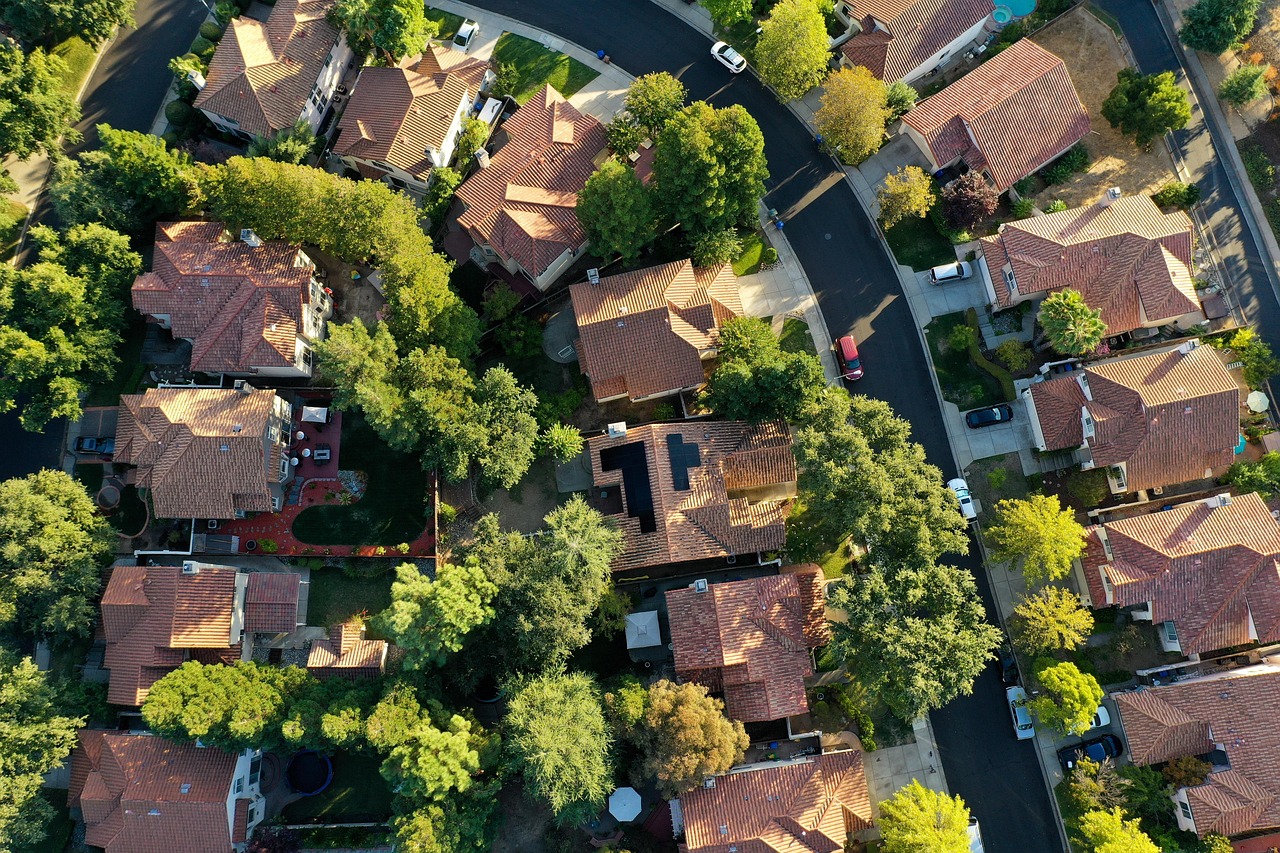
Photo: hamlinjandrew, via Pixabay
Arizona · Surprise
Surprise has excellent sunlight but tight solar economics: APS power is cheap and exports are getting cheaper.
Written by the Solar Learning Lab research deskUpdated August 23, 202610 min read
Surprise roofs produce plenty of energy. The harder part is avoiding cheap daytime exports when APS power is already relatively inexpensive and the export rate is falling again.
Test self-consumption before adding panels
Use the APS bill to find cooling, pool, EV and daytime load. In Surprise, a panel that exports too much can weaken the project even under excellent sun.
Explore surprise solarSurprise has sun. It does not have California-style retail electricity prices.
APS averaged 16.45 cents per kWh for residential service in 2024. Southern California Edison’s comparable figure was 32.43 cents. The hardware does not know the difference. The savings do. EIA 2024 Table 6.
That lower avoided purchase price means a Surprise project needs more discipline around upfront price, load profile and excess production. Plenty of sunlight is not a shortcut around arithmetic.
Selling extra solar back to APS gets less valuable on September 1
The Arizona Corporation Commission action reduces the APS and UNS Resource Comparison Proxy export rate by 10 percent to 5.5 cents per kWh, effective September 1. PV Tech coverage of the ACC action.
This is the page’s hard truth: solar that meets house load can still make sense; solar intentionally oversized to export is harder to defend. Existing customers retain the rate in effect at their interconnection request, according to the same reporting. A bid should make its production and export split visible.
Surprise’s $300 solar permit is three line items, not a mystery bundle
The Citywide Fee Schedule lists a $109 Solar Admin Fee, $128 Solar Plan Review Fee and $63 Solar Permit Fee. Together they total $300. City fee schedule.
Arizona law says municipal solar-permit fees may not exceed actual issuance cost and an itemized cost list must be provided on request. Surprise already publishes three fee lines. If a quote adds a different “city fee,” ask the contractor to separate the city charge from its own handling cost. A.R.S. 9-468.
No confirmed instant platform, but there is a specialized faster route
No fetched City of Surprise source confirms SolarAPP+ or another instant automated solar platform. The normal published solar time frame allows 10 working days for administrative completeness, 45 for substantive review and 55 overall; its first-review target is 8 working days. City licensing time frames.
The Self-Certification Building Permit Program lets a registered professional bypass normal plan review and obtain permits in 5 business days. It has professional-registration, training and project-eligibility rules. It is a professional-only option, and the materials reviewed do not establish it as a standard residential-PV route. Self-certification packet.
APS retail value and export value are miles apart
| Energy source | Type | Average price | What that means |
|---|---|---|---|
| APS | 2024 residential average | 16.45¢ per kWh | Lower retail value makes self-consumption more important. |
| APS RCP export | from September 1 | 5.5¢ per exported kWh | A 10 percent reduction from the prior rate. |
| Onsite solar | production consumed at home | retail purchase avoided value varies by account | The strongest solar kWh is the one used by the home instead of sold at the lower RCP export rate. |
Surprise output is abundant. Excess output is the trap.
May is the model’s highest month. The goal is not merely to make that energy, but to line it up with air-conditioning, charging and other home demand.
The Surprise chart represents a PVGIS v5.2 run completed by Solar Learning Lab on August 23, 2026. It uses the NSRDB database with a fixed south-facing array, 30 degree tilt, 14 percent losses and downtown Surprise coordinates. It is not a roof guarantee. PVGIS v5.2 gives this fixed-location estimate. This PVGIS run is deliberately roof-agnostic. It cannot know how much noon generation a household will export, which APS plan it uses or whether a proposed battery changes the load pattern.
Size to self-consumption. This is the central Surprise decision.
Our fixed PVGIS run produces 1,826.9 kWh per kW annually, with May at 174.8. Production is not the problem. Matching production to the home’s cooling, pool, EV and daytime use is the work.
The calculator below uses an Arizona baseline and cannot model an APS bill or the exact time of each exported kWh. Treat a lower production case and an explicit self-consumption estimate as basic purchase hygiene, not pessimism.
Arizona still has an ownership-based state credit
Arizona’s solar-device credit is 25 percent of cost up to $1,000 total per residence, with up to 5 years of carryforward. It is for eligible Arizona residents and does not apply to leases or power purchase agreements. Arizona Department of Revenue Publication 543.
The federal homeowner credit ended after December 31, 2025. CRS discussion of federal timing. A homeowner considering a lease or PPA should evaluate the rate, term and escalator as a contract, not assume a tax credit flows to them.
Surprise is growing fast, and HOA review still belongs in the pre-design checklist
Census QuickFacts estimates Surprise at 175,304 people in July 2025, up 22.5 percent from its 2020 base. That means new roof inventory, but master-planned living can put HOA rules into the decision. Census QuickFacts.
Arizona law says an association cannot prohibit solar, though it may set reasonable placement rules that do not prevent installation or impair function, use, cost or efficiency. Get the written architectural standard early. Do not design first and argue later. A.R.S. 33-1816.
Make every Surprise bidder show the export assumption
Ask for the APS rate plan, the assumed share of production used in the home, the share exported at 5.5 cents and the cash versus financed price. Ask whether the $300 City fee is included and who is handling any HOA approval.
If the savings table treats every solar kWh as a 16.45-cent avoided purchase, it is not describing a real export-heavy project. It is describing a favorable spreadsheet.
Use this calculator to look for an export-heavy Surprise design
Run a smaller and a larger system, then ask how much of each is expected to stay in the home. A sunny output forecast without that split is not enough for an APS purchase decision.
The high end is the Surprise fixed-location PVGIS output. The lower end helps expose how sensitive a project is before the daytime-load estimate is complete.
Cash quotes in Surprise cluster near $2.20 per watt, against a $3.50 national 2024 median (LBNL). Use your quote.
Assumptions you can change
Use the rate on your actual lease or PPA quote. There is no published statewide average we trust enough to hardcode.
Cash purchase
$14,180 after state credit
- Year 1 benefit
- $160/mo
- Payback
- 7 years
- 20 year net position
- $32,409
Surprise cash math is most credible when the estimate shows self-consumed and exported kWh separately. APS’s low export value makes that distinction material.
Solar loan
$202/mo 15 yr payment
- Year 1 net
- -$42/mo
- Upfront
- $0
- 20 year net position
- $10,251
A Surprise loan comparison must show the financed price and the modeled export share. A low monthly payment does not rescue an oversized array that sells power at the RCP rate.
Lease / PPA
$0 down you buy the power
- Year 1 net
- -$92/mo
- Upfront
- $0
- 20 year net position
- -$23,299
For a Surprise lease or PPA, focus on the contract price, escalation language and expected APS export share. Arizona’s state homeowner credit excludes lease and PPA arrangements.
Estimates, not quotes. Surprise inputs combine Arizona market data with the city PVGIS run. They cannot replicate an APS tariff, forecast a household’s daytime use or value each export at the Resource Comparison Proxy rate. We are a solar installer and we also partner with other solar companies. See our disclosures.
Surprise solar questions
What does a Surprise solar permit cost?
Does Surprise have confirmed instant solar permitting?
How fast is the self-certification route?
What is APS’s 2024 residential average price?
What happens to APS export value on September 1?
Does Arizona’s solar credit apply to leases or PPAs?
Surprise proposals need an export line, not just an annual-production line
Request the portion of modeled output consumed on site, the portion credited at the 5.5-cent RCP rate, the APS plan and the $300 City fee. Also ask whether HOA review or a standard City review path affects the calendar.
Ratings snapshot: Google Maps, August 2026, via the DataForSEO SERP feed. Zero companies paid us and none are endorsed by us.


Mesh Bro Enterprises LLC
Surprise, AZ
5.0(38 Google reviews)
Under The Son Solar
Surprise, AZ
5.0(27 Google reviews)
Ratings and review counts are Google Maps ratings for Surprise local results, retrieved August 17, 2026 via the DataForSEO SERP API. We list the highest rated established companies we found. No company paid to appear here, and appearing here is not an endorsement. Check current reviews and licensing before you sign anything.
Surprise permit, APS and Arizona-law sources
The City fee schedule and review materials sit here with the EIA table, export-rate reporting and Arizona credit and HOA law. Together they explain why the decision is driven by self-use.
fees · permit · timelines · selfCert · statute · eia · export · rateCase · azCredit · hoa · growth · federal
Evaluate a Surprise roof around the daytime-load question
We are a solar installer and we also partner with other solar companies. Have the APS bill ready, plus any pool, EV, cooling and HOA details. A sensible system starts with how the household uses power, not the largest number of panels that fits.
What does your monthly electric bill look like?
Surprise average is $167 per month (EIA, 2024).