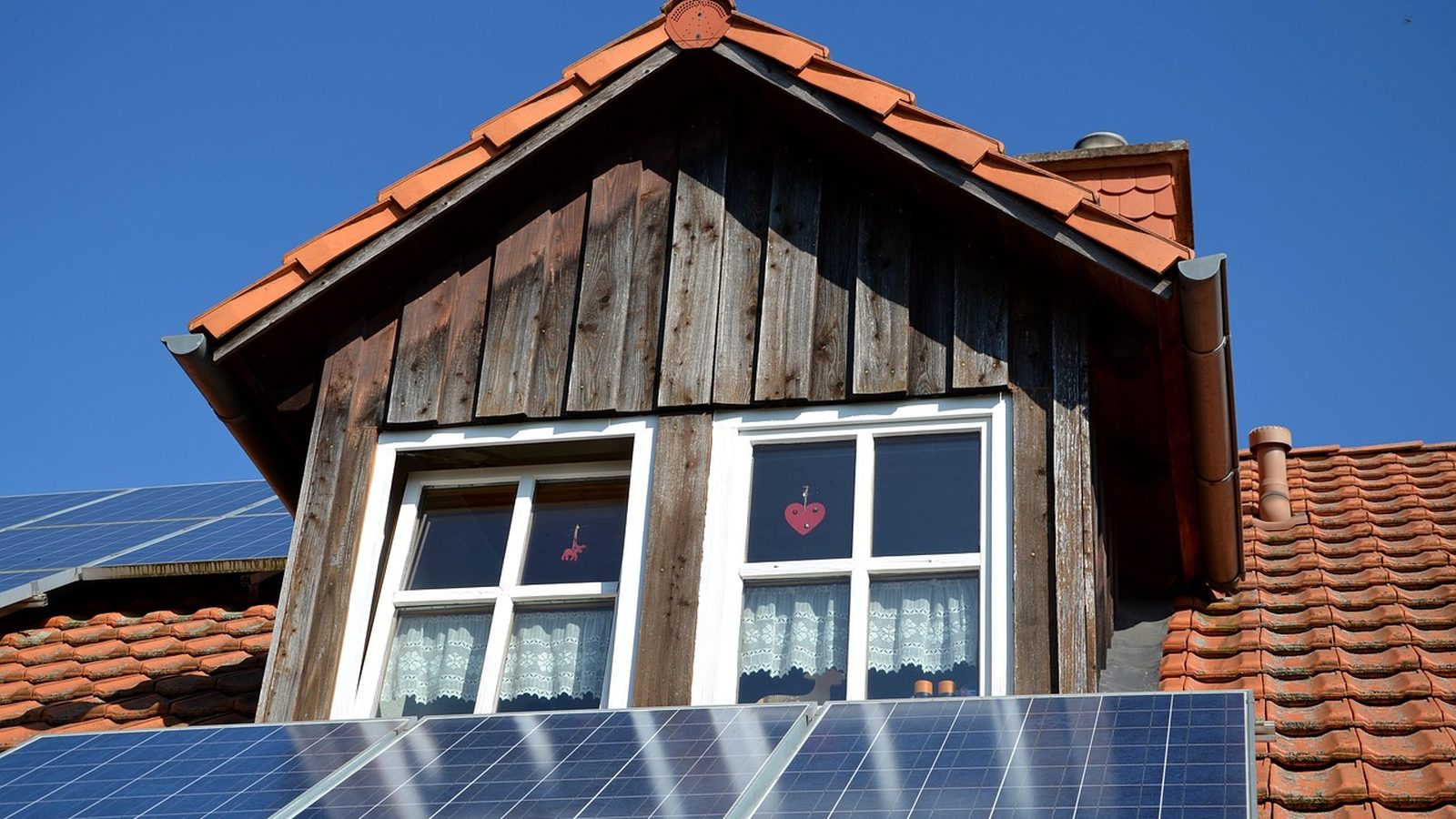
Photo: congerdesign, via Pixabay
Arizona · Peoria
Peoria solar is an owner's permitting decision
Written by the Solar Learning Lab research deskUpdated August 22, 202610 min read
Peoria gives a homeowner two things that are genuinely useful: a large owner-occupied base and a plainly published $184 residential PV permit for the simple 40-amp, 8K-or-less category. That does not make every quote simple. It makes permit lane, breaker size and future electrical scope the early questions, before anybody inflates the design to chase a headline offset.
Owner occupancy in the cited 2020 through 2024 profile
Median household income in 2024 dollars
Published simple residential PV permit
Peoria is the city in this group where the owner can usually control the roof. The more useful test is whether the job fits the city's simple lane or requires a larger electrical conversation.
Price the correct Peoria scope
Ask a bidder whether the design fits SolarAPP+, the appointment lane or a conventional plan review before comparing payment estimates.
Get a Peoria reviewPeoria has the ownership profile that rooftop sales decks assume
QuickFacts reports 76.0 percent owner occupancy in Peoria for 2020 through 2024, the strongest profile of these three Arizona cities. The same profile lists $95,815 median household income, a $463,600 median owner-occupied value and 19.6 percent of residents age 65 or older. Those numbers do not prove a payback. They do tell you why clarity around bill stability, roof condition and contract length belongs ahead of a generic promise about maximum production. Read Peoria's Census profile.
Peoria covers 176.08 square miles at a reported 1,084.6 people per square mile. A wider, lower-density city can mean more detached-roof opportunities, but it also means an installer's local reputation alone says little about how carefully they handle an individual electrical layout. A strong owner audience is not permission to sell a long loan without explaining the cash price and utility model. See the city profile.
Peoria has two solar permit lanes. Pick one on purpose.
SolarAPP+ is live, voluntary and limited to residential solar permits. The city tells contractors to start with automated review, then bring the signed solar application, homeowner affidavit, address-specific checklist and equipment specifications into the city development portal. A wall-mounted battery or energy-management system triggers a sealed engineering letter for the address. A derate or panel upgrade must be permitted first, then its permit number is entered into the solar application. That sequence is the point. Adding an electrical upgrade late can move a job out of the easy story. Read Peoria's SolarAPP+ steps.
The other route is not a walk-in shortcut. Peoria's over-the-counter review is by appointment and capped at a 40 amp PV back-fed breaker for typical 8,000 kW systems. The published lane excludes derates, panel upgrades, sub-panels, microinverters and revisions. A company must email the application at least 24 hours in advance, may submit no more than three applications per appointment and gets no same-day appointment or walk-in option. That is a narrow lane designed for plain jobs, not a label an installer can place on any roof. Read the city's over-the-counter rules.
The practical Peoria question is short: what makes this project ineligible for the $184-style simple path? Put the answer in the proposal. If a bidder says the system is straightforward but will not state breaker size, panel condition, module architecture and whether an upgrade is contemplated, the city's own lane definition has exposed a missing assumption. Check the published permit conditions.
The $184 fee is real, and it is not a blank check
Peoria's current schedule lists $184 for a residential solar photovoltaic permit, 40 amp circuit or less and 8K or less. It separately lists $115 for a residential solar de-rate permit, 40 amp circuit over 8K. The schedule also identifies $104 per hour for non-specified-work plan review, with a half-hour minimum. These figures make Peoria the cheapest published residential-PV permit of this group, but the category words carry the condition. A system that needs work outside the category needs a different estimate. Open the Peoria fee schedule.
Arizona law says a city solar permit fee cannot exceed actual issuance cost and permits, but does not require, a qualified automated platform. Peoria has gone further than a generic statute by publishing SolarAPP+ and a defined appointment lane. The research does not identify a published residential solar review timeline or SolarAPP+ processing-fee amount. Both belong in the n.a. column until the current contractor or city portal provides them. Read A.R.S. 9-468.
City code confirms the split. Your bill resolves it.
Peoria Code Section 23-70 says APS and SRP both service the city and that different installation and design standards apply in their service areas. No fetched source gives a household share or a street-level territory map. The city-code citation is a warning against assuming SRP or APS from a subdivision name. Every Peoria proposal should start with a bill image, not a service-area guess. Read Section 23-70.
| Energy source | Type | Average price | What that means |
|---|---|---|---|
| APS | 2024 utilitywide average | 16.45¢ per kWh | Use the bill for a current address tariff. |
| SRP | 2024 utilitywide average | 13.46¢ per kWh | Use the bill for a current address tariff. |
| Peoria rooftop solar | Compensation | provider specific per kWh | Code confirms two providers. The account confirms which one. |
For SRP, keep the rate discussion compact and dated. SRP lists Customer Generation and Average Demand as net-metering plans and four plans using an export rate. Its compare page says 3.45 cents per exported kWh, while its rooftop page says $0.0187 for the same export-plan group. Those conflicting published statements mean the current ratebook belongs in the bid file. For APS, August 2026 coverage reports a 5.5-cent export rate for new solar customers after the ACC reduction. Do not turn either utility's number into a citywide Peoria promise. See SRP's comparison, its rooftop page and APS export coverage.
A Peoria model is a benchmark for a long-lived roof decision
May is the highest-output month in this model.
PVGIS v5.2. PVGIS v5.2 model run by Solar Learning Lab on August 22, 2026, NSRDB radiation database. Fixed south facing mount, 30 degree tilt, 14 percent losses, downtown Peoria coordinates. Your roof will differ.
The fixed PVGIS run produces 1,773.1 kWh per kW annually, with May at 175.0 kWh per kW. Youngtown's nearby climate normal records 5,901.3 cooling degree days at base 57. Both figures support a serious summer-load conversation. Neither sees a pool pump, a future vehicle, an east-facing roof plane or a family's afternoon schedule. Peoria owners should ask an installer to place the modeled production beside twelve months of actual usage and the selected rate plan. See the climate-normal data.
Keep tax rules, SRP offers and provider credits separate
Arizona's individual solar energy-device credit equals 25 percent of device cost, with a $1,000 cumulative cap for the residence and up to five years of carryforward. The state also has the cited sales-tax exemption and property-tax treatment. The residential federal 25D credit ended in 2025. A lease or PPA provider may claim 48E, which is not a check sent to a Peoria homeowner. SRP customers may also examine a limited-time $250 demand-management-system offer and a $0.005 per kWh REC purchase program. Eligibility comes before arithmetic. Read the Arizona credit, SRP rebates and the CRS update.
A Peoria owner can make the decision in the right order
First, separate the roof decision from the electricity decision. Check roof age, gather a full year of bills and identify any planned vehicle, pool or HVAC change. Second, make the contractor name the city lane: SolarAPP+, an appointment-based over-the-counter review, or a conventional submission. Third, ask whether a back-fed breaker, derate, upgrade, sub-panel or battery engineering letter changes that lane. Only then compare array size and financing. This sequence fits Peoria because the city has drawn the boundaries of the simple permit path unusually clearly. It is harder to hide an electrical contingency when the public permit rule gives the buyer a precise question to ask. Use Peoria's permit page as the checklist.
For households that expect to remain in the home, the decision can also include future load without pretending that every future kilowatt-hour deserves another panel today. A bidder can show a current-load option and a future-load option, each with its own permit and export exposure. That makes the owner choose a tradeoff rather than accept an oversized array by default. See the owner-occupancy context.
Pick the bidder who understands which lane the job occupies
Glendale and Peoria share these five Phoenix-metro Google Maps results, but the Peoria test is different. Ask each company whether its proposed equipment fits the 40-amp appointment lane, SolarAPP+, or conventional review. Then ask what would move it: an electrical upgrade, sub-panel, microinverters, a battery control system or a design revision. That is a concrete comparison between companies that have identical star ratings but may be pricing entirely different permit realities.
Ratings snapshot: Google Maps, August 2026, via the DataForSEO SERP feed. Zero companies paid us and none are endorsed by us.




Peoria buyers see these Phoenix-metro businesses from a Google Maps result set collected August 17, 2026 using the DataForSEO SERP API. The list is a starting point for comparing permit-lane competence, not a referral list. It was not sold to any company, and inclusion carries no endorsement. Check fresh customer feedback, license status and the permit scope for the actual design.
Run a Peoria range, then add the permit lane
Peoria's upper output value comes from the modeled south-facing layout. Orientation, shade, roof geometry, electrical design and when the family uses power can shrink or reshape the actual range.
Cash quotes in Peoria cluster near $2.20 per watt, against a $3.50 national 2024 median (LBNL). Use your quote.
Assumptions you can change
Use the rate on your actual lease or PPA quote. There is no published statewide average we trust enough to hardcode.
Cash purchase
$14,620 after state credit
- Year 1 benefit
- $160/mo
- Payback
- 8 years
- 20 year net position
- $31,908
For a Peoria residence, the Arizona device credit cannot exceed $1,000, regardless of the 25 percent calculation. The homeowner federal credit ended in 2025. A cheap permit lane is helpful, but it does not substitute for a utility-specific savings model.
Solar loan
$208/mo 15 yr payment
- Year 1 net
- -$48/mo
- Upfront
- $0
- 20 year net position
- $9,090
Peoria owners should set a cash offer and a financed offer side by side with the proposed breaker scope shown. Then ask whether the SRP or APS model changes the benefit enough to change the financing choice.
Lease / PPA
$0 down you buy the power
- Year 1 net
- -$92/mo
- Upfront
- $0
- 20 year net position
- -$23,269
A PPA or lease provider may use 48E. Before accepting that structure in Peoria, compare its escalator, transfer provision and term with the value of owning a roof asset through the city's permit process.
Estimates, not quotes. The Peoria range uses Arizona EIA pricing, EnergySage cost inputs and a local PVGIS run. Match it to the account provider, rate plan and electrical permit lane before treating it as a purchase decision. We are a solar installer and we also partner with other solar companies. See our disclosures.
Peoria solar questions
Is $184 the permit cost for every Peoria solar job?
Can a contractor use SolarAPP+ in Peoria?
Can a contractor walk in for over-the-counter solar review?
Does APS or SRP serve my Peoria roof?
What federal homeowner solar credit applies in 2026?
Peoria sources
Peoria SolarAPP+ process · Peoria permit and appointment rules · Peoria residential-PV fee schedule · Peoria Code Section 23-70 · Arizona municipal permitting law · Arizona tax credit statute · Arizona Department of Revenue credit page · State property-tax solar provision · State sales-tax solar exemption · Peoria Census QuickFacts · NOAA cooling and climate normals · PVGIS production-model reference · EIA Arizona residential-rate workbook · SRP plan selector for solar households · SRP net-metering customer-generation page · SRP export-plan explanation · SRP rooftop-solar rate statement · SRP demand-management rebate · SRP REC purchase program · SRP residential pricing changes · Arizona Commission APS export coverage · Arizona Commission APS rate-case update · ACC resource-comparison proxy record · Congressional Research Service federal-credit note
Request a Peoria permit-path review
We are a solar installer and we also partner with other solar companies. Start with a bill, photos of the electrical equipment and any planned battery or panel work. The best first answer is which city lane the job can actually use.
What does your monthly electric bill look like?
Arizona average is $167 per month (EIA, 2024).